Multi-zone climate control sounds fancy, but the real goal is mundane and important: keeping the nursery warm at night without roasting the upstairs office. These ten thermostats and zone helpers split the difference between a single wall dial and a full smart-home overhaul. Some run on wires you already have; others layer on top of an existing thermostat to push the temperature where it matters most.
How The Shortlist Stacks Up

PRO1 T725 Heat Pump/Conventional Programmable Digital Wall Thermostat
PRO1 T771 Single Stage Non-Programmable Wall Thermostat

PRO1 T701 Single Stage Non-Programmable Wall Thermostat
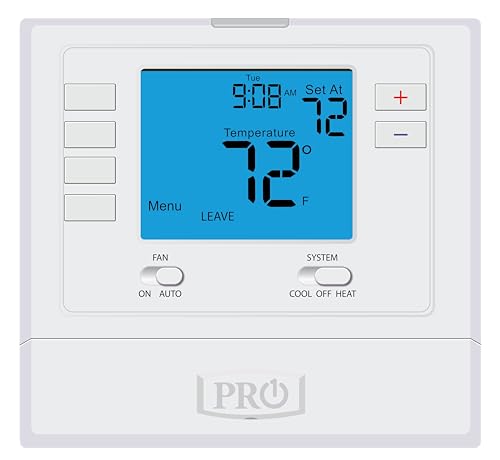
PRO1 T715 Multi-Stage Programmable Gas Thermostat

Heagstat NonProgrammable Thermostat 1 Heat/1 Cool

PRO1 T721 Non-Programmable Wall Thermostat 2H/1C
Google Nest Temperature Sensor 3-Pack

Ventamatic XXFIRESTAT Adjustable Attic Thermostat
PRO1 T805 Single Stage Programmable Wall Thermostat

Google Nest Learning Thermostat (4th gen) with Sensor
More On The Choices That Made The List
The T725 sits at a useful crossroads: it understands both a 2 heat/1 cool heat pump and a 1 heat/1 cool conventional setup, so swapping equipment later doesn’t force a thermostat swap. The 4-square-inch blue backlit screen is large enough to read across a living room, and the 7-day or 5/1/1 schedule options cover the way most households actually live.
For a homeowner stepping into multi-zone thinking without ripping open walls, this is a low-stakes starting point. Unlike the simpler T771 later in the list, this one lets you program separate wake, leave, return, and sleep temperatures, which is what gives “zones” their meaning in the first place.
Notable Gains
- Dual-mode support means one thermostat can follow you through an equipment change
- Programmable scheduling translates into real overnight savings for working families
- Backlit display stays legible in a dark hallway without fumbling for a switch
- Part of the established T700 platform, so replacement parts stay familiar
Things To Consider
- Owners commonly report the menu takes a few button-presses to learn
- Not the right fit for multi-stage furnaces that need 2H/2C control
Feature Snapshot
Who It Suits Best
Heat pump owners who want scheduling without buying into a full smart ecosystem, particularly in a single-family home with predictable routines.
Consider Something Else When
Two-stage furnace owners should reach for the PRO1 T715 instead, since it handles the 2H/2C wiring the T725 cannot.
The T771 is the thermostat you put in the spaces most people forget to climate-control: a detached garage, a garden shed, a basement workshop. Its setpoint range stretches from 25°F to 90°F, which matters more than it sounds, because cold-storage rooms and uninsulated outbuildings rarely sit inside a normal living-range scale.
There’s no scheduling, no app, no learning curve beyond up-arrow, down-arrow. That minimalism is the point. Compare it to the T725 above, and you trade weekly programming for a wider temperature envelope and a price tag that won’t sting if it lives in a dusty space.
Practical Pluses
- Extra-wide setpoint range handles spaces that run hot or cold outside normal comfort zones
- Non-programmable design means guests, tenants, or kids can’t accidentally wipe a schedule
- Backlit 4 sq in screen stays readable in a dim garage
- Simple swing and calibration adjustments for fine-tuning
Worth Noting
- No schedule means you’ll nudge it manually as seasons change
- Single-stage only, so a two-speed furnace will leave capacity on the table
- Not designed for primary living spaces where multi-zone scheduling shines
Best Suited To
Anyone climate-controlling a garage, shed, workshop, or seasonal storage room that needs a wider temperature range than a standard living thermostat offers.
Skip It When
Main living areas benefit far more from the programmable PRO1 T725, which actually schedules around your week.
The T701 is the sensible cousin in this lineup: same 4-square-inch blue backlit display as the T725, same T700 platform DNA, but stripped down to single-stage, non-programmable operation. For a rental unit or a vacation property where a programmable schedule creates more confusion than convenience, that simplicity pays off.
It runs on gas, oil, or electric conventional systems, which covers the majority of older U.S. housing stock. Where the T771 leans toward specialty spaces, this one leans toward everyday homes where the goal is just reliable, predictable temperature control.
Benefits That Matter
- Compatible with gas, oil, or electric conventional systems for broad install coverage
- Glow-in-the-dark light button helps in a sudden nighttime power flicker
- T700 platform means parts familiarity for future replacements
- Generous display area for users who don’t want to squint at temperature readings
Trade Offs
- Lacks any scheduling, so weekly routines won’t auto-adjust
- Single-stage only, so multi-speed equipment won’t be fully utilized
- Limited appeal for owners who want app-based control or learning features
Feature Snapshot
Made For
Landlords and homeowners with rental or guest units who want a thermostat that just runs without anyone messing with the schedule.
Look Elsewhere When
Smart-home enthusiasts will want the Google Nest Learning Thermostat, which learns routines rather than asking you to set them.
Multi-stage gas furnaces are where single-stage thermostats quietly fail: they call for full heat when only a low-burn is needed, which short-cycles the equipment and wastes energy. The T715 talks to 2 heat/2 cool systems natively, letting your furnace ramp up and down the way it was designed to.
It’s programmable in 7-day, 5/1/1, or non-programmable modes, which is unusual. That flexibility lets a homeowner start in non-programmable mode while learning the system, then graduate to full scheduling. Pair it with a glow-in-the-dark light button and the same T700 platform as its siblings, and you’ve got the most capable conventional wall unit in the PRO1 stable.
Key Advantages
- Full 2H/2C support lets a multi-stage furnace actually behave like one
- Three scheduling modes make it friendly whether or not you want full automation
- 4 sq in backlit display matches the rest of the PRO1 T700 family
- Glow-in-the-dark button helps during a midnight furnace click-on
Room For Improvement
- Setup menu is denser than the simpler T701, so first-time installers may want patience
- No Wi-Fi or app layer, which limits remote monitoring for frequent travelers
- Overkill for a home running a single-stage furnace
Feature Snapshot
Who Will Love This
Owners of two-stage gas furnaces who want better temperature control without leaving the wall-thermostat category.
A Better Fit Elsewhere
Heat pump households should consider the PRO1 T725, which is built around heat pump logic rather than multi-stage gas.
The Heagstat model earns its slot because it doesn’t try to do anything it shouldn’t. It is built strictly for 24VAC conventional single-stage systems with 2 to 5 wires, which is exactly what most older homes have running to their existing thermostat base.
The white backlight keeps the display readable without the blue tint that some people find harsh at night. If you’ve got a furnace and an outdoor AC condenser with full indoor ductwork, this thermostat talks to both. It will not, however, talk to a heat pump, and that’s worth flagging up front.
Everyday Advantages
- Strict 2-5 wire compatibility means it often drops into existing wiring without extra adapters
- White backlight is easier on sensitive eyes than blue tints in a dark bedroom
- Forced-air compatibility covers gas, oil, and electric furnaces
- No learning curve, which matters for households that don’t want to fiddle
Points To Note
- Systems with 6 to 8 wires are not compatible, ruling out some newer installations
- Heat pump systems are explicitly excluded
- No scheduling means manual adjustments through the seasons
- Brand recognition is lower than the PRO1 line, which may matter for parts availability long term
Right Fit For
Homeowners with a straightforward older furnace and air conditioning setup who want a no-nonsense thermostat that fits existing wiring.
Swap It Out When
Anyone with a heat pump or a multi-stage system should reach for the PRO1 T721 or T715, which handle those configurations natively.
The T721 sits in a useful middle ground: it’s a non-programmable wall thermostat that still understands 2 heat/1 cool heat pump systems and 1 heat/1 cool conventional systems. That dual-mode capability used to be locked behind pricier units, and this one brings it to a simpler feature set.
It runs on AA batteries or common-wire power, so it adapts to the wiring already in your wall. The glow-in-the-dark light button is a small but useful touch, especially in a hallway that goes fully dark at night. Think of it as the T725’s less scheduled sibling.
What Works In Its Favor
- Dual-mode heat pump and conventional support in a single unit
- AA battery option removes the need for a common wire in older homes
- Glow-in-the-dark button helps in a power outage
- T700 platform consistency across the PRO1 line
Honest Caveats
- No scheduling means you’ll adjust setpoints manually as the seasons shift
- Display is the same 4 sq in as smaller units, so wall presence is modest
- Not designed for multi-stage 2H/2C gas systems
Perfect Match For
Households running a heat pump with backup heat, or mixed homes where the system type is about to change during a renovation.
Not Your Match When
Programmable scheduling is a priority, in which case the PRO1 T725 covers the same system types with weekly automation.
This is not a thermostat on its own, and that’s actually the point. The three Nest Temperature Sensors are the missing piece for anyone who already runs a compatible Nest Learning Thermostat or Nest Thermostat E. Place them in a nursery, a home office, and a living room, and the main thermostat starts prioritizing whichever room you’ve told it to focus on.
Low Energy Bluetooth handles the wireless link, with a working range up to about 50 feet in normal home conditions. For households chasing true multi-zone behavior without rewiring, sensors layered onto an existing smart thermostat are the cleanest path. The honest read is that without a Nest thermostat on the wall, these sensors can’t do anything.
Why It Works Well
- Three-pack covers the rooms most households care about in one purchase
- Wireless sensors mean no new thermostat wiring anywhere
- Pairs with the Nest thermostat you may already own
- Low Energy Bluetooth conserves battery life over long stretches
Points To Keep In Mind
- Requires a compatible Nest thermostat, which is a separate purchase
- 50-foot range assumes typical home construction, not all masonry layouts
- Doesn’t control HVAC on its own, so it’s a complement, not a complete solution
Feature Snapshot
Who Should Grab It
Existing Nest thermostat owners who want room-specific comfort without running new wires through their walls.
Reach For A Different Pick When
You don’t already own a Nest thermostat, in which case the Google Nest Learning Thermostat bundle below is the more useful starting point.
The Ventamatic XXFIRESTAT is the most niche item on this list, and it earns its place because attic ventilation is one of the easiest home-comfort wins people overlook. This thermostat controls power attic ventilators, with an adjustable bi-metallic switch tuned by a simple screwdriver and a firestat safety cutoff at 183°F.
It handles up to about 10 amps and can run up to three ventilator units, which suits many whole-house attic setups. The 50°F to 120°F adjustable range matches the way attic air actually behaves through the year. For most living spaces, this is the wrong tool, but for the right attic, it’s exactly right.
What Pays Off
- Built-in firestat at 183°F adds a safety layer for unattended equipment
- Screwdriver-only adjustment keeps the controls tamper-resistant
- 10-amp capacity can run multiple ventilator units from one thermostat
- Wide 50°F to 120°F range matches real attic temperature swings
Less Ideal Details
- Specialty-purpose only, with no role in everyday living-space comfort
- Requires compatible power attic ventilators to do anything useful
- Mechanical design means no remote monitoring or smart-home pairing
Whose Shelf It Belongs On
Homeowners with power attic ventilators who want consistent attic temperature equalization and an extra safety cutoff in one device.
Another Choice May Suit
Anyone looking for whole-home multi-zone comfort should look at the Nest sensors or the PRO1 T725 instead, since this unit won’t touch living-area HVAC.
The T805 takes everything familiar about the T700 platform and stretches the screen to 7 square inches, which is nearly double the viewing area of the smaller PRO1 models. For anyone who walks past the thermostat multiple times a day, that extra real estate genuinely matters.
It’s still a 1 heat/1 cool conventional thermostat, so it stays friendly with older furnaces. The 7-day, 5/1/1, or non-programmable scheduling flexibility mirrors the T715, but in a single-stage build aimed at simpler systems. Compare it to the T701 above, and the upgrade is largely the display size and the scheduling layer.
What Helps Most
- Larger 7 sq in screen reads from across a large living room or kitchen
- Three scheduling modes suit first-time programmable users
- Glow-in-the-dark light button for hallway locations
- T800 platform means a slightly newer generation than the T700 family
Practical Considerations
- Single-stage only, so multi-speed equipment goes underutilized
- Conventional systems only, no heat pump support
- Larger face may not suit minimalist decor preferences
Feature Snapshot
Built With In Mind
Homeowners who value screen readability and want scheduling without leaving the wall-thermostat category.
Where A Sibling Pick Shines
Two-stage furnace owners benefit more from the PRO1 T715, which handles the 2H/2C wiring the T805 doesn’t.
The fourth-generation Nest Learning Thermostat is the only unit on this list that watches what you do and quietly adjusts itself. After a week or two, it starts anticipating your wake-up and bedtime temperatures, and it adapts when your routine shifts. The included 2nd-generation Nest Temperature Sensor extends that learning to a specific room, which is the closest a single thermostat gets to true multi-zone behavior.
The Obsidian finish looks like jewelry on the wall, which is part of the package whether you care about aesthetics or not. Compare it to the PRO1 models: those are competent, predictable, and app-free. This one asks for your Wi-Fi password and repays you with a thermostat that mostly thinks for itself.
The Case For It
- Self-learning schedule removes the chore of programming weekly setpoints
- Included room sensor brings single-thermostat setups closer to zone behavior
- Remote control via the Nest app for travelers and commuters
- Obsidian finish suits modern interior design
Small Caveats
- Requires a stable Wi-Fi connection to use the smart features fully
- Higher learning curve than a wall dial, especially during initial setup
- True multi-zone comfort still benefits from additional room sensors beyond the one included
Who Should Grab It
Smart-home homeowners who want one thermostat that learns their schedule and adds a room sensor in the box.
A Better Fit Elsewhere
Renters and hands-off households may prefer the PRO1 T701, which runs without Wi-Fi and never asks for an account.
What Matters Most Before Choosing Multi-Zone Thermostats
Start with your system, not the feature list. Count the wires at your existing thermostat base. Two to five wires usually means a conventional furnace and AC; six or more often signals a heat pump or multi-stage equipment. The Heagstat, PRO1 T701, and PRO1 T805 are friendly to that 2-5 wire world, while the T725, T721, and T715 expect heat pump or multi-stage wiring.
Next, think about how much schedule you actually want. A 7-day programmable thermostat earns its keep when your week has predictable swings (work, school, sleep). The Nest Learning Thermostat earns its keep when your week is unpredictable and you’d rather not program it at all. Non-programmable units stay relevant in rentals, guest houses, and garages where nobody wants to fiddle.
Room-by-room comfort usually means adding sensors rather than running new thermostats. The Nest Temperature Sensor 3-pack is the cleanest way to extend an existing Nest system, and the sensor bundled with the 4th-gen Nest Thermostat covers a single priority room out of the box. Without sensors, “multi-zone” mostly means different schedules in one thermostat, not different temperatures in different rooms.
Key Considerations Across These Picks
Common Shopping Slip Ups
The most frequent mistake is buying a thermostat before confirming the system type. Heat pump households often grab a conventional unit and discover the emergency heat coil never cycles correctly. The PRO1 T725 or T721 should anchor any heat pump decision, while the T715 or T805 fits multi-stage gas setups.
Another slip is assuming “programmable” means “smart.” A programmable thermostat follows a schedule you’ve already set. A learning thermostat watches what you do and adjusts on its own. If the goal is set-and-forget, only the Nest Learning Thermostat delivers that behavior; everything else still wants a few minutes of weekly programming.
Where The Extra Money Goes
Higher-tier thermostats in this category usually buy two things: a wider system envelope and a learning or app layer. The PRO1 T715 commands a step up because it talks to 2H/2C systems, which is rare in this price range. The Nest Learning Thermostat earns its slot by replacing the programming chore entirely with observed behavior.
The upgrade is worth it when your equipment actually needs the extra capability. A two-stage furnace paired with a single-stage thermostat wastes its low-burn efficiency, so the T715 pays for itself over time. A household with a predictable week may find the Nest’s learning features underused, in which case a mid-range PRO1 model is the smarter spend.
Frequently Asked Questions
What does “multi-zone” actually mean with a thermostat?
Multi-zone usually means different rooms or areas are controlled separately, either by separate thermostats on separate dampers or by a single thermostat paired with remote room sensors. A single thermostat with no sensors can only set one temperature for the whole house.
Do I need a special thermostat for a heat pump?
Yes. Heat pumps run on a different control logic than conventional furnaces, and a conventional thermostat can short-cycle the compressor. The PRO1 T725 and T721 are designed for heat pump compatibility, while the T701, T805, and Heagstat are conventional-only.
Can a learning thermostat replace room sensors?
Partially. The Nest Learning Thermostat adapts its schedule to your habits, but it only reads temperature where it sits on the wall. The included sensor extends that reading to one priority room, and adding a Nest Temperature Sensor 3-pack brings fuller multi-room coverage.
Will any of these work without Wi-Fi?
All the PRO1 wall thermostats and the Heagstat model run fully without Wi-Fi. Only the Nest Learning Thermostat requires a network connection to use its smart features, though basic temperature control still works locally.
How many wires do I need in the wall?
Conventional systems typically use 2 to 5 wires, which the Heagstat, PRO1 T701, and PRO1 T805 handle directly. Heat pump and multi-stage systems usually need 6 or more wires, and the T725, T721, and T715 are built for those configurations.
The Takeaway
The right multi-zone thermostat depends less on brand and more on what your HVAC system actually needs. Heat pump owners should anchor on the PRO1 T725 or T721, multi-stage furnace households on the T715, and renters or garage spaces on the simpler T701 or T771. For smart-home comfort that watches and learns, the Nest Learning Thermostat with sensor covers the most ground, and the Nest Temperature Sensor 3-pack extends any existing Nest setup. Pick the unit that matches your wiring and your routine, and the rest falls into place.