Upgrading to a connected thermostat pays off the moment you stop heating or cooling an empty room. Whether you want a touchscreen hub, simple scheduling from your phone, or radiant floor heating in a chilly bathroom, the right pick makes comfort automatic instead of constant. This list rounds up ten options across budgets and home setups, with a couple of add-on sensors to help any system hit the right temperature where you actually live.
A Quick View Of The Lineup

Sensi Touch 2 Smart Thermostat & Room Sensor

Google Nest Thermostat with Trim Kit

SunTouch SunStat ConnectPlus Floor Heating Thermostat

Honeywell Home RTH9585WF Wi-Fi Color Thermostat

ecobee Smart Thermostat Premium with Smart Sensor
Google Nest Temperature Sensor 3-Pack

ecobee SmartSensor 2-Pack

Sensi Touch Smart Thermostat (ST75, Black)
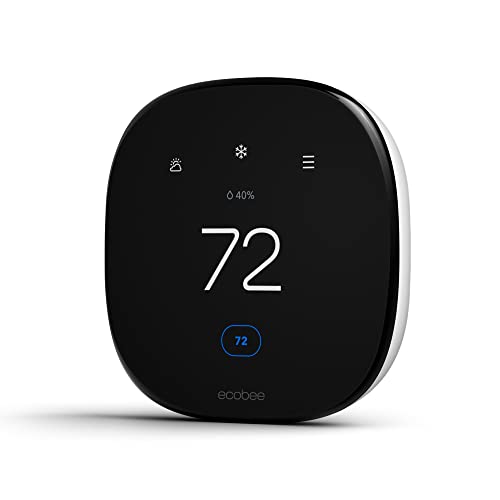
ecobee Smart Thermostat Enhanced

ecobee3 Lite Smart Thermostat (Black)
Taking A Closer Look At The Options
The Sensi Touch 2 arrives as Emerson’s flagship connected unit, pairing a color touchscreen with an explicitly stated privacy promise: your usage data stays out of third-party hands. Setup leans on Bluetooth pairing and the manufacturer’s app, which walks through wiring step by step. A common wire (the low-voltage “C-wire” that supplies constant power to the thermostat) is required, so older homes without one may need a quick adapter or a pro visit before installation.
The companion room sensor (sold separately) reports temperatures back to the thermostat, which means a nursery stays warm while an empty guest room isn’t over-conditioned. ENERGY STAR certification backs the energy-saving claims, and flexible scheduling through the app is straightforward enough for anyone used to setting smartphone reminders.
Practical Pluses
- Stated privacy commitment, with a clear no-sell promise for personal data.
- Touchscreen interface that reads clearly from across a room during evening settings.
- ENERGY STAR certification, with features like usage reports designed to trim heating and cooling costs.
- Optional room sensor support to balance temperatures in trickier multi-level homes.
- App-guided install that maps wires and confirms compatibility before power-up.
Trade Offs
- A common wire is required, so homes without one need a minor wiring step first.
- Room sensors come separately, adding to the total cost.
Who It Suits Best
Privacy-minded homeowners who want a full-color touchscreen and don’t mind confirming a common wire exists before buying.
Look Elsewhere When
You want voice control built directly into the wall unit, in which case the ecobee Smart Thermostat Premium covers that ground without a separate speaker.
The Google Nest Thermostat (Snow) keeps the experience friendly for first-time smart-home adopters, with a mirrored-finish dial and a small display that blends into modern walls. It includes a trim plate to cover paint gaps left by older thermostats and a steel plate for installations over an electrical box, so it slots into a wide range of homes without a drywall patch.
Schedule creation happens through the Google Home app on Android or iPhone, and the unit drops into an energy-saving temperature automatically when nobody’s home. ENERGY STAR certification applies, and the system learns a basic occupancy pattern within the first week or two of use, so you can leave it alone once it gets the rhythm.
The Practical Payoff
- Auto-away mode conserves energy by stepping down heating or cooling when no one is detected.
- Included trim plate covers old paint edges, so installation looks clean.
- Scheduling is fully handled in the Google Home app most people already have on their phone.
- ENERGY STAR certification for documented efficiency gains.
Honest Caveats
- The display is smaller and less informative than the Sensi Touch 2’s full-color screen.
- Advanced sensor balancing requires buying separate Nest Temperature Sensors, as covered later in this list.
Made For
Shoppers new to connected thermostats who already use Google Home and want the lightest possible learning curve.
Consider Something Else When
You’d prefer a touchscreen with on-device menus for guests without the app, in which case the Honeywell Home RTH9585WF offers a much larger color display.
SunTouch’s SunStat ConnectPlus is purpose-built for radiant floor heating, not whole-home forced-air systems, so it earns a different lane than everything else on this list. The 4.3-inch color screen provides manual floor-temperature override right at the wall, and a Wi-Fi connection opens up app control plus home-automation pairing.
Automatic clock setting, current outdoor temperature display, and weather compensation all come baked in, and the unit can shut itself down automatically during warm stretches. That kind of feature set is genuinely useful in a master bathroom where you want warm tile floors at 6 a.m. but no wasted energy during summer afternoons.
What Stands Out
- Designed specifically for radiant electric floor systems, which most thermostats ignore.
- 4.3-inch color display for at-a-glance floor temperature readouts.
- Home automation compatibility with Alexa and Google ecosystems.
- Weather compensation and warm-weather shut-down to avoid unnecessary runtime.
Points To Note
- Not designed for forced-air or heat-pump homes, so it’s a non-starter for most standard setups.
- Installation requires working with low-voltage floor-sensor wiring, which a generalist DIYer may want a specialist to handle.
Best Suited To
Homeowners with electric radiant floor heating in one or two tiled zones who want app control on top of it.
Where Another Pick Suits Better
You need whole-home heating and cooling control, in which case the ecobee3 Lite Smart Thermostat fits standard HVAC far more cleanly.
Feature Snapshot
Honeywell’s RTH9585WF arrives with a customizable color screen that lets the wall unit match your décor, an underrated feature when the thermostat sits on a prominent living-room wall. The included wall plate simplifies retrofit installations and covers the gap left by an older, smaller unit, which matters when the original hole was drilled for a different generation of thermostats.
System compatibility is broad, covering forced air (gas, oil, or electric), hot water, steam, and heat pumps with electric backup. Notably, electric baseboard heat running on 120 to 240 volts is not supported, so check your wiring before assuming it will drop in.
Key Advantages
- Large, customizable color touchscreen that doubles as wall décor.
- Broad HVAC compatibility, covering forced air, hot water, steam, and heat pumps.
- Flexible scheduling, including peak-rate pricing windows for utility programs.
- Wall plate included for retrofit coverage.
Worth Noting
- Not compatible with 120 to 240-volt electric baseboard heating systems.
- Setup benefits from Honeywell’s app, which is more involved than the streamlined Sensi walkthrough.
Right Fit For
Households with mixed-age HVAC equipment who want a colorful, easy-to-read display on a prominent wall.
Reach For A Different Pick When
You specifically need baseboard heat support or voice control baked in, both of which the ecobee Smart Thermostat Premium handles more cleanly.
The ecobee Smart Thermostat Premium is the most feature-dense unit on this list, with built-in Siri and Alexa voice control so a separate smart speaker isn’t required for spoken commands. A bundled SmartSensor targets hot and cold spots by reporting temperatures from the room you actually sit in, which is the long-standing ecobee advantage over single-point thermostats.
Beyond scheduling, the Premium adds an air quality monitor and integrates with smoke alarm and doorbell systems for whole-home awareness. For deep smart-home households, the unit essentially becomes a wall-mounted hub rather than a one-trick controller.
Useful Strengths
- Built-in Siri and Alexa voice control remove the need for a separate speaker on the counter.
- Included SmartSensor addresses the usual problem of one hallway thermostat reading for the whole house.
- Air quality monitoring adds health awareness alongside comfort.
- Smart-home integration with smoke alarm detection and doorbell live view.
Things To Consider
- Highest feature count means the most complex setup, including account linking for voice services.
- Voice and air-quality features depend on stable Wi-Fi and consistent firmware updates.
Whose Shelf It Belongs On
Smart-home power users who want voice, sensors, and air monitoring in one wall-mounted device.
Swap It Out When
You’re on a tighter budget and don’t need built-in voice, in which case the ecobee Smart Thermostat Enhanced delivers the core scheduling experience at a friendlier entry tier.
Quick Facts
This three-pack of Nest Temperature Sensors expands any compatible Nest thermostat into a multi-room system, which matters in homes where the hallway thermostat never reflects the actual bedroom temperature. Each sensor communicates its reading to the main unit, and the system picks a target based on which rooms you tell it to prioritize at different times of day.
Drop one in a baby’s room, one in a home office, and one in a finished basement, then schedule the system to care about whichever room is in use. Bluetooth Low Energy handles communication, so battery life is generally long, but placement matters: avoid direct sunlight and heating vents for accurate readings.
Where It Helps
- Three-sensor bundle covers a typical small home’s priority zones.
- Compatible with Nest Learning Thermostat and Nest Thermostat models.
- Wireless placement up to roughly 50 feet, so no new wiring runs.
- Scheduling prioritizes specific rooms at specific times of day.
Practical Considerations
- Requires a compatible Nest thermostat to function, so it’s not a standalone device.
- Placement affects accuracy, with direct sun and vents commonly skewing readings.
Perfect Match For
Nest thermostat owners who want whole-home comfort across three priority rooms without rewiring.
Not Your Match When
You run an ecobee system, in which case the ecobee SmartSensor 2-Pack is the matching ecosystem accessory.
The ecobee SmartSensor goes beyond temperature reading, using infrared detection to flag whether a room is actually occupied. The thermostat then knows to condition the rooms that matter and skip the ones that don’t, which tends to produce more meaningful savings than a basic temperature-only sensor can deliver.
Wireless range reaches up to about 60 feet in typical homes, so a single 2-pack covers a bedroom and a living area without range issues. Pairing happens inside the ecobee app, and sensors can be assigned to different priorities for daytime versus nighttime schedules.
The Good Stuff
- Occupancy detection, not just temperature, gives smarter prioritization.
- Wireless range up to 60 feet covers most bedrooms and living areas.
- Two-pack is enough to balance a typical small home’s comfort issues.
- Pairs directly with ecobee thermostats for whole-home awareness.
Some Limits To Know
- Requires an existing ecobee thermostat, so it isn’t useful as a standalone purchase.
- Battery replacement is an occasional chore, depending on sensor traffic.
Who Should Grab It
ecobee owners who want their system to react to which rooms are actually being used.
Skip It When
You run a Nest thermostat, where the Google Nest Temperature Sensor 3-Pack is the matching accessory instead.
The original Sensi Touch (ST75) is the predecessor to the Touch 2 reviewed earlier, with the same color-screen body and the same privacy-focused approach from Emerson. In real-world terms, that means a familiar touchscreen feel, a strong data-protection stance, and a top-rated app that guides DIY setup.
The ST75 is the unit many long-time smart-home households already have on the wall, and it remains a sensible pick for anyone replacing an older Sensi unit while keeping their existing app configuration. As with the Touch 2, a common wire is required for installation.
Points In Its Favor
- Color touchscreen reads clearly and matches the Touch 2 aesthetic.
- Strong privacy commitment from Emerson, with a clear third-party data stance.
- DIY-friendly install through the Sensi app, with Bluetooth-assisted pairing.
- Works with Alexa, which most shoppers already have set up.
Room For Improvement
- An older platform than the Touch 2, so newer features may not roll out here.
- Common wire required, same as the Touch 2.
Built With In Mind
Existing Emerson Sensi households and homeowners who prefer a proven platform with the original touchscreen design.
Another Choice May Suit
You’re starting fresh in 2026, in which case the Sensi Touch 2 brings the latest firmware and full SmartSensor support straight out of the box.
Feature Card
The ecobee Smart Thermostat Enhanced sits between the entry-level Lite and the Premium reviewed earlier, picking up occupancy-based adjustments and ecobee’s eco+ optimization suite without the built-in voice control. That positioning makes it a sensible middle pick for shoppers who want smart scheduling without paying for hardware features they won’t use.
It pulls temperature and occupancy data from a paired SmartSensor (sold separately) and works with Apple Watch, so you can nudge the temperature from your wrist. eco+ schedules automatic setbacks when you’re away or asleep, which is the practical day-to-day reason to upgrade from a basic programmable unit.
Standout Benefits
- eco+ features automatically adjust temperatures when you’re away or asleep.
- Works with Apple Watch and major smart-home platforms for flexible control.
- Scheduling suggestions adapt to actual household routines over time.
- Compatible with SmartSensor accessories for room-specific balancing.
Things To Weigh
- No built-in voice assistant, unlike the Premium model.
- SmartSensor comes separately, similar to other ecobee units.
Who Will Love This
Shoppers stepping up from a basic programmable thermostat who want smart optimization without voice hardware.
A Better Fit Elsewhere
You specifically want Siri or Alexa built into the wall, in which case the ecobee Smart Thermostat Premium is the upgrade within the same family.
The ecobee3 Lite is the entry point into the ecobee ecosystem, trading the Premium’s air quality monitor and built-in voice for a lower-priced unit that still handles Wi-Fi scheduling and multi-platform smart-home integration. For most first-time ecobee shoppers, it’s a meaningful upgrade over a basic programmable thermostat.
Voice control arrives through your existing smart speaker rather than the wall unit, and ENERGY STAR certification backs the energy-saving claim. The app pairs with iOS and Android, and a common wire (or the included power extender kit) handles most installations.
Strengths Worth Knowing
- Entry-level ecobee experience at a friendlier price tier.
- Works with Siri, Alexa, and Google Assistant through existing smart speakers.
- ENERGY STAR certification with documented energy savings potential.
- App-based scheduling accessible from iOS or Android.
Honest Caveats
- No built-in voice or air quality monitor, unlike the Premium.
- Lacks the occupancy-sensing capabilities of newer ecobee models.
Best Suited To
First-time smart-thermostat shoppers who want ecobee scheduling without paying for premium-tier features.
Look Elsewhere When
You want the newest ecobee platform and SmartSensor support out of the box, in which case the ecobee Smart Thermostat Enhanced is the more current alternative.
What To Weigh Before Choosing A Wifi Smart Thermostat
Compatibility is the first checkpoint. Most modern HVAC systems work with these units, but electric baseboard heat (120 to 240 volts) rules out the Honeywell Home RTH9585WF, and whole-home radiant floor heating is a job for the SunTouch SunStat ConnectPlus rather than a forced-air unit.
A common wire (the low-voltage “C-wire” that supplies constant power) is required for several picks on this list. Homes without one usually need a small adapter or a quick electrician visit before installation. The Google Nest Thermostat and ecobee Lite both ship with helpful workarounds if you’d rather skip that step.
Ecosystem fit matters more than people expect. Nest thermostat households benefit from the Nest Temperature Sensor 3-Pack, while ecobee shoppers should look at the ecobee SmartSensor 2-Pack. Buying a sensor from the wrong family leaves you with a paperweight.
Feature expectations should match the household. Built-in voice and air monitoring justify the Premium tier for some shoppers, while others find the Lite or Enhanced more than enough. Adding room sensors later, if needed, often beats paying for premium hardware upfront.
What Separates A Better Pick From A Risky One
Common Shopping Slip Ups
The most common mistake is assuming any thermostat will work in any home, then discovering a missing common wire on install day. Check your wiring before buying, and look at compatibility lists for baseboard heat or radiant floor systems, where many otherwise excellent units simply don’t apply. Picking the wrong ecosystem sensor is another quiet trap, so confirm whether you’re shopping Nest or ecobee accessories before adding a multi-pack.
What The Higher Tier Buys
Stepping up from the Lite to the Enhanced or Premium tiers typically adds occupancy detection, built-in voice control, and air quality monitoring. For households that have already invested in a smart speaker, the lower tiers cover most comfort needs. The upgrade pays off more in busy homes with uneven temperatures or in households that genuinely use voice control throughout the day, where convenience adds up fast.
Frequently Asked Questions
Do Wifi Smart Thermostats Need A Common Wire?
Most modern connected thermostats need a common wire (called a C-wire) for continuous power. A few models ship with adapters or workarounds, but checking your existing wiring before buying prevents a frustrating install day.
Can These Thermostats Control Electric Baseboard Heating?
Most can’t. The Honeywell Home RTH9585WF explicitly excludes 120 to 240-volt baseboard systems, and similar limits apply to several others on this list. Electric baseboard heat typically needs a line-voltage-specific thermostat designed for that load.
How Do Room Sensors Actually Help?
A sensor reports the temperature from the room where it sits, so the thermostat stops guessing based on a hallway reading. That’s why the Nest Temperature Sensor 3-Pack and ecobee SmartSensor 2-Pack make such a difference in multi-room homes with hot and cold spots.
Will A Smart Thermostat Actually Lower Energy Bills?
ENERGY STAR-certified models can reduce heating and cooling costs when schedules match real usage, with savings depending on climate and habits. The biggest gains come from automatic setbacks when nobody’s home, which most of these picks handle on their own.
Do I Need An Internet Connection To Use These?
Wi-Fi unlocks app control, scheduling, and voice integration, but basic on-wall temperature changes still work without an active connection. Some advanced features, like ecobee’s eco+ adjustments, require cloud connectivity to function fully.
Closing Thoughts
The right pick depends on your HVAC setup, your existing smart-home ecosystem, and how much you want the thermostat to do. Match the platform to your wiring first, then layer on sensors or premium features as your needs grow. Any of the ten options here will bring more comfort and control than a basic wall unit, so trust the rest of the decision to your own home’s quirks.