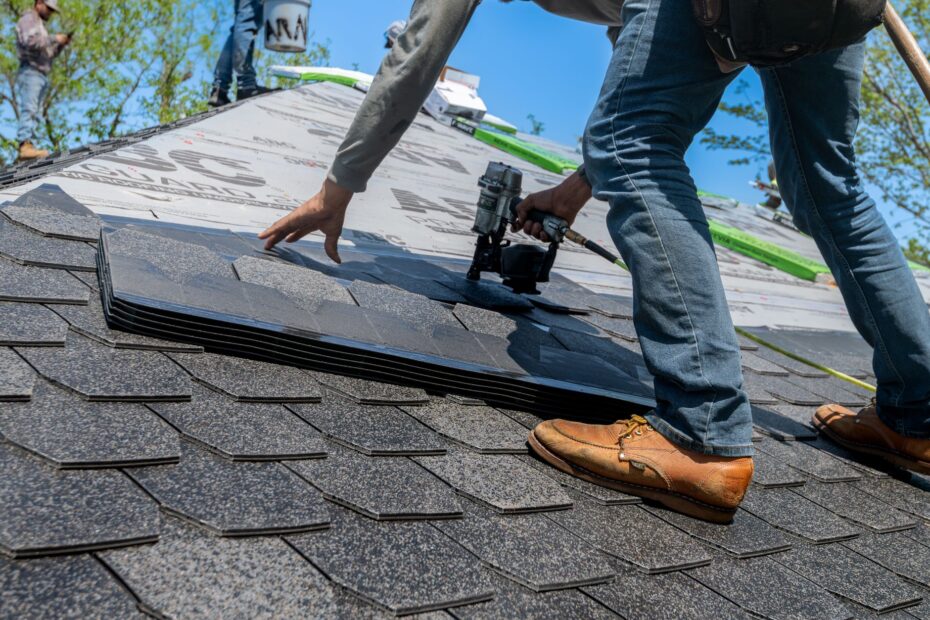
Asphalt shingles vs. metal roofing is a roof-covering comparison between lower opening expense and simpler repairs on one side, and longer roof lifespan with stronger weather performance on the other. Your climate, roof shape, budget, and expected years in the home determine which material fits your situation.
This comparison covers material types, roof replacement cost, measurements, climate exposure, maintenance, installation details, insurance, and resale considerations for homeowners planning a replacement.
Roofing Materials Use Different Systems
Asphalt shingles use overlapping individual units, while metal roofing uses panels, shingles, tiles, or shakes secured as a system. That basic difference affects your installation method, repair work, appearance, and service interval.
Three-tab shingles are flat strips with repeating cutouts. Architectural shingles use laminated layers that create a thicker profile and stronger wind resistance. Your shingle selection affects weight, appearance, expected roof lifespan, and the material listed in an estimate.
Metal roofing includes standing seam panels, exposed-fastener panels, metal shingles, metal tiles, and metal shakes. A standing seam metal roof uses raised seams and concealed clips across much of the roof field, so labor requires more layout work and detail work.
| Roofing category | Common formats | Core strength | Common trade-off |
|---|---|---|---|
| Asphalt shingles | Three-tab, architectural, designer laminate | Lower opening expense and straightforward repairs | Shorter replacement interval |
| Metal roofing | Standing seam, exposed-fastener panels, metal shingles | Long service life and weather resistance | Higher installation expense and specialized labor |
Your material choice is not a universal verdict. Roof geometry, local storms, curb appeal, available funds, and your ownership plan all change the value of asphalt shingles and metal roofing.
Those broader trade-offs become actionable when labor, tear-off, and roof complexity enter the estimate.
Installation Scope Shapes Roof Replacement Cost
Material price is only one line in a roof replacement cost estimate. Tear-off, disposal, decking repairs, underlayment, flashings, ridge work, ventilation, steep-pitch labor, and roof installation labor can shift the total sharply.
A low quote can leave out work that your roof still needs. Ask for separate line items for tear-off, decking, flashings, ventilation, and disposal so you can see where two estimates differ.
Installed totals include labor and detail work
Metal panels cost more than standard architectural shingles, and standing seam requires careful layout, clips, edge details, and trim work. Asphalt roofing has a wider installer pool, so your labor charge can be lower on a simple gable roof.
Your asphalt shingles vs metal roof cost comparison should use matching scopes. A metal estimate that includes new flashings and a shingle estimate that reuses old flashings do not show a fair material difference.
| Cost factor | Asphalt shingles | Metal roofing |
|---|---|---|
| Initial installation | Lower for standard architectural products | Higher, especially standing seam |
| Repair approach | Single damaged units can be swapped | Panels and trim need system-specific work |
| Replacement cycles | One or more cycles during long ownership | Fewer cycles under sound installation |
| Cooling effect | Depends on color and rated surface | Reflective coatings can reduce solar gain |
Long ownership changes the value calculation
A 25-year ownership period could include one architectural shingle installation plus repairs. A metal system rated for 40 to 70 years can still have substantial service life left when you sell the home.
Your long-term spending also includes storm repairs, cooling energy use, financing charges, and resale timing. Metal does not repay every homeowner at the same rate, especially with a planned move within five years.
Ask each contractor to separate tear-off, decking, flashings, ventilation, and disposal from the roof covering itself. Your comparison becomes clearer once every scope line is visible.
House Size Does Not Equal Roof Size
A 2,000-square-foot ranch can have roof area near 2,300 square feet after pitch and overhangs enter the measurement. A garage, dormers, valleys, or a rear addition can raise your material quantity again.
Roofers price coverage in a roofing square, equal to 100 square feet of roof surface. A 2,400-square-foot roof contains 24 squares before waste, not 20 squares based on indoor floor area.
Roof shape adds waste and labor
Simple gables create longer, cleaner runs with less cutting. Hips, valleys, skylights, chimneys, and intersecting additions leave smaller offcuts, so waste can rise from about 5 percent on a plain layout toward 15 percent or more on a cut-up roof.
| Example house feature | Effect on roof area or labor | Estimate consequence |
|---|---|---|
| 6:12 roof pitch | Surface area exceeds the footprint | More covering and steeper labor |
| Two dormers | Extra valleys and wall flashings | More cuts and leak-prone details |
| Attached garage | Adds a separate roof plane | More squares than living area suggests |
| Old shingle layers | Requires removal or a code review | Disposal and deck inspection charges |
Your 2,000-square-foot home needs a field measurement before a useful metal-roof figure exists. Panel profile, local wages, tear-off needs, deck condition, and flashing details at pipes and walls shape the installed total.
Roof Lifespan and Weather Exposure Drive Long-Term Value
Architectural asphalt shingles tend to last about 15 to 30 years, based on sun exposure, ventilation, wind, and workmanship. Properly installed metal roofs commonly last 40 to 70 years or longer, though salt air and finish damage can shorten that span.
That difference matters during a long stay in your house. A durable roof covering still fails around poorly detailed valleys, wall transitions, chimneys, and pipe penetrations.
Wind and hail resistance depend on the assembly
Wind resistance comes from fastening, deck attachment, edge metal, underlayment, and the roof covering working together. Your hurricane-area roof needs a documented assembly rating rather than a broad claim that metal or shingles are storm-proof.
Metal sheds snow readily and performs well during fire exposure. Asphalt can lose granules, crack, lift, or age faster under harsh sun. Hail can dent thin metal panels, while the same impact can fracture shingle mats or knock granules loose.
Coastal homes need corrosion-resistant panels, compatible fasteners, and separation between dissimilar metals. Your contractor should name the panel coating and fastener material rather than writing only “metal roof” on the proposal.
Rain and heat create different material demands
Heavy rain exposes weak flashing and drainage details on either roof type. Water follows valleys, sidewalls, pipe boots, and skylights, so your roof installation quality matters as much as the visible covering.
A reflective metal surface sends more solar heat away than dark asphalt shingles. Your metal roof vs shingles in hot climate result still depends on attic insulation, roof color, duct location, and ventilation.
Attic Layers Control Heat, Noise, and Maintenance
Rain on metal is not automatically louder indoors. Solid roof decking, attic insulation, and finished ceilings muffle impact sound, while loose trim or poorly secured panels can create rattles and expansion noise.
Your metal roof vs shingles energy efficiency result depends on more than the roof surface. A light-colored cool-rated shingle with deep attic insulation can narrow the cooling gap with reflective metal.
Asphalt repairs are more direct because a roofer can lift surrounding courses and replace one damaged shingle. Metal repairs need matching panels, flashings, clips, fasteners, and finish color, which becomes harder after a product line changes.
That repair complexity makes precise installation especially important, since small mistakes can become expensive to correct.
- Check attic insulation. Your insulation depth has a larger effect on indoor heat and rain sound than the roof covering alone.
- Inspect penetrations yearly. Pipe boots, skylights, and chimney flashings deserve attention before a small leak stains drywall.
- Clear roof debris. Wet leaves hold moisture against roof surfaces and can block gutters around either material.
- Match repair materials. Your replacement shingle or panel should match the existing profile, color, and fastening method.
Metal Installation Errors Create the Largest Risks
A panel set slightly out of line becomes more visible with every adjacent panel. Metal’s biggest drawback is the expense of correcting layout errors, restricted expansion movement, poor flashing, weak penetrations, or flawed transitions.
Standing-seam panels expand and contract during temperature swings. Clips need room for movement, while flashings at chimneys, walls, and valleys need to stay watertight without pinning the panel in place.
Surface defects reveal material and workmanship limits
Oil canning is visible waviness in flat metal panels. It does not always harm weather performance, but your eye can catch it in low-angle sunlight, especially across wide standing-seam pans.
Large hail can dent metal, scratched finishes can expose the surface, and incompatible metal contact points can corrode. Exposed-fastener panels also need screw checks because washers age and fasteners can back out.
Metal installed over old shingles is not an automatic shortcut. Uneven layers can telegraph through panels and hide damaged roof decking.
Overlay work needs a site-specific review
Metal can go over existing shingles only where local rules, manufacturer instructions, roof weight, deck condition, moisture control, and roof geometry permit the work. Tear-off is the safer route with soft decking, leaks, or uneven existing layers.
Your installer should explain how a discontinued panel profile would be repaired years later. A spare panel stored in a dry garage can solve a future matching problem that paint touch-up cannot fully hide.
Climate and Ownership Plans Point Toward Different Choices
A 30-year ownership plan favors metal more strongly than a three-year resale plan. Your final choice should fit the house, regional exposure, visual style, and funds available for the opening installation.
| Your situation | Stronger fit | Reason |
|---|---|---|
| Limited replacement budget | Architectural asphalt shingles | Lower installed expense and wide repair access |
| Long-term ownership | Metal roofing | Longer service life can reduce future replacement cycles |
| Hot, sunny climate | Reflective metal or cool-rated shingles | Surface color and attic design affect cooling demand |
| Hurricane-prone coast | Rated metal or rated shingles | Assembly wind uplift rating matters more than material name |
| Hail zone | Material selected for local impact exposure | Metal can dent; shingles can lose granules or fracture |
| Architecturally prominent home | Metal shingles or standing seam | Profiles can create a distinctive roofline |
Your metal roof vs shingles insurance terms vary by insurer, deductible, location, fire rating, and wind rating. Ask your insurer for written terms before signing a contract because a premium reduction is never automatic.
That vs shingles resale value depends on local expectations. Metal can appeal where durability and modern lines matter, while asphalt can fit nearby homes and keep a listing within neighborhood norms.
Metal contains recycled content and can enter recycling streams after removal. Worn asphalt shingles are petroleum-based and are frequently discarded, which can matter to your material choice.
Estimate details protect your decision
- Name the product. Your quote should list shingle grade or metal profile, gauge, finish, and color.
- List underlayment. Specify membrane type, ice-barrier locations, and attachment method beneath your roof covering.
- Price deck repairs. Set a per-sheet rate for damaged roof decking instead of accepting an open-ended charge.
- Spell out flashings. Include chimneys, walls, valleys, skylights, pipes, and edge metal in writing.
- State storm ratings. Your proposal should identify wind and hail classifications suited to local exposure.
- Check crew experience. Ask for proof that the crew has installed your chosen roofing profile on similar roof shapes.
Final Thoughts
Asphalt shingles fit your project where opening expense, familiar appearance, and direct repairs lead the decision. Metal earns its higher opening charge through longer service life, reflectivity, and weather performance, but only with exact installation.
Put your measured roof area, climate risks, ownership horizon, and complete estimate scope on the same sheet before choosing. That side-by-side review exposes the trade-off that matters most for your home.
FAQ
What is the difference between asphalt shingles and metal roofing?
Asphalt shingles use layered individual units that a roofer can replace one at a time. Metal roofing uses panels or formed metal units with system-specific clips, fasteners, seams, and flashing details. Your choice comes down to opening expense, repair method, weather exposure, appearance, and expected ownership length.
Is a metal roof better than asphalt shingles for my home?
Metal fits your home where long service life, snow shedding, reflective surfaces, and high-wind assembly ratings matter. Asphalt fits homes where lower opening expense, broad style selection, and direct single-shingle repairs matter more than a longer replacement interval.
Is it better to have a shingle or metal roof?
Metal suits your house where you expect decades of ownership, face high wind, snow, fire exposure, or intense sun, and can fund specialized installation. Asphalt suits your project where lower opening expense, familiar styles, and easier individual repairs matter more than a longer service interval.
What is the biggest problem with metal roofs?
Installation errors are the main concern with metal roofs. Your panels need room for thermal movement, exact flashing at penetrations, compatible fasteners, and straight layout; correcting mistakes after completion can involve removing long panel runs and custom trim.
How much does a metal roof cost for a 2,000-square-foot home?
A 2,000-square-foot house needs a roof measurement before any useful price range exists, because its roof surface can cover 2,300 square feet or more. Your panel type, pitch, waste, tear-off, decking repairs, local labor, and flashing count shape the installed total.
Is it cheaper to install a metal roof or asphalt shingles?
On most homes, standing-seam metal panels cost more to install than asphalt shingles. Your long-run spending can shift toward metal during extended ownership because asphalt can need another replacement cycle while the metal system remains serviceable.