Shopping for a new thermostat sounds simple until you realize how many shapes a category takes. Some folks want a learning brain that figures out the routine for them. Others just need a clean wall plate to hide the paint scars left behind by a 1990s Honeywell. A few need a sensor that finally cools the upstairs bedroom without freezing out the living room.
This list covers ten products that each solve a real piece of that puzzle, from full smart thermostats down to the small accessories and water heater parts that often get overlooked. You’ll find premium picks, budget-friendly options, sensors, wall plates, and a learning thermostat bundled with a room sensor. The goal is matching your actual setup, not chasing the flashiest model on the shelf.
The Choices Worth Comparing

Sensi Thermostat Wall Plate, White, F61-2663

Petrichor Nest Thermostat Wall Plate (Snow)

Google Nest Temperature Sensor (2nd Gen)

Heagstat Non-Programmable Thermostat (1 Heat/1 Cool)

ecobee Smart Thermostat Premium

Reliance 9000507-045 Lower Electric Thermostat

ecobee SmartSensor 2-Pack
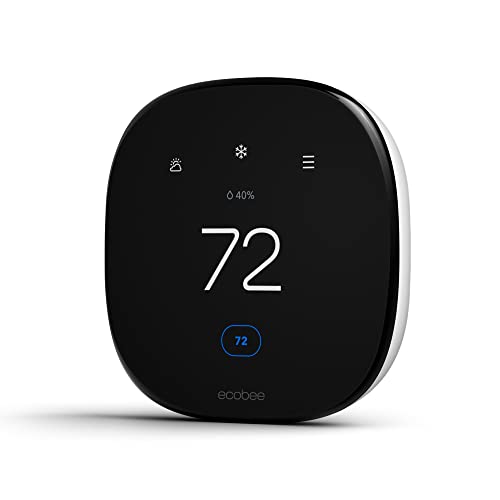
ecobee Smart Thermostat Enhanced

Google Nest Learning Thermostat (4th Gen) + Sensor (Obsidian)

Google Nest Learning Thermostat (4th Gen) + Sensor (Silver)
The Strengths Of Each Pick
Pulling an old thermostat off the wall rarely leaves a pretty surface behind, and that’s exactly the problem this White-Rodders wall plate solves. It’s a decorative cover sized to slide behind the Sensi Wi-Fi thermostat and mask whatever mess the previous unit left behind, no spackle or paint required.
If your old thermostat was wider than the Sensi, the mismatched footprint usually shows as a ring of bare drywall or faded paint. This plate sits flush against the wall and carries the same soft white tone as the Sensi body, so the whole arrangement reads as one clean unit rather than a retrofit.
Strong Points
- Color-matched to Sensi Wi-Fi thermostats for a unified look
- Generous 6.75 by 4.5 inch footprint covers most legacy paint rings
- Soft-curved front profile mirrors the thermostat’s design language
- Saves a Saturday afternoon of patching and repainting
Worth Noting
- Only fits Sensi Wi-Fi models ST55 and 1F87U-42WF
- Won’t hide extra-large openings from much older rectangular thermostats
Key Product Details
Whose Shelf It Belongs On
Sensi Wi-Fi owners replacing a wider legacy thermostat who want a clean wall without a full repaint.
Look Elsewhere When
You run a different thermostat brand, where the Petrichor Nest Thermostat Wall Plate is a better match for 2020 Nest models.
Like the Sensi plate above, this is purely a cosmetic fix, but aimed at a different thermostat family. Petrichor builds a trim kit sized for the 2020 Google Nest Thermostat, covering the gap left when you swap a chunky old unit for the slim Nest disc.
The Snow colorway sits flush with the wall and resists fingerprints, which matters more than it sounds in a hallway where everyone walks past at shoulder height. Installation is a single screw plate behind the thermostat base, no rewiring, no app setup.
Good Reasons To Consider
- Custom-fit for 2020 Nest Thermostat models GA01334-US, GA02082-US, GA02081-US, and GA02083-US
- Fingerprint-resistant Snow finish stays clean in busy hallways
- Large enough to mask holes from prior rectangular thermostats
- No tools beyond a screwdriver for most installations
Trade-Offs To Consider
- Not compatible with older Nest Learning Thermostat generations
- Single-color option means limited matching if your walls are warm-toned
Best Suited To
2020 Nest Thermostat owners dealing with unsightly wall openings after a recent upgrade.
A Better Fit Elsewhere
You own a Sensi Wi-Fi unit rather than a Nest, where the White-Rodgers F61-2663 plate handles the same wall-repair job.
Most whole-home thermostats only read the hallway where the thermostat happens to live, which explains why the back bedroom always feels three degrees off. The second-generation Nest Temperature Sensor is a battery-powered remote that reports back to a compatible Nest thermostat and steers comfort toward the room you actually sleep in.
It works with the Nest Learning Thermostat 3rd and 4th generation, plus the Nest Thermostat E. You can pair several sensors and prioritize one per schedule block, so the kitchen matters at dinner and the nursery matters at night.
The Value In It
- Targets temperature to the room that matters most in each part of the day
- Wireless, battery-powered design installs anywhere without running wire
- Compatible with three Nest thermostat generations for flexible pairing
- Pairs cleanly with schedules so priorities shift automatically
- Porcelain white finish blends into most rooms without drawing attention
A Few Limitations
- Requires a compatible Nest thermostat to function at all
- Reports temperature only, no humidity or motion data
Made For
Households with multiple Nest thermostats or persistent hot and cold spots in rooms far from the main thermostat.
Consider Something Else When
You run an ecobee system, where the ecobee SmartSensor 2-Pack covers the same remote-sensor role inside that ecosystem.
Not every home needs a learning thermostat, and renters especially benefit from something simple that just works. The Heagstat H1H1C is a non-programmable thermostat aimed at conventional single-stage forced-air systems with two to five wires, and it cuts the cost of running a furnace and AC without Wi-Fi setup, app logins, or firmware updates.
The white backlight keeps the screen readable at night, and the body fits a standard wall opening. For an older home with a basic HVAC system, this is often the practical move.
Where It Delivers
- Compatible with 24VAC conventional single-stage 1H/1C systems, including gas, oil, and electric furnaces
- No Wi-Fi pairing or app dependency, fewer things to break over time
- White backlit display is easy to read in dark hallways
- Lower complexity means fewer wiring mistakes during install
Some Limits To Know
- Not compatible with heat pump or multi-stage systems
- Six to eight wire configurations are not supported
Key Product Details
Who It Suits Best
Owners of basic forced-air homes who want a straightforward thermostat without a smartphone app.
Swap It Out When
You want scheduling and remote control, where the ecobee Smart Thermostat Enhanced delivers app-driven comfort on a similar budget footprint.
The Premium sits at the top of the ecobee line and earns that spot by bundling a lot into one wall unit. You get Wi-Fi control, a built-in air quality monitor, smoke alarm detection that pings your phone, and a metal body that feels a step above plastic. Geofencing (using your phone’s location to know when you’re home or away) handles occupancy automatically.
An included SmartSensor extends that awareness into other rooms, which solves the same problem the Nest Temperature Sensor addresses. Compared to the Heagstat above, this is a different category entirely: more intelligence, more integration, more wiring to think about.
What Makes Sense
- Built-in air quality monitor adds a layer most thermostats skip
- Geofencing adjusts temperature when you leave or arrive home
- Smoke alarm detection sends alerts through the app for extra safety visibility
- Included SmartSensor eliminates hot and cold spots in priority rooms
- Compatible with Siri, Alexa, and Google Assistant for flexible voice control
Practical Considerations
- Higher cost than entry-level smart thermostats
- Some features depend on an active ecobee account and cloud connectivity
Who Should Grab It
Tech-heavy households that want one wall device to monitor air quality, run the HVAC, and tie into voice assistants.
Where A Sibling Pick Shines
You’d rather spend less and skip the air quality sensor, where the ecobee Smart Thermostat Enhanced covers scheduling on a tighter budget.
This one lives in a completely different room of the house. The Reliance 9000507-045 is a lower-element thermostat for electric water heaters, designed to drop in where an old unit has failed. It mounts at the lower position on the tank and regulates heating for the bottom element.
Unlike the smart thermostats in this list, there’s no Wi-Fi or scheduling to think about. You swap it, restore power, and let the tank do its job. Owners commonly report checking the model number on the existing thermostat before ordering to confirm a match.
Useful Strengths
- Drop-in replacement for many residential electric water heater setups
- Lower-element position matches standard dual-element tank wiring
- Simple mechanical design with fewer failure points than smart modules
Factors To Consider
- Specific to electric water heaters, not central HVAC systems
- Confirming the model number against the existing part is essential before ordering
The Right Fit
DIYers replacing a failed lower thermostat on a standard electric water heater tank.
Reach For A Different Pick When
You’re shopping for a wall thermostat instead, where the ecobee Smart Thermostat Premium is the natural upgrade path.
Where the Nest Temperature Sensor focuses on temperature alone, the ecobee SmartSensor pulls double duty. It detects both temperature and occupancy through infrared, then nudges the paired ecobee thermostat to prioritize the room where someone is actually sitting.
Wireless communication from up to 60 feet means most homes can cover upstairs, downstairs, and a finished basement without signal struggles. Two sensors in one box is the most common starting point.
Strengths Worth Knowing
- Occupancy detection through infrared adds presence-aware comfort
- Up to 60-foot wireless range covers most floor plans
- Two-pack configuration solves two rooms at once
- Integrates seamlessly with existing ecobee smart thermostats
Where It Is Less Suited
- Only works with ecobee thermostats, no Nest compatibility
- Battery replacement enters the picture every couple of years in heavy-use rooms
Perfect Match For
ecobee households who want their thermostat to follow family members between rooms.
Not Your Match When
You run a Nest system instead, where the Google Nest Temperature Sensor is the equivalent add-on.
The Enhanced model is the lower rung of ecobee’s current lineup, and for many homes it’s the smarter buy over the Premium above. You still get the scheduling engine, the eco+ features that automatically adjust temperature when you’re away or asleep, and compatibility with Apple Watch plus major smart home platforms.
The trade-off shows up in what’s missing: no built-in air quality monitor, no smoke detection. For households that just want a learning-style thermostat without the extras, this lands in the practical sweet spot.
Notable Upsides
- eco+ features automatically turn temperatures down when you’re away or asleep
- Schedule suggestions adapt to your lifestyle over time
- Works with Apple Watch, Apple HomeKit, Alexa, and Google Assistant
- Lower price point than the Premium while keeping core scheduling features
Potential Compromises
- No built-in air quality monitoring like the Premium offers
- SmartSensor sold separately if you want remote room data
Who Will Love This
First-time smart thermostat owners who want app control and scheduling without paying for extras they won’t use.
Another Choice May Suit
You want a sensor bundle from day one, where the Google Nest Learning Thermostat 4th Gen with Temperature Sensor ships with one already in the box.
The fourth-generation Nest Learning Thermostat is the most advanced thermostat Google has shipped. It learns the temperatures you prefer, at the times you prefer them, and adjusts the schedule as your routine shifts across weeks and seasons. A 2nd-generation Nest Temperature Sensor ships in the box, so remote-room awareness is part of the deal from day one.
The Obsidian finish is a near-black with subtle depth, which works well on darker walls or modern interiors. Compared to the ecobee Premium above, this leans more into pure learning behavior and less into auxiliary sensors like air quality monitoring.
Well-Handled Touches
- Adaptive learning tunes itself to your schedule over time
- Bundle includes a 2nd-gen Nest Temperature Sensor out of the box
- Helps monitor HVAC system health for smoother long-term operation
- Obsidian finish blends into darker or contemporary wall palettes
Things That May Matter
- Learning behavior takes a few weeks to settle, patience required at first
- Obsidian color may feel heavy against light-colored walls
Key Product Details
Built With In Mind
Routine-driven households willing to give the thermostat a couple of weeks to learn their patterns.
Where Another Pick Suits Better
Your walls lean light or warm-toned, where the Silver variant below matches more decor styles.
Functionally identical to the Obsidian version above, this Silver variant simply trades the dark finish for a brighter, more neutral one. You still get the same learning engine, the same bundled 2nd-gen Temperature Sensor, and the same system monitoring features.
The Silver face pairs naturally with white trim, light gray walls, or kitchens with stainless hardware. If you’ve ever held two finishes up against a paint swatch, you know how much that color decision can swing the final look.
Real-World Strengths
- Same learning thermostat engine as the Obsidian model
- Silver finish complements light walls and contemporary kitchens
- Bundled sensor supports multi-room comfort from day one
- Tracks HVAC system health alongside temperature control
Small Caveats
- Same learning curve as the Obsidian sibling, expect a setup window
- Fingerprints show more visibly on bright metal finishes
Feature Snapshot
Who Will Love This
Homeowners who want the Nest learning experience in a finish that suits lighter interior palettes.
Skip It When
You’d prefer a darker statement on the wall, where the Obsidian model carries the same engine with a bolder presence.
Picking The Right Thermostat For Your Home
Compatibility with your existing system is the first filter. Count the wires at your current thermostat before falling in love with a smart model. Most conventional systems use 2 to 5 wires, while heat pumps and multi-stage setups often need 6 to 8. The Heagstat above is a clean fit for the simpler group, while ecobee and Nest handle the more complex configurations.
Next, think about how you actually live. Schedulers who tweak temperatures daily benefit from learning thermostats like the Nest 4th Gen. Set-and-forget households often do fine with a non-programmable unit or a mid-tier model like the ecobee Enhanced. Remote sensors earn their keep in homes with stubborn hot and cold spots, especially multi-story layouts where the hallway thermostat can’t read the upstairs bedroom.
Connectivity preferences matter too. Voice assistant integration is standard on ecobee and Nest, while a basic Heagstat keeps things offline. If you rent, confirm the install doesn’t require a C-wire (a common wire that supplies continuous power to smart thermostats), since some older apartments lack one.
Key Considerations Across These Picks
Common Shopping Slip Ups
The biggest mistake is buying a thermostat before checking the wire count. A beautiful learning thermostat won’t power up on a 2-wire system without a workaround. The second slip is overlooking whether your HVAC is conventional or heat pump; the Heagstat covers the first, not the second. Always confirm compatibility, count your wires, and check the breaker before ordering.
Where The Extra Money Goes
The jump from a basic non-programmable thermostat to a learning smart model pays for sensors, Wi-Fi radios, scheduling software, and app ecosystems. Premium tiers like the ecobee Smart Thermostat Premium add air quality monitoring and smoke detection, useful in homes where indoor air matters. For most households, the Enhanced tier delivers the smart-thermostat experience without paying for extras you may not need.
Frequently Asked Questions
Do smart thermostats work without Wi-Fi?
Yes, most can still control your heating and cooling manually without a network connection. You lose app control, scheduling, and voice assistant features, but the basic setpoint works fine at the wall.
Will a new thermostat save money on energy bills?
Smart thermostats with scheduling and occupancy detection commonly reduce heating and cooling run time, especially in homes with predictable routines. Savings depend heavily on your existing system and how often you adjust temperatures manually.
Are wall plates necessary if I’m swapping thermostats?
Not always, but they save significant patching and repainting when the new thermostat has a smaller footprint than the old one. The Sensi and Petrichor plates handle the most common size mismatches.
Can I install these thermostats myself?
Most homeowners handle basic swaps with a screwdriver and the included instructions. Heat pump wiring, C-wire additions, and complex multi-stage systems are worth handing to a professional.
How long do remote sensors last?
Battery-powered sensors like the Nest Temperature Sensor and ecobee SmartSensor typically run for one to three years on a set of batteries. Owners commonly report replacing them every couple of years in heavy-traffic rooms.
Closing Remarks
The right thermostat depends less on feature count and more on how your home is wired and how your family actually moves through it. Start with compatibility, then match the smart features to your daily habits, and you’ll land on a model that earns its place on the wall.