Smart hubs turn a handful of separate smart gadgets into one responsive system you can actually live with. Whether you want hands-free lighting, climate tracking in a wine cellar, or a bedside speaker that doubles as a snooze button, the right hub keeps everything talking without fuss. The picks below cover voice assistants, multi-protocol hubs, dimmers, and sensors, so your home ends up running on your terms.
The Essentials At A Glance

Echo Dot 5th Gen with Iron Man Stand

Mission Cables Stand for Echo Spot 2024

YoLink Temp & Humidity Sensor 2-Pack + Hub

Kasa Smart Light Switch HS200

Kasa Smart Switch 2-Gang HS200-2

Kasa Smart Dimmer Switch HS220P3

Shelly Plus RGBW PM 2-Pack

The Details Behind The Selections
The Echo Dot 5th Gen bundle pairs a compact voice assistant with a themed Iron Man stand, giving your nightstand a small character without much footprint. Audio is noticeably fuller than older Dot generations, so music in a kitchen or bedroom carries better without needing a separate speaker.
Alexa handles the usual jobs: timers, weather, smart home control, and streaming from major services via Bluetooth or built-in skills. A tap on top snoozes an alarm, which is genuinely useful for anyone who hits the bedside button reflexively.
A Few Strong Suits
- Clearer vocals and deeper bass than prior Dot generations, making it solid for casual music listening.
- Built-in Alexa handles timers, weather, and smart home routines hands-free.
- Bluetooth and major streaming service support for flexible playback.
- Tap-to-snooze on top is genuinely handy for morning routines.
Things To Consider
- Sound output is still room-sized, not party-sized.
- Some smart home skills require extra setup through the Alexa app.
Who It Suits Best
A first-time smart home shopper who wants a friendly, low-effort bedside assistant with a little personality from the Iron Man stand.
Where Another Pick Suits Better
Hardcore lighting enthusiasts building out whole-home dimming should look at the Lutron Caseta Smart Hub instead.
The Mission Cables stand turns the Echo Spot into more than a clock. Two USB-C ports and one USB-A port sit at the back, letting you top off a phone, tablet, or e-reader overnight without adding a bulky power strip.
Setup is genuinely tool-free, with a simple jumper cable connecting the Spot to the base. The neutral color options, charcoal and glacier white, blend into most bedroom or home office decor without much fuss.
Notable Upsides
- Adds 1.5A charging per port for phones, tablets, and other small USB devices.
- Tool-free setup with the included jumper cable.
- Two color options that blend into typical bedroom or office setups.
Points To Note
- Designed specifically for the Echo Spot 2024, so it will not retrofit older Echo devices.
- Charging speeds are fine for overnight top-ups, not fast-charging a tablet mid-day.
Right Fit For
Anyone who already owns the Echo Spot 2024 and wants a tidier nightstand with built-in charging.
Swap It Out When
People who want a full hub with broader smart home support should consider the Aqara Smart Home Hub M3 instead.
The YoLink sensor set leans on LoRa, a long-range, low-power radio that pushes signals much farther than typical Wi-Fi sensors. In practice that means a sensor parked in a basement, detached garage, or metal-walled outbuilding still pings the hub reliably.
Battery life stretches to roughly two years on a single set of cells, so you set them up and largely forget about them. Alerts can fire through the app, email, or SMS, which is helpful when a wine collection or a nursery climate drifts out of range.
A Favorable Mix
- LoRa signal reaches up to a quarter mile in open air, far past typical Wi-Fi range.
- Around two years of battery life means low maintenance.
- Email and SMS alerts work without you needing to keep the app open.
Honest Caveats
- Designed for indoor monitoring, not outdoor weather exposure.
- Setup depends on the YoLink ecosystem, so it is not a drop-in for other smart home platforms.
Key Product Details
Built With In Mind
Cellar owners, greenhouse hobbyists, and pet households that need reliable climate monitoring in spots Wi-Fi struggles to reach.
Skip It When
Shoppers wanting general lighting and voice control should consider the Echo Dot 5th Gen with Iron Man Stand instead.
The HS200 is a single-pole smart switch that swaps in for a standard wall switch and connects directly to your Wi-Fi through the Kasa app. Schedules, countdowns, and remote on/off all live in that app, so a forgotten porch light or bedroom lamp can be handled from anywhere.
It works as a basic on/off control, with no dimming or fancy presets. For most rooms that just need reliable smart switching, that is more than enough.
Where It Delivers
- Replaces a standard single-pole switch with reliable app and voice control.
- Schedules and timers automate daily lighting patterns without a separate hub.
- Works with major voice assistants through the Kasa app.
Worth Noting
- Requires a neutral wire in the wall box, which some older homes lack.
- Single-pole only, so it cannot replace three-way switches without extra wiring.
Perfect Match For
DIY-minded homeowners with neutral wiring who want a no-fuss smart switch for everyday rooms.
Look Elsewhere When
Anyone needing dimming should step up to the Kasa Smart Dimmer Switch HS220P3.
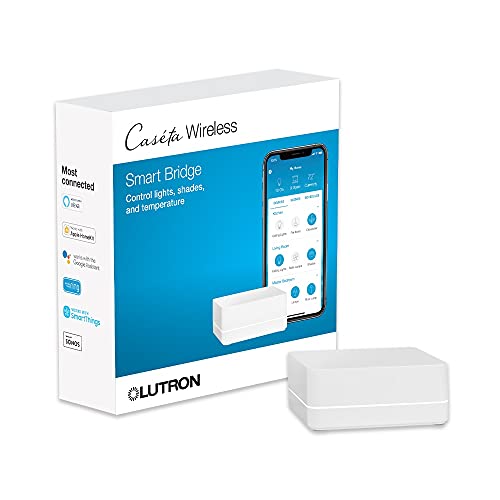
The Lutron Caseta hub is the quiet backbone of a serious smart lighting setup. It supports up to 75 devices, coordinating dimmers, switches, and Serena remote-controlled shades through a single, dependable signal.
Compatibility runs deep: Alexa, Apple HomeKit, Google Home, and more all play nicely with the Lutron app. In practice that means one hub handles lights, shades, and temperature routines without you juggling multiple apps.
Advantages To Know
- Supports up to 75 paired devices for larger homes.
- Compatible with Alexa, Apple HomeKit, Google Home, and other major platforms.
- Reliable RF signal that handles dimmers and shades smoothly.
- App control from smartphone, tablet, and Apple Watch.
Room For Improvement
- Lutron dimmers are sold separately, so total cost climbs with room count.
- Requires its own dedicated hub unit, adding a piece of hardware to your network.
Core Details
Whose Shelf It Belongs On
Homeowners building out a polished, reliable lighting system across multiple rooms and shades.
Consider Something Else When
First-timers seeking a simple single-room switch should try the Kasa Smart Light Switch HS200.
The HS200-2 packs two switches into a single gang, which is exactly what hallways, staircases, and rooms with multiple fixtures need. Both buttons connect to your Wi-Fi through the Kasa app, so a quick routine can turn on the hall lights the moment you walk in.
An Away mode randomizes on/off cycles to make a home look occupied, a small touch that helps during travel. Grouping with other Kasa devices keeps scenes in one place rather than scattered across multiple apps.
Everyday Perks
- Two switches in one unit, ideal for hallways and dual-fixture rooms.
- Schedules and personalized scenes through the Kasa app.
- Away mode simulates occupancy with randomized cycles.
Less Ideal Details
- Needs a neutral wire, which older homes may not have.
- Single-pole only, so it will not retrofit three-way switch setups.
Best Suited To
Homeowners with two-fixture switch boxes who want smart control without buying two separate units.
Another Choice May Suit
People planning whole-home dimming will be happier with the Lutron Caseta Smart Hub.
The HS220P3 brings smooth dimming to rooms where plain on/off feels too blunt. Physical up and down buttons sit on the switch itself, so a quick tap restores the last brightness level without hunting for your phone.
Through the Kasa app, you can dial in lighting scenes for movie night, dinner, or reading. Voice control through major assistants means a simple phrase can dim the lights while your hands are full.
Useful Strengths
- Built-in dimmer buttons restore the last brightness level with a tap.
- App and voice control through the Kasa ecosystem.
- Single-pole wiring fits most standard room setups.
Small Caveats
- Requires a neutral wire, which not every older switch box provides.
- Not designed for three-way circuits, so multi-switch hallways need a different solution.
Quick Facts
Who Should Grab It
Anyone wanting soft, app-controlled dimming in living rooms or bedrooms without upgrading to a full lighting hub.
Reach For A Different Pick When
Builders outfitting an entire house with dimmers should consider the Lutron Caseta Smart Hub for scale.
The Shelly Plus RGBW PM is a compact Wi-Fi controller that drives any 12V or 24V DC LED strip, including RGBW, RGB, and plain white profiles. Built-in power metering tells you exactly how much energy your accent lighting pulls, which is handy for tuning a setup.
It doubles as a Wi-Fi range extender and BLE gateway, stretching signal coverage across a larger installation. A two-pack covers both sides of a room or a couple of zones without you buying extras.
Useful Touches
- Works with RGBW, RGB, and white LED strips at 12V or 24V DC.
- Real-time power metering tracks energy use per strip.
- Functions as a Wi-Fi extender and Bluetooth gateway.
- Compatible with Alexa and Google Home for voice scenes.
Practical Considerations
- Requires some wiring comfort since it sits inline with low-voltage strips.
- App configuration can feel fiddly compared to plug-and-play hubs.
Made For
Hobbyists and tinkerers building custom accent lighting under cabinets, behind TVs, or along ceilings.
A Better Fit Elsewhere
Anyone wanting simple wall-switch lighting should look at the Kasa Smart Light Switch HS200 instead.
The Aqara M3 is a multi-protocol hub that speaks Zigbee and Thread, letting you fold devices from different ecosystems into one Aqara Home app. Matter bridge support pushes Aqara-specific scenes into Matter-compatible platforms like Home Assistant, which is a real bonus for mixed-device homes.
Up to 127 Aqara Zigbee devices can pair with the hub, so scaling up a large installation is on the table. IR control adds legacy remotes for older TVs or air conditioners into the mix.
Noteworthy Benefits
- Supports Zigbee, Thread, Matter bridge, and IR in a single hub.
- Capacity for up to 127 Aqara Zigbee devices for larger homes.
- Integrates Aqara scenes with Matter ecosystems like Home Assistant.
Things To Weigh
- Setup is more involved than a simple Wi-Fi switch, so plan on a learning curve.
- Full benefit only shows up when you have multiple protocol devices to bridge.
Feature Snapshot
Who Will Love This
Tech-forward homeowners running a mix of Zigbee, Thread, and IR devices who want one hub to rule them all.
Not Your Match When
Beginners wanting a single, simple voice setup will find the Echo Dot 5th Gen with Iron Man Stand easier to start with.
Matching The Right Hub To Your Home
The right smart hub depends less on brand loyalty and more on what you already own and what you plan to add. Voice assistants like the Echo Dot excel as everyday companions, while protocol hubs like the Aqara M3 shine in homes with mixed device ecosystems. Lighting-focused picks such as the Lutron Caseta deliver dependable dimming at scale.
Wiring And Infrastructure Matter
Older homes without neutral wiring will hit walls with most smart switches, including the Kasa HS200 and HS220P3. Pulling a neutral wire can be an electrician’s job, so factor installation cost into your choice.
Range And Signal Coverage
Wi-Fi hubs struggle in basements, outbuildings, and metal-walled spaces. The YoLink sensor set leans on LoRa to push past those limits, while the Shelly Plus RGBW PM doubles as a Wi-Fi extender for larger setups.
Scale And Device Count
A single smart speaker covers a small apartment, but a growing household quickly bumps into device limits. The Aqara M3 handles up to 127 Zigbee devices, and the Lutron Caseta supports 75 paired units for serious whole-home ambitions.
App And Ecosystem Fit
Mixing ecosystems usually means juggling apps. Hubs that bridge Matter, Zigbee, and Thread, like the Aqara M3, keep routines in one place. Simpler switches and dimmers, such as the Kasa line, fit best when you want one app and a few rooms automated.
Key Considerations Across These Picks
Pitfalls Shoppers Hit
The most common slip is buying a switch without checking for a neutral wire, which rules out most Wi-Fi smart switches in older homes. Another is assuming any hub will work with any device, when Matter, Zigbee, and proprietary protocols do not always bridge cleanly without the right hub.
Where The Extra Money Goes
Higher-tier hubs like the Aqara M3 and Lutron Caseta cost more because they coordinate dozens of devices reliably across multiple protocols. That premium pays off in larger homes, mixed-device setups, and routines that need to fire without lag, but a small apartment rarely needs that scale.