Adjusting the temperature from bed, the couch, or a hotel room across the country sounds almost ordinary now, but only when the hardware in your wall actually cooperates. The right remote thermostat pulls double duty: it talks to your HVAC system reliably, and it lets you tweak the climate without leaving the spot you’re in. The picks below cover conventional systems, heat pumps, radiant floors, and fireplace inserts, so most living situations should find a match.
An Overview Of The Picks

PRO1 T725 Heat Pump/Conventional Programmable Thermostat
PRO1 T771 Single Stage Non-Programmable Thermostat

SunTouch SunStat ConnectPlus Smart Wi-Fi Floor Heating Thermostat

PRO1 T701 Single Stage Non-Programmable Thermostat
PRO1 T715 Multi-Stage Programmable Gas Thermostat

PRO1 T721 Non-Programmable Heat Pump Thermostat

ecobee SmartThermostat with Voice Control
SkyTech Millivolt Wireless On/Off Thermostat Remote

DIGITEN Wireless Thermostat WTC100 Pro Controller
PRO1 T805 Single Stage Programmable Thermostat
Meet The Standout Selections
The T725 earns the top spot because it speaks two HVAC languages on a single wall plate. It handles 2 heat/1 cool heat pump systems and switches over to 1 heat/1 cool conventional setups, which covers a lot of North American households. Owners get a 7-day or 5/1/1 programming schedule and a four-square-inch blue backlit screen that shows schedule modes like wake, leave, return, and sleep at a glance.
For households with a heat pump, the schedule flexibility matters more than the screen size, and that is where the T725 pulls ahead of simpler non-programmable options later in this list. Compared to the T701 below, you trade the glow-in-the-dark button for proper weekday-and-weekend scheduling. In most homes, that flexibility pays for itself in the first winter.
The Upside
- Handles 2 heat/1 cool heat pump plus 1 heat/1 cool conventional systems on one unit
- 7-day and 5/1/1 programming for both weekday and weekend routines
- Blue backlit four-square-inch display with clear schedule-mode labels
- Built on the dependable T700 platform shared across the PRO1 family
Things To Consider
- Requires basic HVAC wiring knowledge to install on heat pump terminals
- Programming setup takes longer the first week as you map out routines
Who It Suits Best
Heat pump owners who want a programmable schedule and don’t mind a one-evening setup session.
Skip It When
A simple non-programmable like the PRO1 T701 below is a better match for someone who just wants to set a temperature and forget it.
The T771 is the unit you reach for when a regular house thermostat will not cut it. Its setpoint range stretches down to 25°F, which is genuinely rare on the residential market and lets you protect a garage, shed, or workshop from freezing without constant babysitting. A four-square-inch blue backlit display keeps the readings legible even in a dim corner of the shop.
This one is non-programmable on purpose, so the dial-style workflow fits someone who wants fast manual changes rather than schedules. Compared to the T725 above, you give up programming flexibility but gain the low-temperature capability. For specialty spaces, that trade-off lands cleanly in your favor.
A Few Strong Suits
- Setpoint range of 25°F to 90°F for cold-space frost protection
- Non-programmable layout means quick manual adjustments in a busy shop
- Swing adjustment and calibration controls for fine-tuned comfort
- Four-square-inch blue backlit screen readable in dim lighting
Honest Caveats
- Lacks any scheduling or remote-app features for whole-home use
- Single-stage design will not handle multi-stage HVAC equipment
Made For
Garages, sheds, and workshops that need frost protection without a complicated interface.
Consider Something Else When
You want a programmable schedule for a primary living space, in which case the PRO1 T725 above fits better.
The ConnectPlus jumps straight to the smart end of the category. It is purpose-built for radiant floor heating rather than forced-air systems, which means the 4.3-inch touchscreen and Wi-Fi connectivity are aimed at warming tile and stone underfoot in a bathroom or kitchen. Automatic clock syncing and outdoor temperature readouts give the schedule real context, and warm-weather shutdown prevents wasted energy once the floor no longer needs supplemental heat.
Home automation support lets you build routines that span lighting and climate from one app, which the conventional PRO1 models earlier in this list cannot touch. Owners commonly report the app pairing step as the trickiest part of the install. Past that one-time hurdle, the daily experience is mostly tapping a screen or asking a voice assistant.
Useful Strengths
- Wi-Fi connectivity with remote app control from anywhere
- Automatic outdoor temperature display and warm-weather shutdown
- Weather compensation adjusts the floor temperature based on outdoor conditions
- 4.3-inch touchscreen interface designed specifically for floor heating control
Trade Offs
- Designed for radiant floor systems, not forced-air HVAC compatibility
- Wi-Fi setup can take patience during the initial pairing step
Quick Facts
Right Fit For
Homeowners with radiant floor heating who want app and voice control over their bathroom or kitchen warmth.
Look Elsewhere When
You run a conventional forced-air system and need a wall thermostat like the PRO1 T715 instead.
The T701 strips the thermostat down to its essentials and resists the urge to add features you may never touch. It runs a 1 heat/1 cool conventional system, ships on the same T700 hardware platform as the T725, and adds a glow-in-the-dark light button that lights up the four-square-inch blue backlit display when you walk past at night. For renters or anyone who treats a thermostat as a dial, not a device, that minimalism is the whole appeal.
You give up the 7-day scheduling of the T725 above, but you keep the same reliable platform and visibility. Owners who do not want to fiddle with menus tend to stay happy with the T701. Compared to the T771 covered earlier, you trade the wide setpoint range for everyday single-stage home comfort.
Reasons It Performs
- Glow-in-the-dark light button for nighttime visibility
- Simple non-programmable operation suited to 1 heat/1 cool systems
- Gas or electric configurable on a single conventional HVAC system
- Four-square-inch blue backlit display shared with the T700 platform
Room For Improvement
- No scheduling means manual adjustments for every routine change
- Single-stage design will not suit multi-stage equipment
Whose Shelf It Belongs On
Renters and homeowners with a basic conventional HVAC system who want a straightforward dial-style experience.
A Better Fit Elsewhere
You need a programmable schedule or heat pump compatibility, which the PRO1 T725 handles instead.
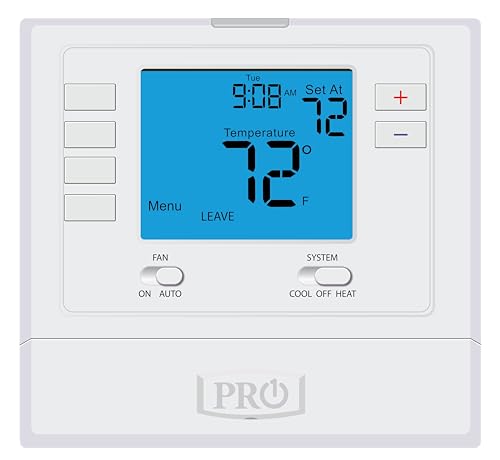
The T715 is built for the more capable side of residential HVAC. It controls 2 heat/2 cool gas systems, which means two-stage heating and two-stage cooling on a single thermostat, and it lets you pick 7-day, 5/1/1, or non-programmable modes depending on how structured your week runs. Battery or hardwired power options keep the install flexible when the wall does not have a common wire pulled.
The glow-in-the-dark light button and four-square-inch blue backlit display make adjustments easy in a hallway at midnight. Compared to the T701 earlier, this one adds genuine staging intelligence rather than just a single on/off signal. In homes with a variable-speed furnace or two-stage compressor, the difference shows up in comfort and noise.
Everyday Wins
- Controls 2 heat/2 cool gas furnace systems with full staging capability
- Three operating modes: 7-day, 5/1/1, or non-programmable
- Battery or hardwired power for flexible install situations
- Glow-in-the-dark button keeps the screen visible in low light
Points To Note
- Multi-stage staging requires compatible HVAC equipment
- More configuration steps during initial setup than single-stage units
Feature Snapshot
Built With In Mind
Homeowners with two-stage gas HVAC who want scheduling and staging support in one wall unit.
Swap It Out When
You only have a single-stage system, in which case the PRO1 T701 is a simpler, more economical fit.
The T721 is the crossover unit in the PRO1 lineup, supporting 2 heat/1 cool heat pumps or 1 heat/1 cool conventional systems on the same wall plate. That dual capability makes it attractive in homes where the equipment type might change between renovations, or where a contractor has not fully committed to a heat pump upgrade yet. AA battery or hardwired power keeps the install adaptable.
It is non-programmable, so the experience stays closer to a manual dial than a smart schedule. Compared to the T725 earlier, you lose scheduling in exchange for a slightly more flexible system match. The four-square-inch blue backlit display and glow-in-the-dark light button stay familiar for anyone who has handled other T700-platform units.
A Strong Showing
- Switchable 2H/1C heat pump or 1H/1C conventional system support
- AA battery or hardwired power for varied install situations
- Glow-in-the-dark light button for nighttime access
- Four-square-inch blue backlit display for clear temperature readouts
Softer Spots
- No scheduling capability compared to programmable PRO1 siblings
- Manual mode selection required when switching between heat pump and conventional setups
Best Suited To
Homeowners with mixed or transitional HVAC equipment who want one thermostat that can handle either setup.
Reach For A Different Pick When
You want a programmable schedule on a dedicated heat pump system, which the PRO1 T725 handles more naturally.
The ecobee SmartThermostat sits at the top of the connected climate category, and it earns that position by paying attention to more than one room at a time. An included SmartSensor watches the spaces that matter most, so the system reacts to where you actually are rather than where the wall thermostat happens to live. Built-in voice control keeps hands free in the kitchen, and the smart-home integration goes deeper than any unit on this list.
Energy reporting tends to be the quietly appreciated feature, since it shows what each adjustment actually does to your monthly bill over time. Compared to the PRO1 hardware above, you trade the simplicity of a wall dial for app-driven intelligence and room-level zoning. For most connected households, that upgrade is the whole point.
Benefits That Matter
- Included SmartSensor adjusts temperature based on the rooms that matter most
- Built-in voice control for hands-free adjustments
- Detailed energy reporting helps track actual usage patterns
- Deep smart-home integration with major home automation platforms
Worth Bearing In Mind
- Higher learning curve than a basic wall thermostat like the PRO1 T701
- Sensor placement matters for accurate whole-home readings
Perfect Match For
Connected smart-home households that want room-level comfort data, voice control, and energy reporting in one device.
Not Your Match When
You only need a basic wall thermostat for a single-stage system, in which case the PRO1 T701 is more appropriate.
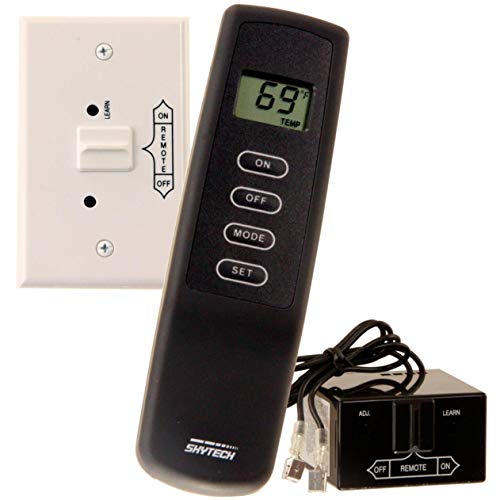
The SkyTech 1001TH-A lives in a different neighborhood than every other thermostat on this list. It is a wireless remote-and-receiver kit designed for gas logs and millivolt safety pilot valves, which means it sends an on/off signal to a fireplace rather than a furnace. The remote lets you flip the logs on from the couch and hold a steady room temperature without leaving your seat.
Compatibility with both millivolt pilot valves and electronic spark ignition keeps it usable across most gas log setups. Compared to the wall-mounted units above, this is genuinely portable and genuinely handheld. Anyone whose primary climate goal is fireplace comfort will recognize its value immediately.
Key Advantages
- Wireless handheld remote for gas log fireplaces
- Works with millivolt safety pilot valves and electronic spark ignition
- Thermostat mode maintains a set room temperature automatically
- Receiver unit installs inside the fireplace control compartment
Practical Considerations
- Limited to gas log fireplaces rather than whole-home HVAC systems
- Battery-operated remote needs occasional replacement
Who Should Grab It
Gas log fireplace owners who want couch-side control without walking over to flip a switch.
Where Another Pick Suits Better
You need central HVAC control, where the PRO1 T725 or ecobee SmartThermostat above are the right category entirely.
The DIGITEN WTC100 Pro is built around three buttons and a remote sensor, which keeps the learning curve short for anyone who just wants to point and adjust. It is non-programmable, but it reads room temperature accurately and triggers connected equipment once the target is hit. The plug-and-play design suits portable heaters, fans, and small spaces where a full wall install would be overkill.
Switching between Celsius and Fahrenheit happens with a button, which is convenient in shared spaces or for renters between countries. Compared to the SkyTech remote above, this one targets heating appliances rather than fireplaces. The honest read is that this is a niche tool, but the niche is real.
Well-Handled Touches
- Plug-and-play design with three-button operation
- Built-in accurate temperature sensor in the remote
- Celsius and Fahrenheit toggle for different regional needs
- Wireless remote control without running new wiring
Some Limits To Know
- Not designed to replace a central wall thermostat on whole-home HVAC
- Non-programmable, so each adjustment is manual
Who Will Love This
Renters and small-space dwellers who want wireless control over a portable heater or fan without rewiring a wall.
Where A Sibling Pick Shines
You need central HVAC control rather than appliance-level control, where the PRO1 T701 is the more capable option.
The T805 wraps a familiar feature set into a slightly larger package, with a seven-square-inch blue backlit display that is easier to read across a room than the four-square-inch screens on earlier PRO1 models. It covers 1 heat/1 cool conventional systems and offers 7-day, 5/1/1, or non-programmable modes. For households where someone in the family prefers bigger text or simply wants temperature information visible from a distance, the larger screen matters.
The glow-in-the-dark light button carries over from the T701 and T715, so the platform feels consistent across the lineup. Compared to the T725 covered earlier, the T805 sticks to single-stage conventional setups rather than heat pump terminals. In a typical gas or electric forced-air home, that is exactly the equipment you have.
What It Does Well
- Larger seven-square-inch blue backlit display for room-distance readability
- Three modes including 7-day, 5/1/1, and non-programmable scheduling
- Glow-in-the-dark light button for low-light navigation
- Conventional 1 heat/1 cool HVAC compatibility for most households
Small Caveats
- Single-stage design will not handle multi-stage HVAC equipment
- Larger display means a slightly bigger wall footprint than T700 siblings
Feature Card
The Right Fit
Households with a single-stage conventional HVAC system that value a large, readable display and flexible scheduling.
Where Another Pick Suits Better
You run a heat pump or two-stage furnace, where the PRO1 T715 above is the better match for your equipment.
Factors To Weigh Before Choosing A Remote Thermostat
Match The Thermostat To Your Equipment
The single biggest mistake in this category is picking a thermostat before confirming what your HVAC system actually is. Heat pump, conventional gas, conventional electric, multi-stage, single-stage: each one expects a different wiring pattern and terminal layout. A wall thermostat that does not match the equipment may technically power on but fail to trigger the right functions. Pull the model number off your indoor unit, or read the breaker label, before you commit.
Decide Between Programmable, Non-Programmable, And Smart
Programming flexibility matters most when your weekly routine changes between weekdays and weekends. Non-programmable units shine for renters, guest spaces, or anyone who treats a thermostat like a dial. Smart thermostats like the ecobee covered above justify their higher cost when you want room-level sensor data and voice control alongside climate adjustments.
Think About How You Want To Adjust Temperature
Wall dials work for the in-room experience, but remote adjustment is where the category earns its name. Wi-Fi thermostats let you change the temperature from a phone, while handheld remotes like the SkyTech covered earlier let you flip a fireplace on from the couch. Pick the adjustment style that matches how you actually live in the space rather than chasing features you may rarely use.
Wiring, Power, And Installation Realities
Some thermostats run on AA batteries, others need a common wire, and some need both depending on the equipment. Older homes without a common wire can save the install day by choosing a battery-friendly unit. If you are uncomfortable working with line-voltage wiring, a smart thermostat with a clear install guide tends to be the safer path.
Key Considerations Across These Picks
Pitfalls Shoppers Hit
The most common trap is underestimating system compatibility, especially with heat pumps that require specific terminals like O, B, or W2. Another slip is buying a smart thermostat for a household that does not have stable Wi-Fi near the wall location, which causes more frustration than convenience. Owners also tend to overlook the C-wire (common wire) until the install day, when the new thermostat refuses to power up properly.
What The Higher Tier Buys
Spending more on a thermostat typically buys room-level sensing, app control, voice integration, and broader HVAC compatibility. For households with multi-stage equipment, the upgrade shows up immediately in quieter operation and tighter temperature control. For single-stage systems, a mid-tier programmable unit usually delivers the comfort gain without overshooting into features you may never touch.
Frequently Asked Questions
Can I Install A Remote Thermostat Myself?
Most wall thermostats are designed for DIY install with basic tools, but you should always cut power at the breaker first and take a photo of the existing wiring before you disconnect anything. Smart thermostats sometimes require a C-wire that older homes may not have. If the existing wiring looks unfamiliar, calling a licensed HVAC technician is the safer move.
Do Smart Thermostats Work Without Wi-Fi?
Yes, the on-device schedule and temperature adjustments still work locally. What you lose is remote app control, voice assistant integration, and any weather-based features that pull data from the internet. The wall unit itself remains fully usable for daily temperature changes.
How Do I Know If I Have A Heat Pump Or A Conventional System?
Heat pumps typically have an outdoor unit that runs year-round, while conventional systems have a furnace inside and an air conditioner outside. The thermostat terminals also differ, since heat pumps usually include an O or B wire for reversing the refrigerant flow. The equipment label on your indoor unit will confirm which type you have.
Will A Programmable Thermostat Save Energy?
Programmable thermostats can reduce energy use by adjusting temperatures automatically when you sleep or leave the house. The savings depend on how disciplined the schedule is and how often the household actually follows it. Manually programmed schedules that match real routines tend to outperform units left on a default schedule.
How Long Do These Thermostats Typically Last?
Most wall thermostats last around a decade before the temperature sensor or display starts to drift. Smart thermostats tend to receive software updates for several years, which can extend their useful life. Mechanical wear is minimal since there are no moving parts beyond the buttons.
Closing Thoughts
The right remote thermostat is the one that fits your equipment first and your habits second. Work backward from the HVAC system you have, then layer on the features you will actually use, and the choice tends to make itself. A comfortable home starts with a thermostat that quietly matches what your system can do.