Older homes often run on simple two-wire systems, which used to mean giving up on smart control. Newer thermostats and accessories now handle that low-voltage setup without forcing a rewiring project. This roundup focuses on thermostats and supporting gear that play nicely with limited wiring, so comfort finally catches up with the rest of the home.
How The Shortlist Stacks Up

Sensi Touch 2 Smart Thermostat (ST76)

XRDS -RF Thermostat Wire 18/2 10FT
XRDS -RF Thermostat Wire 18/2 20FT

XRDS -RF Thermostat Wire 18/5 25FT

Google Nest Thermostat with Trim Kit

ecobee Smart Thermostat Premium
Google Nest Temperature Sensor 3-Pack

ecobee SmartSensor 2-Pack

XRDS -RF Thermostat Wire 18/2 30FT
ecobee Smart Thermostat Enhanced
The Details Behind The Selections
The Sensi Touch 2 leans into a colorful touchscreen that feels more like a phone than a wall switch, which makes it friendly for households where everyone wants to tap a clear icon instead of fumbling with a jog wheel. A common wire (c-wire) is required, so older two-wire homes may need to pull extra cable or use a power adapter before installing.
It pairs with separate Sensi room sensors to average temperatures across the house, and the brand publicly states it does not sell personal usage data. For folks renting out a second property or juggling a vacation home, remote scheduling through the app is the standout everyday perk. The companion app walks through the wiring step by step, which helps first-timers avoid terminal mix-ups.
Real Benefits
- Color touchscreen reads well from across a room or in low light.
- Compatible with add-on room sensors for balanced whole-home comfort.
- ENERGY STAR-certified scheduling and reporting trim heating and cooling waste.
- Bluetooth-paired app guides the install, so the wiring sequence feels less intimidating.
- Brand policy avoids selling personal information to third parties.
Things To Consider
- A c-wire is required, so two-wire-only homes need an adapter or new cable run.
- Room sensors ship separately, adding to the total spend if whole-home balance matters.
- Glossy display may show fingerprints under bright daylight in some hallways.
Who It Suits Best
Homeowners with a c-wire already in place who want app-driven scheduling without giving up a familiar touchscreen.
Consider Something Else When
The Google Nest Thermostat with Trim Kit is a friendlier fit for anyone who prefers a dial-based interface and doesn’t need room sensor expansion.
Short thermostat runs rarely need a full spool, and the XRDS -RF 18/2 10-foot cable fills that exact gap. Two solid copper conductors handle the low-voltage signal common to most heating-only or basic cooling systems, and the brown PVC jacket bends around tight corners behind a baseboard.
Beyond thermostats, the same two-conductor profile pulls double duty for doorbells and low-voltage security runs, which makes the small spool handy to keep on a shelf. Most homeowners tackling a single-room swap find ten feet is exactly enough to land both ends without excess slack. You may end up with extra if the wall cavity is unusually short, so a quick measurement before ordering saves a return.
A Strong Showing
- Solid copper core carries signal reliably for thermostat and doorbell circuits.
- Flexible brown PVC jacket routes cleanly around inside corners and tight studs.
- Ten-foot length suits direct thermostat swaps without bulk spool waste.
Points To Note
- Only two conductors, so multi-stage HVAC or accessory systems need a wider gauge.
- Short length leaves little margin for miscalculations or reroutes during the install.
Right Fit For
Anyone replacing a single thermostat on a simple two-wire system and wanting just enough cable for one clean run.
Look Elsewhere When
Anyone rewiring multiple rooms should grab the XRDS -RF 30-foot 18/2 instead, which spares a mid-project run back to the hardware store.
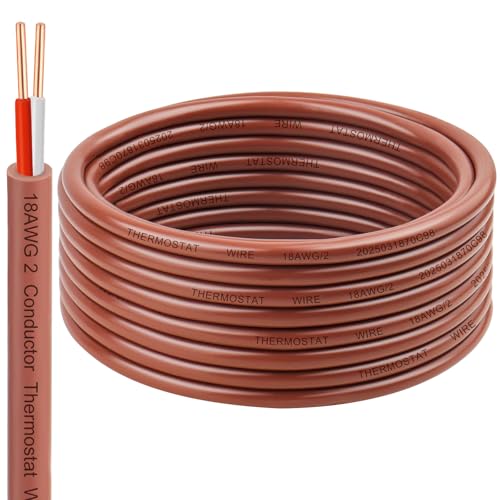
The 20-foot version of the XRDS -RF two-conductor cable strikes a sensible middle ground for most basic thermostat swaps. Solid copper conductors keep resistance low across the run, while the same brown PVC jacket as the 10-foot spool stays pliable when fishing wire through a tight wall cavity.
It works equally well for doorbells, low-voltage lighting, or simple security contacts, so a leftover length rarely goes to waste after the install. For most single-story homes, twenty feet is the comfortable middle between too short and wasteful. You may find a couple of feet leftover for future touch-ups, which is honestly the right kind of margin to have on hand.
Features That Help
- Twenty-foot length handles most standard thermostat pulls with margin to spare.
- Solid copper core supports reliable low-voltage signaling across longer runs.
- Multi-purpose cable covers thermostats, doorbells, and basic alarm loops.
Worth Noting
- Two-conductor design doesn’t support systems needing separate Rc and Rh terminals.
- Excess cable has to be coiled neatly inside the wall box to avoid signal interference.
Best Suited To
DIYers running a thermostat cable through standard drywall who want enough slack without buying a 50-foot spool.
A Better Fit Elsewhere
Anyone wiring a multi-stage system should grab the XRDS -RF 18/5 25FT instead, which carries the extra conductors that heat pumps and accessory boards need.
The five-conductor cable opens the door to systems that need more than just heat call and common wires, such as heat pumps, multi-stage furnaces, and thermostats requiring a dedicated c-wire feed. Each conductor is color-coded, which makes matching terminals at the wall plate far less error-prone. The 25-foot spool covers most two-story homes without leaving yards of waste behind the drywall.
Compared with the simpler two-conductor runs reviewed earlier, this cable carries enough lines to support a continuous power feed alongside separate heating, cooling, and fan signals. It pulls cleanly through conduit and stays flexible around inside corners, which matters during longer fishing jobs. You may end up with some unused conductors, but tucking extras back into the wall is straightforward.
Strengths Worth Knowing
- Five color-coded conductors support heat pumps and dedicated c-wire installations.
- Solid bare copper core delivers stable signal transmission over long runs.
- Twenty-five foot length covers multi-room projects without bulk spool waste.
Trade Offs
- Heavier gauge makes the cable stiffer, so tight bends need careful routing.
- Overkill for simple two-wire systems that don’t use the extra conductors.
Made For
Homeowners upgrading from a basic thermostat to a smart model that needs continuous power and multi-stage control.
Reach For A Different Pick When
The XRDS -RF 18/2 20FT is a lighter, more affordable choice for anyone replacing a basic two-wire thermostat without extra control lines.
The Google Nest Thermostat pares the wall unit down to a clean dial and a mirrored face, which feels less tech-heavy than a full touchscreen. It rotates between heating, cooling, and off with a familiar twist, and the Google Home app handles schedule-building from a phone. The included trim plate covers paint scars or old mounting holes from previous thermostats, which is a thoughtful touch for renters and old-house owners alike.
ENERGY STAR certification hints at meaningful savings through the auto-away feature, which turns the system down when nobody’s home. It also includes a steel plate for installations over an electrical box, a small detail that saves a hardware run. You may find the lack of a touchscreen limiting if you prefer seeing the full forecast on the wall, but the trade is a far cleaner look in a minimalist space.
What Works In Its Favor
- ENERGY STAR-rated scheduling and auto-away features help cut heating and cooling waste.
- Rotary dial interface is intuitive for guests and family members who avoid apps.
- Trim plate hides old paint lines and mounting holes from previous thermostats.
- Steel mounting plate simplifies installs over electrical boxes.
Room For Improvement
- No built-in touchscreen means schedule edits require the phone app.
- Some systems need a common wire or power accessory for full functionality.
Who Will Love This
First-time smart thermostat owners who want a simple dial interface and seamless Google Home app integration.
Where A Sibling Pick Shines
Anyone who wants a full color touchscreen and add-on room sensors should consider the Sensi Touch 2 Smart Thermostat (ST76) instead.
The ecobee Premium leans into the smart home idea harder than most competitors, packing in a built-in air quality monitor, smoke alarm detection, and a doorbell live view on the thermostat screen. Voice control is baked in through both Siri and Alexa, so it doubles as a small wall-mounted assistant. The included SmartSensor tackles hot and cold spots in the rooms that matter most to you.
Geofencing uses phone location to ease off the heat when the last person leaves, then nudges it back up before anyone arrives home. The zinc body feels substantial on the wall and helps justify the higher cost over the Enhanced model reviewed later. You may find the extra smart features overkill in a small apartment, but for a busy family home they earn their keep.
Good Reasons To Consider
- Built-in air quality monitoring flags poor ventilation before it becomes a problem.
- Included SmartSensor balances temperatures in the room you care about most.
- Siri and Alexa support removes the need for a separate smart speaker on the wall.
- Premium metal finish upgrades the look of any hallway or living area.
Honest Caveats
- Premium features carry a higher cost than basic smart thermostats.
- Some advanced functions need a c-wire or power accessory in older homes.
Perfect Match For
Tech-forward households that want voice control, air quality data, and room-level temperature balancing in one package.
Swap It Out When
Budget-focused shoppers should consider the ecobee Smart Thermostat Enhanced, which covers scheduling and sensors without the premium extras.
Single-point thermostats can leave bedrooms chilly while the hallway feels comfortable, which is exactly the problem the Nest Temperature Sensor 3-Pack is built to solve. Each sensor reports back to a compatible Nest thermostat over Bluetooth, letting the system prioritize the rooms that matter, like a nursery or a home office.
Low Energy Bluetooth keeps battery life long, so you won’t be swapping coin cells every few months. Three sensors in one bundle cover most small homes without needing a second purchase. You may want to label each unit at install time, since identical-looking sensors are easy to mix up later when troubleshooting.
Advantages To Know
- Three sensors in one bundle cover bedrooms, offices, and living areas at once.
- Low Energy Bluetooth extends battery life and reduces dropouts.
- Compatible with the Nest Thermostat and Nest Thermostat E for flexible system pairing.
A Few Limitations
- Only works with Nest-branded thermostats, not third-party systems.
- Sensors don’t detect occupancy, only temperature, so they can’t ease off in empty rooms.
Whose Shelf It Belongs On
Nest thermostat owners in multi-room homes where one thermostat reading never quite reflects the lived experience.
Another Choice May Suit
Anyone using an ecobee thermostat should pick up the ecobee SmartSensor 2-Pack instead, since occupancy detection adds a useful layer.
Where the Nest sensors track temperature alone, the ecobee SmartSensor adds infrared occupancy detection to the mix, so the system knows when a room is actually in use. That extra layer of awareness translates into smarter auto-economy settings, since the thermostat can ease off when nobody’s home without sacrificing comfort in occupied rooms.
Wireless range reaches around 60 feet, which is plenty for most single-story layouts and many two-story homes. Two sensors in a single pack cover the main living area and a bedroom, which is the most common upgrade path. You may find that the sensors need occasional firmware updates through the ecobee app to keep detection accuracy sharp.
What Makes Sense
- Occupancy detection helps the system back off in empty rooms automatically.
- Sixty-foot wireless range covers most homes without repeaters or extra hardware.
- Two-sensor pack addresses the two rooms that usually matter most.
Some Limits To Know
- Only pairs with ecobee thermostats, locking you into that ecosystem.
- Infrared detection can miss pets or stationary occupants in some room layouts.
Built With In Mind
ecobee owners who want their thermostat to react to actual occupancy, not just thermostat location temperature readings.
Not Your Match When
Nest thermostat households should grab the Google Nest Temperature Sensor 3-Pack instead, which is purpose-built for that system.
When a thermostat cable needs to span a long basement run or wrap around a tricky attic corner, thirty feet takes the stress out of the job. The same solid copper conductor pair used in the shorter XRDS spools handles the low-voltage signal cleanly, even when the cable snakes behind several studs.
The brown PVC jacket stays flexible enough to feed into conduit without kinking, which is a common frustration with stiffer low-voltage wire. It’s also handy for doorbells, alarm contacts, and other low-voltage circuits where a longer pull prevents mid-project splices. You may end up with more slack than you need, but coiling the extra neatly inside the wall box is standard practice.
Where It Delivers
- Thirty-foot length covers long basement and attic pulls without splicing.
- Solid copper conductors keep signal stable across the full run.
- Flexible jacket bends cleanly around studs and through conduit.
Points To Keep In Mind
- Excess length has to be coiled carefully to avoid signal noise inside the wall.
- Two conductors only, so heat pumps or accessory boards need a wider gauge.
The Right Fit
Homeowners tackling a whole-room rewire or a basement-to-attic thermostat run where ten or twenty feet would fall short.
Skip It When
A simple single-room swap is better served by the XRDS -RF 18/2 10FT, which avoids the hassle of coiling extra wire behind the wall plate.
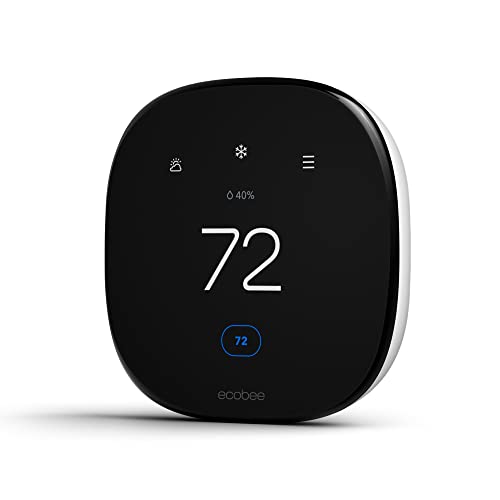
The ecobee Smart Thermostat Enhanced keeps the smart scheduling and occupancy-aware adjustments that define the brand, but skips the higher-tier extras like the built-in air quality monitor and voice assistant. For households that mostly want energy savings and reliable app control, the Enhanced model hits the practical sweet spot.
The eco+ feature set nudges temperatures down when you’re asleep or away, learning patterns over time to fine-tune the schedule automatically. It works with Apple Watch, Siri, Alexa, and Google Assistant, which covers the major smart home ecosystems without forcing a commitment. You may find the plastic body less premium than the higher-tier ecobee, but the trim profile still looks tidy on most walls.
The Helpful Details
- eco+ features adjust temperatures automatically based on occupancy patterns.
- Works with Apple Watch, Siri, Alexa, and Google Assistant for broad smart home fit.
- More accessible price point than the Premium model reviewed earlier.
What To Weigh
- Lacks the Premium model’s built-in air quality monitor and voice control.
- Most advanced functions still rely on a c-wire or compatible accessory.
Who Should Grab It
Energy-conscious households that want smart scheduling and sensor support without paying for premium extras they won’t use.
Where Another Pick Suits Better
Anyone who wants on-device voice control and air quality data should step up to the ecobee Smart Thermostat Premium instead.
What To Weigh Before Picking A 2 Wire Smart Thermostat
A “2 wire” thermostat typically refers to a setup with only two conductors running from the HVAC system to the wall, usually labeled R (power) and W (heat call). Older homes and simple heating-only furnaces often rely on this minimal wiring, which can leave modern smart thermostats short on the continuous power they need. Some newer models work around that limitation, but most still benefit from a common wire (c-wire) for steady power.
Start by opening the wall plate and counting the thin wires tucked into the terminals. Two wires usually means a basic heating-only system, while three to five wires opens up cooling, fan control, and continuous power. If your system is genuinely two-wire only, plan on either using a model designed for that setup or running a power adapter kit. Match the thermostat’s compatibility list to your HVAC type before anything else.
Consider how much room-level control you actually need. A single sensor at the thermostat works fine for open floor plans, while multi-room homes benefit from remote sensors that report back to the main unit. Whole-home balance becomes a real comfort upgrade in two-story layouts where bedrooms run hot or cold compared to the hallway.
Finally, think about the smart home ecosystem you already use. Voice assistant support, app ecosystems, and sensor compatibility all matter when a thermostat is meant to feel like part of the house rather than a bolted-on gadget. Picking a model that fits your existing phone and speaker setup removes a layer of friction from the daily routine.
Key Considerations Across These Picks
Common Shopping Slip Ups
The most common mistake is assuming any smart thermostat will work with two wires, when many actually require a c-wire for steady power. Confirm your wiring count before ordering, and have a power adapter or extra cable on hand if the system falls short. Another trap is ignoring HVAC compatibility. Heat pumps, multi-stage furnaces, and accessory boards need specific terminal support, so check the compatibility list against your system type.
Where The Extra Money Goes
Premium models earn their higher cost through extras like built-in voice control, air quality monitoring, and metal bodies that look more substantial on the wall. Mid-tier options skip those touches while keeping the core smart scheduling and sensor support. If those premium extras match your daily routine, the upgrade pays off. If they would sit unused, the mid-tier delivers the practical benefits without the extra spend.
Frequently Asked Questions
Will a smart thermostat work with only two wires?
Some models support two-wire setups with power-stealing technology, but most modern smart thermostats expect a c-wire for continuous power. Confirm the wiring count at the wall plate before installing.
Do I need a c-wire for smart thermostat installation?
Most smart thermostats run more reliably with a c-wire, since it provides steady power without draining it from the heating circuit. If your system lacks one, a power adapter kit can bridge the gap in many homes.
What is a room sensor used for?
A room sensor reports temperature from a specific spot back to the main thermostat, allowing the system to prioritize the rooms where you spend the most time. Multi-room homes benefit most from this kind of balancing.
Can I install a smart thermostat myself?
Many models are designed for DIY installation, with app-guided wiring steps and Bluetooth pairing for setup. Comfort with basic electrical work and access to the existing wiring make the job smoother.
How long do thermostat wires last indoors?
Indoor low-voltage cable typically lasts decades when properly routed and protected from physical damage. Solid copper conductors resist corrosion well in standard residential conditions.
Wrap Up
The right pick depends on what your existing wiring actually supports and how much room-level comfort you want. Start at the wall plate, count the conductors, and match the thermostat’s compatibility list to your system. The supporting cables and sensors in this roundup make the upgrade easier, whether you’re wiring a single room or balancing a whole house.