Heating and cooling upgrades usually start small. You’re swapping an outdated wall unit, extending a circuit to a new room, or replacing wire that’s been hiding in the wall since the early 2000s. That’s exactly where a two-wire setup shines, because the simple 18/2 cable gets power and signal from one control to your system without dragging a third conductor behind it. The picks below cover the cables that make those installs possible, plus a couple of dedicated thermostats designed for straightforward two-wire heat-only applications.
Your Options, Compared

XRDS -RF Thermostat Wire 18/2 10FT Solid Copper
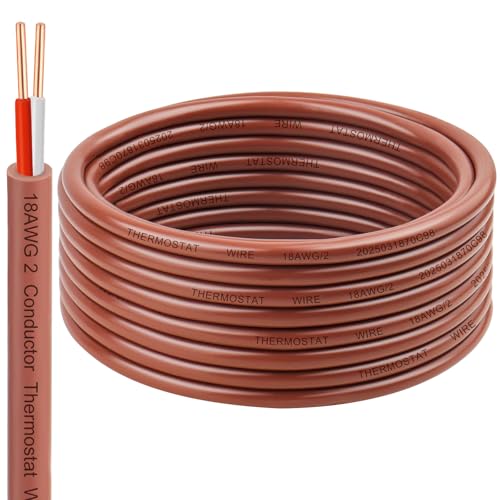
XRDS -RF Thermostat Wire 18/2 20FT Solid Copper

18AWG Thermostat Wire 18/5 Solid Copper 25FT

XRDS -RF Thermostat Wire 18/8 10FT

XRDS -RF 18/8 Thermostat Wire 20FT CL2
XRDS -RF 18AWG 2 Conductor Wire 20FT White

Honeywell TH1100DH1004 PRO 1000 Heat Only
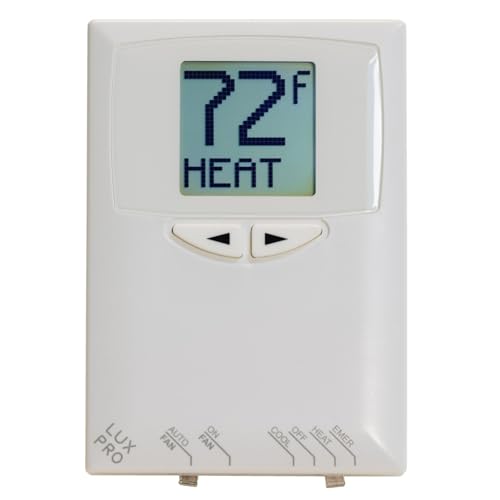
Lux PSDH121B 2-Heat/1-Cool Heat Pump Thermostat
18AWG Thermostat Wire 18/5 Solid Copper 50FT

XRDS -RF Thermostat Wire 18/2 30FT Solid Copper
Taking A Closer Look At The Options
A short, no-nonsense cable for the simplest installs, this 18/2 solid copper wire handles the basics of a two-wire thermostat circuit without leaving a lot of slack coiled in the wall box. The 18 AWG rating is the standard homeowners run across most low-voltage HVAC control loops, so it pairs cleanly with common 24-volt heating and cooling relays.
For an apartment swap or a quick garage replacement, ten feet is usually plenty. Compared to the 20-foot sibling below, this one shines where the run between thermostat and furnace is short and straight.
What Makes Sense
- Solid copper conductors (a single, stiff strand per wire) keep resistance low across short runs.
- Flexible brown PVC jacket bends around tight corners in existing wall cavities.
- Ten-foot length cuts down on wasted coil hidden behind the wall plate.
- Works for doorbells and low-voltage security lines when thermostat work is done.
Honest Caveats
- Only two conductors, so multi-stage systems with extra control wires need a different pick.
- Brown jacket can stand out against white trim in visible surface runs.
- Ten feet runs short in two-story homes or basements where the thermostat sits far from the air handler.
Made For
Apartment dwellers or homeowners making a single-room thermostat swap where the run from furnace to wall plate measures well under ten feet.
Consider Something Else When
The XRDS -RF Thermostat Wire 18/2 30FT Solid Copper makes more sense for anyone whose thermostat sits a long way from the HVAC equipment.
Twenty feet is the comfortable middle of the road for most single-family installs. The same 18/2 solid copper build as the ten-foot version means reliable conductivity across typical residential runs, and the brown PVC outer jacket handles the usual bending and tugging that comes with fishing wire through old wall cavities.
That extra reach pays off when the thermostat lives on an interior wall and the air handler hides in a basement corner. Unlike the ten-foot option above, this one gives you slack to spare without forcing a junction box splice.
Strengths Worth Knowing
- Solid copper core holds conductivity steady across the full twenty feet.
- PVC jacket stays pliable in cold basements where stiffer cables fight back.
- Brown coloring follows common thermostat wire conventions for easy identification.
- Doubles as low-voltage doorbell or security wire when nothing else is on hand.
Trade-Offs To Consider
- Excess length means coiling some slack in the wall if the run is short.
- Two conductors only, so heat pump systems requiring a fifth wire need a different cable.
- Not CL2-rated (a classification marking that signals the cable is safe to run inside walls behind drywall), so it isn’t ideal for new in-wall construction.
Key Specs
Right Fit For
Homeowners handling a one-for-one thermostat swap in a single-story or modestly sized two-story house where the run measures under twenty feet.
Look Elsewhere When
The XRDS -RF 18/8 Thermostat Wire 20FT CL2 is the smarter choice if you need more conductors and an in-wall safety rating.
Five conductors opens the door to multi-stage heating and cooling, common-source heat pumps, and accessories like humidifier controls. The 25-foot length lands comfortably between the short cable and the long one, and the color-coded individual conductors save real time at the terminal strip.
Where the 18/2 cables above are about pure simplicity, this one accepts modern thermostats that ask for additional terminals. It also handles alarm and doorbell circuits in the same pull.
Everyday Wins
- Color-coded insulation removes guesswork at the terminal block.
- Solid bare copper core keeps signal transmission stable across twenty-five feet.
- PVC jacket stays flexible for routing through existing cavities without cracking.
- Five conductors support heat/cool systems plus an accessory common wire for power-hungry smart thermostats.
Points To Note
- More conductors than you need if the system only uses two terminals.
- Color scheme is generic; label each conductor before pulling into tight walls to keep track.
- Twenty-five feet still falls short for very long basement-to-attic runs.
Who It Suits Best
DIYers upgrading from a basic two-wire setup to a multi-stage system or installing a smart thermostat that needs a common wire (a dedicated conductor that delivers continuous 24-volt power to the thermostat).
Skip It When
The XRDS -RF Thermostat Wire 18/2 20FT Solid Copper remains the right call for strictly heat-only setups that never ask for a third conductor.
Eight conductors in a short ten-foot run covers full commercial control panels, zoning equipment, and complex thermostats that want every signal and a common wire all on one jacket. Most homeowners will never need this density, but for installers wiring multi-zone equipment it avoids separate conductors running side by side.
The same 18 AWG solid copper build as the rest of the family means predictable resistance figures. The multi-conductor design suits anyone pulling one cable for several low-voltage circuits at once.
What It Does Well
- Eight individual conductors handle advanced thermostats and accessories without running a second cable.
- Bare copper core delivers clean low-voltage signal transmission.
- Durable PVC jacket wraps all conductors in a single protective sleeve.
- Ten feet works for compact equipment closets and mechanical rooms.
Points To Keep In Mind
- Overkill for any standard residential thermostat.
- Short ten-foot length forces splicing on longer runs.
- Multiple conductors inside one jacket can be stiff to bend around tight corners.
Spec Overview
Best Suited To
Installers working on zoning panels, multi-stage commercial thermostats, or anyone bundling several low-voltage signals in a single cable.
Another Choice May Suit
The XRDS -RF 18/8 Thermostat Wire 20FT CL2 gives you the same conductor count with more reach and an in-wall safety rating.
CL2-rated cable carries a fire-safety classification that matters when the wire runs behind drywall for years. This 18/8 option pairs that rating with solid bare copper conductors, giving you a future-proof bundle for smart thermostats, doorbells, and security panels all on the same jacket.
Compared to the ten-foot eight-conductor pick above, this one reaches twenty feet and earns the right to live inside walls. The build quality reads like cable meant to be forgotten once it’s buried.
Standout Benefits
- CL2 rating meets fire safety standards for residential and commercial in-wall use.
- Solid bare copper avoids the signal loss associated with copper-clad aluminum.
- Eight conductors support current smart thermostats with room to spare for accessories.
- Twenty feet covers most home runs without forcing a junction.
A Few Limitations
- Higher conductor count than needed for basic two-wire thermostats.
- Stiffer overall cable than 18/2 options, harder to navigate through tight cavities.
- Comes in at a higher tier of complexity for first-time installers to terminate.
Who Should Grab It
Homeowners planning to hide cable behind new drywall, or anyone running multiple low-voltage systems from one pull.
A Better Fit Elsewhere
The XRDS -RF 18AWG 2 Conductor Wire 20FT White serves better when only two conductors are needed and visible surface runs matter.
Same 18/2 solid copper performance as the brown-jacketed version, but finished in white for visible surface runs along baseboards or trim. This subtle change matters in finished spaces where a brown cable would shout from across the room.
The available length options reach all the way to a hundred feet, so this is also the cable to consider when a single spool needs to cover multiple rooms. For a basic two-wire heat-only thermostat, the simplicity stays in your favor.
Positive Points
- White PVC jacket blends with most interior trim and baseboards.
- Solid copper conductors avoid the conductivity drop common in copper-clad aluminum wire.
- Smooth jacket pulls easily through existing wall cavities during retrofits.
- Multiple length options cover anything from a small bedroom to a full-house run.
Where It Is Less Suited
- Two conductors only, so adding a common wire later means a fresh pull.
- White jacket shows scuffs and dust more readily than darker cable in mechanical rooms.
- Not CL2-classified, so it isn’t intended for new in-wall construction behind drywall.
Feature Snapshot
Perfect Match For
Homeowners running thermostat wire along finished trim where a neutral jacket keeps the install looking clean.
Swap It Out When
The XRDS -RF 18/8 Thermostat Wire 20FT CL2 is the smarter pick for new in-wall runs that need a safety rating and extra conductors.
The first thermostat on the list, the Honeywell PRO 1000 skips the programming bells and whistles and just keeps the room at the temperature you set. Heat-only operation means it works on a true two-wire setup with no common wire needed, which lines up directly with the 18/2 cables reviewed above.
Garages, workshops, and baseboard heating zones tend to need exactly this kind of straightforward control. The horizontal mount and backlit display read clearly in low light, which installers and homeowners appreciate in mechanical rooms.
Bright Spots
- Non-programmable design removes a layer of setup that older homeowners don’t always want.
- Heat-only operation fits the simplest two-wire circuit topology.
- Backlit display reads cleanly in dim basements and garages.
- Dual-powered design (able to run on either batteries or the 24-volt circuit from the heating system) keeps it working through power interruptions.
Things To Weigh Up
- Heat-only, so it’s not the right pick for central air conditioning systems.
- No scheduling features means manual adjustment for temperature swings.
Whose Shelf It Belongs On
Anyone heating a garage, workshop, or older home with a boiler or baseboard system that runs on a simple two-wire circuit.
Where A Sibling Pick Shines
The Lux PSDH121B 2-Heat/1-Cool Heat Pump Thermostat fits heat pump systems that need cooling control alongside heating.
Heat pump thermostats ask more from their wiring than the simple two-wire heat-only models, and the Lux PSDH121B answers that without slipping into programmable territory. The vertical or horizontal mount option keeps it useful in tight electrical boxes where orientation matters.
Owners commonly appreciate the temperature limit controls that prevent overheating or overcooling in utility spaces. Compared to the Honeywell above, this unit handles cooling too, which is why it pairs naturally with the multi-conductor cables earlier in the list.
Positive Takeaways
- Mounts in either vertical or horizontal orientation to match existing wall plates.
- Supports two-stage heating and one-stage cooling common in heat pump systems.
- Test mode temporarily disables the compressor delay, speeding up installer troubleshooting.
- Adjustable high and low temperature limits protect sensitive spaces.
Potential Sticking Points
- Requires more conductors than the simplest 18/2 cable provides.
- Non-programmable interface may feel limited for users wanting scheduling features.
Built With In Mind
Homeowners with a heat pump system who want manual control without programming, especially in additions, basements, or converted spaces.
Reach For A Different Pick When
The Honeywell TH1100DH1004 PRO 1000 Heat Only is the cleaner match for strictly heat-only baseboard or boiler circuits.
Fifty feet of five-conductor cable solves the long-run problem that shorter spools can’t touch. Whole-house retrofits, attic-to-basement pulls, and additions all benefit from the extra reach, and the color-coded conductors stay easy to identify even when one jacket snakes through multiple wall cavities.
This is the same spec family as the 25-foot version earlier, just stretched out. You trade some flexibility through tight bends for the freedom to reach equipment that’s far from the wall control.
The Practical Payoff
- Fifty-foot length reaches distant air handlers in basements, attics, or attached garages.
- Five color-coded conductors support common wire, multi-stage, and accessory terminals.
- Solid bare copper keeps voltage drop minimal across the full run.
- Sturdy PVC jacket survives pulling through stud bays and around corners.
Where It May Fall Short
- Excess length becomes coiled slack on shorter projects.
- Bare copper core is less flexible than stranded wire for very tight bends.
Quick Facts
The Right Fit
Homeowners running new cable to a distant mechanical room or wiring multiple zones from a single supply line.
Not Your Match When
The XRDS -RF Thermostat Wire 18/2 10FT Solid Copper is the leaner option for tight, single-room swaps.
Thirty feet rounds out the 18/2 family with the longest reach of the simple two-conductor options. It’s the cable to grab when a typical 20-foot spool falls just short of a tricky corner-to-corner run, but a multi-conductor cable feels like overkill.
Solid bare copper handles the same heat-only and basic cooling circuits as its shorter siblings, with extra slack for basements and two-story layouts. The brown jacket is standard for thermostat identification at the panel.
Real-World Strengths
- Thirty feet covers most basement, attic, and two-story runs in a single pull.
- Solid copper conductors deliver consistent low-voltage signal quality.
- Flexible PVC jacket bends around joists and existing framing without cracking.
- Two conductors match simple heat-only thermostat terminals with no extra wires to manage.
Some Limits To Know
- Brown jacket stands out against white trim in visible surface runs.
- Two conductors only, so adding a common wire means a fresh pull.
Who Will Love This
Homeowners wiring a thermostat in a basement, attic, or two-story home where the equipment sits further than twenty feet from the wall control.
A Better Fit Elsewhere
The XRDS -RF 18AWG 2 Conductor Wire 20FT White is the cleaner pick when the run is shorter and the cable will be visible.
Choosing the Right Cable and Control for the Job
Gauge comes first. 18 AWG is the practical standard for residential low-voltage thermostat wiring, and going thinner usually costs you voltage drop (the gradual loss of electrical pressure as current travels through the wire) over longer runs. Going thicker adds stiffness without a real benefit in most homes.
Next, count conductors before you buy. Two-wire thermostats only need two conductors, but anything that includes cooling, a common wire, or accessory controls will ask for three, five, or eight. Pulling extra conductors now saves you from opening the wall again in a year.
Check the jacket rating for the environment. CL2-rated cable (a classification that confirms the jacket meets fire safety standards for hidden in-wall runs) is the right call when the wire lives behind drywall. A standard PVC jacket handles visible surface runs, attic pulls, and basement drops without issue.
Finally, match the cable to the thermostat’s terminal layout. Heat-only controls on two wires are simple, but heat pump systems and multi-stage equipment want specific conductor counts matched to labeled terminals. A quick look at the existing wiring before ordering keeps the install moving.
Key Considerations Across These Picks
Common Shopping Slip Ups
The most frequent mistake is buying the wrong conductor count. A 2-wire thermostat cable won’t carry the common wire that many smart thermostats need for continuous power, and the installer ends up pulling a second cable. Measure twice, count terminals first.
Another misstep is skipping the jacket rating. Standard PVC jacket cable works fine when it’s exposed or run through conduit, but local code (the building rules enforced in your area) often requires CL2-rated cable for hidden in-wall installs. Using the wrong jacket can fail inspection.
What The Higher Tier Buys
Higher-tier options in this category cost more for two real reasons: extra conductors and safety ratings. An eight-conductor CL2-rated cable costs more than a two-conductor brown spool because you’re buying more copper, more insulation, and a tested fire-safe jacket.
The upgrade pays off when the system has multi-stage heating, cooling, or accessory controls, and when the cable will be hidden behind drywall for years. For simple heat-only retrofits in visible locations, a basic two-conductor cable does the job without the extra spend.
Frequently Asked Questions
What does “18/2” or “18/5” mean on thermostat wire?
The first number is the wire gauge (18 AWG in most residential use), and the second number is the conductor count. 18/2 has two insulated wires inside one jacket, while 18/5 has five. More conductors support more thermostat terminals.
Do I really need a common wire for a smart thermostat?
Many smart thermostats draw continuous power for their screens and radios and need a common wire (often labeled “C”) to avoid draining batteries. A two-wire heat-only setup won’t have one, so a cable with extra conductors is the typical fix.
Can I run thermostat wire in the same conduit as electrical wire?
Low-voltage thermostat wire should be kept separate from line-voltage electrical wire (the higher-voltage household circuits, typically 120V) to prevent interference. Running them in parallel without separation can introduce noise that confuses the thermostat’s signal.
Is solid or stranded copper better for thermostat wire?
Solid copper is the typical choice for in-wall runs because it stays put on terminal screws and offers lower resistance. Stranded wire bends more easily but is less common in residential thermostat installations.
How long can a thermostat wire run be before voltage drop becomes a problem?
For 18 AWG thermostat wire, runs up to about 60 to 80 feet generally work fine with standard 24-volt systems. Beyond that, voltage drop can cause the thermostat to misread or the relay to chatter, so thicker gauge or a closer equipment location is the fix.
Wrap Up
Two-wire thermostat work usually comes down to matching the cable to the terminals and the wall to the jacket rating. The simple 18/2 spools handle most heat-only swaps, the multi-conductor options open up cooling and smart thermostats, and the dedicated controls cover the heat-only and heat pump niches. Pick the gauge, count, length, and rating that match your system, and the rest of the install tends to fall into place.