Swapping in a 4-wire smart thermostat unlocks real control over your home’s comfort, but the wiring behind the swap trips up plenty of people. A typical 4-wire setup uses conductors labeled R (red, 24VAC power), W (white, heat), Y (yellow, cooling), and G (green, fan), so the cable that carries those signals has to be solid copper and properly rated. Mismatched wire gauge or the wrong conductor count leaves you with a thermostat that won’t power on or a feature that silently stops working. The picks below cover both the smart thermostats themselves and the low-voltage cable that ties them to your HVAC system, so you can match the right wire to the right wall control without guesswork.
Your Options, Compared

XRDS -RF Thermostat Wire 18/2 10FT Solid Copper
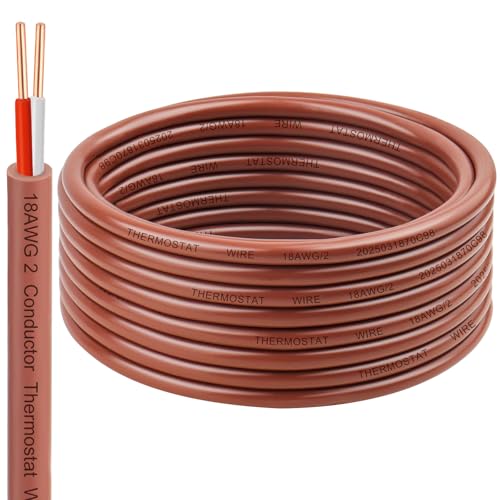
XRDS -RF Thermostat Wire 18/2 20FT Solid Copper

XRDS -RF 18AWG Thermostat Wire 18/5 25FT Solid Copper

Thermostat Wire 18/8 Gauge 8 Conductor 10ft

18/8 Thermostat Wire 20FT CL2 Rated
XRDS -RF 18AWG 2 Conductor Thermostat Wire 20FT White

Google Nest Thermostat Smart Thermostat Snow
XRDS -RF 18AWG Thermostat Wire 18/5 50FT Solid Copper

XRDS -RF Thermostat Wire 18/2 30FT Solid Copper

Sensi Touch Smart Thermostat ST75W-White
Taking A Closer Look At The Options
Short thermostat runs are common in apartments and compact homes where the HVAC air handler sits close to the wall control. This 10-foot, two-conductor 18 AWG solid copper cable handles the basic R and W (or R and C, depending on your setup) signal pair that many legacy thermostats still rely on, which is exactly the kind of clean, minimal wiring the typical 4-wire retrofit demands. Compared to the heavier 18/5 and 18/8 options further down the list, this one stays slim and easy to tuck into tight wall cavities.
For most homeowners swapping an old mercury thermostat for a basic digital wall unit, this cable is sized correctly and stays out of the way. You may find 10 feet too short for a two-story home with a basement air handler, so measuring before you order is worth the two minutes it takes.
Real-World Strengths
- Solid copper cores give you stable 24-volt signal transfer with low resistance, which matters for thermostats that draw continuous power from the cable.
- The 10-foot length suits compact installations where excess slack would just bunch up behind the wall plate.
- Two conductors simplify the wiring job for anyone working with a basic heat-only or cool-only system.
Points To Keep In Mind
- No color-coded inner jacket details are listed, so identify each conductor carefully with a multimeter before termination.
- The brown outer jacket can scuff visibly in exposed basement or attic runs where the wire sits against sharp edges.
Whose Shelf It Belongs On
Apartment dwellers and anyone with a furnace mounted on an interior closet wall will find this 10-foot run is exactly enough cable without waste.
Look Elsewhere When
Multi-stage systems that need common, fan, heat, cool, and a dedicated common wire are better served by the XRDS -RF 18AWG Thermostat Wire 18/5 25FT Solid Copper.
Twenty feet is the sweet spot for many single-story residences where the thermostat sits at one end of the hallway and the air handler lives in the attic or a far closet. This 18 AWG solid copper, two-conductor cable covers the standard red-and-white pair for conventional heating-only or simple cooling thermostats. Compare that to the 10-foot version above: the extra length gives you headroom to route around door frames, joists, and existing wire runs without needing a splice.
The flexible PVC jacket keeps the cable manageable when pulling through drilled holes, which helps in older homes with tight framing. You may find two conductors limiting for a true 4-wire smart thermostat, though, since Wi-Fi thermostats typically need a common wire (C) to draw continuous power, so this cable suits basic upgrades rather than full smart swaps.
What Makes Sense
- Solid copper carries the 24VAC signal with minimal voltage drop, which matters over longer wall-to-air-handler distances.
- The flexible brown PVC jacket bends around corners without cracking, simplifying pulls through tight wall cavities.
- Twenty feet of slack covers most attic-to-wall thermostat drops without leaving you short at the final termination.
Honest Caveats
- Two conductors will not support a smart thermostat that needs R, W, Y, G, and C all in the same jacket.
- The outer brown jacket shows dust and scuffs in exposed basement utility rooms.
Built With In Mind
Homeowners replacing an aging mechanical thermostat on a heat-only system will find this cable is the right size for a no-fuss install.
Skip It When
Anyone upgrading to a Wi-Fi thermostat that requires a common wire should reach for the XRDS -RF 18AWG Thermostat Wire 18/5 25FT Solid Copper instead.
Five conductors unlock the kind of thermostat wiring a smart thermostat actually needs: red for power, white for heat, yellow for cooling, green for fan, and blue for the common wire that keeps the Wi-Fi radios fed. This 18 AWG solid copper cable arrives color-coded, which shortens the install considerably when you are staring at five identical wires in a dim basement. Compared to the 2-conductor options above, this one carries every conductor a modern thermostat asks for in a single jacket, so you avoid bundling separate cables.
The 25-foot length suits mid-sized homes with a single HVAC system pulling air through ducts in a central hallway closet. For most homeowners, having spare conductors on hand means you can repurpose the fifth wire as a C-wire jumper if your existing setup lacks one, which is the most common hurdle when swapping in a Wi-Fi thermostat.
The Helpful Details
- Color-coded conductors reduce wiring mistakes during terminations, especially for first-time installers.
- Five conductors future-proof the install for thermostat upgrades that need a dedicated common wire.
- Solid bare copper resists corrosion better than copper-clad aluminum, which extends service life inside walls.
Things To Consider
- Not CL2 rated, so confirm local code before running this through walls in commercial or multi-family dwellings.
- Twenty-five feet can be tight for basements-to-attic pulls in larger homes, so measure your run carefully.
Key Specs
Best Suited To
Anyone upgrading a single-stage conventional HVAC system to a Wi-Fi thermostat will find this cable has every conductor needed.
Swap It Out When
Multi-stage heating and cooling systems with dehumidification control lines are better served by the Thermostat Wire 18/8 Gauge 8 Conductor 10ft.
Eight conductors in a single jacket sound like overkill until you own a heat pump with multi-stage cooling, a dehumidifier line, and a smart thermostat that wants dedicated C-wire power. This 18 AWG solid bare copper cable gives you spare conductors for every auxiliary function without pulling multiple cables through the same wall cavity. Compared to the 5-conductor option above, this one leaves room for ventilation controls, outdoor sensor feeds, or a future equipment upgrade without re-doing the wire run.
The 10-foot length suits short jumper installs, like replacing a damaged section between the air handler and the wall plate. In our view, most whole-home retrofits will want a longer spool, so consider this cable for repair and patch work rather than full pulls.
What It Does Well
- Eight conductors handle complex multi-stage HVAC setups with room to spare for future features.
- Low-resistance copper keeps voltage steady even with multiple signals traveling the same jacket.
- Durable PVC jacket protects against nicks during tight framing pulls.
Worth Noting
- Ten feet is short for most attic or basement runs, so this works best as a repair or patch cable.
- Eight conductors can be confusing for first-time installers, so label each wire carefully before termination.
Who It Suits Best
Homes with heat pumps, multi-stage cooling, or auxiliary dehumidification will benefit most from the spare conductors this cable provides.
A Better Fit Elsewhere
Anyone running cable through finished walls in code-restricted jurisdictions should consider the 18/8 Thermostat Wire 20FT CL2 Rated for its in-wall fire rating.
CL2 rating is the spec that decides whether your thermostat cable belongs inside a finished wall or stapled along a basement joist. This 18 AWG, 8-conductor solid bare copper cable carries a CL2 designation, which means the jacket meets residential fire-safety standards for in-wall installation. Compare that to the 10-foot 18/8 option above: this one adds the rating plus 20 feet of reach, so it covers the full drop from attic air handlers to second-floor wall thermostats in code-conscious builds.
The eight conductors leave you ready for multi-stage heat pumps, dedicated common wires, and the occasional accessory lead. For most homeowners, the CL2 rating is the deciding factor when an inspector is scheduled to sign off on the work, and this cable clears that bar without adding to the project’s complexity.
The Good Stuff
- CL2 rating meets residential fire-safety standards for concealed in-wall installation.
- Solid bare copper resists corrosion better than copper-clad aluminum (CCA) alternatives.
- Eight conductors support current smart thermostats and leave room for future system upgrades.
Trade Offs
- The thicker jacket with eight conductors is stiffer to bend than 2- or 5-conductor cables, so plan larger drill holes.
- Twenty feet may still fall short for three-story homes with basement HVAC equipment.
Quick Facts
Right Fit For
Homeowners running new cable behind drywall, especially during a remodel or code inspection, will appreciate the CL2 rating on this spool.
Reach For A Different Pick When
Exposed basement runs where in-wall rating is unnecessary can save money with the XRDS -RF 18AWG Thermostat Wire 18/5 25FT Solid Copper.
White-jacketed thermostat cable blends into painted trim and ceiling runs in a way that brown PVC never quite manages. This 18 AWG solid copper, two-conductor cable keeps the same gauge as the brown-jacketed versions above but trades the darker jacket for a finish that disappears against white baseboards. In living spaces where the cable runs along a finished basement ceiling rather than through a wall cavity, the color difference is a small but real upgrade.
The cable ships in multiple length options beyond the 20-foot version shown here, so you can size it to your specific run without splicing. Two conductors still means this cable suits basic systems, not full 4-wire smart installs, but for a heat-only upgrade in a finished room, it pulls double duty as wiring and trim-friendly surface cable.
Practical Pluses
- White PVC jacket stays visually quiet along painted trim and ceiling surfaces.
- Solid copper core keeps signal strength consistent over the full 20-foot run.
- Multiple length options in the same product line let you scale the purchase to the job.
Some Limits To Know
- Two conductors are not enough for a 4-wire smart thermostat that needs a dedicated common wire.
- White jacket shows dirt and grime in unfinished utility spaces, so it works best in finished rooms.
Made For
Finished basement renovations and surface-mounted cable runs in living areas benefit most from a jacket that blends with the surrounding trim.
Not Your Match When
Smart thermostat upgrades that need a C-wire are better served by the XRDS -RF 18AWG Thermostat Wire 18/5 25FT Solid Copper.
The Google Nest Thermostat pairs with a trim plate and a steel mounting plate, which solves the most common retrofit headache: a wall box that is too small, too large, or painted a slightly different color than the rest of the room. The trim kit hides old screw holes and mismatched paint rings, while the steel plate gives you a clean anchor when mounting over an existing electrical box. For homeowners replacing decades-old thermostats, that included hardware is the difference between a 20-minute job and an afternoon of spackling.
The thermostat itself programs itself down when you leave home, which means it learns your schedule through the Google Home app rather than asking you to punch in seven-day schedules. You may find the dependency on the Google Home ecosystem limiting if your household leans toward Apple HomeKit, but for Android-first households the integration feels native.
Strong Points
- Included trim plate covers paint rings and old screw holes from previous thermostats.
- Steel mounting plate lets you anchor the unit over a recessed electrical box cleanly.
- Auto-schedule learning reduces the time you spend programming daily temperature blocks.
- Energy Star certification supports efficiency-focused utility rebates in many regions.
Practical Considerations
- Requires a C-wire or compatible power adapter; older 2-wire systems need extra hardware before install.
- Works most smoothly within the Google Home ecosystem, so Apple HomeKit households may feel locked out.
Feature Snapshot
Perfect Match For
Google Home households with mixed-era walls will appreciate how the included trim kit hides the visual evidence of previous thermostats.
Consider Something Else When
Multi-platform smart homes that lean on Apple HomeKit or Samsung SmartThings should consider the Sensi Touch Smart Thermostat ST75W-White instead.
Fifty feet is the kind of length that comes in handy when the air handler lives on the opposite end of the house from the thermostat. This 18 AWG solid bare copper, 5-conductor cable stretches across full basements, attached garages, and bonus-room additions where a 25-foot spool would leave you splicing mid-run. Compared to the 25-foot 18/5 above, this one doubles the reach while keeping the same conductor count and color coding.
The five conductors still cover a standard 4-wire smart thermostat plus a dedicated common wire, which is the configuration most Wi-Fi thermostats demand. For most homeowners running cable across a finished basement ceiling, the extra length means one continuous pull without junction boxes.
A Strong Showing
- Fifty feet covers large homes and detached additions without mid-run splices.
- Color-coded conductors match standard thermostat terminals for fast, accurate termination.
- Solid bare copper holds signal integrity over long runs better than CCA alternatives.
Less Ideal Details
- The PVC jacket is not CL2 rated, so confirm code requirements before running through enclosed walls.
- Excess length can bunch up behind the thermostat plate if the run is shorter than expected.
Who Should Grab It
Homeowners with single-stage HVAC systems spread across larger floor plans will find this 50-foot spool covers the full pull.
Where Another Pick Suits Better
Multi-stage heat pump systems with accessory leads should reach for the Thermostat Wire 18/8 Gauge 8 Conductor 10ft for spare conductors.
Thirty feet of two-conductor cable sits in the middle of the typical residential range, covering most single-story layouts with attic air handlers or basement furnace drops. This 18 AWG solid copper cable handles the basic power-and-signal pair that conventional thermostats need, with extra slack for routing around obstacles. Compared to the 10-foot and 20-foot versions earlier in this list, this one absorbs the kind of unexpected detours that show up in older homes with cross-bracing inside the walls.
For most homeowners replacing an aging mechanical thermostat on a heat-only or simple cool-only system, this length gets the job done without leftovers to store. Two conductors limit you to legacy thermostat swaps, though, so anyone planning a smart thermostat upgrade should match this to a thermostat that can run on just R and W.
Key Advantages
- Thirty feet absorbs routing detours without forcing a mid-run splice.
- Solid copper conductors carry the 24VAC signal with minimal voltage drop.
- Flexible PVC jacket bends through tight framing without cracking the outer insulation.
What To Weigh
- Two conductors do not support Wi-Fi thermostats that require a dedicated common wire.
- The brown jacket is visible against light-colored trim in finished living spaces.
Right Fit For
Older homes with conventional heating systems and longer-than-average wall-to-furnace distances benefit from the extra slack this cable provides.
A Better Fit Elsewhere
Anyone upgrading to a smart thermostat that needs R, W, Y, G, and C conductors should choose the XRDS -RF 18AWG Thermostat Wire 18/5 25FT Solid Copper.
The Sensi Touch leans hard into platform flexibility, working with Amazon Alexa, Google Assistant, Apple HomeKit, and Samsung SmartThings from the same wall unit. That breadth matters for households that have accumulated a mix of smart speakers and hubs over the years rather than committing to one ecosystem. Compared to the Google Nest above, this one trades auto-schedule learning for native HomeKit support, which is the deciding factor for iPhone-centric homes.
The color touchscreen reads cleanly from across the room, and the built-in level plus illuminated terminals shorten the install. In our view, the requirement for a C-wire is the main hurdle; older homes without a common wire will need to pull new cable or use an adapter before this thermostat powers on.
Useful Strengths
- Broad smart-home compatibility covers Alexa, Google Assistant, Apple HomeKit, and SmartThings.
- Color touchscreen displays temperature clearly from several feet away.
- Built-in level and illuminated terminals simplify DIY installation.
- Standard thermostat footprint avoids the need for patching or painting the wall.
Possible Compromises
- Requires a C-wire for power, which older 2-wire or 4-wire systems may not have.
- Geofencing and scheduling features depend on phone location permissions, which some households disable.
Feature Card
Who Will Love This
Multi-platform smart homes with mixed speakers, hubs, and phones benefit from a thermostat that does not lock them into one ecosystem.
Another Choice May Suit When
Google Home households that prefer automatic schedule learning should consider the Google Nest Thermostat Smart Thermostat Snow instead.
Wiring Up Your Decision
Choosing the right 4-wire thermostat setup starts with a tape measure, not a shopping cart. Pull off the existing wall plate and count the conductors connected to the terminals: R, W, Y, G, and sometimes C. That count sets the baseline, and the smart thermostat you want will tell you whether you need a common wire for continuous power. Cable gauge matters next: 18 AWG is the residential standard for thermostat runs, and anything thinner can drop voltage over longer pulls.
Match the cable to the run. Two conductors suit basic heat-only swaps, but a Wi-Fi thermostat almost always needs R, W, Y, G, and a common wire, which means a 5-conductor cable at minimum. Eight conductors handle multi-stage systems, heat pumps, and accessory lines without forcing a second pull. For walls behind drywall, CL2-rated cable clears most residential building codes, while exposed basement runs can use standard PVC jacketing.
Length is the easiest variable to get wrong. Measure the path from the air handler to the thermostat, including detours around joists and door frames, then add a few feet of slack at each end. Splicing mid-run works but introduces a failure point, so a single continuous pull is the cleaner approach.
Thermostat choice comes down to ecosystem fit and feature priorities. A Google Home household gets the most out of auto-schedule learning, while Apple HomeKit users need a thermostat that supports HomeKit natively. Trim kits and steel mounting plates save wall repair time when the previous thermostat left mismatched paint rings. Touchscreens are nice but not essential, and a C-wire requirement is the most common install blocker across this whole category.
Cross-Cutting Considerations
Wrong Turns To Avoid
The most common slip-up is buying a smart thermostat before checking for a C-wire. Without that conductor, the thermostat cannot draw continuous 24VAC power, and the Wi-Fi radio will not stay online reliably. Pull the existing wall plate and look for a blue wire connected to the C terminal before you order anything, and if it is missing, plan on upgrading the cable alongside the thermostat.
Another trap is matching cable length to the straight-line distance rather than the actual route. Walls hide cross-bracing, fire blocks, and existing wire bundles that force detours, so a tape-measured straight shot underestimates the real run. Add ten to fifteen percent to your measured length to absorb those surprises without leaving yourself short at termination.
What Separates Premium From Basic
The price gap between a basic 2-conductor cable and a CL2-rated 8-conductor spool reflects the rating and conductor count, not the copper quality itself. Premium cable earns its position with fire-safety ratings for in-wall installation and enough conductors to handle multi-stage systems without re-pulling. The upgrade pays off when local code requires CL2, when the HVAC system uses more than four conductors, or when you want spare wires for future equipment changes rather than opening the wall again.
Frequently Asked Questions
What does a C-wire do in a 4-wire thermostat setup?
The C-wire, or common wire, provides a return path for the 24VAC continuous power that Wi-Fi thermostats need to keep their radios and touchscreens alive. Without it, the thermostat has to “steal” power from the heating or cooling circuits, which causes short cycling or display resets on many smart models.
Can a 4-wire thermostat work with only two conductors at the wall?
Basic mechanical thermostats run on just R and W, so a 2-wire cable handles heat-only systems without issue. Smart thermostats generally need R, W, Y, G, and C, which means the existing 2-wire cable has to be replaced with a 5- or 8-conductor run before the upgrade.
Is CL2 rating necessary for in-wall thermostat wiring?
CL2-rated cable is required by most residential building codes when low-voltage wire runs behind drywall in living spaces. Exposed runs along basement joists or attic rafters typically do not need the rating, but in-wall installs in finished rooms generally do.
How long can a thermostat cable run be without signal loss?
18 AWG solid copper cable carries 24VAC signals effectively up to roughly 80 feet in residential settings. Beyond that, voltage drop can cause the thermostat to behave erratically, so thicker cable or a repeater becomes necessary for very long commercial-style runs.
Do all smart thermostats require a common wire?
Most Wi-Fi thermostats need a C-wire for continuous power, though a few models include external power adapters that simulate one. Adapters work for some systems but draw power from the heating or cooling circuit, which can interfere with equipment on older furnaces.
Closing Thoughts
The right 4-wire thermostat setup comes down to matching the cable to the wall, the thermostat to the ecosystem, and the length to the actual route through the house. For most homeowners, that means pairing a CL2-rated, 5-conductor cable with a smart thermostat that supports the voice assistant already on the kitchen counter. Measure twice, match conductors to terminals, and the install tends to land cleanly on the first try.