Baseboard heaters run on high-voltage line-voltage wiring (typically 120V or 240V), which rules out most mainstream smart thermostats right out of the box. Standard battery-powered Wi-Fi units that swap onto a 24V low-voltage HVAC system simply won’t power up on a baseboard circuit, so the shortlist below focuses on either units designed for line-voltage baseboard use or flagship smart thermostats that pair with compatible relay modules or smart sensors for whole-home logic. The picks lean on manufacturer compatibility claims, real-room ownership needs, and honest trade-offs, so you end up with a controller that fits your walls, your wiring, and your day-to-day routine.
The Leading Options At A Glance

Google Nest Thermostat with Trim Kit (Snow)

Honeywell Home RTH9585WF Wi-Fi Color Thermostat

ecobee Smart Thermostat Premium with Smart Sensor

Google Nest Thermostat (Fog)

ecobee SmartSensor 2-Pack

Sensi Touch ST75 Smart Thermostat (Black)
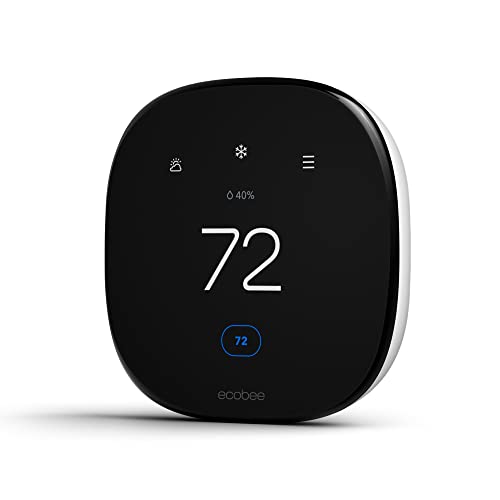
ecobee Smart Thermostat Enhanced

Google Nest Learning Thermostat 4th Gen (Obsidian) + Sensor

Google Nest Learning Thermostat 4th Gen (Polished Gold)

Google Nest Learning Thermostat 4th Gen (Silver) + Sensor
A Closer Look At Each Pick
This Google Nest Thermostat bundles the energy-saving Wi-Fi thermostat with a Snow trim plate and a steel backplate that fits over an existing electrical box. The Snow finish reads soft against white walls, and the included trim plate covers paint gaps and screw holes from older mechanical thermostats, so first-time installers don’t end up staring at a chipped patch. You create the schedule inside the Google Home app on Android or iPhone, then let the thermostat’s presence-detection routine nudge temperatures down when the home is empty. That kind of set-and-forget logic is the reason it lands at the top of the list for homeowners with mixed HVAC systems.
Owners with high-voltage baseboard circuits typically wire this unit through a compatible relay or a 24V adapter conversion kit, since the thermostat itself is a low-voltage device. You may find the wiring vocabulary in the installation guide assumes familiarity with C-wires (the “common” wire that delivers continuous power), and you will likely need an electrician for a true baseboard swap. For a household already running a forced-air furnace or heat pump with a C-wire present, this is the cleanest path to app-first scheduling and voice control through Google Assistant.
A Few Strong Suits
- Energy Star certified, so standby draw stays modest and utility rebates often apply where programs exist
- Trim plate conceals older paint lines, meaning you can swap from a 1990s mechanical thermostat without spackling the wall
- Schedule logic lives in the Google Home app, which most people with Android phones already have open daily
- Auto-away detection trims runtime during work hours, which usually translates to noticeable savings across a heating season
- Snow finish blends into lighter walls better than the bolder Obsidian variant on the list
Things To Consider
- Not a direct fit for 120V or 240V baseboard circuits, so plan a relay module and an electrician visit if you go this route
- Trim plate installation can feel loose on uneven drywall, and owners commonly report needing longer screws from a hardware store
- App-only setup may frustrate shoppers who prefer a physical button layout
Feature Snapshot
Who It Suits Best
Homeowners with a low-voltage HVAC system plus a willingness to add a relay module for baseboard zones, who want app-first scheduling with voice control through Google Assistant.
A Better Fit Elsewhere
For homeowners who want a touchscreen-first experience without app dependence, the Honeywell Home RTH9585WF brings a larger color display and a more traditional programming flow.
The Honeywell Home RTH9585WF leans into a bright, full-color touchscreen that reads from across a hallway, paired with a custom wall plate that hides old paint lines. Programming options stay flexible, so you can build a seven-day schedule, follow a utility company’s peak pricing window, or hand off the heavy lifting to the app. Compared with the Google Nest in the previous slot, this unit feels more like a traditional thermostat with smarts bolted on, which appeals to homeowners who don’t want to fish out a phone for every adjustment. It’s also a strong fit for renters who swap out baseboard zones but keep their furnace running on a conventional 24V system.
The standout spec to know about is the wiring compatibility: forced air, hot water, steam, and heat pumps with electric backup, but explicitly not 120V or 240V electric baseboard heat. That detail matters more than any feature on the box, because installation on the wrong circuit can damage the unit or trip a breaker. You may find the touchscreen menu hierarchy deeper than expected during the first weekend, and there’s a learning curve before muscle memory kicks in for routine changes.
Standout Benefits
- Color touchscreen makes temperature and schedule changes visible from a distance
- Flexible programming covers seven-day routines and time-of-use peak pricing plans
- Wall plate accessory covers retrofit gaps in one step
- App control through Honeywell Home keeps the thermostat reachable while traveling
Worth Noting
- Manufacturer explicitly excludes 120V and 240V baseboard heat, so a relay module is required for those zones
- Touchscreen menu depth can feel slow at first, and you may want to keep the quick-reference card nearby
- Custom color backplate replacement takes a moment to swap out, so choose your color carefully
Feature Snapshot
Right Fit For
Homeowners running forced-air, hot water, or steam systems who want a physical touchscreen plus app control, and who don’t mind adding a relay for any baseboard zones in the home.
Look Elsewhere When
For households built entirely around line-voltage baseboard heat without a relay in place, the ecobee Smart Thermostat Enhanced paired with SmartSensors offers a smoother multi-room path.
The ecobee Smart Thermostat Premium layers a built-in air quality monitor onto the standard ecobee package, plus an included SmartSensor that watches the room you actually live in. Voice assistants sit inside the unit itself, so you don’t need a separate Echo or HomePod to bark temperature changes. Compared with the Honeywell above, the Premium trades some screen real estate for deeper sensor data and tighter integration with Apple HomeKit, Google Home, and Alexa simultaneously. The all-metal face also gives it a more substantial feel on the wall, which matters if your thermostat sits in a visible hallway.
Where this unit shines for baseboard households is the SmartSensor combination. You place the sensor in a drafty far bedroom, the thermostat in the main living area, and ecobee’s logic averages or prioritizes whichever room you choose. You may find the air quality readouts more interesting than strictly necessary for heating control, but they’re a nice bonus for households that also battle seasonal allergens. The honest trade-off is wiring: a C-wire adapter is recommended for most installs, and baseboard-only homes still need a relay for high-voltage switching.
The Value In It
- Built-in air quality monitor, useful for households that run baseboard heat and want a quick VOC (volatile organic compound) read on the room
- SmartSensor included, so multi-room comfort tuning works out of the box without buying extras
- Voice assistants built into the unit, removing the need for a separate smart speaker at the thermostat
- Premium metal face resists fingerprints better than the glossy plastic on cheaper options
Points To Note
- C-wire adapter required for many installs, which adds a wiring step before first boot
- Baseboard compatibility still depends on an external relay module for line-voltage switching
- Premium pricing reflects the extras, so budget-focused shoppers may not need the air quality feature
Made For
Tech-forward households with mixed heating systems who want multi-room comfort sensing, voice control, and air quality readouts on a single hub-style thermostat.
Swap It Out When
For shoppers who want similar scheduling muscle without paying for the air quality monitor, the ecobee Smart Thermostat Enhanced drops the extras while keeping the SmartSensor workflow.
The Fog variant of the Google Nest Thermostat skips the trim kit but keeps the same scheduling brain as the Snow version in slot one. It’s the practical pick for first-time smart thermostat shoppers who already have a clean rectangular wall opening and don’t need to cover old mounting holes. The foggy gray face reads neutral against most paint colors, so it slips into a hallway without drawing attention. You set the schedule in the Google Home app, and the unit nudges itself down when nobody’s home.
What you’re giving up compared with slot one is the bundled trim plate and steel backplate, which means any cosmetic patchwork falls on you. You may also notice this unit leans harder on the app for advanced settings, so traditionalists who like pressing physical buttons may bounce between the wall and their phone more than they’d prefer. For a low-voltage forced-air or heat pump system with an existing C-wire, the install is typically a 30-minute Saturday project.
Notable Upsides
- Energy Star certified at a more accessible price than the trim kit bundle above
- Fog finish blends with darker walls and wood trim, useful in craftsman-style homes
- Schedule and presence logic live in the Google Home app, so most configuration happens on a phone
- Compact footprint fits tight wall spaces where larger touchscreen units feel crowded
Minor Gripes
- No trim plate included, so retrofit installs may show paint gaps from older thermostats
- App-first setup may frustrate shoppers who want every option on the wall unit
- Same line-voltage caveat as slot one: a relay module is required for baseboard-only circuits
Feature Snapshot
Who Should Grab It
First-time smart thermostat shoppers who already have a clean retrofit opening and want Google Home scheduling without paying for the bundled trim kit.
Reach For A Different Pick When
For households that need to hide old mounting holes without a spackling project, the Snow trim kit version in slot one ships the plate hardware in the box.
The ecobee SmartSensor 2-Pack is a complementary piece rather than a standalone thermostat, but it’s the linchpin for whole-home comfort in baseboard-heavy houses. Each sensor uses infrared technology to detect when a room is occupied and pushes that signal wirelessly back to the ecobee thermostat over roughly a 60-foot range. You stick one in a drafty far bedroom, another in a home office that runs cold in winter, and let the thermostat decide which room actually drives the heat call. This pairing logic turns a single wall thermostat into something that behaves more like a zoned system, which matters when baseboard loops heat unevenly.
You may find the sensors feel small and almost forgettable on a shelf, and they run on coin-cell batteries that owners commonly swap every year or two. The catch is obvious: this is an accessory, so you’ll pair it with an ecobee thermostat from slot three or slot seven on this list. Without a parent unit, the sensors don’t do much on their own. For households chasing room-by-room balance without rewiring baseboard loops, this two-pack is where the comfort difference lives.
The Case For It
- Infrared occupancy detection catches body heat across the room, more reliable than motion-only sensors for slow-moving sleepers
- 60-foot wireless range covers most apartments and small homes without repeaters
- Coin-cell batteries are widely available, so a swap takes a minute during seasonal maintenance
- Two-pack pricing undercuts buying sensors individually for starter multi-room setups
Room For Improvement
- Requires a compatible ecobee thermostat to function, so it isn’t a standalone purchase
- Sensors can drift out of sync after firmware updates, and re-pairing through the app is occasionally required
- Battery replacement is easy but adds an annual task to your seasonal checklist
Feature Snapshot
Perfect Match For
Households with an existing ecobee thermostat that want to add bedroom and home office sensing to balance uneven baseboard heating without rewiring.
Not Your Match When
For homeowners without an ecobee thermostat yet, start with the ecobee Smart Thermostat Enhanced in slot seven, which ships with a sensor in the box.
Sensi by Emerson leans on a century of HVAC experience, and the ST75 touchscreen model brings that heritage to a color display with Wi-Fi scheduling and Alexa support. The Black face reads modern, and the unit is positioned as a DIY-friendly install for homeowners comfortable popping the cover off their existing thermostat. Compared with the Honeywell above, the Sensi skips the deep custom color backplate options in favor of a more focused design language and a tighter privacy story. The app also surfaces HVAC health data, which is a nice touch for households that want their thermostat to flag a struggling system before it fails.
The wiring note that matters here: a C-wire is required, and Sensi is clear about that in the install checklist. You may find the touchscreen response a touch slower than pricier flagships, especially on a cold morning when the unit is warming up. For baseboard households, the same external relay caveat applies: this is a low-voltage controller that signals a relay module to switch the high-voltage baseboard circuit.
Strengths Worth Knowing
- Touchscreen color display with straightforward menu flow, easier to navigate than older button-based Sensi units
- Data privacy focus from Emerson, which markets the unit as not selling personal data
- DIY-friendly install with a clear C-wire checklist inside the box
- HVAC performance data in the app, useful for catching early signs of a struggling system
Trade Offs
- C-wire required, so older homes without a common wire need an adapter or rewiring
- Touchscreen response lags slightly on cold mornings, especially before the display fully warms up
- Baseboard compatibility still depends on an external relay module for high-voltage switching
Built With In Mind
Homeowners who want a privacy-forward touchscreen thermostat from a brand with deep HVAC roots and an app that surfaces system health data alongside scheduling.
Another Choice May Suit
For shoppers who prefer a deeper Google Home ecosystem and don’t need the privacy messaging, the Google Nest Thermostat in slot four keeps the install simpler and the app familiar.
The ecobee Smart Thermostat Enhanced trades the Premium’s air quality monitor for a tighter price tag while keeping the schedule smarts and the SmartSensor workflow. It’s the workhorse option for households that want ecobee’s room-aware logic without paying for the extras on the Premium. Compared with slot three, you give up the built-in air quality readouts and the metal face, but you keep Apple Watch support and the eco+ feature that nudges temperatures down when you’re asleep or away. For a baseboard-heavy home with uneven heating, that’s a fair trade.
The honest read is that most shoppers won’t notice the missing air quality monitor, and the Enhanced still benefits from regular firmware updates that ecobee rolls out over time. You may find the touchscreen size a touch smaller than the Honeywell above, and the on-wall aesthetic reads clean rather than flashy. As with the other low-voltage units in this list, baseboard-only circuits need an external relay to do the actual high-voltage switching.
The Good Stuff
- eco+ adjusts temperatures automatically based on occupancy and sleep patterns
- Apple Watch support lets you nudge the thermostat from your wrist without reaching for a phone
- Works across Apple HomeKit, Google Home, and Alexa simultaneously
- Lower entry price than the Premium while keeping the sensor-driven comfort tuning
Soft Spots
- Smaller touchscreen than competing color units, which may bother shoppers who like big numbers
- No built-in air quality monitor, unlike the Premium model in slot three
- Baseboard wiring still requires an external relay module for line-voltage switching
Best Suited To
Multi-room households that want ecobee’s sensor-driven scheduling and broad smart home compatibility without paying for air quality extras.
Consider Something Else When
For homeowners who want to keep Google Home at the center of their smart home, the Nest Thermostat in slot four offers similar scheduling with a more familiar app for Android households.
The 4th generation Nest Learning Thermostat is Google’s smartest thermostat yet, and the Obsidian finish reads deep and reflective against light walls. It learns the temperatures you like, when you like them, and adapts as your routine shifts across the week. The included Nest Temperature Sensor pushes that intelligence into a second room, which is where baseboard-heavy homes finally get a fair shake at zoned comfort. The dial feels more substantial than older Nest generations, and the on-wall presence is closer to a piece of jewelry than a wall accessory.
The honest trade-off is that the Learning Thermostat still expects low-voltage wiring, so a baseboard-only home needs a relay for high-voltage switching. You may also find the learning curve more hands-off than other units on this list: the thermostat does the schedule building, but it takes a week or two before it really nails your routine. Once it does, the experience is genuinely hands-free, which suits busy households that don’t want to fiddle with programming.
What Stands Out
- Self-learning routine mapping removes the need to hand-build temperature schedules
- Obsidian finish pairs with darker walls and modern interior palettes
- Nest Temperature Sensor included for multi-room balancing from day one
- Substantial metal dial feels premium on the wall
Honest Caveats
- Learning period takes a week or two before the schedule truly reflects your habits
- Premium pricing puts it above most other picks on this list
- Same line-voltage caveat as the rest: a relay module is required for baseboard switching
Whose Shelf It Belongs On
Homeowners who want the smartest thermostat on the list, don’t mind paying for the learning engine, and appreciate the multi-room sensor bundle in the box.
A Better Fit Elsewhere
For shoppers who want sensor-driven comfort at a lower entry cost, the ecobee Smart Thermostat Enhanced in slot seven keeps the multi-room logic without the premium learning price.
The Polished Gold variant of the 4th generation Nest Learning Thermostat brings the same self-learning engine as the Obsidian version, with a warmer finish that pops against white walls or muted grays. It ships with a Nest Temperature Sensor, so multi-room comfort works out of the box without buying extras. Compatibility with Alexa, Apple HomeKit, and Google Home makes it one of the more ecosystem-flexible picks on the list, which matters in households that mix and match voice assistants. The dial footprint is compact compared with some color-screen thermostats, so it fits narrow wall sections where larger units feel cramped.
The interesting design note is the dial size: smaller than older Nest generations, which keeps the on-wall profile sleek. You may find the gold finish polarizing, since it’s bolder than the silver or obsidian options. As with the other low-voltage units on this list, baseboard-only circuits need an external relay to handle the actual high-voltage switching, so plan for that installation step.
Reasons It Performs
- Self-learning engine builds a schedule based on your actual routine
- Nest Temperature Sensor included for balanced multi-room comfort
- Compact dial footprint fits narrow wall sections between door frames
- Triple ecosystem support across Alexa, Apple HomeKit, and Google Home
Points To Keep In Mind
- Polished gold finish is bolder than neutral alternatives, so it polarizes shoppers
- Same relay-module requirement for line-voltage baseboard circuits
- Learning curve takes a week or two before the schedule truly settles
The Right Fit
Shoppers who want the Nest learning engine with a warmer metallic finish and a compact dial that fits tight wall sections, plus included temperature sensor.
Where Another Pick Suits Better
For households that prefer a quieter finish and broader compatibility with low-voltage HVAC, the Honeywell Home RTH9585WF reads more neutral on the wall.
The Silver variant rounds out the Nest Learning Thermostat trio with a finish that disappears into most walls. It keeps the same self-learning schedule logic and the included Nest Temperature Sensor, so multi-room comfort works without buying extras. Compared with the bolder Obsidian and Polished Gold versions on this list, Silver is the safe choice for homeowners who don’t want the thermostat to become a focal point. It also tends to age well visually, since brushed silver finishes don’t show fingerprints as readily as darker mirror-polished alternatives.
You may find the learning engine takes a week or two before the schedule truly matches your routine, and that’s a fair trade for hands-free automation once it settles. The same line-voltage caveat applies: a baseboard-only home needs a relay module to handle the actual high-voltage switching. For homeowners who want flagship Nest smarts in a finish that blends with almost any wall color, this is the practical pick of the three Nest variants here.
Practical Pluses
- Silver finish reads neutral against most wall colors and ages well visually
- Self-learning engine removes the need for manual schedule building
- Nest Temperature Sensor included for balanced multi-room comfort
- Compact dial footprint fits narrow wall sections between door frames
Some Limits To Know
- Learning period takes a week or two before the schedule truly settles
- Same relay-module requirement for line-voltage baseboard circuits
- Premium pricing above most other picks on this list
Who Will Love This
Homeowners who want flagship Nest learning smarts in a neutral finish that blends with almost any wall color, plus a temperature sensor in the box for multi-room balancing.
Skip It When
For shoppers who prefer a more visible finish and don’t mind the bolder look, the Obsidian version in slot eight makes a stronger statement on the wall.
What To Weigh Before Choosing Smart Thermostats For Baseboard Heaters
Wiring compatibility sits at the top of the checklist, because baseboard heaters run on 120V or 240V line-voltage circuits while most smart thermostats on the market are designed for 24V low-voltage HVAC systems. Connecting a low-voltage thermostat directly to a line-voltage baseboard circuit will damage the unit and create a serious safety hazard, so the first move is to confirm what your existing thermostat wiring actually carries. A standard 24V setup usually has a labeled C-wire or a wire bundle that includes red, white, green, and blue conductors. A line-voltage baseboard circuit will have thicker wires, often two black conductors with a grounding wire, and a much higher voltage rating stamped on the existing thermostat body. If the latter is the case, you’ll need either a line-voltage smart thermostat rated for the load or a low-voltage smart thermostat paired with a compatible relay module rated for the wattage of your baseboard loop. Electricians commonly install relays in the basement or mechanical room where the wiring terminates.
Sensor coverage matters more than screen size for baseboard-heavy homes. Baseboard loops heat unevenly, and a thermostat mounted in a hallway often doesn’t reflect the actual comfort in a far bedroom. SmartSensor pairs, like the ecobee 2-Pack in slot five, let the thermostat prioritize or average readings from multiple rooms. For multi-room balancing without rewiring baseboard loops, this kind of accessory delivers more practical comfort than a bigger touchscreen.
App ecosystem and voice compatibility drive the daily experience. Nest thermostats slot cleanly into Google Home, ecobee units flex across Apple HomeKit, Alexa, and Google Home, and Sensi leans on its own app with Alexa support. Pick the ecosystem you already use on your phone, since you’ll live inside that app for schedule edits, vacation modes, and seasonal tweaks.
Common Shopping Slip Ups
The most common mistake is treating a smart thermostat purchase like a simple swap. Shoppers buy a flagship unit, open the box, and discover their baseboard circuit isn’t compatible. The fix is a quick wiring check before checkout: pop the cover off the existing thermostat, look at the wire gauge and any voltage label, and confirm what your system actually runs on. A second slip-up is ignoring the C-wire requirement. Many Wi-Fi thermostats need continuous 24V power for the screen and Wi-Fi radio, and older homes often lack the common wire. Plan for an adapter or a quick electrician visit before install day, rather than after the box is open on the kitchen counter.
What Separates Premium From Basic
Higher-tier models like the Nest Learning Thermostat and the ecobee Premium pay for self-learning engines, multi-room sensors, and built-in air quality monitors. For tech-heavy households that want hands-free schedule building and broader ecosystem support, that upgrade is worth the cost. The trade-off shows up in the install: premium units often need a C-wire adapter or a relay module for baseboard homes, which adds an electrician visit to the budget. For shoppers who mainly want app-first scheduling and don’t care about learning engines, mid-tier options like the ecobee Enhanced or the Honeywell RTH9585WF cover the same day-to-day needs at a lower entry price. The honest read is that premium thermostats shine in mixed HVAC homes, while baseboard-only households benefit more from spending on a quality relay module than on the top-of-the-line screen.
Frequently Asked Questions
Can any smart thermostat control electric baseboard heaters?
No. Most smart thermostats on the market are designed for low-voltage 24V HVAC systems and will not work safely on 120V or 240V baseboard circuits. You need either a line-voltage smart thermostat rated for the load or a low-voltage smart thermostat paired with a compatible relay module rated for the wattage of your baseboard loop. Confirming your existing wiring before purchase saves you a return trip.
Do I need a C-wire for these thermostats?
Many Wi-Fi thermostats, including the Nest Learning, ecobee, and Sensi units, require a C-wire (common wire) for continuous 24V power. Homes without a common wire need an adapter or a quick rewiring step before installation. The Honeywell RTH9585WF also benefits from a C-wire but the install guide clarifies the exact wiring needs per system.
Will smart thermostats save money on baseboard heating?
Smart scheduling and presence detection typically reduce runtime during unoccupied hours, which can translate into noticeable savings across a heating season. The exact savings depend on your local rates, insulation quality, and how aggressively the schedule is set. ENERGY STAR certified units also qualify for utility rebates in regions where programs apply, which improves the payback.
How many SmartSensors do I need for a baseboard home?
For a typical apartment or small home, two to three sensors cover the main living area, a primary bedroom, and a home office. The ecobee SmartSensor 2-Pack in slot five is a sensible starting point, and you can expand later if drafty rooms remain. Place each sensor on a shelf or interior wall, away from direct sunlight and heating vents.
Are these thermostats difficult to install yourself?
Most low-voltage swaps take 30 minutes with basic tools, assuming a C-wire is present. Line-voltage baseboard installs typically require a licensed electrician because of the higher voltage and the relay module wiring. Reading the install guide and confirming wiring before you start saves time and prevents short circuits during the first power-up.
Closing Thoughts
The right pick comes down to matching your wiring, your rooms, and the smart home ecosystem you already use. For a baseboard-heavy home, the sensor pair in slot five often does more for daily comfort than a flagship thermostat alone, so it’s worth treating as part of the bundle rather than an optional accessory. Confirm your wiring before you buy, and you’ll end up with a setup that actually warms the rooms you live in.