Picking the right commercial thermostat shapes how every workday feels, whether you manage a retail floor, a busy warehouse, or a multi-zone office. The models below cover genuine commercial jobs alongside their close residential cousins, since light commercial spaces often rely on the same hardware. You’ll find honest reads on each pick, the trade-offs that matter, and clear guidance on who each thermostat suits best.
A Side-By-Side Look

PRO1 T725 Heat Pump/Conventional Programmable Wall Thermostat
PRO1 T771 Single Stage Non-Programmable Wall Thermostat

PRO1 T701 Single Stage Non-Programmable Wall Thermostat
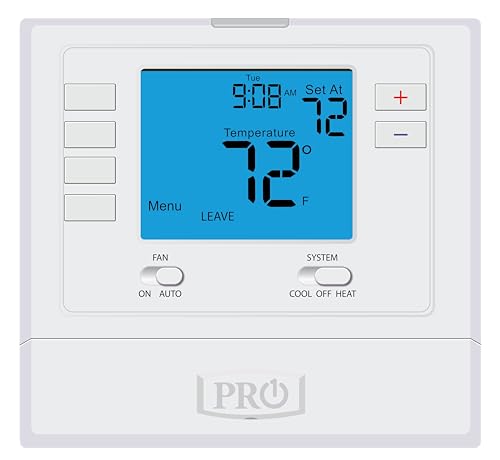
PRO1 T715 Multi-Stage Programmable Gas Thermostat

Heagstat Non-Programmable Thermostat 1 Heat/1 Cool

PRO1 T721 Non-Programmable Wall Thermostat

Venstar T2800 Commercial Platinum Slimline Thermostat

OJ Microline UTN4 Radiant Floor Heat Thermostat
PRO1 T805 Single Stage Programmable Wall Thermostat

42002-0007S Control Board Kit for Pool/Spa Heaters
A Breakdown Of The Leading Choices
The PRO1 T725 sits in an interesting middle ground, covering both 2 heat/1 cool heat pump setups and 1 heat/1 cool conventional systems. That dual personality makes it a practical choice for light commercial spaces that have inherited mixed equipment over the years, like a small office that upgraded cooling but kept an older furnace. The 4 sq. in. blue backlit display reads clearly from across a room, which matters in lobbies and break areas where you glance at temperature more than you tinker with it.
Programmability runs 7-day or 5/1/1, so you can set weekday and weekend schedules that match a real workweek. Compared to the simpler PRO1 T701 that follows, this unit trades manual simplicity for scheduled automation. The honest read is that it works well for facilities managers who want scheduling without stepping into full smart-thermostat territory.
Positive Takeaways
- Dual support for heat pump and conventional systems removes the need to stock two different thermostats on service calls
- 7-day and 5/1/1 programming let you match shifts, weekdays, and weekend hours without manual resets each morning
- The 4 sq. in. blue backlit screen stays readable in dim hallways and back offices
- Sits on the proven T700 platform that PRO1 has used across its light commercial line
Things To Consider
- Hardwired installation is typical, so plan wire routing during a remodel or new-build window rather than expecting a quick swap
- Programming setup can feel slow on the first walk-through if you have never configured a programmable wall unit before
Who It Suits Best
Facilities managers and small-business owners running mixed-equipment properties who want a set-and-forget schedule.
Where Another Pick Suits Better
The Venstar T2800 Commercial Platinum Slimline Thermostat fits higher-stage commercial sites that need three heating and two cooling stages.
The PRO1 T771 is built for spaces that don’t fit the standard home-thermostat mold. The setpoint range stretches down to 25°F, which opens up garages, sheds, and workshops where freeze protection matters more than comfort scheduling. Non-programmable means no menu diving, and the 4 sq. in. blue backlit display stays legible in low-light shops.
Swing adjustment and calibration controls give a technician enough tuning room to keep a heater cycling correctly in cold conditions. Where the PRO1 T725 ahead leans on automation, this model leans on simplicity. It is well matched to property managers maintaining several outbuildings where fewer moving parts translates into fewer service calls.
What Makes Sense
- Setpoint range reaching 25°F supports freeze protection for uninsulated or semi-heated spaces
- Non-programmable design reduces user error in multi-tenant or staff-shared buildings
- Calibration controls allow precise tuning during seasonal swings
Room For Improvement
- Lacks scheduling, so any nighttime setback has to happen manually at the wall
- Single-stage only, which makes it a poor fit for two-stage gas equipment
Built With In Mind
Garage owners, workshop operators, and property managers maintaining detached structures that need reliable low-temperature heating control.
Look Elsewhere When
You run a multi-stage gas furnace and need 2 heat/2 cool staging, where the PRO1 T715 Multi-Stage Programmable Gas Thermostat fits better.
The PRO1 T701 is the kind of thermostat that quietly does its job in the background. Built on the T700 platform, it offers a 4 sq. in. blue backlit display with a glow-in-the-dark light button for those after-hours adjustments when the lights are off. The non-programmable design makes sense in spaces where staff rarely change the temperature, like small stockrooms or back-of-house offices.
You may find this unit wins on everyday usability rather than advanced features. Compared to the PRO1 T771 covered earlier, it sacrifices the wide low-temperature setpoint range for a more standard comfort-focused window. It supports gas or electric conventional 1 heat/1 cool setups, which covers the bulk of small business HVAC systems.
Good Reasons To Consider
- Glow-in-the-dark light button helps during power blips or overnight visits
- Large display reduces misreads in low-light back offices
- Non-programmable layout suits staff who only touch the thermostat occasionally
Worth Noting
- Standard comfort-only setpoint range, so it isn’t suited to garages needing deep freeze protection
- No scheduling means setback temperatures happen manually if at all
Right Fit For
Small shops, offices, and stockrooms running simple single-stage HVAC who want reliability over automation.
Consider Something Else When
You want a larger display and programmable scheduling, in which case the PRO1 T805 Single Stage Programmable Wall Thermostat offers a 7 sq. in. screen.
The PRO1 T715 handles 2 heat/2 cool gas systems with a programmable schedule that fits how a building actually uses its HVAC. The T700 platform foundation brings the same 4 sq. in. blue backlit display and glow-in-the-dark light button found on the T701 ahead, so familiar hardware service is straightforward for technicians.
Power comes through either AA batteries or a hardwired connection, depending on what the existing wiring supports. For most service replacements, the battery option avoids fishing a common wire through old walls. This thermostat sits between the residential-feeling T701 and the commercial-focused Venstar T2800 reviewed later, giving multi-stage capability without overcommitting on commercial-specific outputs.
Practical Advantages
- 2 heat/2 cool staging improves efficiency on modern variable-output gas furnaces
- 7-day, 5/1/1, or non-programmable modes let the unit scale with the user’s comfort needs
- Dual power options (battery or hardwired) ease retrofit installs
Soft Spots
- Limited to gas systems, so heat pump properties should look at the PRO1 T725 or T721
- Programming interface can feel dated compared to app-driven competitors
Best Suited To
Light commercial spaces with two-stage gas furnaces that want scheduling control without smart-home overhead.
Swap It Out When
You need three-stage heating for a larger rooftop unit, where the Venstar T2800 Commercial Platinum Slimline Thermostat offers the extra stage.
The Heagstat Non-Programmable Thermostat keeps things uncomplicated for single-stage conventional heating and cooling. It works with 24VAC forced-air systems including gas, oil, and electric furnaces paired with a separate air-conditioning condenser. A white backlight makes the display visible in low-lit utility rooms and basements where commercial thermostats often live.
Wiring is restricted to two to five conductors, so installers should confirm the existing bundle before ordering. For most single-stage retrofits in older buildings, that constraint actually works in your favor since it prevents mismatched installs. It is a straightforward swap-in for properties where programmability isn’t a priority.
Everyday Advantages
- Compatible with gas, oil, and electric conventional furnaces, broadening its install base
- White backlight improves readability in basement and utility-room settings
- Non-programmable operation keeps the user interface approachable for occasional adjustments
Possible Compromises
- Two-to-five-wire limit excludes 6-8 wire systems common in newer multi-stage setups
- No scheduling, which limits energy savings from nighttime setbacks
Whose Shelf It Belongs On
Property owners on a tight budget replacing an aging single-stage thermostat in a workshop, basement, or back office.
Another Choice May Suit
Multi-stage gas systems are better served by the PRO1 T715 Multi-Stage Programmable Gas Thermostat, which handles 2 heat/2 cool.
The PRO1 T721 takes the dual-system flexibility seen in the T725 earlier and strips away the scheduling. That makes it a quieter, less complex option for properties that have mixed equipment but a stable occupancy pattern. The 4 sq. in. blue backlit display and glow-in-the-dark light button stay consistent across the T700 platform family.
For most service-call replacements, the AA battery option removes the need to pull a common wire from the wall. It supports 2 heat/1 cool heat pumps and 1 heat/1 cool conventional systems, which covers a wide range of light commercial HVAC equipment. The trade-off is no scheduling, so any setback temperatures stay manual.
What Pays Off
- Supports both heat pump and conventional systems in a single unit, simplifying inventory
- Glow-in-the-dark button offers after-hours visibility without needing nearby light
- Battery-powered option avoids common-wire headaches in older walls
Honest Caveats
- Non-programmable operation means staff must manually adjust for unoccupied hours
- Limited to 2 heat/1 cool heat pump or 1 heat/1 cool conventional, so multi-stage gas won’t fit
Perfect Match For
Mixed-equipment properties where staff rarely change setpoints and simplicity beats scheduling.
Reach For A Different Pick When
Scheduling matters to your operation, in which case the PRO1 T725 Heat Pump/Conventional Programmable Wall Thermostat adds 7-day automation.
The Venstar T2800 brings genuinely commercial-grade staging to the table, supporting 3 heat and 2 cool with three configurable outputs for installation flexibility. The slimline housing fits shallow commercial walls and box mounts cleanly over conduit-fed wiring common in older buildings. Backlit, color-coded keys and legends help reduce operator confusion in fast-paced environments.
Service filter and UV light indicators give maintenance crews the heads-up they need to keep equipment running smoothly. Non-volatile memory preserves the schedule through power loss, a meaningful feature in commercial settings where nuisance trips happen. Compared to the residential-leaning PRO1 units earlier, this one targets true light commercial use cases.
Benefits That Matter
- 3 heat/2 cool staging capacity matches larger rooftop units and commercial boilers
- Configurable outputs give installers wiring flexibility on retrofit projects
- Filter and UV indicators reduce missed maintenance intervals in busy facilities
- Non-volatile memory protects the schedule through power interruptions
A Few Limitations
- More complex setup may require a technician for first-time configuration
- Commercial-grade price tier relative to simpler residential units like the Heagstat ahead
Key Features At A Glance
Who Will Love This
Building engineers and contractors working on light commercial sites with multi-stage rooftop units or commercial-grade boilers.
Where A Sibling Pick Shines
Smaller single-stage jobs are better served by the PRO1 T701 Single Stage Non-Programmable Wall Thermostat, which is simpler and less expensive.
The OJ Microline UTN4 shifts the conversation from air-temperature control to surface-temperature control, which is what radiant floor heating actually delivers. The built-in Class A GFCI (Ground Fault Circuit Interrupter) is required for underfloor heating systems and protects against electrical faults in environments where moisture can show up. Dual sensing uses both floor and air sensors for accurate regulation.
Voltage compatibility covers 120V and 240V systems, so it works with common North American radiant installs. It functions as a non-programmable thermostat with a straightforward interface suited to occasional adjustment. For commercial lobbies, spas, or tiled entryways where comfort comes from the floor up, this unit is the right tool.
Real Benefits
- Built-in Class A GFCI meets code requirements for underfloor heating installs
- Dual sensing balances floor temperature and ambient air readings for consistent comfort
- 120/240V compatibility covers most North American radiant setups
Things To Weigh
- Non-programmable, so unattended setback isn’t possible without an external schedule
- Specific to electric radiant floors, with no relevance to forced-air HVAC systems
Made For
Spas, tile lobbies, and commercial spaces running electric radiant floor heating where code-compliant GFCI protection is non-negotiable.
Skip It When
You run forced-air HVAC, where the PRO1 T725 or Venstar T2800 covers the actual equipment type.
The PRO1 T805 stands out for its extra-large 7 sq. in. blue backlit display, the biggest screen in this roundup. That extra real estate matters in commercial settings where people glance at the thermostat from across a room rather than leaning in to read it. The T800 platform supports 7-day, 5/1/1, or non-programmable modes, giving flexibility over how the schedule runs.
For most light commercial sites, the programmable modes deliver meaningful energy savings during unoccupied hours. The unit covers 1 heat/1 cool conventional systems, which aligns with smaller offices, retail floors, and similar spaces. Where the T701 covered earlier keeps things simple, this one adds scheduling visibility on a larger screen.
A Strong Showing
- 7 sq. in. display is the largest in this lineup, improving readability from a distance
- 7-day, 5/1/1, or non-programmable modes cover a wide range of occupancy patterns
- Blue backlighting reduces eye strain in dimly lit back rooms
Trade-Offs To Consider
- Larger housing needs more wall space than slimmer units like the Venstar T2800 covered earlier
- Single-stage only, so multi-stage gas or heat pump properties won’t fit
Feature Snapshot
Who Should Grab It
Small offices and retail floors with single-stage HVAC where readability and scheduling matter more than multi-stage capacity.
Not Your Match When
You operate multi-stage gas equipment, where the PRO1 T715 Multi-Stage Programmable Gas Thermostat fits the staging profile.
The 42002-0007S control board kit with the 472610Z switch pad is a replacement part rather than a wall-mounted thermostat. It is built for Pentair MasterTemp 200/250/300/400 and Sta-Rite Max-E-Therm SR200/SR333/SR400 pool and spa heaters, covering a wide swath of common commercial-grade pool equipment.
The kit replaces existing control board assembly parts and fits as a swap-in repair when an existing unit has failed. For facility managers maintaining pool houses, hotel spas, or aquatic centers, this kind of part keeps downtime short. You may find it useful to confirm the exact heater model number before ordering since compatibility across the SR and MasterTemp lines varies by region.
Strong Points
- Compatible with multiple Pentair and Sta-Rite heater models, simplifying replacement inventory
- Switch pad included so the full control surface is replaced in one order
- Direct-swap design reduces heater downtime for commercial pool operations
A Few Limitations
- Replacement part rather than a general-purpose thermostat, so it doesn’t apply to air-handling systems
- Requires confirming heater model numbers since regional variants differ in compatibility
Feature Rundown
Built With In Mind
Aquatic facility managers, hotel engineers, and pool service technicians replacing a failed control board on common Pentair and Sta-Rite heaters.
A Better Fit Elsewhere
Air-conditioning thermostats are unrelated, so the PRO1 T701 or PRO1 T805 covers conventional HVAC needs instead.
What Matters When Choosing Commercial Thermostats
Choosing a commercial thermostat starts with your system type, since a 24VAC forced-air setup has different needs than an electric radiant floor. Confirm the number of heating and cooling stages your equipment supports, because staging determines how efficiently the system can modulate output. A single-stage thermostat wired to a two-stage furnace wastes the equipment’s efficiency potential.
Voltage matters as much as staging. Most wall thermostats run on low-voltage 24VAC power drawn from the HVAC transformer, while specialty products like the OJ Microline UTN4 handle line-voltage 120/240V circuits. Mixed-voltage installs require careful planning so the right transformer and wire gauge are in place. For most light commercial retrofits, low-voltage is the safest path.
Display size and scheduling options matter more in shared spaces than in private homes. A 4 sq. in. screen works behind a desk, but a 7 sq. in. display reads better across a retail floor. Scheduling capability, including 7-day or 5/1/1 modes, can pay back through nighttime setbacks during unoccupied hours.
For specialty applications, match the thermostat to the equipment. Pool and spa heater control boards are part replacements rather than wall thermostats. Garage and workshop thermostats need wider setpoint ranges for freeze protection, while radiant floor systems require GFCI protection built into the thermostat. Reviewing your actual equipment list before browsing keeps the field manageable.
Key Considerations Across These Picks
Common Shopping Slip Ups
The biggest mistake is matching a thermostat to the wrong system type, since a heat pump model wired to a conventional gas furnace will simply not control heating correctly. Another frequent slip is underestimating wiring needs, since older buildings often lack a common wire that modern electronics require. Confirming the existing wire bundle before ordering prevents a return trip.
Overbuying staging capacity is just as wasteful as underbuying it. A 3 heat/2 cool thermostat on a single-stage system wastes money on capability that the equipment can never use. Match the thermostat’s stage count to your actual HVAC hardware to keep the install clean and the controls predictable.
Where The Extra Money Goes
Higher-tier commercial thermostats earn their price through additional heating and cooling stages, configurable outputs for tricky wiring, and maintenance indicators like filter and UV reminders. Non-volatile memory protects schedules through power interruptions, which matters in commercial settings where brief outages happen. Build quality in commercial units also tends to handle more cycle counts over a longer service life.
The upgrade is worth it when your building genuinely benefits from scheduling, staging, or maintenance alerts. For a one-room shop with a single-stage furnace, the extra capability goes unused. For a multi-zone facility running rooftop units with staging, the higher-tier unit pays back through efficiency and easier maintenance over time.
Frequently Asked Questions
What is the difference between programmable and non-programmable commercial thermostats?
Programmable thermostats let you set automatic schedules for occupied and unoccupied hours, which can reduce energy waste during nights and weekends. Non-programmable models rely on manual setpoint changes at the wall, which keeps the interface simpler and the cost lower. The right choice depends on whether your building benefits from automated setbacks or stays at a steady temperature most of the time.
Can a residential thermostat work in a light commercial space?
In many cases, yes, especially for offices, small retail, and workshops running standard 24VAC forced-air HVAC. Commercial-grade units add staging for larger equipment, maintenance indicators for filter service, and rugged housings for high-traffic walls. For most small businesses, a quality residential-style unit like the PRO1 T805 covers the job without commercial overhead.
How do I know how many stages my HVAC system has?
Check the nameplate on your furnace or air handler, which lists the heating and cooling stages. Single-stage equipment runs at one output level, while multi-stage units modulate between low and high fire. Counting wires at the existing thermostat also gives clues, since more stages typically mean more conductors running to the wall.
What does a GFCI do on a thermostat?
A GFCI (Ground Fault Circuit Interrupter) monitors electrical current and trips the circuit if it detects a fault, reducing shock risk in damp environments. It is required by code for underfloor heating systems where moisture may be present. The OJ Microline UTN4 includes a Class A GFCI specifically for these radiant floor installs.
Why would I need a replacement control board for a pool heater?
Control boards fail over time from heat, humidity, and electrical wear, leaving the heater unresponsive or unreliable. A direct replacement board like the 42002-0007S restores normal operation without replacing the entire heater, which keeps costs manageable. Confirming the heater model number before ordering is essential since board revisions differ across product years.
Closing Remarks
The right commercial thermostat depends on what sits on the other side of the wall, so match the hardware first and the features second. The picks above cover single-stage simplicity, multi-stage scheduling, commercial-grade staging, and even specialty applications like radiant floors and pool heater boards. Run through your equipment list, confirm wiring, and the choice tends to make itself.