Humidity shapes how a room actually feels, often more than the temperature reading on the wall. Run a space too dry in winter and wood floors crack, sinuses sting, and static shocks become a daily nuisance. Push it too damp in summer and you invite musty couches, foggy windows, and a general sense of stickiness that no AC setting seems to fix.
This roundup focuses on thermostats that pair solid temperature control with humidity monitoring, so you can see both numbers at a glance. Some are pure analog-style wall units built for HVAC systems; others are compact desktop hygrometers that give you a quick read on a nursery, wine cellar, or basement workshop. The goal is simple: pair the right tool with the right room.
A Side-By-Side Look
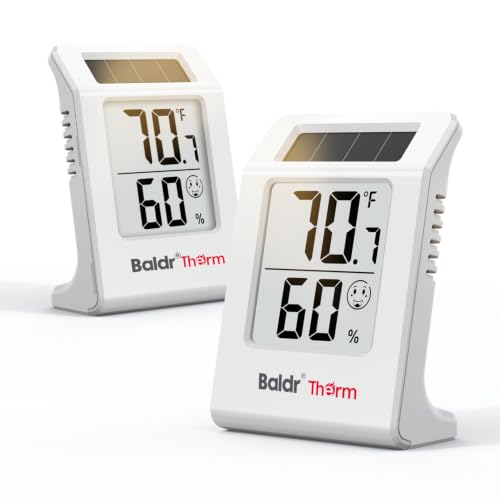
BALDR 2-Pack Digital Hygrometer Solar Humidity Monitor
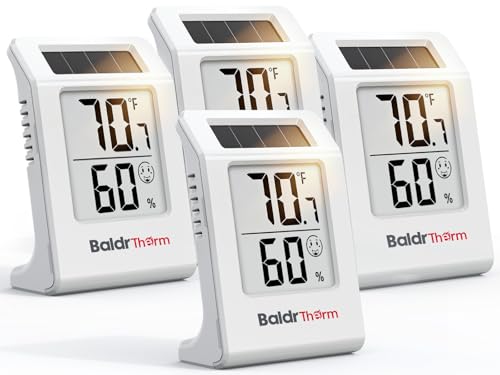
BALDR 4-Pack Digital Hygrometer Solar Humidity Monitor
Honeywell TH1100DV1000 PRO 1000 Heat Only Thermostat

Honeywell TH2110DV1008 PRO 2000 Programmable Thermostat

Heagstat Non-Programmable Thermostat 1 Heat/1 Cool

EconoHome Non-Programmable Thermostat for Home

Honeywell Home RTH111B Digital Non-Programmable Thermostat

BALDR Solar Indoor Thermometer Hygrometer Max/Min

Venstar T2800 Commercial Platinum Slimline Thermostat

OJ Microline UTN4 Radiant Floor Heat Thermostat
A Closer Look At Each Pick
A two-pack desk hygrometer solves the most common humidity-tracking problem: one reading in the living room tells you nothing about the nursery down the hall. The BALDR pair lets you drop a unit in two priority spaces at once, so you can compare a baby’s room against the rest of the house at a glance.
Each meter runs on ambient indoor light, switching to a backup battery when the room goes dim. There’s no app, no Wi-Fi pairing, and no calibration routine to wrestle with on day one. For parents, pet owners, and anyone fighting dry winter air, the simplicity is the whole point.
What Makes Sense
- Two units per box means immediate coverage for a high-priority pair like a bedroom and a nursery
- Solar-first design removes the chore of scheduled battery swaps
- Compact footprint fits on a nightstand or shelf without dominating the surface
- Side-by-side room comparison helps spot humidity gaps the furnace or AC creates
Worth Noting
- Display brightness tracks the room’s light, so dim corners can make the screen harder to read at night
- No connectivity, so logging trends over weeks means jotting numbers by hand
Right Fit For
Parents and pet households who want a quick humidity read in two rooms without apps or complicated setup.
Swap It Out When
Four-room coverage matters more than a two-room starter set, in which case the BALDR 4-Pack is the better match.
Step up from the two-pack and you get enough units to scatter across most of a small home. The 4-Pack is the version worth buying when you suspect the basement is damp, the upstairs is dry, and the office sits somewhere in between, because guessing is what got you into humidity trouble in the first place.
Like its smaller sibling, each unit leans on room light for power and falls back to internal battery reserves after dark. There’s still no smart-home integration, which keeps the cost per unit down and the learning curve near zero. Most people will place these once and forget they exist until a season changes.
A Favorable Mix
- Four units make it realistic to monitor basement, living area, bedroom, and office simultaneously
- Same solar-plus-battery approach as the 2-pack, so no extra maintenance learning curve
- Lower cost per unit than buying singles
- Helpful for spotting which rooms need a humidifier, dehumidifier, or better ventilation
Trade Offs
- Units tend to look alike, so labeling each one by room helps avoid mix-ups
- Display behavior in dim rooms may mean repositioning for night-time checks
Who It Suits Best
Homeowners and small-office users who want humidity readings in four key zones without buying smart sensors.
Look Elsewhere When
Two rooms are all you need, in which case the BALDR 2-Pack keeps things simple and costs less up front.
Not every home has central air. The Honeywell TH1100DV1000 PRO 1000 is built for properties that only need to manage a heating system: think baseboard heaters, hot-water radiators, and simple forced-air furnaces in regions where cooling is handled by window units or simply isn’t part of the picture.
Unlike the BALDR desktop hygrometers above, this is a wall-mounted control wired directly into the HVAC system. The vertical body keeps the dial-style display easy to read at a glance, and the lack of scheduling menus means there’s almost nothing to program. For older homes or rentals where complexity is the enemy, that minimalism is genuinely useful.
Everyday Perks
- Vertical form factor suits narrow wall sections where horizontal units look awkward
- Premier white finish blends with most trim and switch plates
- Compatible with 24VAC heat-only systems common in older properties
- Straightforward install for anyone replacing a basic mechanical thermostat
Points To Keep In Mind
- Heat-only design means no AC control from the same wall unit
- Non-programmable, so multi-zone households lose some efficiency compared to scheduled models
Best Suited To
Owners of baseboard, radiator, or single-stage furnace homes who only need heat control and want a clean, simple wall unit.
Reach For A Different Pick When
You want scheduled heating and cooling from one wall, in which case the Honeywell TH2110DV1008 PRO 2000 is the upgrade path.
Where the TH1100 leaves you turning the dial by hand, the PRO 2000 brings weekday and weekend scheduling to the same vertical form factor. That five-day, two-day program structure matches how most households actually live: stable routines Monday through Friday, then a lazier weekend block that probably drifts toward a higher thermostat setpoint.
The backlit display is built for early-morning and late-night glances, and an early-start function pre-conditions the home so the target temperature lands right on schedule. Compared to the BALDR hygrometers above, this is a wall-mounted HVAC controller rather than a passive monitor, so the role is fundamentally different.
Points In Its Favor
- 5-2 scheduling gives weekday and weekend routines without overcomplicating setup
- Backlit display remains readable in dim hallways
- One-touch setpoint access skips through the menu layers
- Heat/cool and heat-pump compatibility covers common single-stage systems
Honest Caveats
- Programming interface relies on small buttons, which can frustrate anyone new to scheduled thermostats
- No humidity readout on the wall unit itself, so pairing it with a separate hygrometer fills that gap
Built With In Mind
Homeowners with predictable weekday schedules who want heating and cooling on autopilot without learning a smart-home app.
Where A Sibling Pick Shines
The Honeywell TH1100DV1000 PRO 1000 is the better match when scheduling feels like overkill and heat-only control is all you need.
The Heagstat H721-DA1 sits in the affordable corner of the wall-thermostat market, aimed squarely at people replacing a failed unit or finishing out a basement build. It’s a non-programmable design, so the daily routine stays manual, but that also keeps the menu tree short and the install fast.
Compatibility is limited to conventional single-stage 1H/1C systems, which covers most basic forced-air setups but rules out heat pumps with auxiliary strips or multi-stage equipment. Wire count matters here: the base accepts two to five wires, so homes with six- to eight-wire configurations will need a different control.
Everyday Wins
- White backlight keeps the screen readable at night without flooding the hallway
- Simple button layout works for anyone who dislikes layered menus
- Targets the most common single-stage systems in the North American housing stock
- Approachable entry point for first-time thermostat installers
Small Caveats
- Wire-count restriction means homes with more than five conductors aren’t compatible
- No humidity sensing built in, so a desktop hygrometer like the BALDR units fills that role
Whose Shelf It Belongs On
DIYers replacing a basic wall thermostat on a gas, oil, or electric forced-air system with a simple wire bundle.
Consider Something Else When
Heating-only hydronic systems are in play, in which case the Honeywell TH1100DV1000 PRO 1000 is a closer match.
The EconoHome thermostat leans into accessibility. It’s designed for the first-time installer who has opened the wall plate, stared at a rainbow of low-voltage wires, and wondered if a service call would be cheaper. The control covers heat and cool with a manual fan switch, so it handles central gas, oil, and electric furnaces plus air conditioning condensers.
It’s a non-programmable unit, which means no weekday/weekend menus to wrestle with. For households that never quite trusted the schedules on previous thermostats, that simplicity is a feature. Compared to the Heagstat above, the EconoHome pushes harder on the “easy to install” framing without straying far on capability.
Advantages To Know
- Heat/cool compatibility covers most common central HVAC setups
- Manual fan switch adds on/auto control without app integration
- Straightforward wiring approach for a confident DIY swap
- Display prioritizes the temperature reading, reducing menu noise
Areas To Watch
- Single-stage focus means homes with multi-stage or heat-pump systems should look elsewhere
- Build quality leans toward light-duty rather than commercial-grade longevity
Perfect Match For
First-time thermostat installers who want heat and cooling in one wall unit without programming complications.
Skip It When
You’re managing a light-commercial or multi-stage system, where the Venstar T2800 brings the heavy-duty feature set.
The RTH111B is Honeywell’s argument that not every thermostat needs a touchscreen or an app. Soft-touch buttons and a focused digital display keep the experience close to the mechanical thermostats many grew up with, while the precision electronics behind them deliver tighter temperature control.
It’s a non-programmable wall unit, so the day-to-day routine stays hands-on. That tradeoff suits households where someone is always around to bump the temperature a degree or two, and avoids the frustration of programming routines that get ignored. Pair it with a separate hygrometer if humidity readings matter to your comfort.
The Practical Payoff
- Soft-touch buttons feel familiar and resist accidental presses
- Minimalist display shows only the essentials: setpoint and current temperature
- Honeywell Home build quality tends to hold up well across heating seasons
- Drop-in replacement candidate for many older mechanical thermostats
Some Limits To Know
- No scheduling means the thermostat doesn’t run routines automatically
- No on-board humidity display, so a BALDR-style monitor covers that gap
Who Should Grab It
Homeowners upgrading from a mechanical thermostat who want digital precision without touching apps or schedules.
Not Your Match When
Weekly scheduling would actually save you money, in which case the Honeywell TH2110DV1008 PRO 2000 makes more sense.
Single-room households, or anyone who just wants a humidity and temperature readout in one spot, get a simpler option here. The BALDR single-unit hygrometer tracks both metrics and includes a Max/Min memory so you can glance back at the day’s extremes.
Like the multi-packs above, this meter relies on ambient light and a backup battery for dark hours. The comfort-meter framing means the display typically shows a comfort zone indicator alongside the raw numbers, which is helpful if you’re not sure what counts as “good” humidity. You may find the comfort dial oversimplifies things on genuinely extreme mornings, but for everyday use it’s a useful shorthand.
Well-Handled Touches
- Max/Min memory captures overnight lows and daytime peaks without an app
- Comfort-zone indicator translates raw humidity into a quick visual cue
- Solar-first power design keeps maintenance minimal
- Compact body fits on a desk, shelf, or nightstand without dominating the space
Where It Is Less Suited
- Display brightness tracks the room, so dim corners can be a problem at night
- Single-unit format means multi-room coverage requires buying multiples separately
Made For
Single-room dwellers who want a tidy humidity and temperature readout with memory, without managing multiple devices.
A Better Fit Elsewhere
Multi-room monitoring is the goal, in which case the BALDR 4-Pack covers more ground at a similar per-unit cost.
The Venstar T2800 steps up into light-commercial territory. A seven-day programmable schedule, support for three heat and two cool stages, and configurable outputs make this a flexible choice for offices, retail spaces, and accessory dwelling units where a residential thermostat simply runs out of features.
The slimline body keeps the wall profile low, but the backlit, color-coded keys and legends stay readable during after-hours adjustments. Service filter and UV light reminders add a maintenance layer that homeowner-focused units skip, which is exactly what property managers tend to want. Depending on your building’s HVAC complexity, this unit either earns its keep quickly or feels like overkill.
The Value In It
- 3 heat/2 cool staging covers most light-commercial HVAC configurations
- Color-coded key legends reduce guesswork during programming
- Configurable outputs give installers flexibility for unusual wiring setups
- Filter and UV service reminders reduce the chance of forgotten maintenance
Things To Consider
- Feature density adds a learning curve compared to residential wall units
- Best value shows up in properties that actually use the commercial-grade scheduling and staging
The Right Fit
Small-office owners, landlords, and accessory dwelling unit managers who need more HVAC flexibility than a residential thermostat offers.
Swap It Out When
The system is a basic single-stage residential setup, in which case the Honeywell TH2110DV1008 PRO 2000 keeps things lean.
Radiant floor heating lives in its own category, and the OJ Microline UTN4 is built for it. The Class A GFCI (Ground Fault Circuit Interrupter, a safety device that cuts power if it detects current leaking through moisture or a person) sits inside the thermostat itself, which is required for any underfloor heating system. Dual-sensor support lets the unit read both floor and ambient temperature, which keeps tile and laminate surfaces from getting uncomfortably warm or barely lukewarm.
Voltage flexibility across 120V and 240V systems makes it a fit for most North American radiant installs, and the included floor sensor covers the basic install out of the box. The non-programmable design keeps the interface minimal, though some homeowners may eventually wish for weekly scheduling, which is where this thermostat would hand off to a programmable sibling.
Standout Benefits
- Built-in Class A GFCI satisfies electrical code for radiant floor systems
- Dual-sensor design reads floor and air temperatures for tighter control
- 120/240V compatibility covers the majority of residential radiant installs
- Includes the floor sensor in the box, simplifying first-time setup
Practical Considerations
- Non-programmable interface means manual schedule management
- Specialized role makes it the wrong choice outside radiant floor applications
Who Will Love This
Homeowners finishing a bathroom, basement, or kitchen with electric radiant floor heating who want safe, dedicated floor control.
Where Another Pick Suits Better
The system is forced air or hydronic, in which case the Honeywell TH2110DV1008 PRO 2000 or Heagstat are better matches.
What Matters Most Before Choosing Thermostats With Humidity Control
Matching the right device to the right room matters more than picking the flashiest model. Standalone hygrometers like the BALDR units give you data without controlling anything, while wall thermostats like the Honeywell and Heagstat models control your HVAC but rarely display humidity. Many households end up using both: a wall thermostat for heating and cooling, plus one or more desktop hygrometers for spot-checking rooms the wall unit can’t see.
Wiring compatibility is the first thing to check on wall thermostats. Confirm whether your HVAC system is single-stage, multi-stage, or heat pump, and count the low-voltage wires at the existing wall plate before ordering. Most residential single-stage systems use two to five wires; if you see more, you’ll likely need a control rated for that count.
Use case shapes the rest of the decision. Bathrooms with radiant floors want a GFCI-equipped floor thermostat. Nurseries benefit from a quiet, app-free hygrometer that won’t ping a phone. Light-commercial offices often need a programmable thermostat with service reminders. Matching these scenarios to the picks above makes the buying decision much simpler.
Key Considerations Across These Picks
Where Shoppers Go Wrong
The most common slip-up is buying a wall thermostat without confirming wire compatibility, which turns a weekend project into a return. Counting conductors at the existing wall plate, and double-checking that the system matches the thermostat’s stated compatibility, saves a lot of frustration.
Another trap is treating a desktop hygrometer like a thermostat. The BALDR units display humidity and temperature, but they don’t communicate with your furnace or AC. If the goal is automated humidity control, you’d need a smart humidifier or dehumidifier, not a passive monitor. Keep expectations matched to the device category.
The Case For Spending Up
Higher-tier wall thermostats like the Venstar T2800 add multi-stage support, configurable outputs, and service reminders that pay off in larger properties. Programmable scheduling on the Honeywell TH2110DV1008 PRO 2000 brings meaningful efficiency for predictable weekday routines. The upgrade is worth it when the system actually uses the extra capability, and unnecessary when a basic single-stage setup already meets your needs.
Frequently Asked Questions
Do thermostats with humidity control actually save energy?
They help when paired with a whole-home humidifier or dehumidifier, because the system can run only when humidity drifts out of range. A standalone humidity-reading thermostat without a connected humidification device mostly provides information, not energy savings.
How accurate are indoor hygrometers at this price level?
Most desktop hygrometers in this range track within a few percentage points of a calibrated reference, which is enough for everyday comfort decisions. For laboratory-grade accuracy, you’d need a calibrated professional instrument.
Can I install a wall thermostat myself?
Many non-programmable wall thermostats are accessible DIY projects for anyone comfortable with low-voltage wiring and a screwdriver. Always cut power at the breaker, label the existing wires, and follow the new thermostat’s wiring diagram exactly.
What’s the ideal indoor humidity range?
Most sources cite roughly 40 to 60 percent relative humidity as a comfortable, healthy range for living spaces. Levels below 30 percent tend to feel dry, while sustained readings above 60 percent can encourage mold and dust mites.
Do these thermostats work with smart home systems?
None of the picks in this roundup include native smart-home integration or app control. For app-based scheduling and voice control, you’d need a separate category of connected thermostat.
The Takeaway
The right thermostat with humidity control depends entirely on what you need it to do. A wall-mounted Honeywell or Heagstat covers heating and cooling on a daily schedule, while a BALDR hygrometer gives you a humidity and temperature readout in one or more rooms. Pairing the two categories covers most households well.
Start with the room that frustrates you most, then work outward from there. Whether it’s a too-dry nursery, a musty basement, or a boiler that needs a modern control, one of the picks above should fit the bill without forcing a learning curve you don’t want.