Upgrading from an old mercury dial to a modern 4 wire thermostat unlocks cleaner scheduling, smarter temperature swings, and noticeably quieter HVAC cycling. The right cable makes that swap painless, and the right wall unit keeps things simple if you don’t want app-driven complexity. This roundup walks through ten solid options covering thermostat wire gauges, conductor counts, and beginner-friendly non-programmable controls that fit a typical single-stage system. You’ll find picks for short retrofit runs, multi-zone upgrade projects, and stock-up bundles for property maintenance work.
A Quick View Of The Lineup

XRDS -RF Thermostat Wire 18/2 10FT Solid Copper 2 Conductor
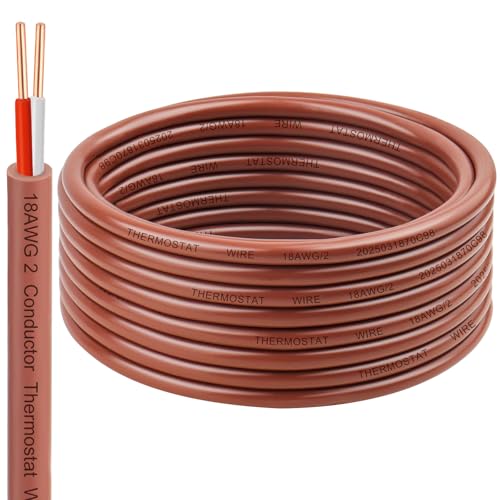
XRDS -RF Thermostat Wire 18/2 20FT Solid Copper 2 Conductor

18AWG Thermostat Wire 18/5 Solid Copper 5 Conductor 25FT

Thermostat Wire 18/8 Gauge 8 Conductor 10ft Bare Copper

18/8 Thermostat Wire 20FT CL2 Rated 8 Conductor Bare Copper
XRDS -RF 18AWG 2 Conductor Thermostat Wire 20FT White Jacket

ELECTECK 5 Pack Non-Programmable Thermostat Digital 1 Heat/1 Cool

Upgraded Non-Programmable Thermostat with Humidity Monitor Green LCD
18AWG Thermostat Wire 18/5 Solid Copper 5 Conductor 50FT

XRDS -RF Thermostat Wire 18/2 30FT Solid Copper 2 Conductor
Inside Each Recommended Option
When a thermostat swap turns into a “who yanked the old cable” mystery, a short fresh run solves it. This XRDS -RF 18/2 cable ships at 10 feet, which covers most single-story retrofits where the furnace sits directly below the wall thermostat.
Solid copper conductors at 18 AWG handle the millivolt-class signals common to low voltage thermostat circuits (meaning the 24V control wiring that tells your furnace when to fire). The brown PVC jacket stays flexible in attic corners and tight crawl spaces, and two conductors are enough for any standard 4-wire thermostat setup that doesn’t need a common wire.
Everyday Perks
- Compact 10-foot length keeps leftover wire out of the wall cavity
- Solid copper core for steady signal transmission on heating and cooling calls
- Flexible brown jacket bends around joists without kinking
- Useful beyond HVAC for doorbells and low-voltage security tie-ins
Worth Noting
- Only two conductors means no dedicated C-wire, so Wi-Fi thermostats may need a workaround
- 10 feet is tight for two-story homes with attic-routed HVAC equipment
- Brown jacket may stand out on white interior trim if any portion stays exposed
Whose Shelf It Belongs On
Anyone replacing a basic 4-wire thermostat in a small single-story home or apartment where the furnace is directly below.
Reach For A Different Pick When
The XRDS -RF 18AWG 2 Conductor Thermostat Wire 20FT White Jacket (pick 6) is a smarter grab if your run crosses ceiling joists and you want a low-visibility cable.
Twenty feet hits the sweet spot for most detached homes with a basement furnace or attic air handler. Compared to the 10-foot version above, this XRDS -RF cable gives slack to route around ductwork without leaving you stretched thin at the wall plate.
The same solid 18 AWG copper conductor design carries over, paired with that flexible brown jacket that installers tend to appreciate when fishing wire through tight corners. Two conductors keep the wiring simple, which matters if you’re matching a basic 4-wire thermostat with no common-wire requirement.
What Works In Its Favor
- 20-foot run accommodates most basement-to-first-floor layouts
- Solid copper for clean low-voltage signal transfer on standard systems
- Flexible jacket resists cracking in cold attic or basement pulls
- Double-duty for HVAC, doorbells, and basic security loops
Trade Offs
- Still only two conductors, so powering a Wi-Fi thermostat’s continuous draw needs an alternative C-wire strategy
- Brown jacket can show through unfinished basement ceilings
- No CL2 rating noted, so verify local code before running it behind closed drywall
Feature Snapshot
Right Fit For
Homeowners handling a first-time thermostat replacement on a single-stage heating and cooling system with a nearby furnace.
Swap It Out When
The 18/8 Thermostat Wire 20FT CL2 Rated (pick 5) is the better match when a C-wire is required and the run hides behind drywall.
Five conductors change the conversation for homeowners eyeing a Wi-Fi thermostat that needs a constant 24V feed. This XRDS -RF 18/5 cable leaves room for a C-wire plus extras, and the color-coded conductors speed up matching at the terminal strip.
Twenty-five feet suits most mid-sized homes where the air handler lives in a basement or crawlspace. If you’re moving from a 4-wire thermostat today but suspect a future heat-pump upgrade, the spare conductor gives you breathing room without re-pulling cable later.
The Value In It
- Five conductors support a C-wire plus future expansion for heat-pump systems
- Color-coded cores reduce wiring mistakes at the wall plate
- Solid bare copper resists corrosion over decades of attic or basement duty
- 25-foot length reaches most basement air handlers without splicing
Small Caveats
- Extra conductors add slight stiffness compared to 2-wire cable
- Multi-color jacket strands can be tricky to feed through small holes in remodel work
- More copper than basic 4-wire thermostat installs actually need
Made For
DIYers upgrading from a non-connected 4-wire thermostat to a smart model that demands a continuous common wire.
Where Another Pick Suits Better
The 18AWG Thermostat Wire 18/5 Solid Copper 5 Conductor 50FT (pick 9) makes more sense for multi-story homes with longer wire pulls between floors.
Eight conductors sound excessive until you wire a multi-stage heat pump with humidity control, ventilation, and a backup heat call. This 18/8 cable from XRDS -RF gives every terminal something to land on, with low-resistance bare copper that won’t choke sensitive control signals.
At only 10 feet, it fits tight retrofit zones where you want maximum conductor count and minimum leftover in the wall. The durable PVC jacket handles tight bends in old work boxes where the cavity is shallow.
Positive Takeaways
- Eight conductors handle complex thermostats with ventilation and dehumidification terminals
- Bare copper core delivers low resistance for stable signal transmission
- PVC jacket stays flexible for retrofits in shallow old-work boxes
- Future-proofs the wall cavity for system upgrades without re-pulling cable
Points To Note
- Short 10-foot length limits its use to nearby air handlers
- Extra conductors raise stiffness, requiring wider holes in framing
- Overkill for simple single-stage heating-only setups
Best Suited To
Homes with multi-stage heat pumps or advanced thermostats that need more than the typical four or five wires.
Skip It When
The XRDS -RF Thermostat Wire 18/2 20FT (pick 2) is the smarter, simpler choice for basic 4-wire thermostat swaps without smart features.
Running thermostat wire behind drywall demands a cable rated for that environment. This 18/8 cable carries a CL2 rating, meaning the jacket is tested to slow flame spread in residential in-wall installations, which is what most local codes expect for low-voltage cabling hidden behind a finished surface.
Twenty feet of 8-conductor solid bare copper handles advanced thermostats that need C-wire power plus extras for humidity sensors and ventilation control. It’s a thoughtful step up from the 4-wire thermostat cable most older homes have in the wall.
The Case For It
- CL2 rating supports code-compliant in-wall installation
- Eight conductors cover C-wire plus multi-stage and accessory terminals
- Solid bare copper maximizes conductivity and reduces corrosion risk
- 20-foot length reaches most basement or attic HVAC equipment
A Few Limitations
- Stiffer than 2 or 5-conductor cables, harder to fish through tight bends
- CL2 rating is specific to low-voltage in-wall use, not plenum spaces
- More cable than required for straightforward single-stage systems
Quick Facts
Who Should Grab It
Anyone closing up walls during a remodel and wanting the cleanest code-compliant path for a smart thermostat installation.
A Better Fit Elsewhere
The Thermostat Wire 18/8 Gauge 8 Conductor 10ft (pick 4) makes more sense for short exposed retrofits where CL2 rating isn’t required.
Same 18 AWG solid copper internals as the brown-jacketed versions above, but the white PVC jacket blends into painted trim and ceiling surfaces where any portion of the cable stays visible. That’s a small detail that matters in finished living spaces with vaulted ceilings or surface-mounted conduit runs.
Available in lengths from 20 feet up to 100 feet for larger projects, this XRDS -RF cable lets you buy just what you need without forcing a single fixed size. For most 4-wire thermostat replacements with two conductors at the wall plate, the 20-foot option handles typical home layouts comfortably.
Everyday Wins
- White jacket disappears against ceiling trim and painted walls
- Solid copper core matches the conductivity of the brown-jacketed siblings
- Flexible PVC simplifies routing in finished rooms with tight corners
- Multiple length options support everything from short swaps to whole-house rewires
Honest Caveats
- Two-conductor design still lacks a C-wire for always-on smart thermostats
- White jacket can show dust in unfinished basements
- No CL2 rating noted for in-wall use without local inspection sign-off
Who Will Love This
Homeowners installing a thermostat in a finished living space where exposed cable runs along white trim would otherwise look out of place.
Consider Something Else When
The XRDS -RF Thermostat Wire 18/2 10FT (pick 1) is the smarter budget call when cable length stays under 10 feet and a brown jacket is fine.
When one thermostat turns into a half dozen, the math changes. This ELECTECK 5-pack delivers five non-programmable digital thermostats designed for single-stage 1-heat/1-cool systems, the same configuration most older homes and rental properties use.
The non-programmable format keeps the user experience simple, no app pairing, no Wi-Fi passwords, no firmware updates to chase. For landlords and property managers, that simplicity is often the point, since tenants get predictable manual controls and you skip the support calls.
What It Does Well
- Five units in one pack reduce per-unit cost for property upgrades
- Digital display is easier to read than legacy mercury dials
- Compatible with gas, oil, and electric single-stage systems
- No programming means tenants can’t accidentally trash a complex schedule
Possible Compromises
- Doesn’t support multi-stage systems or 120/240V electric baseboard heat
- No scheduling, so energy savings rely entirely on occupant habits
- Requires compatible wiring at the wall, not all older homes have a C-wire
Perfect Match For
Landlords and property managers standardizing thermostats across multiple rental units where simplicity matters more than scheduling.
Look Elsewhere When
The Garystat Upgraded Non-Programmable Thermostat with Humidity Monitor (pick 8) fits better when humidity tracking is a priority in a single install.
Most non-programmable thermostats only show temperature, but this Garystat model adds a humidity readout on its green LCD. In humid regions or bathrooms that trap moisture, that single extra reading helps you decide when to run a fan or dehumidifier.
The thermostat handles single-stage 1-heat/1-cool systems, the standard setup behind most 4-wire thermostat installations. It runs on the same low-voltage 24V control signal you’ll find at the furnace terminals, which keeps wiring simple.
What Earns Its Place
- Built-in humidity monitor adds useful data without smart-home complexity
- Green LCD stays readable in low-light hallways
- Compatible with gas, oil, and electric single-stage systems
- Non-programmable design means no setup headaches after installation
Points To Keep In Mind
- Does not support multi-stage systems or 120/240V baseboard heat
- Compatibility check with existing wiring recommended before purchase
- Humidity reading is for display only, no automatic dehumidification control
Technical Highlights
Built With In Mind
Homeowners in humid climates who want a glanceable humidity number without committing to a full smart thermostat ecosystem.
Not Your Match When
The ELECTECK 5 Pack (pick 7) is the better call when outfitting multiple properties and per-unit cost matters more than humidity tracking.
Fifty feet of 5-conductor cable solves the problem most homeowners only discover mid-project: their thermostat is on the second floor and the air handler is in the basement. The XRDS -RF 18/5 50FT version leaves slack for vertical drops through cold-air returns and around plumbing chases.
Five color-coded conductors at 18 AWG solid copper keep the signal clean across the longer run. Voltage drop in low-voltage wiring increases with length, so heavier gauge solid copper pays off when you’re spanning more than one floor.
A Favorable Mix
- 50-foot length handles multi-story pulls with leftover for trim-out
- Five conductors accommodate C-wire plus accessory terminals
- Solid bare copper minimizes voltage drop over long distances
- Color-coded cores speed up accurate terminal matching
Things To Weigh
- Excess cable can coil behind the wall plate if you miscalculate length
- Longer pull increases risk of jacket scuffs during fishing
- More conductor than required for simple single-stage setups
The Right Fit
Multi-story homes, additions above garages, and properties where the air handler sits far from the wall thermostat location.
Where A Sibling Pick Shines
The 18AWG Thermostat Wire 18/5 Solid Copper 5 Conductor 25FT (pick 3) is the more economical choice when the run stays within a single floor.
Thirty feet of 18/2 cable gives HVAC contractors and DIY homeowners extra room to spare when the exact run length is uncertain. This XRDS -RF cable keeps the same 18 AWG solid copper build as the shorter versions above, just in a length that handles two-story drops and outbuilding tie-ins.
The brown PVC jacket stays pliable during winter installs in unheated basements, and two conductors match standard 4-wire thermostat terminals that don’t need a dedicated common wire.
What Pays Off
- 30-foot length covers longer residential runs without splicing
- Solid copper conductors for reliable low-voltage signal transmission
- Brown PVC jacket stays flexible in cold attic and basement conditions
- Useful beyond HVAC for doorbells and basic security wiring
Where It Is Less Suited
- Two conductors won’t support a C-wire dependent smart thermostat
- Extra cable adds clutter if the actual run is much shorter than 30 feet
- No CL2 rating noted for closed-wall installations without inspection
Who It Suits Best
Workshops stocking repair parts and homeowners who want a generous spare for future thermostat swaps or low-voltage tinkering.
Another Choice May Suit
The 18/8 Thermostat Wire 20FT CL2 Rated (pick 5) is the better match for in-wall smart thermostat installs that demand more conductors and a CL2 jacket.
What To Match Before You Buy Thermostat Wire And Controls
The right cable and thermostat combo depends on three questions: how far the wire runs, whether the system needs a common wire, and whether local code requires a CL2-rated jacket for in-wall work. For most single-stage homes, 18 AWG solid copper is the standard, and “AWG” is just the American Wire Gauge sizing system, where a lower number means thicker wire and lower resistance. Two conductors cover a basic 4-wire thermostat, while five or eight conductors leave room for smart thermostats that need continuous 24V power through a C-wire.
Length matters more than people expect. Measure from the thermostat wall location to the air handler or furnace, then add at least five extra feet for service loops and trim-out mistakes. A 25-foot cable that ends two inches short at the wall plate forces a splice, and splices inside a wall cavity aren’t a great look for long-term reliability.
Conductor count comes down to terminals. Standard 4-wire thermostats use R, W, Y, and G for power, heat, cooling, and fan, while a common wire (C) returns power to keep a Wi-Fi thermostat constantly awake. Pulling a 5 or 8-conductor cable today costs roughly the same per foot as a 2-conductor version and saves re-pulling the wall later if the system gets upgraded.
Gauge And Conductor Tradeoffs
Heavier gauge wire (lower AWG number) reduces voltage drop on long runs, which matters for multi-story homes. For most single-floor installs under 30 feet, the difference between 18 and 20 AWG is negligible on 24V control circuits, though 18 AWG remains the safer default. More conductors mean more copper, more stiffness during fishing, and slightly more cost per foot.
Compatibility With Existing Systems
Before any swap, pop the existing thermostat off the wall and photograph the wiring. Most non-programmable replacements like the ELECTECK and Garystat models handle single-stage 1-heat/1-cool systems but skip multi-stage equipment and 120/240V electric baseboard heat. If the old wiring shows more than four conductors already in the wall, the job is essentially a direct swap. If it shows only two or three, plan on pulling fresh cable.
Key Considerations Across These Picks
Common Shopping Slip Ups
The most frequent mistake is buying 2-conductor cable for a thermostat that needs a C-wire, which leaves the smart thermostat perpetually low on power. Another slip is grabbing the cheapest CCA (copper clad aluminum) cable instead of solid bare copper, and CCA tends to develop higher resistance at terminations over time. Skipping the wall-plate wiring photo before ordering parts is the third classic miss, since unknown terminal layouts can turn a 30-minute swap into a full-day re-pull.
What The Higher Tier Buys
Stepping up from a basic 2-conductor to a 5 or 8-conductor cable costs a little more per foot but buys flexibility for future upgrades. CL2-rated jackets add a small premium and unlock code-compliant in-wall installation, which matters when closing up walls during a remodel. Bare copper over CCA compounds with longer runs, where resistance differences start adding measurable voltage drop, so the upgrade often pays for itself on multi-story homes with 30+ foot pulls.
Frequently Asked Questions
What Does A 4 Wire Thermostat Mean?
A 4 wire thermostat uses four conductors to control the HVAC system, typically R (power), W (heat), Y (cooling), and G (fan). Some systems add a C-wire for continuous power to smart thermostats, which technically makes it a 5-wire setup even though the thermostat still shows four control terminals.
Do All 4 Wire Thermostats Need A Common Wire?
No, basic non-programmable thermostats run fine on the four control wires alone. Smart and Wi-Fi thermostats usually need a C-wire because they stay awake continuously, drawing a small constant current that the four control wires can’t supply on older systems.
Can I Use 5 Or 8 Conductor Cable Instead Of 4 Wire Thermostat Cable?
Yes, using a 5 or 8-conductor cable for a 4-wire thermostat installation is common and gives you spare conductors to land a C-wire or future accessories. The unused wires simply get capped off at the wall plate and furnace terminal strip.
Is 18 AWG The Right Gauge For Thermostat Wiring?
18 AWG is the standard gauge for residential thermostat wiring and works well for runs under about 50 feet. Longer runs in larger homes can use 18 AWG as well, since 24V control circuits tolerate modest voltage drop, and the heavier gauge keeps resistance low across the full pull.
What Is CL2 Rating On Thermostat Wire?
CL2 means the cable jacket is tested to meet residential fire-safety standards for low-voltage in-wall installation. Local electrical codes typically require CL2 or higher-rated cable when low-voltage wiring runs behind closed drywall, especially in multi-family dwellings.
Closing Remarks
The right pick comes down to your existing system, the wire run length, and whether a smart thermostat is in the cards. For most single-stage homes, an 18 AWG solid copper cable with two to five conductors paired with a simple non-programmable wall unit covers the basics cleanly. Match the conductor count to your terminals, leave a few extra feet of slack for service loops, and verify CL2 rating before closing up walls. That covers the practical checklist without overcomplicating what is usually a straightforward weekend project.