Swapping a thermostat in an older house often hits the same wall: there’s no common wire running to the wall plate, and most smart units demand one for power. The picks below focus on thermostats and accessories that play nicely with limited wiring, from non-programmable replacements that sip power through the heating circuit to remote sensors that piggyback on a smart system you may already own. Realistically, knowing your HVAC type (conventional versus heat pump, single-stage versus multi-stage) matters more than any single feature, so the list mixes plain digital units with smarter add-ons. Think of this as a practical shortlist for renters, garage owners, and anyone staring at a two-wire wall and wondering what comes next.
The Shortlist At A Glance

PRO1 T725 Heat Pump/Conventional Programmable Thermostat
PRO1 T771 Single Stage Non-Programmable Thermostat
Honeywell TH1100DV1000 PRO 1000 Vertical Thermostat

PRO1 T701 Single Stage Non-Programmable Thermostat
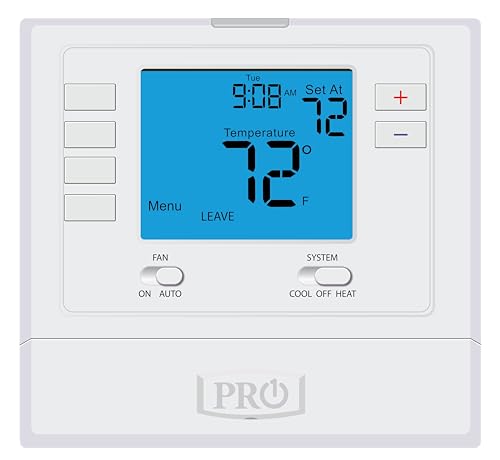
PRO1 T715 Multi-Stage Programmable Gas Thermostat

Heagstat Non-Programmable Thermostat 1 Heat/1 Cool

Honeywell TL7235A1003 Line Volt Pro Thermostat

PRO1 T721 Non-Programmable Heat Pump Thermostat
Google Nest Temperature Sensor 3-Pack
PRO1 T805 Single Stage Programmable Thermostat
A Deeper Look At The Lineup
The PRO1 T725 sits at the top of this list for a reason: it covers both 2 heat/1 cool heat pump configurations and 1 heat/1 cool conventional setups under one roof, so households with mixed equipment don’t need a second unit on the wall. Built on the T700 platform, it pairs a 4 sq. in. blue backlit screen with 7-day or 5/1/1 scheduling, which means you can set weekday and weekend routines without juggling complex menus.
Compared with simpler units below, the T725 trades the bare-bones approach for genuine flexibility. If your home has shifted from a traditional furnace to a heat pump in part of the system, this thermostat adapts without rewiring the swap.
Well-Handled Touches
- Dual compatibility removes the guesswork when you don’t know whether your system runs as a heat pump or conventional setup
- Programmable scheduling with 7-day or 5/1/1 patterns lets you match real weekday and weekend routines
- Blue backlit 4 sq. in. display stays legible in hallways and basements
- Schedule mode labels (wake, leave, return, sleep) translate comfortably into family life
Things To Consider
- Programmability adds a small learning curve for anyone used to a manual dial
- Requires a C-wire or compatible power-stealing setup, which older two-wire homes may not provide
- No Wi-Fi connectivity, so remote adjustments rely on a separate smart accessory
Feature Snapshot
Made For
Homeowners with a heat pump plus conventional setup who want one programmable wall unit to manage both.
Look Elsewhere When
You only need a heat-only baseboard controller, in which case the Honeywell TH1100DV1000 PRO 1000 is the simpler match.
Where the T725 above offers flexibility, the PRO1 T771 narrows in on a single job: controlling basic 1 heat/1 cool conventional systems in spaces that run colder than the rest of the house. Its setpoint range stretches down to 25°F, which makes it a sensible pick for garages, sheds, basements, and workshops where standard residential thermostats refuse to dip that low.
For most main-floor living, this unit looks sparse compared with its programmable siblings. But in a detached garage, simplicity wins because you usually want one temperature and one setting, nothing more.
The Case For It
- Wide setpoint range down to 25°F suits uninsulated spaces that run cold in winter
- Non-programmable design keeps the interface minimal, no scheduling menus to navigate
- 4 sq. in. blue backlit display stays visible in dim utility rooms
- Single-stage operation matches straightforward conventional furnaces and AC condensers
Worth Noting
- No scheduling means you adjust temperature by hand each time conditions change
- Limited to single-stage systems, so it won’t handle multi-stage equipment
- Not suited for heat pump systems even at the basic level
Whose Shelf It Belongs On
Shoppers outfitting a detached garage, workshop, or shed who want a thermostat that actually reaches sub-zero setpoints.
Reach For A Different Pick When
You need scheduling or a heat pump interface, in which case the PRO1 T725 gives you programmability across more system types.
The Honeywell TH1100DV1000 takes a different physical approach: a vertical orientation that fits narrow wall spaces where horizontal thermostats won’t sit flush. It’s a heat-only unit, which means it ignores cooling entirely and focuses on the warming side of the job, a common match for baseboard and radiant systems.
For people replacing a mechanical dial in a hallway or entryway, this Honeywell keeps the interaction almost identical to what they remember. Compared with the PRO1 T771 above, it trades the wide low-end range for a more traditional residential heat-only profile.
Useful Highlights
- Vertical layout fits narrow switch-box spaces that horizontal units cannot
- Heat-only design simplifies the wiring and reduces points of confusion during install
- Premier white finish blends with most trim and wall paint
- Mechanical-style reliability without moving into fully mechanical controls
Honest Caveats
- Heat-only, so no cooling or fan-only operation for summer months
- Non-programmable, requiring manual adjustments as weather changes
- Vertical orientation may look dated in modern open-concept rooms
Best Suited To
Anyone retrofitting a heat-only baseboard or wall radiator system where a narrow vertical profile matters more than programmability.
Swap It Out When
You want both heating and cooling handled by one unit, in which case the PRO1 T701 covers conventional 1H/1C systems in a more familiar horizontal layout.
The PRO1 T701 lands in the everyday sweet spot for households with a basic forced-air furnace and central air. It’s a non-programmable unit, so anyone who finds scheduling menus frustrating can simply set the temperature and walk away. The 4 sq. in. blue backlit display keeps the reading visible without forcing you to lean in close.
Where the Honeywell TH1100DV1000 stays heat-only, this one handles both heating and cooling cycles. That makes it a more flexible option for year-round comfort in a small home or rental unit.
Why It Works Well
- Glow-in-the-dark light button helps you find the controls in a hallway at night
- Conventional 1H/1C compatibility covers most basic furnace-plus-AC setups
- Gas or electric configuration choice adapts to your fuel type
- Backlit display reads cleanly across the room in low light
Points To Keep In Mind
- No scheduling means the temperature stays where you set it until you adjust again
- Single-stage operation only, so multi-stage furnaces will be underutilized
- Not designed for heat pump systems even in basic configurations
The Right Fit
Renters and homeowners with a basic gas or electric forced-air system who want dependable heating and cooling control without programming menus.
Where A Sibling Pick Shines
You run a two-stage furnace and want programmability, in which case the PRO1 T715 stretches further without doubling the install effort.
The PRO1 T715 climbs into multi-stage territory, supporting 2 heat/2 cool systems for homes running a two-stage furnace with a matching AC. Programmability covers 7-day, 5/1/1, or non-programmable modes, which gives you room to grow into scheduling or skip it altogether.
Compared with the T701, this unit pulls extra weight from your HVAC by engaging low and high stages as conditions demand. If your system supports staging, the difference shows up in more even temperatures and shorter blasts of high-heat.
Strong Points
- Multi-stage 2H/2C support matches two-stage furnace and AC systems
- Three scheduling modes let you start simple and grow into full 7-day routines
- Glow-in-the-dark light button stays visible after lights-out
- Battery or hardwired power options give flexibility during installation
Room For Improvement
- Programmability adds setup time compared with the T701’s straightforward layout
- Requires a C-wire or compatible power-stealing setup for reliable operation
- Overkill for single-stage systems, where the T701 already handles the job
Feature Snapshot
Perfect Match For
Owners of two-stage gas furnace systems who want scheduling flexibility and the option to run non-programmable at first.
A Better Fit Elsewhere
Your system is single-stage only, in which case the PRO1 T701 does the job without the extra menus and stages you’ll never use.
The Heagstat Non-Programmable Thermostat narrows compatibility on purpose: it works exclusively with 24VAC conventional single-stage 1H/1C forced-air systems, including gas, oil, and electric furnaces paired with an independent AC condenser. The trade-off is a strict 2 to 5 wire limit, meaning setups with 6 to 8 wires aren’t suitable here.
That narrow fit can actually help shoppers avoid mismatches, because the unit only fits where it works. The white backlight and simple layout suit a guest room, in-law suite, or rental where complexity isn’t welcome.
Noteworthy Benefits
- Strict 2 to 5 wire compatibility prevents miswiring in basic forced-air homes
- White backlight improves nighttime visibility without harsh glare
- Non-programmable interface removes scheduling decisions from the daily routine
- Works with gas, oil, and electric furnace configurations
Some Limits To Know
- Cannot accept 6 to 8 wire configurations, limiting use in homes with extra conductors
- Not compatible with heat pump systems in any stage configuration
- Lacks programmability for households that want set-back routines
Quick Facts
Built With In Mind
Budget-conscious shoppers with a basic forced-air system and a 2 to 5 wire setup who want a no-fuss wall control.
Consider Something Else When
Your home has more than five conductors or runs a heat pump, in which case the PRO1 T721 covers heat pump and conventional setups in one unit.
The Honeywell TL7235A1003 is a different beast entirely. It runs on 240-volt line voltage and uses electronic temperature control, which makes it a fit for electric baseboard heaters and other direct-wired heating circuits. Unlike the low-voltage units elsewhere on this list, it doesn’t piggyback on a 24VAC transformer.
For apartments, additions, and basement conversions with electric heat, this thermostat delivers where common smart replacements can’t. Most standard Wi-Fi thermostats would fail on a 240V circuit, so the TL7235A1003 stays in a category of its own.
Features That Help
- 240-volt line voltage compatibility opens up electric baseboard heater retrofits
- Electronic temperature control responds more precisely than older mechanical dials
- On-demand backlight makes the screen readable without permanent glare
- Soundproof operation reduces the clicking noise common to line voltage thermostats
Trade-Offs To Consider
- Hardwired 240V install requires confidence with electrical work, often a licensed electrician
- Not compatible with low-voltage 24VAC systems like the other picks on this list
- Non-programmable design means you adjust setpoints by hand
Who Should Grab It
Owners of electric baseboard or fan-forced 240V heating systems who want digital accuracy without rewiring the circuit.
Skip It When
Your home runs a low-voltage furnace and AC, where the Honeywell TH1100DV1000 or PRO1 T701 sits more comfortably.
The PRO1 T721 doubles as a heat pump or conventional thermostat, covering 2 heat/1 cool heat pump systems and 1 heat/1 cool conventional systems. That’s flexibility most homeowners appreciate when they aren’t 100% sure what their installer wired up. The 4 sq. in. blue backlit display and glow-in-the-dark light button keep the controls accessible at any hour.
Power options include AA batteries or a hardwired setup, which matters in older homes lacking a C-wire. Compared with the T725 above, this one strips out programmability but keeps the system flexibility, useful if you don’t need schedules.
A Few Strong Suits
- Dual heat pump and conventional support covers uncertain installs
- Battery or hardwired power accommodates older two-wire homes
- Glow-in-the-dark light button stays usable in dark hallways
- Non-programmable layout removes scheduling menus from the daily routine
Potential Compromises
- No scheduling, so setpoints stay where you leave them
- Limited to single-stage conventional or 2H/1C heat pump, not full multi-stage
- Requires careful setup to match the correct system type during install
Who It Suits Best
Homeowners unsure whether their system is a heat pump or conventional setup who want one flexible non-programmable unit.
Not Your Match When
You want full scheduling and multi-stage support, where the PRO1 T715 stretches further on both fronts.
The Google Nest Temperature Sensor 3-Pack isn’t a thermostat itself, but it solves a real problem for people who already own a compatible Nest thermostat. The sensors communicate via Bluetooth up to about 50 feet, letting you place temperature readers in different rooms like a nursery, living room, or home office so the system prioritizes the space you actually care about.
It’s the smart-home add-on for households that want better comfort without rewiring. Compared with the other picks here, this one assumes you already have a Nest Learning Thermostat or Nest Thermostat E on the wall and want to extend its reach.
A Few Highlights
- Three-pack covers multiple priority rooms in one purchase
- Bluetooth communication avoids extra hubs or complicated setup
- Compatible with Nest Learning Thermostat and Nest Thermostat E systems
- Lets you set room-by-room priorities through the Nest app
A Few Limitations
- Only works with compatible Nest thermostats, not a stand-alone solution
- Range limited to roughly 50 feet, so large homes may need repeaters
- Doesn’t replace a thermostat, only enhances an existing one
Right Fit For
Existing Nest thermostat owners who want better comfort in specific rooms without running new wires.
A Better Fit Elsewhere
You don’t own a Nest system yet, in which case starting with a PRO1 T725 programmable thermostat makes more sense than adding sensors.
The PRO1 T805 closes the list with a generous 7 sq. in. blue backlit display on the T800 platform, the largest screen among the PRO1 units here. It supports 7-day, 5/1/1, or non-programmable modes for 1 heat/1 cool conventional systems, so households that want big, clear numbers without losing scheduling flexibility get both.
Compared with the T701, this unit swaps compactness for visibility. For anyone who adjusts the thermostat with reading glasses or wants to glance across the room for a reading, that larger screen earns its place.
A Strong Showing
- Extra-large 7 sq. in. display improves readability from across the room
- Three scheduling modes let you choose between full programming and manual operation
- Glow-in-the-dark light button keeps controls accessible at night
- Conventional 1H/1C compatibility covers most basic forced-air setups
Possible Compromises
- Larger footprint may not fit narrow wall switch boxes
- Single-stage only, so multi-stage furnaces won’t take advantage of staging
- Programmability adds setup time if you prefer a simple dial interface
Feature Snapshot
Who Will Love This
Households with conventional 1H/1C systems who value a large, clear display and want optional scheduling.
Where Another Pick Suits Better
Your system is multi-stage or heat pump based, where the PRO1 T715 or T725 stretch into the capabilities you actually need.
## What To Weigh Before Choosing A Thermostat For Limited WiringMatching the thermostat to your actual HVAC configuration matters more than chasing the biggest screen or the most scheduling modes. Three attributes tend to decide whether a swap feels effortless or frustrating: your system’s stage count, the wire count already in the wall, and the power source the new thermostat expects.### System Type And Stage CountA conventional furnace with central air behaves differently from a heat pump with auxiliary heat, and a single-stage system won’t take advantage of a multi-stage thermostat. Knowing whether your equipment is 1H/1C, 2H/1C, or 2H/2C saves you from buying a unit that ignores half its stages. Most forced-air homes in temperate climates run 1H/1C, which is why units like the PRO1 T701 and T805 show up so often.### Wire Count And Power SourceThe C-wire, or common wire, delivers continuous 24VAC power so the thermostat doesn’t have to steal current from the heating circuit. Older homes often have only two or three conductors at the wall, which rules out many Wi-Fi replacements. Battery-powered and hardwired units such as the PRO1 T721 ease that pain, and units with strict 2 to 5 wire limits, like the Heagstat, keep you from forcing a mismatch.### Display Size And Interface StyleA 4 sq. in. screen is comfortable for most living rooms, but a 7 sq. in. screen helps in hallways or for anyone who prefers larger numbers. Glow-in-the-dark light buttons, like those on the T701 and T805, keep controls usable after bedtime. Backlights, whether blue or white, matter more than people expect when a thermostat sits at the end of a dark corridor.## Smart Choices In A Limited-Wire Setup### Common Shopping Slip UpsBuying a Wi-Fi thermostat first and the wiring situation second is the most frequent mistake. A no-C-wire home can usually run a non-programmable or battery-assisted unit, but jumping straight to a smart model often requires pulling a new wire through the wall. Confirming your wire count before any purchase keeps you from returning a thermostat that simply won’t power on. Equally, mismatching the stage count leaves you with controls that ignore half your equipment, which defeats the upgrade.### Where The Extra Money GoesHigher-tier thermostats on this list, like the T715 and T805, charge for multi-stage support, larger displays, and broader scheduling. The case for paying up is real when your HVAC actually supports staging, because smoother low-stage operation reduces temperature swings and shortens high-heat blasts. For a single-stage gas furnace in a small home, a simpler non-programmable unit delivers the comfort you need without menus you’ll never use.## Frequently Asked Questions### Do Any Of These Thermostats Work Without A C-Wire?Yes, several models support battery power or limited-wire operation. The PRO1 T721 and PRO1 T701 are notable for setups with only a few conductors, while the Heagstat explicitly accepts 2 to 5 wire configurations only.### Can I Use A Wifi Thermostat If I Only Have Two Wires?The picks on this list are largely non-Wi-Fi units designed for limited-wire installs. For genuine Wi-Fi control without a C-wire, many homeowners add a common wire adapter, but the units above focus on direct wire compatibility rather than wireless connectivity.### Which Pick Suits A Heat Pump System?The PRO1 T725 covers 2 heat/1 cool heat pump configurations, while the PRO1 T721 also handles heat pump operation in a non-programmable format. Both are reasonable fits depending on whether you want scheduling flexibility.### Are These Thermostats Safe To Install Myself?Most low-voltage 24VAC swaps are approachable for handy homeowners, but the Honeywell TL7235A1003 runs on 240-volt line voltage, which typically warrants a licensed electrician. When in doubt about your wiring, an electrician’s visit prevents costly mistakes.### Will Any Of These Help With Hot And Cold Spots?The Google Nest Temperature Sensor 3-Pack helps when paired with a compatible Nest thermostat, letting you prioritize specific rooms. For other thermostats, proper placement away from drafts and direct sunlight usually solves most spot complaints.## Closing RemarksThe honest read on this list is that the right pick depends almost entirely on the equipment already on your wall. Heat-only baseboard homes lean toward the Honeywell TH1100DV1000 or TL7235A1003, while conventional forced-air households have several sensible options between the PRO1 T701 and T805. If your home runs a heat pump or you want one flexible unit, the PRO1 T725 and T721 cover both worlds. Take ten minutes to confirm your system type and wire count, and the rest of the decision usually falls into place.