A wall thermostat used to be a plastic switch you bumped on your way to the kitchen. With Google Home in your corner, the dial becomes a small command center that learns your routine, watches for empty rooms, and quietly trims your energy bill while you sleep. The catch is that not every Wi-Fi thermostat plays nicely with the Google Home app, and the ones that do range from simple budget units to sensor-laden flagships. This roundup walks through ten Google-friendly thermostats and accessories worth your attention in 2026, matched to real-life routines rather than spec sheet fantasies.
Your Options, Compared

Google Nest Thermostat Snow w/ Trim Kit

Google Nest Thermostat Fog w/ Trim Kit

ecobee Smart Thermostat Premium w/ Smart Sensor
Google Nest Temperature Sensor 3-Pack

Google Nest Learning Thermostat Polished Steel

Google Nest Learning Thermostat 4th Gen Obsidian

ecobee SmartSensor 2-Pack
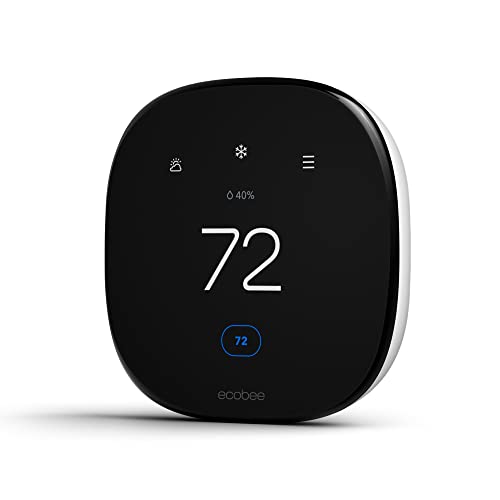
ecobee Smart Thermostat Enhanced

Nest Learning Thermostat 4th Gen Obsidian (Renewed)

Nest Learning Thermostat 4th Gen Polished Gold
Inside Each Recommended Option
The Snow trim kit version of the entry-level Nest is the friendliest on-ramp for someone stepping into the Google Home ecosystem for the first time. The mirror-style finish (a soft, glossy look that swaps the usual metal ring for a glass face) helps it blend with white walls and minimalist decor, and the included trim plate plus steel plate keeps retrofitting simple over an electrical box.
Programming happens in the Google Home app, so the wall unit itself stays clean and almost button-free. For renters and first-time smart-home owners who want basic voice control and presence detection without a learning curve, this is the model most likely to disappear into daily life.
Good Reasons To Consider
- Snow’s reflective face hides fingerprints better than darker trim kits, useful in a busy hallway.
- ENERGY STAR certification, so it lands on most utility rebate lists for energy-efficient thermostats.
- Built-in presence sensing nudges the temperature down when the home is empty, which adds up over a heating season.
- Setup walks through the Google Home app on Android or iPhone, which most people already have installed.
Things To Consider
- The mirror finish picks up smudges from curious hands near the entryway and needs the occasional wipe.
- Lacks the self-learning algorithm of the Nest Learning line, so energy savings lean on manual schedules.
- No included remote room sensors in the box, so larger homes will still see hot and cold pockets.
Who It Suits Best
First-time smart thermostat owners in apartments and smaller single-zone homes who want the lightest possible entry point into Google Home.
Consider Something Else When
Shoppers who want the thermostat to build its own schedule should look at the Nest Learning Thermostat Polished Steel instead.
The Fog trim kit is functionally identical to the Snow version above, but the warmer off-white tone changes how the thermostat sits against cream walls, wood paneling, or Scandinavian-style interiors. For homeowners who care about the way the wall plate reads in a hallway or living room, the color shift is genuinely worth the choice.
Everything else carries over: app-based scheduling through Google Home, automatic temperature setbacks when you leave, and ENERGY STAR efficiency. Pair it with a few smart bulbs and you have a wall-mounted control center that feels curated rather than tacked-on.
Where It Excels
- The soft fog color reads as warm rather than clinical, which suits neutral interior palettes.
- Same ENERGY STAR efficiency as the Snow, so utility rebates apply identically.
- Trim plate and steel plate are included for retrofit installs over older wiring boxes.
- Schedules and temperature setbacks live in the Google Home app, which most users already know.
Points To Keep In Mind
- Color choice does not add features, so cost should be the only deciding factor between Snow and Fog.
- Like the Snow trim kit, it lacks the self-programming engine of the Learning Thermostat line.
- Remote sensors are sold separately, which matters in homes with a single thermostat and multiple rooms.
Made For
Design-conscious owners in warm-toned homes who want their thermostat to match the room instead of fighting it.
Swap It Out When
Anyone wanting learning behavior should step up to the Google Nest Learning Thermostat Polished Steel for the auto-scheduling experience.
Ecobee’s flagship is the one to beat for smart-home power users. It pairs with Google Home for full voice and routine integration, while also supporting Siri and Alexa natively, which matters in mixed-assistant households. The included SmartSensor ships in the box, which sets it apart from competitors that treat room sensors as an upsell.
Daily use feels polished: a slim glass face, a vivid touchscreen, and a bundled sensor that lets the system weight the room you actually live in. For families arguing over which bedroom runs cold, the sensor approach usually wins the argument fast.
Everyday Advantages
- Built-in microphone array supports Siri and Alexa directly, while Google Home routines still work over Wi-Fi.
- Included SmartSensor targets comfort to the room that matters most, not just where the thermostat lives.
- Touchscreen interface is responsive enough to skip the app for quick adjustments.
- Compatible with most 24V HVAC systems common in North American homes.
Honest Caveats
- The metal-and-glass build looks great, but it shows dust more than plastic trim kits.
- Multiple features, including some advanced occupancy behaviors, lean on an ecobee account and cloud sync.
- Wiring can require a C-wire or the included power adapter in older homes without a common wire.
Quick Facts
Right Fit For
Power users running a multi-assistant smart home who want the best sensor story ecobee offers.
Look Elsewhere When
Pure Google Home households on a tight budget may prefer the ecobee Smart Thermostat Enhanced instead.
This 3-pack of Nest Temperature Sensors is the upgrade path most people miss. They do not run on their own, but when paired with a compatible Nest thermostat, they push temperature data from bedrooms, nurseries, or home offices into the main schedule. For a two-story home with one thermostat, that is the difference between a comfortable upstairs and a stuffy one.
Setup happens inside the Google Home app, and each sensor reports wirelessly to the paired thermostat. They also help on single floors where one room always feels colder than the hallway. For most households, two to three sensors is the sweet spot.
Strengths Worth Knowing
- Three-pack covers a typical multi-room home without needing separate purchases.
- Reports temperature wirelessly to a paired Nest thermostat, keeping comfort balanced across zones.
- Pairs through the Google Home app, no extra hub required.
- Small footprint lets them sit on a shelf or mount on a wall without dominating the room.
Worth Bearing In Mind
- Requires a compatible Nest thermostat, so this is an add-on, not a standalone product.
- Sensors rely on Bluetooth Low Energy, so thick walls or large floor plans can limit reliable range.
- Battery replacements are occasional but expected over multi-year ownership.
Key Specs
Best Suited To
Multi-room homes where one thermostat always seems to misread the comfort level in bedrooms or upstairs spaces.
A Better Fit Elsewhere
Anyone still choosing their thermostat should start with the Nest Learning Thermostat Polished Steel, then add these sensors later.
The third-generation Nest Learning Thermostat is the model that taught an entire category what self-programming meant. After a week of manual tweaks, it begins building its own schedule around when you wake, leave, and return, which is genuinely useful for people who hate fiddling with apps. The polished steel ring is heavier and more substantial than the plastic Nest Thermostat above.
It also pays attention to your HVAC system, not just the air temperature. Owners commonly rely on the Home/Away Assist and the Nest Leaf prompts to keep an eye on efficiency, while the Energy History view in the app helps explain why a bill spiked last month.
Real Benefits
- Self-programming engine builds a schedule around your habits without manual entry.
- Polished steel ring looks and feels premium against most interior palettes.
- Home/Away Assist drops to an Eco Temperature automatically when no one is home.
- Energy History and the Nest Leaf nudge toward more efficient setpoints without nagging.
Some Limits To Know
- No remote room sensors in the box, so multi-room balancing still needs an add-on.
- Older generation, so newer 4th-gen flagships outpace it on adaptive features.
- Polished steel shows fingerprints more readily than white plastic trim kits.
Perfect Match For
Schedulers who hate schedules and want a thermostat that quietly optimizes itself over the first month.
Reach For A Different Pick When
Shoppers wanting the latest hardware should consider the Nest Learning Thermostat 4th Gen Obsidian for newer system support.
The 4th-generation Nest Learning Thermostat is the current flagship in the line, and it ships with a Nest Temperature Sensor already in the box. For a whole-home remodel or a first-time install, that bundle removes the most common upgrade regret: discovering a month later that one sensor would have solved the upstairs bedroom.
System compatibility is the quiet hero here. It works with most 24V setups, including gas, electric, forced air, heat pump, and radiant, often without a C-wire (a dedicated low-voltage wire that supplies constant power). The Obsidian finish blends into dark or modern interiors where lighter trim kits would feel out of place.
What Works In Its Favor
- Bundled temperature sensor targets a priority room out of the box, no add-on purchase needed.
- Wide HVAC compatibility, including heat pump and radiant systems, fits more homes out of the gate.
- Works with Google Home, Alexa, and Apple HomeKit for flexible voice control.
- Deep learning engine continues to refine schedules based on real behavior over weeks and months.
Things That May Matter
- Non-retail packaging can feel utilitarian, though the thermostat itself is the same retail unit.
- Obsidian finish shows dust against light walls and benefits from occasional wiping.
- Setup can require the app and online account to unlock full learning behavior.
Feature Snapshot
Who Will Love This
Homeowners mid-renovation who want the latest Nest generation plus a sensor in the box, with broad HVAC compatibility.
Where Another Pick Suits Better
Shoppers watching their budget should consider the Nest Learning Thermostat Polished Steel for the same learning engine at a lower tier.
These ecobee SmartSensors are the closest cousin to the Nest Temperature Sensors above, with one important difference: they also detect occupancy. That means the paired ecobee thermostat knows not just the temperature in a room, but whether anyone is actually in it, which lets the system skip heating or cooling empty spaces more aggressively.
The 2-pack covers most small homes, and additional sensors can be added later as you discover new problem rooms. Pair them with either the Smart Thermostat Premium or the Smart Thermostat Enhanced, and they push the whole system toward room-by-room comfort that a single wall thermostat cannot match on its own.
What Pays Off
- Occupancy detection stops conditioning empty rooms, which trims energy use during work-from-home days.
- Wireless range covers most single-floor homes without additional hubs.
- Two-pack is enough to start balancing a typical living-and-bed layout.
- Pairs cleanly with both ecobee Smart Thermostat models in this list.
Trade-Offs To Consider
- Requires a compatible ecobee thermostat, not a Nest, so this is ecosystem-specific.
- Occupancy detection can be tripped by pets, depending on placement and room layout.
- Adding sensors across a large home increases cost quickly.
Built With In Mind
ecobee households in larger homes with predictable comfort dead zones who want occupancy-aware adjustments.
Not Your Match When
Nest households should pick up the Google Nest Temperature Sensor 3-Pack instead, since ecobee sensors do not work with Nest thermostats.
The Enhanced sits one step below the Premium, trading the polished metal-and-glass build and built-in voice for a more wallet-friendly plastic touchscreen. It still runs the same eco+ platform that adjusts temperature based on occupancy and suggests schedule tweaks, which is most of what people actually use day to day.
For renters, first-time upgraders, or anyone whose current thermostat has died unexpectedly, this is a sensible middle ground. Google Home integration is full, so voice routines and presence triggers work the same way they would on the pricier ecobee.
The Practical Payoff
- eco+ adjusts temperatures around occupancy and sleep without constant manual input.
- Full Google Home compatibility keeps voice and routine control simple.
- More affordable entry into the ecobee ecosystem than the Premium tier.
- Touchscreen interface remains responsive enough for quick temperature checks.
Practical Considerations
- Plastic body shows wear sooner than the Premium’s metal-and-glass face.
- SmartSensor usually sold separately, unlike the Premium’s bundled sensor.
- Lacks built-in voice assistants, so Google Home control still needs a separate speaker or display for hands-free use.
Whose Shelf It Belongs On
Renters and first-time smart thermostat upgraders who want ecobee intelligence without the Premium price.
Skip It When
Anyone wanting bundled room sensors out of the box should step up to the ecobee Smart Thermostat Premium instead.
Renewed units are an honest middle path between the third-gen Learning Thermostat and a full-price 4th-gen flagship. The thermostat and bundled 2nd-gen temperature sensor are inspected and resold through Amazon’s renewed program, which targets cost-aware shoppers who still want the latest generation’s hardware and learning engine.
Functionally, you get the same Obsidian-finish Learning Thermostat 4th Gen covered earlier, including adaptive eco behavior, Google Home and Alexa compatibility, and bundled room sensing. The honest trade-off is cosmetic: light surface marks on the dial or trim may show up, and packaging is typically plain.
Notable Gains
- Access to the 4th-generation learning engine without the full retail outlay.
- Bundled 2nd-gen temperature sensor solves a priority-room problem from day one.
- Same Obsidian finish and HVAC compatibility as the new-in-box version above.
- Google Home and Alexa support for voice and routine control.
Room For Improvement
- Renewed units may show minor cosmetic wear that retail buyers would not accept.
- Packaging is typically plain, so it may not suit gift purchases.
- Warranty terms are usually shorter than the retail version, so read the listing details.
Best Suited To
Cost-aware shoppers who want the 4th-gen Nest hardware and bundled sensor without paying full retail price.
Consider Something Else When
Anyone prioritizing a sealed-box purchase or longer coverage should consider the ecobee Smart Thermostat Enhanced instead.
The Polished Gold finish is the same 4th-generation Learning Thermostat hardware as the Obsidian model above, wrapped in a warmer brass-style ring. It is the easy choice when the thermostat will live in a room with brass fixtures, warm wood tones, or a curated gallery wall where the cooler finish would feel out of place.
You still get the bundled Nest Temperature Sensor, adaptive eco behavior, and Google Home plus Alexa support. For shoppers who care as much about how the dial reads at eye level as they do about the software, this is the model most likely to disappear into a designed space rather than interrupt it.
Useful Touches
- Polished gold finish complements warm-toned fixtures and wood interiors.
- Same 4th-gen learning engine and adaptive eco features as the Obsidian model.
- Bundled temperature sensor targets a priority room out of the box.
- Google Home, Alexa, and Apple HomeKit compatibility for flexible voice control.
Honest Caveats
- Polished gold shows fingerprints more readily than matte finishes and benefits from occasional wiping.
- Finish is a style choice, not a feature upgrade, so cost should reflect that.
- Brass-style finishes can clash with cooler-toned rooms if not planned around.
Who Should Grab It
Design-led homeowners building a warm or traditional palette who want flagship learning features without a tech-forward finish.
Another Choice May Suit
Cool-toned or minimalist rooms pair more naturally with the Nest Learning Thermostat Polished Steel reviewed earlier.
What To Weigh Before Choosing A Google Home Thermostat
Start with your HVAC system, not the thermostat. Compatibility matters most: most smart thermostats work with standard 24V systems, but high-voltage baseboards, proprietary heat pumps, or older two-wire installs may need an adapter or a different model. Wiring photos of your current thermostat save a return trip.
Voice and ecosystem fit comes next. If your home already runs on Google Home routines and Nest speakers, a Nest Learning Thermostat or Nest Thermostat is the natural fit. Households mixing in Alexa or Siri speakers should look at ecobee for the broadest assistant coverage. Multi-assistant homes avoid dead-end ecosystems later.
Comfort reach matters more than people expect. A single thermostat on the main floor will always misread upstairs bedrooms. A bundled or add-on room sensor is the difference between a house that feels balanced and one with a permanent thermostat war. Whole-home sensor coverage is the most underrated upgrade in this category.
Key Considerations Across These Picks
Mistakes Worth Dodging
The most common slip in this category is buying a thermostat without checking the wiring first, especially the C-wire. A missing common wire forces last-minute adapter purchases or a return. Another recurring trap is assuming Google Home compatibility means full voice control; some thermostats only accept schedule pushes from Google, while voice commands still need their own assistant or speaker.
When Paying More Pays Off
Higher-tier picks like the ecobee Smart Thermostat Premium and the Nest Learning Thermostat 4th Gen earn their keep with bundled room sensors, wider HVAC compatibility, and learning engines that quietly cut energy use over weeks. For larger homes with multiple comfort zones, the upgrade usually pays for itself within a couple of heating seasons. Smaller apartments rarely benefit enough to justify the gap.
Frequently Asked Questions
Do all of these thermostats work with the Google Home app?
Every thermostat and sensor in this list pairs with Google Home for schedule control and routine triggers, but built-in voice control varies by model. The ecobee Premium adds Siri and Alexa natively; Nest models rely on a separate Google Assistant speaker for hands-free voice commands.
Can I install these myself without an electrician?
Most homeowners comfortable with a screwdriver and a voltage check can self-install, and the apps walk through wiring step by step. Older homes without a C-wire may need the included power adapter or a minor wiring upgrade before installation completes.
Do smart thermostats actually save energy?
ENERGY STAR certified models can reduce heating and cooling bills by trimming output during empty hours and avoiding unnecessary setpoints. The biggest savings show up in homes with predictable routines and consistent thermostat setbacks.
Are temperature sensors worth the extra cost?
In single-zone homes with one thermostat, sensors usually solve a real problem like a cold upstairs bedroom. In open-plan homes with even airflow, the value drops. Two to three sensors cover most layouts without overbuilding.
Will a renewed thermostat work the same as a new one?
Refurbished Nest units run the same firmware and learning engine as the retail versions, with cosmetic differences and shorter coverage as the main caveats. Functionally, the experience matches for everyday use.
Bottom Line
The best smart thermostat for Google Home is the one that matches your HVAC system first and your routines second. Start with the wiring in the wall, decide whether you want a learning engine or a simple schedule, and only then weigh sensors and finishes. The ten picks above cover the most common paths into that decision, from budget-friendly Snow trim kits to flagship learning thermostats with bundled sensors. Whichever route you choose, the Google Home app ties it all together, so the rest is just personal taste.