Most LED headaches come from a poor match between bulb and switch. Pick the wrong dimmer and you get buzz, flicker, or a dim range that barely moves, and your living room starts to feel like an engineering project. The ten options below cover the everyday scenarios people run into at home: living room mood lighting, hallway motion control, bedrooms that need a soft ramp, and workshop circuits where reliability matters more than refinement. Every pick has a clear role, so you spend less time guessing.
The Main Contenders

Lutron Pico Remote for Caseta Smart Dimmer Switch
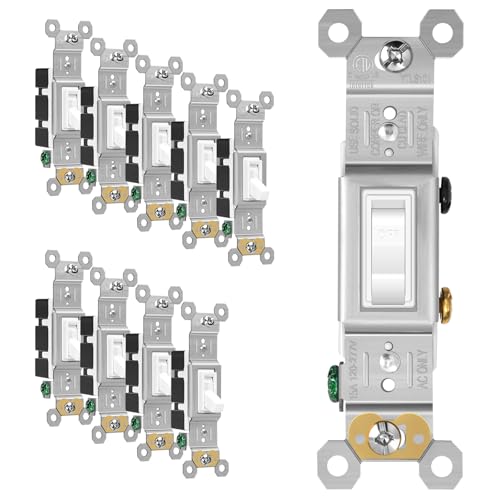
ECOELER Toggle Light Switches 15A 10 Pack

ECOELER Decorator Rocker Light Switch 20 Pack

Lutron Caseta Smart Lamp Dimmer Starter Kit

24V 100W Dimmable LED Driver TRIAC / 0-10V
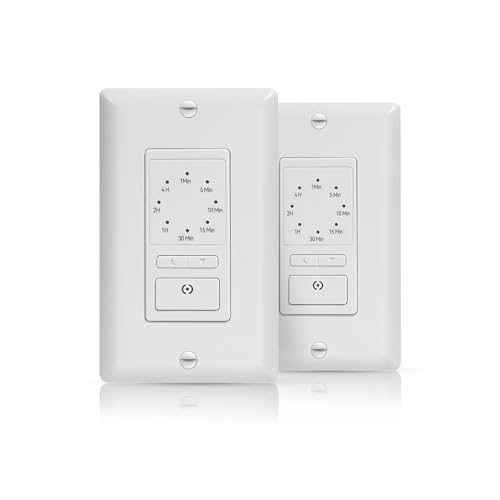
ECOELER 4-Hour Countdown Timer Switch 2 Pack
ECOELER PIR Motion Sensor Light Switch

ECOELER LED Dimmer Switch Single Pole / 3-Way 2 Pack

ECOELER No-Neutral Occupancy Sensor Switch 2 Pack
ECOELER Motion Sensor Dimmer Light Switch
More Details On Our Top Picks
The Lutron Pico remote is a small handheld controller that talks wirelessly to a Caseta in-wall dimmer, so you can mount the dimmer where the wiring lives and still have a switch at couch-level. Three buttons cover on, off, and raise or lower brightness, which is plenty for most living rooms and bedrooms.
Because it runs on a battery and does not require a neutral, the Pico slots into retrofit projects where pulling new wire is unrealistic. A tabletop pedestal keeps it next to a reading lamp, while a car-visor placement lets you hit the porch light from the driveway before stepping out, depending on your routine.
A Favorable Mix
- Wireless mounting means no chasing wires through the wall
- Three-button layout is intuitive for guests and kids
- Works alongside any Caseta in-wall dimmer you already own
- Tabletop and visor accessories cover common placement needs
Things To Consider
- Requires a paired Lutron Caseta dimmer to function at all
- Battery replacement is an occasional ownership task
Who Will Love This
Anyone with a Caseta hub who wants a switch next to the bed without opening up drywall.
Where Another Pick Suits Better
For a full plug-in lamp setup, the Lutron Caseta Smart Lamp Dimmer Starter Kit covers both hardware and hub in one box.
ECOELER’s toggle pack is a no-frills replacement for builders and renovators who want a uniform look across many rooms. Each switch is rated 15A at 120/277V, so you can use the same hardware across residential and light commercial circuits without sorting boxes.
The slim, shallow body fits a standard junction box with room to spare, and the self-grounding clip saves a step during installation. A break-off plaster ear lets you align the yoke flush with the drywall when you mount a row of switches side-by-side, which is the kind of detail that shows up during a long weekend of trim-out.
Why It Works Well
- Ten-pack covers a full home’s worth of basic switches
- 120/277V rating suits both residential and light commercial runs
- Thermoplastic body resists impact during rough-in work
- Self-grounding design speeds up wiring on the ladder
Worth Noting
- These are on/off toggles, not dimmers, so they are not the answer to mood lighting
- Plain white finish limits styling options for designer interiors
Made For
Contractors and homeowners running a multi-room rewire who want a single SKU on the shelf.
Look Elsewhere When
You want a rocker profile instead, since the ECOELER Decorator Rocker Light Switch 20 Pack delivers that modern look in higher volume.
If you are refreshing an older home where the existing plates are already the wide Decora style, this 20-pack lets you swap every switch in the house in a single trip. The shallow body slips behind the drywall without forcing you to chisel the opening wider.
Built with polycarbonate thermoplastic and a steel yoke, the switches feel sturdy when you tap the paddle, and the break-off ear keeps multi-gang boxes aligned. Twenty units means you have spares on hand for the inevitable add-on room or detached garage, depending on how your project grows.
Strengths Worth Knowing
- Twenty switches cover a whole-house rewire with extras left over
- Modern Decora paddle matches current outlet plates
- Polycarbonate and steel construction handles rough jobsites
- Single-pole design keeps wiring simple for DIYers
Points To Note
- Plain white may show scuffs in high-traffic hallways over time
- Not a dimmer, so it pairs with a separate slider if you want mood control
Best Suited To
Landlords and renovation crews standardizing on the Decora footprint across multiple units.
Skip It When
You only need to dim a couple of rooms, in which case the ECOELER LED Dimmer Switch 2 Pack handles those circuits directly.
This starter kit is the shortest path to app-controlled lamp dimming without touching the wall switch. You get a plug-in dimmer module, the Caseta Smart Hub, and a Pico remote, so the kit covers hardware, brain, and handheld control in one box.
Plug a floor or table lamp into the module, pair the hub, and you can schedule lighting based on local sunrise and sunset, which is genuinely useful in winter months when you arrive home after dark. The Pico remote also acts as a tabletop scene controller, so you can fire a “movie” preset without grabbing your phone.
The Upside
- No in-wall rewiring required for renter-friendly installation
- Hub enables schedules that adjust for sunrise and sunset
- Compatible with voice assistants once the hub is online
- Sturdy Pico remote runs on a coin cell that lasts for years
Trade Offs
- Lamp module occupies an outlet and adds a small brick to the cord path
- Hub requires a free Ethernet port on your router
The Right Fit
Apartment dwellers and first-time smart home shoppers who want plug-and-play dimming with scheduling.
Consider Something Else When
You only need one bedside remote, since the Lutron Pico Remote works with any Caseta dimmer you already own.
This HOMYHUE driver sits between your wall dimmer and a 24V LED load, translating the dimmer’s signal into something the strip or module can use. TRIAC is the standard phase-cut protocol used by most household dimmers, while 0-10V is the professional low-voltage control favored in commercial lighting.
Supporting both protocols (plus 10V PWM, which pulses a control wire to set brightness) means you can use whichever wall control matches your room. The 100-277V AC input also covers both residential 120V and commercial 277V circuits, so the same driver works in mixed spaces.
Reasons It Performs
- Multi-protocol support (TRIAC, 0-10V, 10V PWM) suits most wall dimmers
- 24V DC output at 4.17A covers a healthy run of LED strip
- UL listing and Class 2 designation support residential and commercial installs
- Wide 100-277V AC input works across common supply voltages
Room For Improvement
- Drivers run warm under full load, so plan airflow around the enclosure
- Wiring is more involved than a wall dimmer, depending on your skill level
Whose Shelf It Belongs On
DIYers building under-cabinet, cove, or shop lighting runs who need a clean dim curve on 24V LED.
Swap It Out When
You only need a wall dimmer for line-voltage bulbs, in which case the ECOELER LED Dimmer Switch 2 Pack is the simpler choice.
This timer switch is built for the room where someone always forgets to flip the light off. Eight preset options range from 1 minute up to 4 hours, so it covers a quick bathroom visit, a half-hour shower, and a fan that should cycle off before morning.
The manual override button gives you on/off control at any time without resetting the countdown. Rated at 15A, it handles most household fans and lighting loads, including dimmable LED bulbs when you want a timed warm-dim scene.
The Practical Payoff
- Eight presets cover short visits and long soaks alike
- Manual override means you are never locked into a countdown
- Works with fans and lights for one-switch rooms
- Two-pack covers the most forgetful rooms in the house
Points To Keep In Mind
- Preset buttons take a glance to learn at first
- Countdown resets if you toggle the manual override mid-cycle
Perfect Match For
Families with kids who leave the bathroom fan running all night.
Not Your Match When
You want automatic hands-free lighting instead, where the ECOELER Motion Sensor Light Switch is a stronger fit.
PIR (passive infrared) sensing detects body heat as you walk into a room, which is more reliable than ultrasonic sensors for typical hallways and bathrooms. This ECOELER switch supports both Occupancy mode, which auto turns the light on and off, and Vacancy mode, which only turns the light off after you leave.
Adjustable sensitivity helps you fine-tune the detection zone so the switch ignores a small dog but still catches a kid walking in at midnight. The neutral-wire requirement is worth flagging, since older homes without a neutral in the box cannot use this model without rewiring.
Bright Spots
- OCC and VAC modes adapt to energy goals and code requirements
- Adjustable sensitivity avoids false triggers in tight rooms
- PIR detection is reliable for typical foot traffic
- Single-pole wiring keeps the install accessible for DIYers
Honest Caveats
- Requires a neutral wire in the box, which older homes may lack
- PIR can miss very slow movement if the sensitivity is set too low
Built With In Mind
Homeowners adding hands-free control to laundry rooms, guest baths, and closets.
A Better Fit Elsewhere
For an older home with no neutral wire, the ECOELER No-Neutral Occupancy Sensor Switch installs without that upgrade.
This is the dimmer most people picture when they imagine a living room wall switch: a slider on the side, a rocker on the front, and a dim curve you can adjust to match your bulbs. It supports both single-pole and 3-way circuits, so the same hardware covers a hallway with two switches.
You only need one dimmer in a 3-way setup, with the other location using a standard on/off switch, which keeps the install cost low. Compatibility with LED, CFL, incandescent, and halogen loads up to their respective wattages means you can mix bulb types in adjacent rooms without buying separate dimmers.
Points In Its Favor
- Slider dimming gives precise control across the full range
- Single-pole and 3-way support cover most room layouts
- Up to 300W LED/CFL handles a multi-fixture ceiling
- Two-pack suits a bedroom plus a stair landing
Small Caveats
- Slider can collect dust in kitchens and may need an occasional wipe
- Maximum wattage drops for LED/CFL, which matters in large chandeliers
Who Should Grab It
DIYers upgrading a couple of bedrooms to mood lighting on a standard toggle circuit.
Reach For A Different Pick When
You want motion-triggered dimming, in which case the ECOELER Motion Sensor Dimmer Light Switch layers sensing on top of this slider.
Pre-1980s homes often run a switch loop without a neutral conductor, which disqualifies most smart switches. This occupancy sensor solves that by working directly off the line and load wires, sparing you a trip back to the breaker panel.
It still delivers hands-free lighting for bathrooms, closets, and garages, where a brief visit does not justify flipping a switch. A grounding wire is still required, so your box needs the bare copper path back to the panel, which is standard in most grounded older homes.
The Case For It
- Installs in switch loops that lack a neutral conductor
- Two-pack lets you retrofit two problem rooms at once
- PIR detection covers typical foot traffic reliably
- Useful in older homes where rewiring is impractical
Worth Bearing In Mind
- Not rated for 3-way circuits, so it cannot replace both ends of a hallway
- A grounding wire is still required at the box
Right Fit For
Owners of mid-century and earlier homes adding hands-free lighting without opening the walls.
Another Choice May Suit
For a modern home with a neutral already in the box, the ECOELER PIR Motion Sensor Light Switch offers the same idea with more flexibility.
This switch merges two ideas: a PIR occupancy sensor and a dimming slider, so the light can turn on at a preset level when you enter and then dim down after you leave. It is a natural pick for bedrooms, nurseries, and hallways where you want a soft wake-up glow rather than a hard on/off.
The ambient light sensor prevents the switch from firing in daylight, so it does not waste energy competing with the sun. Adjustable time delay options, including a 15-second test mode, let you dial in how long the light stays on before it ramps down, depending on the room’s typical use.
Where It Helps
- Combines motion sensing with dimming in a single device
- Ambient light sensor avoids daytime triggers
- OCC and VAC modes offer energy code flexibility
- 15-second test mode simplifies setup and tuning
Less Ideal Details
- Higher complexity means more settings to learn at first
- Slider position can drift if bumped repeatedly in a hallway
Who It Suits Best
Bedroom and nursery owners wanting a hands-free light that fades rather than snaps on.
Where A Sibling Pick Shines
For a simpler on/off motion switch without dimming, the ECOELER PIR Motion Sensor Light Switch keeps the install lean.
What To Weigh Before Picking A Dimmer Switch For LEDs
The single biggest factor in dimmer performance is the dimming range, measured as the percentage drop from full brightness to the lowest stable level. A wider range means you can drop a living room from a bright reading light to a near-dark movie scene. The second factor is minimum load, since LED bulbs use far less wattage than incandescents, and a dimmer rated for older loads may not recognize the low draw.
Bulb compatibility matters just as much. Not every LED bulb dims cleanly with every dimmer, and the industry uses a “dimmable” label that does not guarantee smooth behavior. If you have a known bulb brand, look for a manufacturer compatibility list before committing.
Finally, decide how you want to control the switch. Manual sliders and rockers cost less and never need batteries. Smart dimmers and remotes add scheduling, scene control, and voice integration, but they require a hub, a neutral wire, or both. Matching the control style to the room saves you from overpaying for features you will not use.
Common Buying Slip Ups And When To Spend Up
Pitfalls Shoppers Hit
A common mistake is grabbing an old incandescent dimmer from the spare parts bin and pairing it with new LED bulbs. Most older dimmers do not register the low LED load, which leads to flicker, drop-out at low levels, or a buzzing sound. A related trap is trusting a bulb’s “dimmable” label as a guarantee of compatibility, since the dimmer side of the equation matters just as much.
Another oversight is overlooking the wiring in the box. Many smart and motion switches need a neutral conductor, and older switch loops do not have one. If your home predates the 1980s, confirm a neutral exists, or pick a no-neutral model like the ECOELER No-Neutral Occupancy Sensor Switch.
When Paying More Pays Off
Higher-tier dimmers earn their place when you want a wider dimming range, smoother low-end behavior, or app control. They also tend to include better surge protection and longer-lasting components, which matters for circuits that cycle on and off dozens of times a day.
The upgrade is most justifiable in living rooms, dining rooms, and primary bedrooms where mood lighting gets daily use. In closets, guest bathrooms, and utility rooms, a standard dimmer or motion switch delivers the same practical benefit at a fraction of the cost.
Frequently Asked Questions
Do all LED bulbs work with any dimmer switch?
No. LED bulbs need a dimmer specifically rated for LED loads, and even then performance varies by brand. Check the dimmer manufacturer’s compatibility list before pairing a new switch with your existing bulbs.
What is a neutral wire and why does it matter?
A neutral wire returns current to the panel and is required by most smart and motion switches. Older switch loops may not include one, so pick a no-neutral model like the ECOELER No-Neutral Occupancy Sensor Switch if your box lacks it.
Can I install a dimmer switch myself?
Homeowners comfortable with basic electrical work can usually handle a single-pole swap after turning off the breaker. For 3-way circuits, multi-gang boxes, or any aluminum wiring, a licensed electrician is the safer choice.
Why do my LED bulbs flicker when dimmed?
Flicker usually means a mismatch between the bulb’s minimum load and the dimmer’s range. Switching to a dimmer rated for LED loads, or to a bulb on the dimmer’s compatibility list, typically clears it up.
How does a motion sensor switch save energy?
It only powers the light when someone is in the room, and many models include an ambient light sensor to skip daytime use. Pairing it with LED bulbs multiplies the savings since LEDs already draw a fraction of older bulb wattages.
Closing Remarks
Dimmer switches for LED bulbs cover a wide spectrum, from a simple in-wall slider to a hub-driven smart system. Start by checking your bulb compatibility and your box wiring, then pick the control style that matches the room. The right switch turns LED lighting from “always on full blast” into the flexible, room-aware setup it was meant to be.