Custodial crews, small business owners, and homeowners tackling serious floor space all hit the same wall: a wobbly, lightweight mop bucket that splashes water across a clean floor. The right commercial mop bucket changes that. Spilled-proof design, smooth casters, and a wringer that actually grips the mop head keep the job moving. Below are five picks built around durability, capacity, and day-to-day ease.
Your Options, Compared
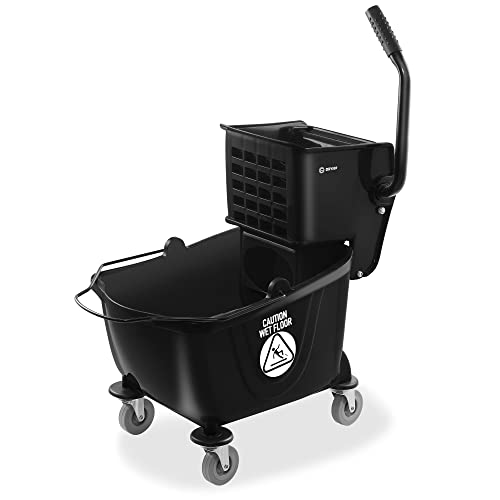
Dryser Commercial Mop Bucket with Side Press Wringer, 26 Quart, Black

Dryser Commercial Mop Bucket with Side Press Wringer, 26 Quart, Blue

Dryser Commercial Mop Bucket with Side Press Wringer, 26 Quart, Green

Dryser Commercial Side Press Wringer Combo Mop Bucket, 33 Quart, Blue

Dryser Commercial Side Press Wringer Combo Mop Bucket, 33 Quart, Black
A Deeper Look At The Lineup
The Dryser 26-quart in black is the entry point in this lineup, sized for hallways, break rooms, and modest square footage rather than warehouse floors. Its side-press wringer sits low on the bucket, which keeps the overall profile compact and makes it easier to roll under counters or mop sinks between refills.
For a home with hardwood or a small storefront, the 26-quart capacity strikes a friendly balance. You carry less water, so the bucket is easier to dump at the end of a shift. Compared to the 33-quart sibling covered below, this one trades away capacity for a noticeably lighter push.
Useful Highlights
- The 26-quart volume handles roughly two full rooms before needing a refill in most homes.
- The deep tub walls reduce splash-back when wheeling across thresholds.
- Side-press wringer keeps hands clear of dirty water during mop wringing.
- Compact footprint fits inside janitor closets and mop-sink alcoves.
Things To Consider
- Smaller capacity means more frequent water changes on big jobs.
- Lacks the reinforced caster hardware found on the 33-quart model.
- Owners with larger commercial spaces may outgrow it within months.
Right Fit For
Homeowners and small-office cleaners who want a manageable bucket for daily touch-ups and weekend deep cleans.
Reach For A Different Pick When
You handle multi-room commercial spaces where the Dryser 33-Quart Blue model would save time between refills.
Functionally identical to the black 26-quart version, this blue variant solves a different problem: visual organization. Facilities that color-code cleaning tools to prevent cross-contamination (blue often signals general, low-risk areas) get the same bucket in a more identifiable shell.
You get the same side-press wringer geometry, the same deep walls that cut down on splash, and the same modest capacity. The trade-off is purely aesthetic, though in a busy school or medical office, that visual cue matters. This is the bucket crews reach for without thinking twice.
Positive Points
- Blue hue fits standard color-coded cleaning protocols in many facilities.
- Same spill-resistant side press as the black version, so no learning curve.
- Lighter-than-33-quart frame reduces fatigue on shorter routes.
- Easy to spot across a busy storage closet.
- Extra-deep walls extend time between water dumps.
Worth Noting
- Color alone won’t suit every facility’s coding system (some use red for restrooms).
- Capacity is unchanged from the black model, so larger jobs still need refills.
Made For
Custodial staff who follow color-coded cleaning protocols and want a familiar bucket in a facility-friendly shade.
Look Elsewhere When
Your operation uses green to flag general-purpose zones, in which case the Dryser 26-Quart Green model would slot in better.
Rounding out the 26-quart trio, this green version covers facilities that flag general-purpose zones in green, which is common in food service and some healthcare protocols. The mechanics carry over unchanged from the black and blue siblings.
You still get the spill-resistant side press and the same manageable footprint. What changes is the shell color, which matters most for crews running multiple buckets across a shift. Picking the right color up front prevents the wrong mop from touching the wrong floor.
What Helps Most
- Green finish aligns with common food-service color coding.
- Side-press wringer cuts down on bent-over wringing time.
- Compact 26-quart size stores neatly against walls.
Trade Offs
- Same 26-quart capacity as its color siblings, so no upgrade in volume.
- Green may not match every facility’s color scheme.
- Not suited to heavy industrial grime, where the 33-quart models shine.
Quick Facts
Best Suited To
Kitchen crews in restaurants and cafes who need a clearly labeled mop station separate from restroom tools.
A Better Fit Elsewhere
Janitorial teams covering large warehouses, where the Dryser 33-Quart Black model would outlast and outlast longer routes.
This is where the lineup shifts into serious territory. The 33-quart blue bucket adds roughly 25 percent more water capacity than the 26-quart models, along with a sturdier caster mount system and a wringer built around a steel pressure rod spring engineered for elasticity, meaning the handle returns to position smoothly after each press.
For schools, clinics, and offices with multiple rooms, that extra volume pays off in fewer trips to the dump sink. The four non-marking wheels roll quietly enough for daytime cleaning, and the carbon steel caster mounts keep them locked down rather than wobbling over time.
Real Benefits
- 33-quart tank stretches cleaning sessions across bigger floor plans.
- Steel pressure rod spring keeps wringer action consistent over years of use.
- Non-marking casters protect finished floors in offices and clinics.
- Bumper guards prevent scuffs on walls and corners during tight turns.
- Anti-corrosive polypropylene shell shrugs off harsh chemicals.
- Spacious wringer basket fits larger mop heads without bunching.
Honest Caveats
- Heavier when full, so stairs and curbs need a second pair of lifters.
- Takes up more closet space than the 26-quart versions.
- May be overkill for a one-bedroom apartment.
- Larger footprint is tougher to maneuver around narrow furniture layouts.
Core Details
Who Should Grab It
Custodial crews running multi-room routes in offices, schools, or medical facilities who need capacity and durability in one bucket.
Skip It When
Your cleaning footprint is a small apartment or studio, in which case the Dryser 26-Quart Black would handle the job with less bulk.
The 33-quart black is the workhorse finish of the lineup: same rugged construction as its blue sibling, but in a darker shell that hides scuffs and stains better over time. For crews running nightly janitorial routes, that cosmetic detail translates into a bucket that still looks presentable after months of use.
Compared to the 26-quart models earlier in this list, the jump in capacity and caster strength is unmistakable. You trade maneuverability for endurance, which is the right swap in a busy facility. The wringer handle, built around a steel rod spring, returns smoothly and resists the wobble that plagues cheaper units.
Strong Points
- Black finish hides wear, dirt, and scuffs better than lighter colors.
- Steel pressure rod spring keeps wringer action reliable over long shifts.
- 33-quart capacity cuts refill trips on big jobs.
- Carbon steel caster mounts resist loosening over months of rolling.
- Bumper guards protect door frames and baseboards in tight layouts.
Points To Note
- Heavier than 26-quart models, especially when filled.
- Bulkier footprint requires more storage space.
- Darker shell makes it harder to spot in dim closets.
Feature Snapshot
Whose Shelf It Belongs On
Professional janitorial teams running nightly routes who need a bucket that ages gracefully and stands up to heavy daily use.
Swap It Out When
Color-coded facility rules call for blue or green, in which case the Dryser 33-Quart Blue is the obvious swap.
What Matters Most In a Commercial Mop Bucket
Capacity Versus Footprint
A 26-quart bucket suits tight spaces and shorter routes, while a 33-quart model cuts down on refill trips when floors stretch across multiple rooms. Pick based on the square footage you cover per shift, not on the bigger-is-better instinct.
Wringer Mechanism
Side-press wringers use a lever action that extracts water without forcing you to bend over a down-press plate. That ergonomic detail matters across an eight-hour shift. The steel pressure rod spring in the 33-quart models keeps the lever action smooth after thousands of presses.
Wheels and Bumper Guards
Non-marking casters protect finished floors from black streaks, and steel caster mounts keep the wheels firmly attached. Bumper guards around the bucket prevent wall scuffs during tight turns, which is more useful than it sounds in narrow exam rooms or hallways.
Body Material and Build
Polypropylene, a rigid thermoplastic resin, resists the harsh chemicals in commercial floor cleaners and shrugs off drops better than thin plastic. Web-molded construction, where reinforcing ribs run through the walls, keeps the bucket from flexing under a full load of water.
Key Considerations Across These Picks
Pitfalls Shoppers Hit
A common trap is buying a bucket based on capacity alone and ignoring the wringer hardware. A wobbly wringer fails within months, regardless of how much water the tub holds. Another misstep is skipping wheel quality; cheap casters crack under load and leave black streaks on tile.
Where The Extra Money Goes
Stepping up from a 26-quart to a 33-quart model adds carbon steel caster mounts, a steel pressure rod spring in the wringer, and bumper guards. Those upgrades extend service life on heavy commercial routes. For a home user, that extra investment rarely pays back. For a nightly janitorial crew, it usually does.
Frequently Asked Questions
How often should a commercial mop bucket be emptied?
Empty and rinse the bucket whenever the water turns visibly gray or soapy residue builds up. For most routes, that means a fresh fill every one to three rooms, depending on traffic and floor type.
Can these buckets handle bleach-based cleaners?
The polypropylene body on both the 26-quart and 33-quart models resists standard commercial disinfectants, including diluted bleach. Rinse thoroughly after use to extend the life of the hinges and wringer spring.
Are the wheels safe for hardwood floors?
The non-marking casters on all five picks are designed to roll without scuffing finished surfaces. You may still want to lift the bucket over thresholds to keep the wheels from picking up grit that scratches.
What is the difference between a side-press and a down-press wringer?
A side-press wringer uses a lever that moves vertically beside the bucket, so your hands stay clear of soiled water. A down-press wringer sits on top of the tub and pushes the mop head straight down, which can be harder on the wrists during long shifts.
Do color-coded buckets really matter?
In facilities following hygiene standards, yes. Color coding helps prevent the same mop from touching a restroom floor and a kitchen surface. Matching your bucket color to your facility’s protocol keeps audits cleaner and staff consistent.
The Takeaway
Pick the bucket that fits the space you actually clean, not the biggest one on the list. The 26-quart models handle homes and small offices with ease, while the 33-quart versions earn their weight on bigger commercial routes where refill trips and wheel strength matter most.