That rough idle, the hesitant throttle, the sluggish cold start. Carbon, gum, and varnish creep into fuel systems over time, and a good additive cuts through that buildup before it turns into a repair bill. This roundup covers pour-in treatments and spray-on cleaners that target carburetors, fuel injectors, intake valves, and combustion chambers, so you can match the right formula to your engine and your mechanical comfort level.
The Main Contenders

Berryman B-12 Chemtool 0116 (3 Pack) 15oz
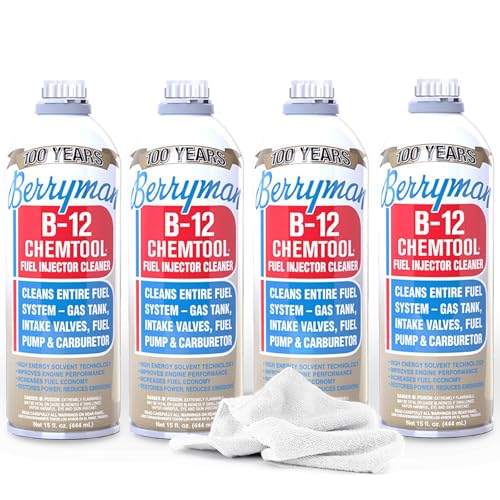
Berryman B-12 Chemtool 0116 (4 Pack) 15oz
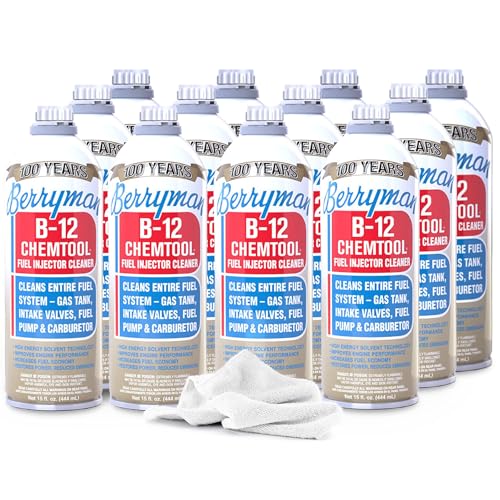
Berryman 0116 Fuel Injector Cleaner 12 Pack
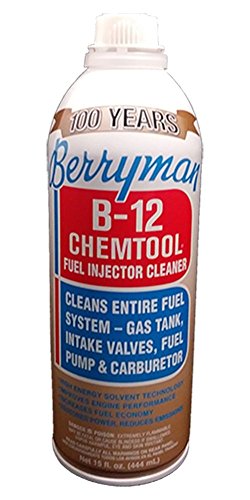
Berryman B-12 Chemtool Fuel Injector 3 Pack
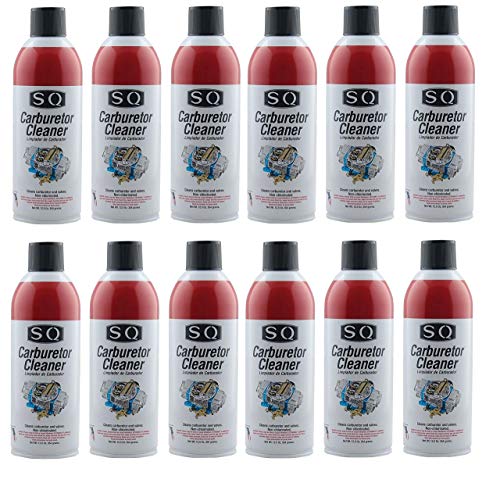
SQ Carburetor Cleaner 12 Pack 12.5oz

Mercury 8M0058691 Quickleen 32oz

Quicksilver Quickleen Engine Cleaner
Why These Options Stand Out
The Berryman B-12 Chemtool has earned its reputation in home garages over decades, and this three-bottle bundle keeps the treatment within arm’s reach for several service intervals. You simply pour a measured amount into the fuel tank, and the additive travels through the lines, injectors, carburetor, and into the combustion chamber as the engine runs.
For a daily commuter showing early signs of carbon buildup, this format hits a practical sweet spot. Three 15oz bottles cover multiple tanks of treatment without forcing a bulk commitment, and the included shop towel earns its keep during the pour-in step.
Benefits That Matter
- Dissolves gum, varnish, and carbon across injectors, carburetors, intake valves, and combustion chambers in one treatment cycle
- Pour-in format means no disassembly, no special tools, and no mechanic appointment
- Safe for catalytic converters and oxygen sensors, so newer vehicles stay protected
- Three-bottle bundle supports ongoing maintenance rather than a single one-off dose
Things To Consider
- Pour-in additives work gradually through combustion, so results unfold over several tanks rather than instantly
- Owners of diesel engines will want to look elsewhere, as this formula targets gasoline fuel systems
Feature Snapshot
Made For
DIYers maintaining a single gasoline-powered daily driver who want a recognizable, trusted formula.
Consider Something Else When
Boat owners running an outboard will get a better fit from the Mercury 8M0058691 Quickleen 32oz, which is engineered for marine fuel systems.
The four-pack version of the Berryman B-12 Chemtool steps in for households that run more than one vehicle or treat fuel routinely across the calendar year. Compare that to the three-pack from Item 1, which serves a single driver just fine, and the value case for the four-pack tightens once you factor in a second car, a lawn tractor, or a generator.
Adding the liquid to a fuel tank takes about a minute, and the additive circulates through the lines and combustion chambers as the engine runs. The included SMA shop towel handles the inevitable drips on the filler neck without leaving lint behind.
Good Reasons To Consider
- Four bottles stretch across a full year of seasonal treatments for most drivers
- Same oxygen-sensor-safe formula as the three-pack, so emissions components stay protected
- Targets fuel residues in tanks, lines, valves, rings, and pistons, addressing the full fuel path rather than just the injector tip
Honest Caveats
- More bottles than a single-driver household may need, so storage space becomes a small consideration
- Pour-in treatments still need repeated doses over time to deliver measurable gains
Right Fit For
Families or hobbyists running two or more gasoline engines who want to keep several vehicles on a treatment rotation.
Look Elsewhere When
Workshop owners needing deep fleet coverage will find the Berryman 0116 Fuel Injector Cleaner 12 Pack a stronger match for their volume.
A twelve-pack of Berryman B-12 Chemtool speaks to a different kind of owner entirely. Small repair shops, mobile mechanics, and serious tinkerers rotating through several customer cars each week will burn through bottles faster than they realize, and buying by the case cuts down on the restocking trips.
The chemistry inside the bottle matches what you find in the smaller three- and four-pack bundles, so the dosing logic and treatment cycle stay consistent. You pour, run, and let the additive work through the fuel system, with one shop towel included to manage the inevitable spills.
A Favorable Mix
- Bulk format keeps a steady supply on hand without frequent reordering
- Cleans the full fuel path, including injectors, intake valves, and combustion chambers
- Compatible with catalytic converter and oxygen sensor hardware
Points To Note
- Twelve bottles demand real shelf space, and you may find a garage corner becomes a permanent storage spot
- Overkill for a single-driver household, since the small bundles already outlast a typical maintenance cycle
Who Will Love This
Independent mechanics and fleet maintenance teams who treat fuel systems as a routine service offering.
Swap It Out When
Casual owners maintaining one car should pick the Berryman B-12 Chemtool 0116 (3 Pack) 15oz instead, which delivers the same chemistry in a manageable size.
Berryman’s three-pack from its own brand listing (rather than the bundled SMA ProQor resells) covers the same core formula and the same 15oz bottle size as Item 1, so the chemistry comparison lands in familiar territory. What shifts is the packaging context and the listing arrangement, which some shoppers prefer when buying direct from the brand.
You still pour the additive into the fuel tank, run the engine, and let the formula circulate through fuel injectors, carburetors, intake valves, and combustion chambers. For most short-term tune-ups on a single vehicle, three bottles supply several months of treatment without committing to a deep bench.
A Few Strong Suits
- Direct brand packaging with the recognizable Berryman label
- Cleans fuel system residues across injectors, valves, rings, and pistons
- Sensor-safe formulation for modern emissions-equipped vehicles
Trade-Offs To Consider
- Smaller bundle than the four-pack from Item 2, so multi-vehicle owners may run out sooner than expected
- Pour-in cleaners take multiple tanks to show measurable engine response
Quick Facts
Best Suited To
Shade-tree mechanics running a short cleaning cycle on one or two cars before a road trip or emissions test.
Reach For A Different Pick When
Mariners with outboards will be better served by the Quicksilver Quickleen Engine and Fuel System Cleaner, which handles ethanol-blend marine fuel.
The SQ Carburetor Cleaner takes a different approach from every pour-in additive on this list. Rather than riding through the fuel system, you spray it directly onto external carburetor parts, linkages, and choke assemblies to dissolve grime on contact. That’s the format small-engine owners reach for during spring startup prep.
It’s non-chlorinated and leaves no residue, so you can wipe parts clean without worrying about film that might foul a running engine. Lawn mowers, chainsaws, and two-stroke equipment respond well to this kind of direct cleaning before the season’s first pull.
Bright Spots
- Spray-on application targets visible buildup without disassembling the entire carburetor
- Residue-free formula lets you reassemble and run the engine immediately after cleaning
- Twelve-bottle case handles a full spring of small-engine tune-ups
Factors To Consider
- Highly flammable, so keep it away from open flames and hot engine surfaces during use
- Cannot be shipped to several states, so check local regulations before ordering
- External spray-on, not a fuel additive, so it does not address internal injector or combustion chamber deposits
Feature Card
Who Should Grab It
Homeowners with a garage full of lawn equipment who want fast, visible cleaning before summer mowing season.
Where Another Pick Suits Better
Drivers chasing internal fuel system deposits should choose the Berryman B-12 Chemtool 0116 (3 Pack) 15oz, which works from inside the fuel tank.
The Mercury Quickleen carries an OEM pedigree that matters on the water. Built to Mercury Marine’s strict original equipment manufacturer specifications, this formula addresses carbon deposits across carburetors, injectors, intake valves, spark plugs, piston crowns, and cylinder heads, the same hot spots that build up on outboards during heavy seasonal use.
The dosing is refreshingly straightforward: one ounce treats five gallons of gasoline, so a single 32oz bottle covers roughly 160 gallons of treatment. You add it occasionally throughout the boating season rather than every fill-up.
The Upside
- OEM-grade formula designed by Mercury Marine specifically for marine engines
- Targets carbon buildup that contributes to knocking and piston seize-up
- Large 32oz bottle covers an entire season of treatment for most recreational boats
Points To Keep In Mind
- Does not contain fuel stabilizers, so you will need a separate stabilizer for long-term storage between trips
- Occasional dosing rather than continuous treatment, which may not suit boaters fighting stubborn existing deposits
Feature Card
Right Fit For
Boat owners running Mercury outboards who want a manufacturer-aligned cleaner rather than a generic fuel additive.
Not Your Match When
Drivers maintaining a car or truck should pick the Berryman B-12 Chemtool Fuel Injector 3 Pack, which is formulated for automotive fuel systems.
The Quicksilver Quickleen rounds out this list as a flexible fuel treatment that plays nicely with all gasoline grades and ethanol-blend fuels. That ethanol compatibility matters for boaters running modern fuel at the marina pump, where E10 has become the standard offering.
One ounce treats five gallons, matching the dosing rhythm of the Mercury Quickleen from Item 6, but this version can be used at every fuel fill-up rather than only occasionally. For boat owners who run ethanol fuels and want a continuous cleaning habit, the dosing flexibility shifts the calculus.
What Stands Out
- Works at every fill-up, supporting continuous cleaning rather than occasional dosing
- Compatible with ethanol-blend fuels commonly found at marine pumps
- Targets carbon deposits across the full fuel and combustion path
Some Limits To Know
- Continuous use adds up in bottle consumption, so storage and reorder planning become routine
- Marine-focused formulation, so automotive applications get less specific attention than dedicated car treatments
Whose Shelf It Belongs On
Recreational boaters refueling often with ethanol-blend gas who want cleaning built into every trip.
A Better Fit Elsewhere
Car owners chasing a single deep cleaning should choose the Berryman B-12 Chemtool 0116 (3 Pack) 15oz for its automotive focus.
Choosing a Carb Cleaner Additive That Actually Fits Your Engine
The first fork in the road is pour-in versus spray-on. Pour-in additives travel through the fuel system and reach internal components like injectors, intake valves, and combustion chambers, while spray-on cleaners handle external carburetor surfaces, linkages, and choke assemblies on small engines. Matching the format to the job keeps you from expecting internal results from an external spray or vice versa.
Engine type matters just as much. Gasoline engines, including most cars, trucks, lawn equipment, and outboards, accept the Berryman and Quicksilver formulas on this list. Diesel systems use different chemistry entirely, and the additives here do not address diesel injector deposits. If your equipment sits for long stretches between uses, marine-specific formulas like the Mercury Quickleen pair better with a separate fuel stabilizer.
Dosing frequency rounds out the decision. Occasional seasonal treatments suit weekend boaters who store their rigs over winter, while every-fill-up dosing fits active operators fighting continuous ethanol-blend exposure. Bulk bundles reward high-frequency users, and smaller packs suit casual maintenance schedules without crowding the garage shelf.
Picking Through the Choices With Confidence
Where Shoppers Go Wrong
The most common slip is grabbing a spray-on carb cleaner when the real problem lives inside the fuel tank. External sprays cannot touch injector tips or intake valve deposits, so an engine that hesitates under throttle needs a pour-in formula, not an aerosol. The reverse mistake also happens: pouring a fuel additive into a tank when the actual issue is a gummed-up choke plate that responds only to direct spray cleaning.
Another pitfall is ignoring ethanol compatibility. Marine and small-engine equipment running E10 fuel can suffer phase separation and deposit buildup that standard automotive additives address inconsistently. Choosing a formula specifically rated for ethanol-blend fuels prevents the slow carbon accumulation that robs compression over a season.
Where The Extra Money Goes
Higher-tier offerings typically buy you OEM pedigree, larger bottle sizes, or specialty compatibility. The Mercury Quickleen costs more per ounce than a Berryman bundle, but you are paying for marine-specific engineering that aligns with outboard manufacturer specifications. Bulk packs like the Berryman twelve-pack trade a higher upfront cost for a lower per-bottle rate that pays off when you run several vehicles or run a small shop.
Spending up makes sense when your engine type demands it (marine outboards, ethanol-heavy fuel, or high-mileage direct-injection systems) or when your usage frequency justifies the bulk savings. For a single daily driver on occasional treatment, a smaller bundle delivers the same chemistry without the storage overhead.
Frequently Asked Questions
How often should a carb cleaner additive be used?
Most pour-in additives work best as a periodic treatment rather than a daily habit, with many owners running a bottle through the tank every few thousand miles. Spray-on cleaners are used as needed during tune-ups.
Can a fuel additive fix a rough idle?
A pour-in additive can help when carbon and varnish buildup contribute to the rough idle, but mechanical issues like vacuum leaks or worn spark plugs require separate repairs.
Are these additives safe for modern engines with catalytic converters?
The Berryman and Quicksilver formulas on this list are designed to be safe for catalytic converters and oxygen sensors, though checking the specific product label for your vehicle is always wise.
Do marine and automotive additives really differ?
Yes, marine formulas often account for ethanol-blend fuels, longer storage periods, and outboard-specific combustion characteristics that automotive blends do not target.
Should the engine be running when adding a pour-in additive?
Typically the additive is poured into the fuel tank before fueling up, then circulated through the system as the engine runs on the treated gasoline.
Bottom Line
The right carb cleaner additive depends on where the problem lives and what engine you run. For everyday automotive maintenance, the Berryman B-12 Chemtool three-pack remains a dependable starting point, while boaters should reach for the Mercury or Quicksilver marine options. Spray-on SQ cleaner handles the external jobs on lawn equipment. Match the format to the fuel system, respect the engine type, and let chemistry do what wrenches cannot.