A thermostat keeps your engine warming up on cold mornings and shedding heat when you’re stuck in traffic. When one fails, you see a temperature gauge that climbs too high, a heater that blows cold, or a check-engine light that won’t quit. The repair itself isn’t glamorous, but picking the right part saves you a second teardown in six months.
Most car owners only swap a thermostat once or twice in the life of a vehicle, so knowing which car thermostat brands actually fit your make and model is the hardest part. This list leans on OE-matched design, build materials, and vehicle coverage to help you choose with confidence, whether you drive a 2007 Pacifica or a Tundra that pulls a trailer every weekend.
The Essentials At A Glance

MAHLE TX1887D Thermostat Insert

Mopar Thermostat Housing
Motorcraft RT1219 Thermostat

Lexus 90916-03100 Engine Coolant Thermostat

GM Genuine Parts 131-71 Engine Coolant Thermostat

Dorman 902-313 Thermostat Housing

Honda 19301-PAA-306 Thermostat

AISIN THT-005 Thermostat with Housing
GM Genuine Parts 131-87 Engine Coolant Thermostat

MotoRad 7248-192 Fail-Safe Thermostat
What Each Pick Brings To The Table
European imports reward owners who stick to OE-matched cooling parts, and MAHLE has built its name in exactly that corner of the aftermarket. The TX1887D is a thermostat insert, meaning the wax-pellet element and spring sit inside a sealed cartridge that drops into the housing you already have on the engine. That makes the swap faster than a full-housing replacement and keeps the original mounting points intact.
For most European import owners working in a home garage, this is the part that gets the engine back to its factory warm-up behavior. The opening temperature is encoded in the last digits of the part number, so you confirm the spec before you order rather than guess at the bench.
Reasons It Performs
- Designed to the original manufacturer’s thermal specs, so the gauge reads the way it did when the car left the showroom.
- Quick engine warm-up behavior, which matters on cold mornings and reduces cold-running fuel wash on short trips.
- Insert-only format means less hardware to wrestle with, and the original housing gasket is reused if it is still in good shape.
- Wax-element construction is industry-standard for predictable opening and closing cycles over many heat cycles.
Things To Consider
- Fitment is vehicle-specific, so confirming the OE part number against your VIN or service manual is worth the extra ten minutes.
- Because it is an insert only, a corroded or warped housing on the engine will still need its own replacement down the road.
At A Glance
Made For
Owners of European imports who want a quiet, spec-correct thermostat replacement without paying dealership labor rates.
Look Elsewhere When
You drive a Chrysler minivan with a tired housing, since the Dorman 902-313 housing-and-cover combo solves a problem this insert alone cannot.
When a thermostat housing cracks on a Chrysler product, you usually find slow coolant loss long before the gauge ever moves. The Mopar housing uses OE-grade aluminum castings and gasket surfaces so the rebuilt engine bay looks the way the factory intended, and coolant routing stays correct under pressure.
Owners of Ram vans and older Chrysler platforms who already trust Mopar for filters, sensors, and wipers will land here naturally. Compared to the MAHLE insert above, this part is the actual housing, so it addresses the cracked neck or corroded seal that an insert swap cannot fix on its own.
Benefits That Matter
- OE-spec aluminum casting matched to factory coolant passages, which keeps thermostat alignment predictable.
- Direct fit on Chrysler, Jeep, Dodge, and Ram applications, reducing the trial-and-error that follows generic aftermarket parts.
- Engineered by the same teams that build the vehicles, so mounting bosses and sensor ports line up without shimming.
Worth Noting
- The thermostat itself is typically not included, so the housing is one line item on a larger cooling-system invoice.
- Vehicle-specific fitment means a year-by-year match check matters even within the same model family.
Right Fit For
Chrysler, Jeep, Dodge, and Ram owners who need a genuine housing rather than a generic aftermarket replacement.
Skip It When
You drive a GM truck and want a thermostat core with the housing in one box, since the GM Genuine Parts 131-71 handles that role on its own.
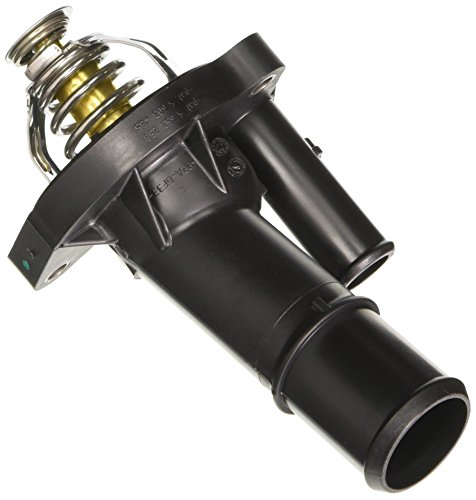
Motorcraft sits in the Ford toolbox for a reason. The RT1219 is the factory supplier’s thermostat for many Ford and Lincoln engines, and it drops in with the same spring tension and opening temperature the engine was tuned around at the plant.
For an F-150 owner who pulls a camper on weekends, that factory-matched behavior is the difference between a clean warm-up on a cold trailhead and a sluggish gauge that climbs in stop-and-go traffic. Compared to the Mopar housing, the RT1219 is the working element only, with no housing or cover included.
What Stands Out
- Ford OE supplier part, so warm-up timing and operating temperature match the factory tune.
- Compact 2.55-inch package height fits inside tight thermostat covers common on modular Ford engines.
- Aftermarket-tier testing targets long-life reliability on trucks that log real highway miles.
Trade Offs
- Source data lists origin as Mexico, which is standard for many Motorcraft parts but worth noting if a buyer prefers another country of origin.
- Thermostat only, so a leaking cover gasket still requires its own replacement during the same job.
Built For
Ford and Lincoln owners doing a routine thermostat service on engines the RT1219 was designed for.
Reach For A Different Pick When
Your truck has a multi-application mixed fleet, since the MotoRad 7248-192 covers a wider range of import and domestic models in one part number.
Lexus drivers tend to keep their cars a long time, and the 90916-03100 is the genuine OEM thermostat the brand designed into specific V8 and V6 applications. Genuine OEM parts arrive with the same calibration Toyota engineers used on the assembly line, which matters on engines tuned for precise emissions behavior.
For most owners working on a Lexus in a home driveway, this part removes the guesswork of matching aftermarket temperatures to a tight factory tune. It pairs naturally with the AISIN THT-005 covered below, which serves a different corner of the Lexus range.
Where It Helps
- Genuine OEM design directly supports factory emissions and fuel-economy behavior.
- Compact packaging suits tight engine bays common in Lexus sedans and crossovers.
- Stable spring tension keeps the operating temperature steady through many heat cycles.
Soft Spots
- Application coverage is narrower than aftermarket alternatives, so verifying the part number against the specific engine is essential.
- Thermostat only, so gasket and housing hardware come from the existing parts inventory.
Who It Suits Best
Lexus owners who want a factory-grade thermostat for the engines it directly fits.
Consider Something Else When
You drive a Lexus GS F, LC500, or Tundra platform, since the AISIN THT-005 covers those applications with an integrated housing and gasket.
The 131-71 is the GM-recommended replacement for the thermostat the factory originally installed, sitting in the coolant outlet where the radiator line meets the engine block. GM Genuine Parts and ACDelco coverage overlap, so this part lands on shelves wherever service parts are stocked for Chevrolet, GMC, Buick, and Cadillac.
For a Silverado owner doing a Saturday-morning cooling system refresh, this part checks the OE box without straying into the premium price tier. Compared to the Dorman housing covered further down, this is the working thermostat only, with no housing or gasket hardware.
The Upside
- Factory-spec coolant flow control restores the operating temperature the engine was calibrated for.
- GM-recommended replacement for the original factory component on supported applications.
- Compact temperature-controlled valve design fits the standard GM thermostat outlet.
Honest Caveats
- Fitment depends heavily on engine family, so a year and engine-code check is worth the time before ordering.
- Housing and outlet gasket are not included, so plan a separate gasket if the old one has hardened.
Feature Snapshot
Made For
GM truck and SUV owners who want a factory-recommended thermostat without stepping into the dealer service lane.
A Better Fit Elsewhere
You are chasing a fail-safe thermostat for a mixed fleet, where the MotoRad 7248-192 brings a patented lock-open feature instead.
The 902-313 is built for the most common failure point on a Chrysler cooling system: the plastic thermostat housing itself. Dorman engineers this housing as a direct replacement for specified vehicle years, makes, and models, so mounting holes and coolant passages line up without modification.
For owners of a 2007 or 2008 Chrysler Pacifica or Town & Country, this housing solves the cracked neck or stripped sensor port that an insert swap cannot. Compared to the Mopar housing above, this is an aftermarket direct-fit alternative rather than the OE-supplier part.
Notable Gains
- Direct replacement engineered for the original housing on supported year, make, and model combinations.
- Built to handle thermal cycling on engines that see frequent short trips and cold starts.
- Aftermarket price tier makes it a practical choice for older vehicles out of factory warranty.
Some Limits To Know
- Application coverage is limited to listed years and models, so checking fitment with the vehicle’s trim is essential.
- Thermostat element typically sold separately, so plan to add the matching insert during the same service.
Whose Shelf It Belongs On
Chrysler minivan owners chasing a direct-fit housing for the supported 2007-2008 model years.
Swap It Out When
You want a factory Mopar part for a Ram or Jeep platform, where the Mopar Thermostat Housing above delivers the original-equipment angle.
Honda’s 19301-PAA-306 ships from Japan with OE-spec tolerances, and it is the thermostat the factory used on the supported engine families. For Accord, Civic, and CR-V owners who have stuck with Honda parts over the years, this is the natural fit for a routine cooling service.
For most Honda owners doing the swap in a home garage, the compact 5.75-inch-tall package is straightforward to maneuver into the thermostat housing. It pairs well alongside the AISIN THT-005 covered below, which targets Lexus and Toyota V8 applications rather than Honda’s smaller-displacement lineup.
What Earns Its Place
- Genuine Honda OE specification, so the operating temperature window matches the engine’s factory tune.
- Compact 5-by-5-inch package footprint fits the tight thermostat cover on many Honda four-cylinders.
- Built in Japan under Honda’s quality system, which appeals to owners who prefer overseas factory origin.
Where It May Fall Short
- Application coverage is limited to specific Honda and Acura engines, so verifying the part number against the vehicle is worth doing.
- Housing and gasket hardware are not included, which is normal for a thermostat-only part.
Who Will Love This
Honda and Acura owners working on supported engines who want a factory-grade thermostat without straying into dealer parts pricing.
Not Your Match When
You drive a Lexus V8 application, since the AISIN THT-005 covers those platforms with a housing and gasket in one box.
AISIN is the OE supplier behind many Toyota and Lexus cooling-system components, and the THT-005 packages the thermostat, housing, and gasket as one assembly. For a Lexus GX460 or Tundra owner who wants the housing and thermostat refreshed in a single job, this is the part that closes both gaps at once.
For most owners tackling the cooling system on a supported Lexus or Toyota V8, this integrated approach reduces the chance of a gasket leak after the install. It works alongside the Lexus 90916-03100 covered above, which serves a different corner of the Lexus range as a thermostat-only OE part.
What Helps Most
- OE-matched design and manufacturing approach bring factory form, fit, and function to the replacement.
- Integrated housing and gasket simplify the install and reduce the parts list for one cooling-system service.
- Targeted fitment for Lexus GS F, GX460, LS460, LX570, and Toyota Tundra, Sequoia, and Land Cruiser applications.
Practical Considerations
- Coverage is limited to specific Lexus and Toyota V8 platforms, so an application check before purchase is essential.
- Combined assembly price tier is higher than a thermostat-only replacement, though it offsets separate housing costs.
Best Suited To
Lexus and Toyota V8 owners who want a single-assembly replacement for the thermostat and housing together.
Where A Sibling Pick Shines
You only need a thermostat core on a Lexus sedan, where the Lexus 90916-03100 above handles that role as a genuine OEM part.
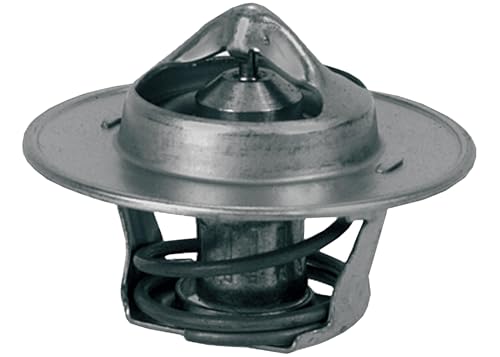
The 131-87 is positioned as a premium aftermarket thermostat for many vehicles on the road today, sitting in the coolant outlet or inlet and controlling flow through the radiator. Compared to the 131-71 covered above, this part targets a different range of GM applications, so the two are not direct substitutes for the same engine.
For a late-model GM owner doing a coolant service after a water-pump replacement, this part keeps the system behaving the way the factory intended. It pairs naturally with the Mopar housing covered earlier when comparing OE-flavored parts across different brand families.
Positive Takeaways
- Premium aftermarket positioning targets consistent coolant-flow control on supported GM vehicles.
- Temperature-controlled valve design maintains normal operating temperature under varied driving loads.
- Compact package simplifies install inside the standard GM thermostat outlet.
Points To Keep In Mind
- Fitment is vehicle-specific, so confirming the 131-87 application list against the engine code matters.
- Housing and outlet gasket are not included, which is standard for a thermostat-only service part.
Feature Snapshot
The Right Fit
Late-model GM owners who want a premium aftermarket thermostat on engines the 131-87 directly fits.
Where Another Pick Suits Better
You service a mixed fleet of imports and older Fords, where the MotoRad 7248-192 covers a wider application range in one part.
The Fail-Safe line from MotoRad is built around a patented lock-open behavior: when the cooling system starts to overheat, the thermostat locks in the open position rather than failing closed. That single design choice keeps coolant flowing at maximum rate, which reduces the risk of expensive engine damage on a long highway drive.
For owners with mixed fleets or older imports, this 7248-192 covers a long application list spanning Audi, BMW, DeLorean, and Ford Ranger and Mustang platforms. Compared to the Motorcraft RT1219 above, this is a broader-coverage part aimed at safety rather than OE-flavored replacement.
Useful Highlights
- Patented lock-open design safeguards against overheating when other cooling-system components start to fail.
- Locking technology keeps coolant flowing at maximum rate to reduce the risk of engine damage during a thermal event.
- Broad application list spans Audi, BMW, DeLorean, and Ford Ranger, Mustang, and Explorer platforms.
Where It Is Less Suited
- The lock-open fail-safe mechanism is a deliberate design choice, so a thermostat that fails in the closed position will not happen here, but the part is heavier than a standard thermostat.
- Coverage is wide but specific to listed model years, so trim-level verification still matters before ordering.
Built With In Mind
Mixed-fleet owners and import drivers who want a fail-safe thermostat rather than a standard closed-on-failure design.
Another Choice May Suit
You drive a current Honda and prefer a factory OE thermostat, where the Honda 19301-PAA-306 above delivers the OE-spec angle.
Cooling System Choices Worth Weighing Before You Click Order
A thermostat looks like a small part, but it sits at the center of how your engine warms up, how the heater works in winter, and how the gauge behaves on a long drive. The wrong temperature rating will keep the engine from reaching its tuned operating window, which hurts fuel economy and emissions behavior over time. Matching the OE specification matters more than chasing a “faster” or “cooler” aftermarket claim.
Vehicle fitment is the first filter. Each thermostat carries a specific opening temperature, and that number is encoded in the last digits of the part number for some brands. Checking the engine code, the model year, and the trim level against the application list is the step that prevents the most common do-it-yourself returns. Most retailers publish fitment data in the product page’s vehicle compatibility chart, which is worth a careful read before the order is placed.
Material choice and build quality influence how long the part survives thermal cycling. A thermostat that lives in a daily-driven commuter car will cycle tens of thousands of times across its life, so consistent spring tension and a stable wax-element seal matter over the long run. OE-matched parts from the factory supplier tend to last as long as the original, while bargain-tier thermostats can stick open after a few winters.
Getting The Most Out Of Your Replacement
Most thermostat swaps go smoothly when the cooling system is drained first, the housing is cleaned of old gasket material, and the new gasket is seated dry before torque. Reusing a stretched or hardened gasket is the most common cause of a slow coolant leak after the job is done, which can look like a thermostat failure until the housing is inspected.
It is worth replacing the thermostat and the housing at the same time when the housing shows signs of corrosion or cracking, since the labor overlap makes the second part nearly free. Inspecting the radiator cap, the water pump, and the coolant hoses during the same service catches issues that would otherwise turn a thermostat swap into a second cooling-system repair within a year.
The fail-safe design from MotoRad is worth considering for older vehicles that have lived through multiple thermostat changes. A lock-open thermostat reduces the risk of being stranded on a highway when the cooling system starts to fail for reasons unrelated to the thermostat itself. That extra margin matters most on long-distance drivers and on vehicles with known weak water pumps.
Frequently Asked Questions
How do I know which thermostat fits my specific vehicle?
Start with the engine code and model year, then cross-reference against the application list on the product page. The opening temperature for the replacement should match the OE rating, which is encoded in the last digits of the part number for some brands.
Is a higher-end thermostat worth the extra cost over a budget option?
Premium parts from OE suppliers tend to hold their calibration across more heat cycles, which matters on daily-driven vehicles. Budget parts can work fine for a short-term repair, but the long-run risk of sticking open or failing closed tends to favor mid-tier and premium options.
Can I replace a thermostat without draining the entire cooling system?
Most jobs still require draining enough coolant to drop the level below the thermostat housing. Catching the coolant in a clean pan and reusing it after the install is the common approach for experienced home mechanics.
What causes a thermostat to fail prematurely?
Old coolant that has lost its corrosion inhibitors is a common cause, since dissolved minerals attack the wax element and the spring. Overheating events and coolant starvation also damage the seal, so the surrounding cooling-system health matters as much as the part itself.
Wrap Up
Ten options is plenty of ground to cover, and the right pick comes down to your engine code, your budget, and how long you plan to keep the vehicle. Genuine OE parts from the factory supplier are the safest bet for late-model cars under warranty or with tight emissions tunes, while aftermarket direct-fit parts make sense for older vehicles where housing replacement is part of the job. Match the part number, replace the gasket, and the cooling system will behave the way the factory intended for many winters to come.