Automatic thermostats take the fiddling out of staying comfortable. Whether you’re trying to balance a workshop, a reptile enclosure, or a multi-room home, the right unit swaps guesswork for steady, hands-off control. This roundup covers wall-mounted HVAC thermostats, fireplace remotes, greenhouse controllers, and a few specialty parts that fit specific pellet stoves and smart home setups. Each pick was selected for its real-world fit, not a spec sheet flex. You’ll find honest trade-offs, not hype.
The Choices Worth Comparing
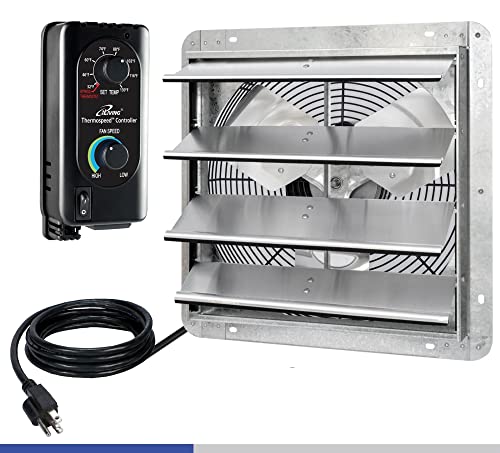
iLIVING 16″ Wall Mounted Shutter Exhaust Fan with Thermostat

iLIVING 18″ Wall Mounted Shutter Exhaust Fan with Thermostat

White-Rodgers 80 Series Non-Programmable Heat Pump Thermostat

Skytech SKY-3301 Fireplace Remote with Timer and Thermostat
White-Rodgers 1F80-361 Single Stage Programmable Thermostat
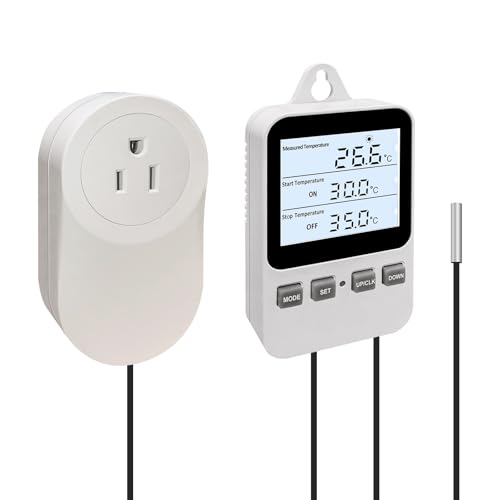
HIADA Heating Cooling Digital Plug-in Thermostat 120V 15A
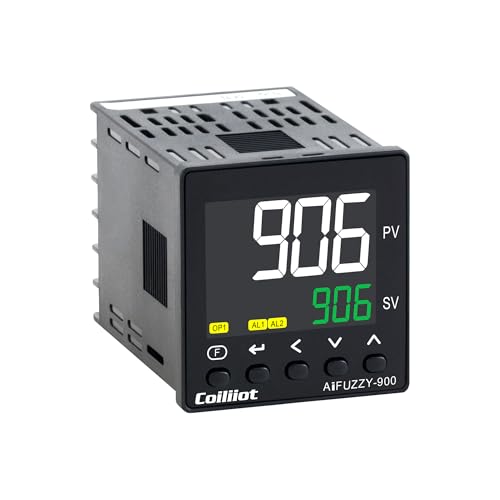
Coiliiot PID Temperature Controller Dual Output 48x48mm
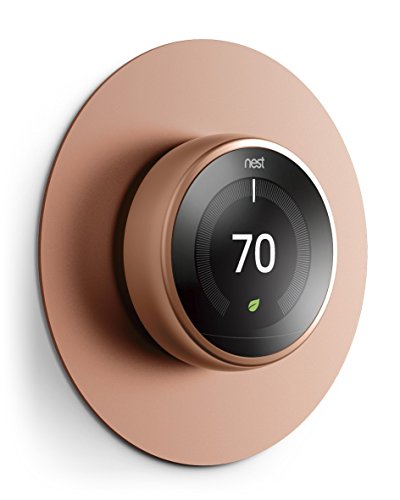
elago Wall Plate Cover for Google Nest Thermostat E

Harman Wireless Room Sensor Thermostat OEM 3-20-777556

White-Rodgers 1E78-144 Single Stage Non-Programmable Thermostat
More Details On Our Top Picks
A 16-inch shutter fan with a built-in thermostat gives small-to-mid shops and garages real climate control without a ducted system. The unit pulls air outward through a wall opening, with aluminum blades and an OSHA-compliant wire guard that handles the kind of debris floating around woodshops and auto bays. Automatic louvers open only when the fan runs, so backdrafts stay sealed during cooler months. A variable-speed dial sits alongside the thermostat so you can ramp airflow to match seasonal demand rather than running full blast year-round.
This fan covers roughly 1,800 square feet and runs on standard 120-volt current at 0.85 amps, which means you can wire it into most existing circuits. Owners setting up an attached garage gym or a basement workshop benefit most, since the thermostat hands off the on-off decision once the room hits your setpoint. Compared to the smaller consumer-grade fans in most home centers, the metal construction and integrated thermostat justify the heavier form factor.
What Makes Sense
- Variable speed lets you tune airflow to seasonal needs rather than running at full blast.
- Automatic shutters block cold backdrafts during off cycles, useful for unheated garages in winter.
- Aluminum blades and a wire guard stand up to shop debris better than plastic alternatives.
- Thermostat-driven operation removes manual cycling in busy work environments.
Worth Noting
- Wall cutting required during installation, so plan on a contractor if you’re not comfortable with masonry or framing.
- At 0.85 amps it pulls modest power, but dedicated circuit planning is still a good idea in older shops.
Feature Snapshot
Right Fit For
Shop owners and serious DIYers who need hands-off climate control in a 1,500 to 1,800 square foot space without running ductwork.
Swap It Out When
The iLIVING 18″ Shutter Exhaust Fan is a stronger match for anyone outfitting a barn, warehouse, or greenhouse with more than 2,000 square feet to clear.
Stepping up to the 18-inch version of the same iLIVING platform, this fan pushes 1,736 CFM and clears up to 2,600 square feet. That footprint covers pole barns, greenhouses, and larger workshops where the 16-inch sibling runs out of headroom. Automatic louvers and a thermally protected, fully enclosed motor keep the package safe in dusty agricultural settings where stray debris would otherwise spell trouble.
The variable speed controller and thermostat pairing make the most sense for users who want to leave the fan to its own judgment in spaces that swing between cold winter mornings and hot summer afternoons. Set the temperature once and the fan cycles on and off without supervision. For anyone running a livestock barn or a propagation greenhouse, the higher airflow translates into real plant and animal comfort instead of a token breeze.
Features That Help
- 1,736 CFM output suits large outbuildings and commercial growing spaces.
- Thermostat integration trims energy use during mild weather.
- Enclosed motor is thermally protected, a real benefit in uninsulated barns.
- Wire guards and aluminum blades tolerate the rougher environments of agricultural settings.
Things To Consider
- Larger wall cutout and heavier frame complicate retrofit installs in existing sheds.
- Higher airflow means more noticeable noise at full speed, worth weighing in spaces used as offices.
Best Suited To
Property owners with greenhouses, barns, or warehouse spaces up to 2,600 square feet who need dependable automatic ventilation year-round.
Another Choice May Suit
The iLIVING 16″ Wall Mounted Shutter Exhaust Fan is the smarter pick for compact garages and shops under 1,800 square feet.
Heat pump owners sometimes find programmable thermostats confusing, especially if their system handles auxiliary heat differently than a standard furnace. The 1F83H-21NP strips that back to a straightforward dial that anyone in the household can operate. A backlit display makes the current setting readable from across the room without fumbling for glasses.
Installation is the bigger selling point for homeowners who want to skip the contractor. The included built-in level simplifies mounting, and the wiring terminals are clearly labeled for heat pump configurations. For older homes with single-stage heat pump systems, this thermostat keeps the experience simple. Compared to the touchscreen smart thermostats flooding the market, this is the dependable analog-leaning choice that does the basics well.
A Few Highlights
- Backlit display helps quick reads during late-night adjustments.
- Designed for heat pump systems, reducing configuration guesswork.
- Built-in mounting level trims installer time on the wall.
Trade Offs
- Lacks scheduling, so day-to-day comfort swings follow the manual setting.
- No smart-home integration for remote adjustments from a phone.
Technical Highlights
Made For
Households running single-stage heat pump systems who want reliable set-and-forget operation without learning app-based controls.
Reach For A Different Pick When
The White-Rodgers 1F80-361 Single Stage Programmable Thermostat is the better match for anyone who wants weekday and weekend scheduling baked in.
Gas fireplaces lose their appeal fast if you have to crouch by the hearth every time you want to adjust the flame. The Skytech SKY-3301 turns the fireplace into something closer to a furnace, with a thermostat that calls for heat when the room drops below your setpoint. The timer adds an automatic shutoff for evenings when you fall asleep in front of the fire.
A flip-up cover shields the buttons from accidental adjustments, which matters in homes with kids or pets. Skytech specifically designs these systems for gas heating appliances, so installation involves working with millivolt or low-voltage gas valve systems rather than a 24V HVAC circuit. The build and safety logic align with standard fireplace remote expectations, making it a sensible upgrade for owners who currently rely on the manual switch.
What Stands Out
- Thermostat mode turns the fireplace into a true room-temperature controller.
- Timer adds a built-in auto-shutoff, helpful for sleeping rooms.
- Flip-up button cover prevents accidental setting changes.
- Tailored for gas heating appliances rather than retrofitted to one.
Minor Gripes
- Not designed for wood-burning or electric fireplaces, so check your appliance type before ordering.
- Receiver module mounts inside the fireplace surround, which can be tight in pre-fab units.
Right Fit For
Homeowners with a compatible gas fireplace who want automatic thermostat control instead of manual on-off cycling.
Look Elsewhere When
The HIADA Heating Cooling Digital Plug-in Thermostat handles small appliances better, and the Harman Wireless Room Sensor Thermostat fits Harman pellet stove owners specifically.
The 1F80-361 brings scheduling to single-stage systems without complicating the user experience. The 5+1+1 program structure, meaning weekday, Saturday, and Sunday each get their own temperature plan, lets you set up to four periods per day. For households where everyone leaves at different times, that granularity makes a real difference on monthly bills.
This unit is compatible with 24-volt and millivolt systems, and works with gas, oil, or electric heat, giving it a broader install footprint than most contractor-grade units. It arrives in a contractor bulk-pack with an anti-static bag, which is a small but useful detail for anyone who plans to stock replacements. Compared to the non-programmable White-Rodgers 80 Series sibling reviewed earlier, the trade is clear: more setup time on day one for ongoing automation that adjusts itself.
Strong Points
- 5+1+1 schedule flexibility fits varied weekday and weekend routines.
- Works with 24V and millivolt systems, covering most gas, oil, and electric setups.
- Up to four daily periods allow fine-tuned comfort and savings windows.
A Few Limitations
- Single-stage only, so it cannot manage multi-stage or heat pump systems.
- Programming requires initial time investment before the savings kick in.
Who Should Grab It
Homeowners with single-stage gas, oil, or electric systems who want weekday and weekend scheduling without paying for full smart-home integration.
A Better Fit Elsewhere
The White-Rodgers 1E78-144 Single Stage Non-Programmable Thermostat is the easier choice for renters who don’t need scheduling and just want reliable manual control.
Outlet-style thermostats solve a problem that wall-mounted HVAC units can’t touch: controlling the heat mat, lamp, or fan plugged into a specific enclosure. The HIADA controller handles both heating and cooling modes, switching the outlet on when the probe reads below your setpoint (in heat mode) or above it (in cool mode). For keepers running a reptile tank, seedling mat, or incubation setup, that flexibility keeps the climate steady through both summer heat waves and winter chills.
The 120-volt, 15-amp rating covers most household heating mats, ceramic heat emitters, and small fans without tripping breakers. The trade-off is the corded probe, which you position inside the enclosure to read the actual air or surface temperature. Anyone running multiple enclosures may want one controller per habitat to avoid one room’s settings bleeding into the next.
The Value In It
- Heating and cooling modes support year-round terrarium or greenhouse use.
- 15-amp outlet handles common mats, emitters, and small fans directly.
- Plug-and-play setup skips hardwiring for non-technical keepers.
Points To Note
- Probe placement affects accuracy, so position it where the animal or plant actually lives.
- Single outlet means each enclosure needs its own controller for independent climates.
Spec Overview
Best Suited To
Reptile keepers, seedling growers, and incubation hobbyists who need a wall-outlet solution with both heating and cooling modes.
Skip It When
The Coiliiot PID Temperature Controller suits anyone running a kiln, smoker, or brewing setup that demands tighter PID-based accuracy.
A PID (proportional-integral-derivative) controller is the right tool when on-off cycling produces too much swing for the application. Coffee roasters, ceramic kiln operators, and home brewers rely on PID logic to hold temperatures within a degree or two. The Coiliiot unit offers both relay and SSR (solid-state relay) outputs, giving it the flexibility to drive small heaters directly or interface with an external solid-state relay for higher loads.
At 48x48mm, the panel fits a standard DIN cutout, which simplifies installation into an existing control box. The 100-240V input voltage range means the unit works on most global mains without a step-down transformer. Dual alarms help flag overheat conditions or sensor failures, an important safeguard when a runaway kiln or smoker could mean real damage. Compared to the simpler HIADA outlet controller reviewed earlier, the trade-off is added complexity in exchange for genuine precision.
Points In Its Favor
- PID logic holds temperatures tighter than on-off cycling, which matters for roasts and cures.
- Dual relay and SSR outputs handle both small loads and external contactor setups.
- Dual alarms flag overheat and sensor faults before they become costly.
- Wide 100-240V input suits varied shop and bench wiring.
Where It May Fall Short
- Wiring and configuration take more setup time than plug-and-play controllers.
- K-type thermocouple required, so confirm probe compatibility with your heat source.
Who It Suits Best
Hobbyists running coffee roasters, kilns, smokers, or brewing rigs who need precise temperature control rather than simple on-off cycling.
Consider Something Else When
The HIADA Heating Cooling Digital Plug-in Thermostat is the simpler answer for someone running a single terrarium or seedling mat who doesn’t need PID precision.
Switching from an old thermostat to a Nest E often means living with the ghost of the previous install. The elago wall plate slides behind the Nest base to cover paint touch-ups, screw holes, and the slightly larger cutout the previous unit left behind. Anodized aluminum edges give the wall a clean line that matches the Nest’s industrial feel.
Installation is essentially slip-on, no tools beyond what’s already in your Nest box. Each plate is sanded around the edges so the rim doesn’t feel sharp against the wall. This isn’t a thermostat in the strict sense, but anyone who has stared at mismatched paint around their smart home upgrade knows the difference a tidy cover makes.
Useful Strengths
- Covers the gaps, holes, and paint mismatches from prior thermostat installs.
- Anodized aluminum finish complements the Nest E’s hardware aesthetic.
- Tool-light installation lets you finish the upgrade in minutes.
Small Caveats
- Designed specifically for the Nest Thermostat E, so it may not fit other Nest models without checking dimensions.
Whose Shelf It Belongs On
Nest Thermostat E owners finishing a retrofit install who want a clean, professional-looking wall finish.
A Better Fit Elsewhere
Anyone shopping for an actual thermostat should look at the White-Rodgers 1E78-144 for simple home climate control or the 1F80-361 for scheduling.
Replacing the wireless thermostat on a Harman pellet stove is one of those jobs where off-brand parts rarely work. This OEM (original equipment manufacturer) sensor module pairs specifically with the Absolute43, Absolute63, Allure50, XXV-TC, Accentra, and Insert 52i-TC models, so compatibility is essentially guaranteed for owners of those stoves. The wireless design means no new holes in the wall and no extra low-voltage wiring to chase.
The trade is that this is a replacement part, not a smart upgrade. Owners who already have a working Harman thermostat typically only buy this when the original fails or loses wireless pairing. Anyone running a different pellet stove brand should look elsewhere. The part number 3-20-777556 is the safest way to confirm you have the right model.
Notable Upsides
- OEM part ensures correct communication with compatible Harman stoves.
- Wireless design avoids new wiring runs across the room.
- Compatible across several current Harman stove series for easier sourcing.
Less Ideal Details
- Narrow compatibility means it won’t help owners of other pellet stove brands.
- Replacement-focused, so it adds features only if your existing unit has failed.
Perfect Match For
Harman pellet stove owners running Absolute43, Absolute63, Allure50, XXV-TC, Accentra, or Insert 52i-TC units with a failed wireless thermostat.
Where A Sibling Pick Shines
The Skytech SKY-3301 Fireplace Remote is the better route for gas fireplace households wanting thermostat control.
The 1E78-144 stays in the same spirit as the other White-Rodgers 80 Series picks but strips things further down. A backlit digital display and a single manual dial keep the experience simple enough for renters, guest properties, and anyone who doesn’t need a schedule. The unit supports single-stage heating, cooling, and heat pump systems without auxiliary heat, which covers most basic residential HVAC setups.
Compatibility with both 24-volt and millivolt systems makes it flexible for older homes running into modern HVAC controls. The unit does not support electric baseboard heat, so confirm your heat source before buying. Compared to the 1F80-361 reviewed earlier, the trade is clear: you give up the 5+1+1 scheduling for a unit that’s easier to explain to anyone who walks in the door.
Where It Delivers
- Backlit digital display makes the current setting readable at a glance.
- Supports single-stage heating, cooling, and heat pump (without aux) systems.
- Works with both 24V and millivolt systems, covering older and newer installs.
Soft Spots
- Not compatible with electric baseboard heat, which limits some older homes.
- Manual-only operation means no automatic setback for sleeping hours.
Quick Facts
Built With In Mind
Renters, landlords, and guest property owners who want reliable manual thermostat control without programming complexity.
Not Your Match When
The White-Rodgers 1F80-361 Single Stage Programmable Thermostat fits households wanting automatic scheduling and weekday-to-weekend routines.
What Matters Most Before Choosing Automatic Thermostats
Choosing the right automatic thermostat starts with the system you already own. Heat pump, single-stage, multi-stage, and millivolt gas fireplaces each demand a different category of controller, and mismatches show up fast in wiring or feature gaps. Once the system match is locked in, the next call is between programmable and non-programmable: programmable units pay off when your schedule changes daily, while non-programmable dials stay simpler for renters and small offices.
For specialty uses like greenhouses, reptile enclosures, kilns, and pellet stoves, the conversation shifts from HVAC wiring to outlet load and probe placement. A PID controller handles tight tolerances for roasters and brewers, while an outlet-style controller fits any standard 120V heating mat or fan. Pay close attention to current draw: a 15-amp rating covers most household accessories, but kilns and high-wattage heaters may need a separate contactor or relay to stay safe.
Key Considerations Across These Picks
Pitfalls Shoppers Hit
The most common miss is buying a thermostat for the wrong HVAC configuration. Heat pump models like the 1F83H-21NP won’t behave correctly on a standard furnace circuit, and non-programmable units lack the staging logic some multi-stage systems need. Specialty parts like the Harman OEM sensor only fit their listed stove models, so cross-brand shopping is a dead end. Always match the part number, voltage, and stage count before anything else.
Where The Extra Money Goes
Higher-tier picks in this list typically add scheduling flexibility, PID precision, or specialty compatibility. A programmable unit like the 1F80-361 trades a few minutes of setup for ongoing savings through targeted setback periods. The PID controller’s value shows up in processes where temperature swings ruin the outcome, such as coffee roasts and ceramic firings. For basic single-stage homes, the extra spend on a smarter model rarely beats a well-installed simple thermostat paired with a disciplined manual routine.
Frequently Asked Questions
What is an automatic thermostat?
An automatic thermostat is a temperature controller that runs heating or cooling equipment based on a setpoint, without requiring you to manually switch the system on or off.
Do all automatic thermostats work with heat pumps?
No. Some models, like the White-Rodgers 1E78-144, support heat pump systems without auxiliary heat, while others are designed strictly for standard furnace circuits. Always check the compatibility list before purchasing.
Can I install these thermostats myself?
Outlet-style units and basic wall thermostats often include built-in levels and clear terminals for confident DIY installation. Specialty HVAC controls and millivolt fireplace systems typically benefit from professional installation to avoid wiring errors.
What is a PID controller used for?
A PID (proportional-integral-derivative) controller holds temperatures within a tight range by continuously adjusting output rather than simply switching on or off. It suits coffee roasting, brewing, ceramic kilns, and similar precision applications.
How does a wireless room sensor differ from a standard thermostat?
A wireless room sensor transmits temperature readings to a paired control module rather than acting as the system’s brain itself. Replacement sensors like the Harman OEM unit restore communication between the wall sensor and a compatible stove.
Wrap Up
Automatic thermostats cover a wider category than most shoppers expect, from wall-mounted HVAC units to greenhouse probes and pellet stove sensors. Match the unit to your system, your environment, and your tolerance for setup, and the comfort gains follow naturally. Each pick on this list earns its spot for a specific scenario, so the right answer depends less on ranking and more on which climate you’re actually trying to control.