Your air conditioner pulls moisture from indoor air on humid days, and all that water exits through a small plastic drain line. That line collects algae, slime, and debris over time, and the first sign of trouble usually shows up as a dripping air handler or a mystery puddle on the floor. The right product keeps the line clear so your AC keeps quietly doing its job. This roundup covers tablets, liquids, and mechanical tools designed for routine upkeep and stubborn clogs.
The Main Contenders

Mission Control 32 oz AC Drain Line Cleaner

HVAC GUYS Flow Treat Tabs (400 Tablets)

ProTreat HVAC Drain Pan Tablets (30 Count)

AC Drain Doctor Condensate Cleaner Tool

AC Flush Kit with PVC Pipe Cutter
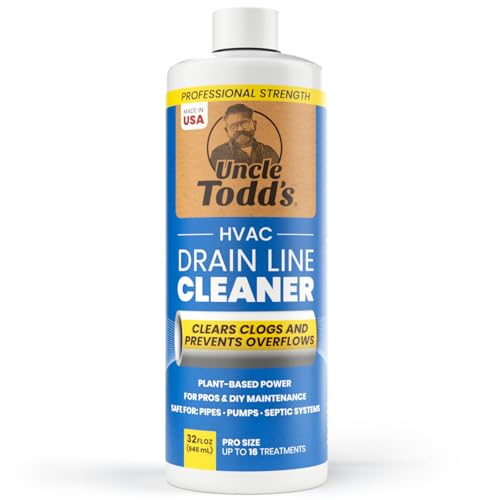
Uncle Todd’s HVAC Drain Line Cleaner

RedRock 16g CO2 Cartridges (30 Pack)

AC Safe Pan Tablets (30 Count)
The Details Behind The Selections
Mission Control’s cleaner arrives as a ready-to-pour liquid that works on both central air handlers and ductless mini split systems. The 32 oz bottle yields roughly four treatments at 8 oz each, giving a household roughly a year of quarterly maintenance. You pour the dose into the cleanout port, let it dwell for 15 to 30 minutes, and flush with water.
That dwell-and-flush pattern suits homeowners who’d rather not climb into the air handler to drop a tablet every month. Compared to the tablet options below, this format lets the liquid reach deeper into the trap and horizontal runs where algae tends to anchor.
Notable Upsides
- One bottle covers about four seasonal treatments, which spreads cost across a full year
- Works across central AC and mini split lines without needing different products
- Pour-and-flush method means no disassembly of the air handler cabinet
- Liquid form reaches bends in the line that tablets may sit on top of
Things To Consider
- You need a cleanout port or T-fitting to introduce the liquid; older systems without one require a service call to add
- Pouring liquid on a schedule is easier to forget than tossing in a tablet each month
Quick Facts
Who Should Grab It
Homeowners with central air or mini splits who want a quarterly routine and already have a cleanout port nearby.
Look Elsewhere When
Skip this and grab AC Safe Pan Tablets instead if you prefer dropping a tablet in the pan and forgetting about it until next month.
Flow Treat Tabs come in a 400-count container, which is the kind of supply that disappears quietly into a maintenance closet for years. Each tablet is dropped into the drain pan, where it dissolves slowly over roughly four weeks. The slow release keeps algae and odor-causing biofilm from gaining a foothold in the pan and the line below it.
Where Mission Control’s liquid calls for a cleanout port, these tablets need only an accessible drain pan inside the air handler. For most split systems, that’s a panel that pops off with a screwdriver. The trade-off is reach: tablets clean where they sit rather than chasing slime further down the pipe.
Key Advantages
- A 400-tablet supply covers several years of monthly service without reordering
- Drop-and-forget routine takes seconds per month
- Helps control the musty odor that travels up through return ducts when biofilm builds
- Slow-release format avoids the shock of dumping chemistry into the pan at once
Worth Noting
- The tablet dissolves in the pan, so very heavy existing slime deeper in the line may still need a separate flush
- You’ll need to open the air handler cabinet monthly, which some homeowners prefer to avoid
Made For
Households that want a set-and-forget monthly routine and don’t mind popping an access panel to drop in a tablet.
Consider Something Else When
Step up to the AC Drain Doctor if your line is already chronically clogged and you want a flush point you can hit with a garden hose instead of another tablet.
ProTreat’s 30-tablet pack is positioned as a direct replacement for the long-running PT217 tablet format, so it slots into routines already built around that schedule. You place a tablet in the drain pan or directly into the line, and it goes to work controlling algae and the gunk that causes pan overflow.
Compared to the 400-tablet Flow Treat supply above, this is a more modest 30-count aimed at shorter planning windows or trying out the format. The compatibility framing also matters if you’ve been using PT217, Hydrex 68115, Trane DTR031320, or Wagner Pan Tabs and want a known-shape replacement.
Noteworthy Benefits
- Drop-in shape for PT217 and a long list of OEM tablets simplifies switching brands
- Targets both pan overflow and line buildup in one tablet
- Dosing is foolproof: one tablet per treatment, no measuring
Trade Offs
- A 30-tablet count runs out faster than the Flow Treat 400-count supply if you’re treating monthly
- Like other pan tablets, it relies on water in the pan to dissolve, so a dry pan won’t get dosed
Best Suited To
Homeowners replacing existing PT217-style tablets who want a direct fit without rethinking their routine.
A Better Fit Elsewhere
Choose HVAC GUYS Flow Treat Tabs instead if you’d rather buy a multi-year supply once and stop reordering every season.
The Drain Doctor is a different category of solution. Rather than dissolving buildup with chemistry, it installs a permanent flush point directly into your 3/4 inch PVC drain line. Once in place, you clear clogs in roughly 30 seconds by attaching a garden hose and flushing the line.
This appeals to homeowners whose line keeps clogging despite tablets and liquids. Installing it requires about 7 inches of accessible drain line, and the manufacturer sells separate components for tighter spaces. The honest read is that this is a hardware commitment, not a consumable.
What Pays Off
- Clears clogs in seconds without harsh chemicals or a wet/dry vacuum
- One-time install replaces repeated technician visits for the same clog
- Works on all standard 3/4 inch inner diameter condensate lines
Honest Caveats
- Requires about 7 inches of straight pipe for the standard install
- You’ll need basic PVC cutting and cementing skills, or a handyman to install it the first time
- It’s a tool, not a treatment, so it doesn’t prevent algae between flushes
Who Will Love This
DIYers with chronically clogged lines who want a permanent access point and don’t mind a small install job.
Skip It When
Pick Uncle Todd’s HVAC Drain Line Cleaner instead if you haven’t yet committed to a cleanout port and just want a chemical treatment to start with.
This flush kit bundles the AC Flush Buddy flush tool with a PVC pipe cutter, which means you can cut into your 3/4 inch drain line and install the flush fitting in a single trip to the closet. It’s aimed at first-time installers who don’t already own a ratchet-style pipe cutter.
Compared to the AC Drain Doctor above, the kit is more about convenience than a different mechanism. Both deliver a permanent flush point. The decision between them usually comes down to whether you already own a PVC cutter and prefer one brand’s fitting design over the other.
The Value In It
- Includes a pipe cutter, so first-time DIYers don’t need to source tools separately
- Fits standard 3/4 inch PVC condensate lines found in most residential systems
- One install pays for itself the first time you avoid a service call
Some Limits To Know
- Cutter is sized for 3/4 inch PVC, so it won’t help if your line is a different diameter
- Like the Drain Doctor, it’s a clog-clearing tool, not an algae preventative
Feature Snapshot
Perfect Match For
First-time installers who want everything needed to add a permanent flush point in one purchase.
Another Choice May Suit
Choose the AC Drain Doctor instead if you already own a PVC cutter and just need the flush fitting itself.
Uncle Todd’s positions itself as a bleach-free liquid alternative, aimed at homeowners who want to keep harsh chemicals away from condensate water that drains toward landscaping. The bottle is sized to deliver roughly 16 months of treatment, which puts it in a similar territory to Mission Control’s annual supply but with a different chemistry angle.
The fast-acting claim suggests shorter dwell times than the Mission Control product. That matters in real use because nobody wants to leave the AC off for an hour mid-summer waiting on a treatment.
Useful Strengths
- Bleach-free formula suits households concerned about drain-water chemistry
- One bottle covers roughly 16 months of treatments at standard intervals
- Liquid format reaches further into horizontal pipe runs than tablets
Points To Note
- Like other liquid options, you’ll need a cleanout port or T-fitting to introduce the product
- Longer supply means heavier bottle to store in a utility closet
Right Fit For
Homeowners who prefer bleach-free drain treatments and want a long-lasting liquid supply.
Reach For A Different Pick When
Grab Mission Control instead if you only want about a year of supply per bottle and prefer the smaller 32 oz format.
RedRock’s 30-pack is a refill supply, not a complete tool. The 16-gram unthreaded CO2 cartridges are designed specifically for the Gallo Drain Gun, an air-blast device that fires short bursts of compressed gas through the condensate line. Each cartridge clears one clog.
For shoppers who don’t already own a Gallo Drain Gun, this pack won’t help on its own. For those who do, it’s the consumable that keeps the tool useful year after year. The 30-count gives a comfortable cushion between reorders.
Points In Its Favor
- Bulk 30-pack reduces how often you reorder cartridges
- Air-blast clearing avoids pouring liquids into tight attic spaces
- Standard 16-gram size matches the Gallo Drain Gun chamber
Where It Is Less Suited
- Useless without the compatible Gallo Drain Gun
- Unthreaded design must match your specific gun model, so double-check fit before ordering
Whose Shelf It Belongs On
Existing Gallo Drain Gun owners who want a long-lasting refill supply for occasional clogs.
Where A Sibling Pick Shines
Pick the AC Flush Kit instead if you don’t yet own a clearing tool and want to install a permanent hose-flush point.
AC Safe Pan Tablets round out the list with a focused job: cleaning scum in drain pans and humidifier reservoirs. The 30-tablet count is a short-cycle supply, well suited to homeowners who want to test the format before committing to a multi-year bulk buy.
Compared to ProTreat’s 30-count pack, this tablet leans more toward general pan and humidifier maintenance than condensate line treatment. If your main worry is the sticky residue that collects under the air handler, this is a tidy, low-effort answer.
What Makes Sense
- Targets pan scum directly, which is where most overflow starts
- Works in humidifier reservoirs too, broadening its usefulness
- Small 30-tablet count keeps cost low for trying the format
- Made in the United States according to listed country of origin
Small Caveats
- You’ll reorder more often than with a 400-count tablet supply
- Pan-focused treatment doesn’t replace mechanical clearing for an already clogged line
Built With In Mind
Homeowners who want a simple, low-cost entry into routine pan maintenance without a multi-year commitment.
Swap It Out When
Step up to HVAC GUYS Flow Treat Tabs if you find the routine works and want to buy a much larger supply at once.
What To Weigh Before Choosing AC Drain Line Cleaners
Match The Format To Your Access Point
Liquids like Mission Control and Uncle Todd’s need a cleanout port or T-fitting to enter the line. Tablets drop into the drain pan, which means opening the air handler cabinet. Mechanical tools like the Drain Doctor and AC Flush Kit need a section of PVC line to install onto. Knowing where you’ll actually introduce the product prevents buying something you can’t easily use.
Decide Between Treatment And Clearing
Tablets and liquids are preventive: they slow algae and biofilm so clogs are less likely. Tools and cartridges clear clogs that already exist. Households with no history of overflow can lean fully into preventive chemistry. Households that have already had a wet ceiling should add a mechanical clearing option to the kit.
Bulk Supply Versus Test Size
A 400-tablet supply costs less per dose but ties up cash and closet space. A 30-tablet pack costs more per dose but lets you confirm the format works in your system. For first-time buyers, a smaller trial pack often makes sense before graduating to bulk.
Consider Drain-Water Chemistry
Some municipalities and HOA rules look at what’s in condensate water. Bleach-free liquids like Uncle Todd’s appeal to households that prefer gentler drain chemistry, while tablets and mechanical tools sidestep the question entirely.
Pitfalls Worth Sidestepping And Where Premium Pays Off
Where Shoppers Go Wrong
The most common mistake is treating the symptom but ignoring the pan. Algae starts in the standing water of the drain pan, so skipping the pan and pouring liquid straight into the line leaves the source intact. Another slip-up is assuming any tablet fits any system; PT217 replacements help, but always check the original part number when matching. Finally, don’t ignore the float switch: many newer systems have a safety shutoff that triggers when the pan overfills, and no cleaner fixes a stuck switch.
When Paying More Pays Off
The premium in this category usually buys installation hardware rather than stronger chemistry. Spending more on the AC Flush Kit or AC Drain Doctor means getting a permanent flush point, which transforms every future clog from a service call into a 30-second hose job. For anyone whose line has clogged more than once, that hardware cost pays back quickly in avoided visits.