A reliable thermostat quietly shapes how comfortable your home feels every single day. The right model trims your energy costs and lets you fine-tune temperatures from your phone, while the wrong one leaves you tapping unresponsive buttons on the wall. The picks below span everything from app-driven smart hubs to straightforward digital dials, so you can match the thermostat to your HVAC system and how much automation you actually want.
The Leading Options At A Glance

PRO1 T725 Heat Pump/Conventional Programmable Thermostat

PRO1 T701 Single Stage Non-Programmable Thermostat
PRO1 T715 Multi-Stage Programmable Gas Thermostat

ecobee Smart Thermostat Premium with Smart Sensor

PRO1 T721 Non-Programmable Wall Thermostat

ecobee SmartSensor 2-Pack with Occupancy Detection

Harman Wireless Room Sensor Thermostat (3-20-777556)

White-Rodgers Single Stage Thermostat 1E78-144
ecobee Smart Thermostat Enhanced, Programmable WiFi
What Each Pick Brings To The Table
The PRO1 T725 sits at the top of this list because it bridges two HVAC worlds, accepting both a 2-heat/1-cool heat pump layout and a conventional 1-heat/1-cool system on the same wiring. That dual compatibility matters for homeowners who might switch furnace types during a renovation, or who manage a property with mixed equipment. Programming means you can build a weekly schedule, so the system eases back when you leave for work and warms up before you return.
For owners who want scheduled comfort without juggling an app, the large 4-square-inch blue backlit display and simple button layout keep daily use straightforward. Compared with the simpler T701 that follows, this model earns its place through weekly scheduling depth. In most homes, the trade-off lands where you set it and walk away, trusting the schedule to handle the rest.
Reasons It Performs
- Supports both heat pump and conventional setups, giving you wiring flexibility if your equipment changes.
- 7-day or 5/1/1 programming lets weekdays and weekends run on different routines, useful for hybrid work schedules.
- Spacious blue backlit screen keeps readings legible in dim hallways and at night.
- The T700 platform base signals long-term parts availability for future repairs.
Things To Consider
- Requires basic wiring knowledge during install; the common-wire (C-wire) need can catch first-timers off guard.
- No Wi-Fi, so remote control through your phone is off the table here.
Who It Suits Best
Owners with a heat pump who want scheduled automation without paying for app connectivity will get solid value from this model.
Where Another Pick Suits Better
Smart-home enthusiasts who want phone control and voice integration should look at the ecobee Smart Thermostat Premium instead.
Stripping out scheduling software sounds like a downgrade, but for many households it’s actually a relief. The PRO1 T701 trades weekly programs for a clean 4-square-inch blue backlit display and a glow-in-the-dark light button, so you can read the temperature and bump it up or down without navigating menus. Setup targets single-stage conventional systems with one heating and one cooling circuit.
This thermostat works best in homes where the family routine is roughly the same every day, so a schedule adds little. If you find yourself wishing for fewer buttons and more clarity, the T701 will feel like a breath of fresh air. Compared with the T725 above, the difference comes down to whether you want programming or pure simplicity.
The Case For It
- Non-programmable design removes the learning curve and lets any household member use it instantly.
- Glow-in-the-dark light button helps during middle-of-the-night adjustments without flipping on overhead lights.
- Gas or electric configuration toggle covers most conventional furnace setups.
Honest Caveats
- No scheduling means temperatures stay where you set them until someone changes them manually.
- Limited to single-stage conventional systems, so heat pump owners should skip to another pick.
- The T700 platform means you may find better long-term parts support, but the screen itself is basic.
Made For
Set-it-and-forget-it households with predictable routines who want a clear, no-fuss wall thermostat.
Skip It When
Heat pump owners should reach for the PRO1 T721, which supports 2H/1C heat pump systems.
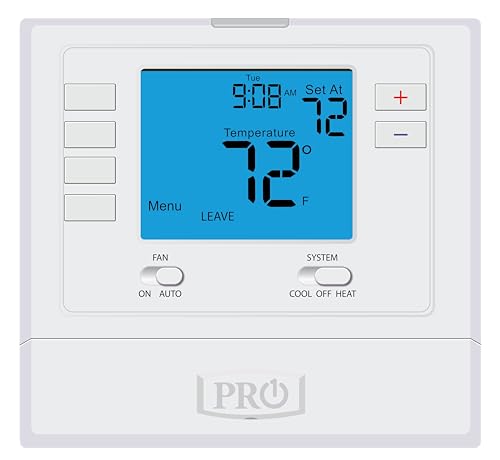
The PRO1 T715 steps up to multi-stage territory, supporting two-stage heating and two-stage cooling gas systems. That extra stage control matters when your furnace and air conditioner have low and high firing modes; a single-stage thermostat wastes that potential efficiency. You get 7-day, 5/1/1, or non-programmable modes, so the unit grows with your routine rather than locking you in.
For homes with zoned equipment or larger floor plans, the T715 can ramp equipment gradually instead of blasting full-bore. Pair that with the familiar 4-square-inch blue backlit display and the glow-in-the-dark light button, and daily use stays approachable. Relative to the T725 above, this is the better match when your HVAC supports two stages of heating and cooling.
Notable Upsides
- Two-stage heating and cooling control lets compatible furnaces and AC units run more efficiently during mild weather.
- Flexible programming or non-programmable modes let you set weekly schedules or skip them entirely.
- T700 platform base provides familiar navigation and access to replacement parts.
- Battery or hardwire power options simplify installation in older homes without a common wire.
Points To Note
- Overkill for simple single-stage systems; you would pay for capacity you cannot use.
- Setup requires identifying which wires control each furnace stage, which can intimidate first-time installers.
Best Suited To
Larger homes with multi-stage gas furnaces and air conditioners that want scheduling flexibility without app complexity.
Look Elsewhere When
Single-stage HVAC owners get better value from the PRO1 T701 covered earlier in this roundup.
The ecobee Smart Thermostat Premium is the most loaded unit on this list, with built-in Wi-Fi, Siri and Alexa voice support, and a bundled SmartSensor that reads the temperature in another room. That sensor matters in homes where the hallway thermostat reads 70 degrees while the nursery is genuinely 75: the unit can average or prioritize specific rooms to fix hot and cold spots.
Smart-home households benefit most here, since the thermostat talks to platforms across the ecosystem, plus the included air quality monitor adds an extra layer of awareness. Compared with the simpler PRO1 units reviewed earlier, the trade-off is cost and complexity for genuinely remote, learning-friendly control. For tech-savvy owners who want their thermostat integrated into a broader smart home, this model handles it all from the wall.
Useful Touches
- Wi-Fi connectivity means you can adjust temperatures from anywhere with the app.
- Built-in voice control through Siri and Alexa removes the need for a separate smart speaker on the wall.
- Included SmartSensor helps balance temperatures in the rooms that matter most, like bedrooms or home offices.
- SmartSensor uses infrared technology to detect occupancy up to about 60 feet away.
Where It May Fall Short
- Premium pricing reflects the feature set, so budget-first shoppers may hesitate.
- Wi-Fi dependency means a router hiccup temporarily limits remote control.
- Setup assumes a C-wire is present, which older homes may lack.
Key Specs
Who Will Love This
Smart-home households with multiple voice platforms will appreciate the seamless integration across rooms and routines.
Not Your Match When
Homeowners on a tight budget or those without a C-wire should consider the PRO1 T725 instead.
Heat pump owners who want the simplicity of a non-programmable thermostat now have a dedicated option in the PRO1 T721. It supports 2-heat/1-cool heat pump systems and 1-heat/1-cool conventional systems, plus a glow-in-the-dark light button that pays for itself the first time you walk past it at 2 a.m. The T700 platform base keeps the navigation familiar for anyone who has handled a PRO1 unit before.
The unit runs on AA batteries or a hardwired setup depending on installation preferences. For most homes, the practical difference compared with the T725 above is the absence of weekly programming. In our view, that’s a feature, not a bug, for owners who never bothered to set a schedule on their previous unit anyway.
Where It Delivers
- Heat pump compatibility means owners of dual-fuel or heat-only systems can use a simple non-programmable control.
- AA battery option simplifies installation in older homes without a common wire.
- Glow-in-the-dark light button aids late-night adjustments.
- 4-square-inch blue backlit display keeps readings clear in low light.
Small Caveats
- No scheduling means manual temperature changes are part of daily life.
- Single-stage cooling only, so two-stage cooling homes will need a different model.
Quick Facts
Perfect Match For
Heat pump owners wanting a no-app, no-schedule wall thermostat that just runs the equipment reliably.
A Better Fit Elsewhere
Smart-home households who want phone control will find more to work with in the ecobee Smart Thermostat Enhanced.
Sometimes the problem with a smart thermostat is not the thermostat itself but the fact that it sits in a hallway nobody actually uses. The ecobee SmartSensor 2-Pack fixes that by adding remote sensors that talk wirelessly to the main unit, telling it the real temperature and occupancy in places like the primary bedroom or a finished basement. Place one in the room where comfort matters most and the system can prioritize that reading.
These sensors work as an accessory, so you will still need an ecobee thermostat or compatible base unit to act on the data they collect. Compared with the standalone thermostats reviewed earlier, this is the upgrade path for households already running ecobee hardware. For most families with a two-story layout or a bonus room, you may find this pair eliminates the nightly thermostat argument.
Features That Help
- Infrared-based occupancy detection senses when a room is actually in use, not just the thermostat location.
- Wireless communication up to about 60 feet lets sensors reach far rooms without rewiring.
- Two-pack format covers the most-used rooms from a single purchase.
- Integrates with ecobee thermostats to prioritize or average readings across rooms.
Worth Bearing In Mind
- Sensors do not function standalone; an ecobee thermostat or hub unit is required.
- Battery-operated units eventually need cell replacements, typically every few years depending on use.
Feature Snapshot
Built With In Mind
Two-story homes or households with one stubborn room that never feels right benefit most from remote sensors.
Swap It Out When
Single-zone apartments without a separate ecobee base unit will get more value from a complete ecobee Smart Thermostat Enhanced instead.
Most thermostat reviews ignore pellet stoves, but the Harman Wireless Room Sensor Thermostat fills an important niche. It’s an OEM (Original Equipment Manufacturer) replacement part designed specifically for Harman pellet stove models including the Absolute43, Absolute63, Allure50, XXV-TC, and Accentra Insert 52i-TC. That specificity is a feature, not a limitation, because aftermarket thermostats rarely talk to these stoves reliably.
Owners with a Harman pellet stove who have misplaced or worn out their original remote thermostat will find this restores wireless temperature control. Compared with the wall-mounted thermostats elsewhere on this list, the use case is much narrower. Depending on your stove model, pairing should be straightforward since this is the same part Harman ships from the factory.
A Few Highlights
- OEM part ensures compatibility with specific Harman pellet stove models, avoiding the guesswork of aftermarket options.
- Wireless operation removes the need to walk to the stove to adjust settings.
- Targets a temperature sensor role rather than HVAC control, fitting a true specialty gap.
Some Limits To Know
- Compatible only with specific Harman stove models, so most homeowners will need a different thermostat entirely.
- Doesn’t replace a whole-home HVAC thermostat, meaning you may still need another pick from this list.
At A Glance
Whose Shelf It Belongs On
Harman pellet stove owners who need a replacement wireless thermostat will find this fills the role.
Another Choice May Suit
Anyone with central HVAC rather than a Harman stove should look at the PRO1 T725 for a more universal fit.
The White-Rodgers 1E78-144 has been a familiar sight on hardware store shelves for years, and for good reason. This Emerson-made single-stage unit handles 24-volt and millivolt (a low-voltage signal used by some older thermostats) systems, plus single-stage heating, cooling, and heat pump configurations without auxiliary heat. A backlit digital display keeps the temperature easy to read without depending on Wi-Fi or apps.
Replacement projects benefit most from this model because the wiring follows a familiar conventional layout, and most heating technicians have installed one at some point. Compared with the PRO1 T701 reviewed earlier, the trade-off is similar simplicity but a longer history of parts availability. For older homes on standard 24V systems, this remains a steady choice.
What Stands Out
- Compatible with 24-volt and millivolt systems, so it works across a wide range of older furnaces.
- Backlit digital display keeps readings clear in dim basements or utility rooms.
- Non-programmable design avoids any schedule confusion for occasional users.
- Heat pump compatibility (without auxiliary heat) covers basic heat-only systems.
Trade-Offs To Consider
- Not compatible with electric baseboard heating, limiting use in some older homes.
- Single-stage only, so multi-stage households should look at the PRO1 T715 instead.
- No scheduling or app features mean manual adjustments stay part of the routine.
Spec Overview
The Right Fit
Homeowners tackling a basic thermostat replacement on a standard 24V system will find this a familiar, low-hassle choice.
Reach For A Different Pick When
Anyone wanting phone-based remote control should consider the ecobee Smart Thermostat Enhanced instead.
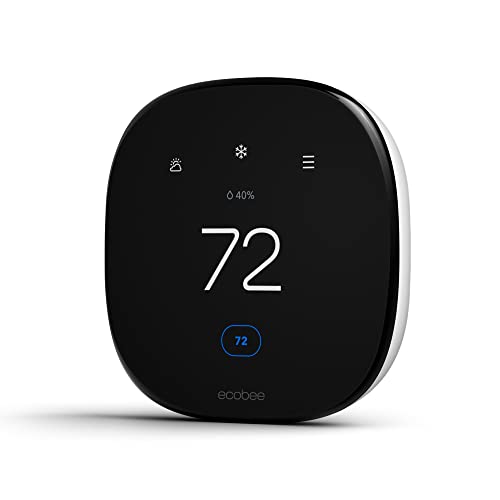
The ecobee Smart Thermostat Enhanced sits one rung below the Premium model reviewed earlier, trading some extras for a friendlier entry into app-driven temperature control. Built-in Wi-Fi and a learning algorithm adjust temperatures based on occupancy, suggesting schedule tweaks as your routine evolves. The eco+ feature (ecobee’s energy-saving automation suite) automatically turns temperatures down when you leave or fall asleep, helping trim utility bills without thinking about it.
For households new to smart thermostats, this model handles the heavy lifting: it works with Apple HomeKit, Google Assistant, and other ecosystems. Compared with the PRO1 units earlier in this roundup, the difference is software polish and remote access rather than wiring flexibility. In most cases, you can expect a few percentage points shaved off your heating and cooling usage once the unit learns your patterns.
Where It Excels
- Occupancy-based adjustments trim heating and cooling when no one is home, helping reduce energy use.
- Wi-Fi connectivity opens phone and smartwatch control from anywhere with signal.
- eco+ features automate energy savings without requiring constant schedule edits.
- Compatible with major smart home platforms including Apple HomeKit and Google Assistant.
Factors To Consider
- Requires a C-wire for full operation, which some older homes may lack.
- Smaller feature set than the Premium model reviewed earlier, so heavy smart-home users may want to spend more.
- Software updates require occasional reconnection to your home network.
Who Should Grab It
First-time smart thermostat shoppers looking for app control and energy savings without paying for premium extras.
Consider Something Else When
Smart-home power users wanting voice assistants built directly into the wall should look at the ecobee Smart Thermostat Premium.
Picking The Right Thermostat Without Regret
Start by identifying your HVAC system type. Single-stage, multi-stage, heat pump, and conventional setups each accept different thermostats, and matching the wrong one means features you cannot use or wires that do not line up. Look at the wiring label inside your current thermostat cover; the terminal letters (R, W, Y, G, C, and so on) tell you what kind of system you have.
Compatibility matters more than brand loyalty. Confirm the new thermostat supports your exact configuration, whether that’s 2H/1C heat pump or 24-volt millivolt, before anything else. For most homeowners, this single check prevents the most common installation headaches.
Decide whether you actually need a smart thermostat. App and voice control add real convenience, but they also introduce a router dependency and a learning curve. Households with predictable routines often get more from a non-programmable unit like the PRO1 T701 than from a connected model they never fully configure.
Common pitfalls worth sidestepping include skipping the C-wire check, choosing a thermostat with more stages than the HVAC supports, and overlooking the need for a common wire when upgrading to a Wi-Fi model. A five-minute inspection of your existing wiring before ordering saves hours of frustration during install.
Higher-tier models like the ecobee Premium earn their cost through bundled sensors, built-in voice assistants, and integrated air quality monitoring. The upgrade pays off when you will actually use those features; otherwise, the Enhanced model covers the smart-home basics for less.
Common Mistakes And Upgrade Trade-Offs
Common Shopping Slip Ups
Buying a thermostat before checking your wiring is the most frequent regret. Many Wi-Fi models require a C-wire (a common wire that delivers continuous power), and older homes may need a workaround or a new wire run. Pulling the cover off your existing thermostat and photographing the terminals before ordering prevents the most common match-up problems.
Another trap is paying for stages you do not have. A two-stage thermostat on a single-stage furnace does not improve comfort; it just sits there with unused capacity. Match the thermostat’s stage count to your equipment.
Where The Extra Money Goes
Higher-tier connected thermostats justify their cost through bundled SmartSensors that balance temperatures across rooms, built-in voice assistants that remove the need for a separate smart speaker, and integrated air quality monitoring that adds another layer of home awareness. The case for paying more comes down to how many of those features you will genuinely use day to day.
Frequently Asked Questions
Do smart thermostats work without Wi-Fi? Yes, most smart thermostats function as ordinary programmable units when Wi-Fi drops, so your HVAC keeps running. You just lose phone and voice control until the network returns.
What is a C-wire and do I need one? A C-wire, or common wire, delivers continuous 24-volt power to the thermostat. Many Wi-Fi models require it for stable operation, though some units run on battery or include adapters for homes without one.
Can I install a thermostat myself? Most homeowners with basic electrical comfort can swap a thermostat in under an hour, provided the new model matches the wiring. Turn off the breaker, label the wires, and snap them onto the matching terminals on the new unit.
Will a smart thermostat save money? Smart thermostats can trim heating and cooling costs by adjusting temperatures automatically when no one is home. Actual savings depend on your local rates, your HVAC efficiency, and how often you forget to adjust the temperature manually.
Are programmable and smart thermostats the same thing? Programmable thermostats follow a schedule you set on the device itself, while smart thermostats connect to Wi-Fi and adjust based on occupancy, learning, or remote commands. The ecobee Enhanced reviewed above combines both approaches.
Closing Thoughts
Your thermostat sits at the center of daily comfort, so the right match pays you back every morning. Match the model to your HVAC system first, then decide how much automation you actually want. Browse the picks above and grab the one that fits your setup, your routine, and your appetite for smart-home features.