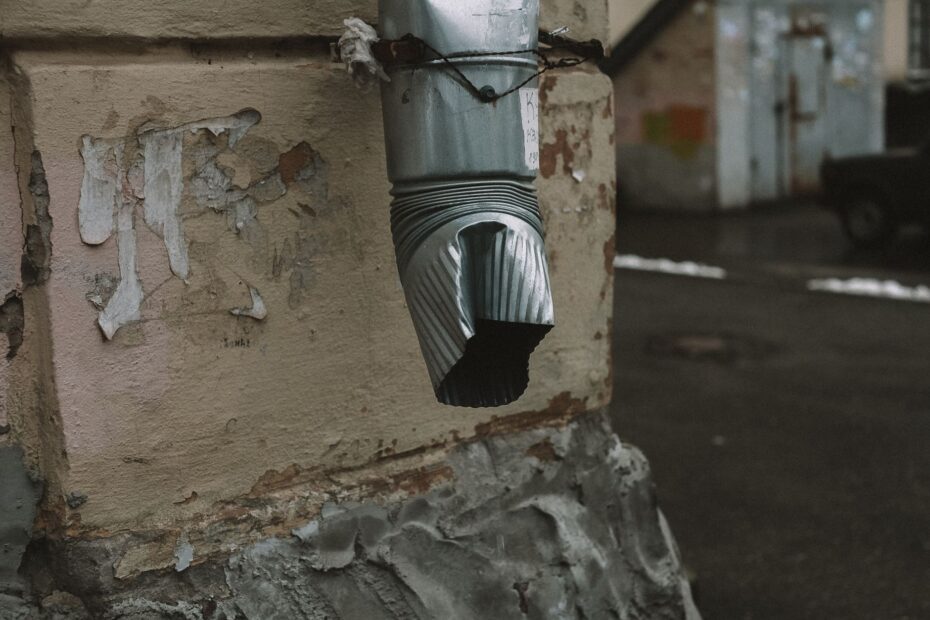
During a one-inch storm, roof runoff moves from the eaves through gutters and downspouts onto sloped ground away from the foundation. That controlled route limits siding stains, soil erosion, wet fascia boards, and water collecting beside your foundation.
You can trace the full drainage path around your house, spot weak points after rain, and separate gutter problems from grading, foundation, or regional flooding issues.
Roof Runoff Needs a Controlled Route
Rain falling across a roof gathers at the lower edge instead of spreading evenly across your yard. Gutters intercept that concentrated flow at roof eaves before it hits siding, trim, planting beds, and the narrow soil strip beside your foundation.
Your roof surface acts like a collection area. A 2,000-square-foot roof sends water toward a limited number of eaves, so even a brief storm can concentrate runoff at a few locations rather than across the entire lot.
Collection and discharge have separate roles
How a gutter system works comes down to two linked jobs: collection at the roof edge and discharge at ground level. Gutters catch water beneath the eaves, while downspouts carry it from the channel to a planned outlet.
A trough without a clear outlet only moves the overflow problem. Your system needs open channels, sound seams, correctly pitched runs, and a discharge route that continues downhill after water leaves the downspout.
| System part | What it does | Why it matters for your house |
|---|---|---|
| Roof surface | Sheds rain toward the eaves | Concentrates rain from a large collection area |
| Gutter channel | Catches runoff at the roof edge | Keeps falling water off siding and soil |
| Downspout | Moves water from eave to ground | Directs flow away from the wall |
| Extension or splash block | Guides water across the ground | Limits pooling beside the foundation |
Site conditions shape the drainage plan. A wide overhang above sandy soil on a sloped lot sheds water differently from a steep roof above clay soil near a basement, where your drainage route needs tighter control.
Water Must Travel From the Roof to a Safe Drainage Area
Once rain reaches the gutter channel, gravity carries it toward each outlet. A slight pitch keeps water moving instead of leaving standing water along fascia boards, where weight and moisture strain the roof edge.
The full route matters because water leaving a downspout still needs a place to go. Your outlet should send runoff across ground that falls away from the house rather than into a low spot beside the wall.
Each runoff link affects the next one
- Roof surface: Rain runs down shingles, metal panels, or tile toward the lower edge.
- Gutter channel: The trough catches water before it falls beside exterior walls.
- Correct pitch: A gradual slope moves water toward downspout outlets and avoids standing water.
- Downspout outlet: Vertical sections carry roof runoff from the eave to ground level.
- Ground extension: A splash block, extension, or buried pipe sends water along a downhill route.
- Drainage area: Grading carries discharged water away from your foundation toward a suitable outlet.
Standing water inside a gutter adds weight and speeds corrosion in steel sections. It also creates a dark, wet channel near the roof edge, and frozen water can strain fasteners during cold spells.
A downspout ending six inches from a wall sends its full roof load into one soil pocket. Your clean gutter above cannot solve that ground-level problem without an extension, splash block, drain line, or a grade that carries water farther away.
Once runoff reaches the ground, its route determines whether it disperses harmlessly or concentrates against the house.
Uncontrolled Runoff Follows Several Damage Paths
Water landing beside a foundation does not stay on the surface. It enters soil pores, raises moisture against below-grade walls, and can reach cracks, joints, porous masonry, or gaps around utility entries.
How gutters protect your foundation depends on keeping roof runoff from saturating soil beside the structure. Drier soil reduces hydrostatic pressure, the force that pushes moisture toward basement walls and slab edges after the ground becomes saturated.
Saturated soil puts pressure on below-grade walls
Repeated wetting can worsen an existing crack or seepage point. Expansive clay adds another concern because it swells and shrinks as moisture changes around your house, stressing soil near foundation walls.
Consider a two-story roof valley draining toward one clogged gutter corner. During a heavy storm, water can spill over the same four-foot section for an hour, washing mulch aside and cutting a low channel toward the wall.
Overflow wets the roof edge and exterior wall
Spilling water reaches fascia boards, soffits, trim, siding, and window surrounds. Paint blisters near the gutter line, followed by staining, softened wood, and vertical dirt marks below the overflow point.
Your inspection after rain can reveal the route. Water stains beneath one gutter seam point to a local leak, while wet ground beneath several outlets points toward discharge placement or grading.
Water stains below a gutter seam point to a local leak, while broad wet ground beneath several downspouts points to a larger discharge or grading issue.
Concentrated runoff causes soil erosion as well. Falling water scours planting beds, exposes roots, undercuts walkway edges, and removes soil near your foundation instead of spreading across a stable drainage area.
Downspout Placement and Grading Keep Water Moving Away
Collection at the roofline fails at ground level where a downspout empties into a basin or toward a wall. Where downspouts should drain depends on a route that stays downhill, avoids walkways, and keeps water from returning to your foundation.
Aim the outlet toward open ground, a planned rain garden, or a locally permitted drainage connection. Your discharge route needs space for heavy rain without sending water toward a driveway, neighboring property, or shallow low spot.
Ground-level options fit different sites
| Discharge method | Best fit | Watch for |
|---|---|---|
| Downspout extension | Open yard with downhill grade | Crushed sections, mower damage, outlet too close to the wall |
| Splash block | Short surface run on firm soil | Water turning back toward the foundation |
| Buried drain line | Longer route to a suitable outlet | Pipe clogs, poor pitch, blocked outlet |
| Rain garden | Planned planted basin away from structures | Overflow near the house during saturated ground conditions |
Extensions suit yards with a steady fall away from the building. Your extension needs to stay open, intact, and pointed toward ground that carries water farther from the wall.
Splash blocks suit short runs over firm soil. But a splash block on flat ground merely shifts water a few feet, leaving the same moisture problem near your foundation.
Buried lines hide the route and protect it from foot traffic, yet they need a clear outlet and an accessible cleanout. A rain garden can spread roof runoff through planted soil, though its basin belongs well away from your house.
Even a well-designed outlet fails when debris or a sagging channel interrupts flow before water reaches it.
Clogs and Poor Pitch Start a Predictable Failure Chain
A spillover during moderate rain signals a drainage problem, not a harmless quirk. Leaves, shingle grit, seed pods, and roof moss slow water in the channel or block an elbow, forcing runoff over the gutter lip.
Your first task is finding the point where flow stops. Watch the gutter during rainfall or flush it with a hose, then follow water from the upper channel through each downspout and across the final outlet.
Visible symptoms reveal the source
- Water over the edge: Debris, poor pitch, or a restricted outlet forces runoff over the front or back lip.
- Dripping seams: Loose joints or failed sealant send water onto siding and soil below.
- Sagging sections: Heavy debris or loose fasteners alter gutter slope and trap standing water.
- Siding stains: Dirty vertical streaks show repeated overflow or a leak near the roof edge.
- Wet foundation soil: A blocked downspout, short outlet, or low spot keeps water beside the house.
- Ice near outlets: Winter discharge can freeze across paths or reveal a blocked lower section.
The sequence is direct: debris blocks flow, blocked flow causes overflow, and overflow wets fascia boards while cutting channels through soil. Gutter maintenance to prevent water damage starts with clearing the obstruction and flushing the entire run.
Persistent basement moisture calls for a wider look. Water beside your house long after rainfall points toward poor grading, a damaged buried line, or an overloaded drainage area rather than the gutter channel alone.
Gutters reduce roof runoff exposure, but they do not repair foundation cracks, correct a failed stormwater system, or stop regional floodwater. Your drainage plan works only where the soil, outlet, and surrounding site move water away from the building.
Routine Care Keeps Gutters and Outlets Working Together
Leaves gather in autumn, spring seed pods lodge in outlets, and wind can loosen hangers after a storm. Your inspection should cover the roof edge, channel, downspout, extension, and final drainage area rather than stopping at visible debris.
A practical inspection routine finds small failures
- Remove loose debris: Scoop leaves and grit from gutters before they pack into a dense, heavy layer.
- Flush each run: Send hose water toward every downspout and watch for slow drainage or backup.
- Inspect seams: Look for drips at end caps, corners, elbows, and downspout connections.
- Secure hangers: Tighten loose fasteners so the channel keeps its intended slope toward outlets.
- Trace discharge: Run water through extensions and confirm it reaches the planned drainage area.
- Check after storms: Look for bent metal, separated joints, and soil washed from beneath an outlet.
Guards reduce leaf entry into the trough, yet roof grit can pass through openings, wet debris can rest on top, and downspouts can still block below the guard.
Your guarded channels still need inspection after leaf drop and major wind events. Fine mesh can hold wet debris at the roof edge, poorly fitted covers can send water over the front lip, and ice buildup adds stress during freezing weather.
Roof pitch, tree cover, and local weather shape guard performance. That tradeoff appears in Consumer Reports coverage of gutter guard performance.
Climate, Site Conditions, and Insurance Limit Gutter Protection
No. Broad roof overhangs, sandy soil, planned swales, roof geometry, and fast-draining ground allow some homes to direct water without continuous gutters on every roof edge.
Florida homes show one regional example. Some have limited gutters because sandy soil and broad eaves move water away, yet intense rain still exposes short downspouts, flat grading, and drainage paths that end beside the house.
Weather changes the load on the drainage system
| Site condition | Added drainage pressure | Your practical focus |
|---|---|---|
| High-rainfall area | Large roof volumes reach outlets quickly | Clear channels, adequate outlet capacity, stable discharge routes |
| Snow-prone area | Ice dams and snow weight strain roof edges | Ventilation, insulation, secure hangers, safe winter outlet paths |
| Dry climate | Rare storms hit hard-packed soil | Direct sudden runoff away from walls and walkways |
| Flood-prone area | Groundwater and storm drains rise | Site drainage work beyond gutters alone |
Ice dams form where melted snow refreezes near cold roof edges and traps water behind the ice. Gutters collect that water, but your downspout cannot solve the roof-temperature problem that starts an ice dam.
Homeowners insurance coverage depends on policy language and the cause of loss. A sudden covered water event receives different treatment from rot, seepage, or damage an insurer links to deferred gutter cleaning.
Keep dated photos of your upkeep and records of repairs. Repeated moisture despite clear channels calls for a drainage professional who can inspect grading, buried lines, foundation conditions, and site drainage.
The Full Drainage Route Protects the House
Your system works as a chain: roof collection, sloped channels, clear downspouts, a controlled outlet, and soil that carries water away. How gutters prevent water damage depends on that complete route, not on the gutter channel alone.
Trace the route during the next rain. You can follow water from shingle to eave, downspout to outlet, and outlet to its final drainage area before a small overflow becomes a wet-basement problem.
FAQ
How does a house’s gutter system prevent water damage?
At the eaves, gutters collect roof runoff and carry it through downspouts before it reaches the foundation. Your outlet, extension, splash block, or drain line then sends that water across ground that slopes away from the house.
What happens when rainwater runs off a roof without gutters?
Rainwater falls in concentrated sheets beneath the roof edge. Your siding, planting beds, fascia boards, walkways, and foundation soil receive repeated wetting where runoff lands in the same narrow strip.
How far should downspouts discharge water from the foundation?
Aim for an outlet far enough from your wall that water continues downhill and cannot return to the foundation. Your site grade matters more than one fixed distance because a long extension ending in a low spot still leaves water near the house.
Can clogged gutters cause roof, siding, and foundation damage?
Yes. A clog holds water in the channel, sends overflow onto fascia boards and siding, and concentrates runoff near the foundation. Your inspection should include the gutter channel, elbows, downspout outlet, and ground below it.
Do gutters prevent basement flooding?
Gutters reduce roof runoff beside basement walls, which lowers one source of saturated soil and seepage pressure. Your gutters do not solve floodwater, poor grading, overloaded storm drains, damaged drain lines, or existing foundation cracks.
What are the downsides of having gutters?
Gutters need cleaning, seam checks, secure hangers, and working outlets. Your system can overflow where debris collects, and ice, standing water, or poor installation can strain fascia boards and fasteners.