Big flat surfaces like driveways, garage floors, and patio slabs eat time and patience. A pressure washer wand alone leaves stripes, splashes dirty water back at you, and takes twice as long as it should. Commercial surface cleaners fix that mess with rotating nozzles under a housing that traps overspray while it scrubs. The eight attachments below handle different sizes, pressure ranges, and use cases, from quick weekend touch-ups to daily commercial runs.
The Leading Options At A Glance

APOWER 16.5″ Pressure Washer Surface Cleaner

TOR 24″ Pressure Washer Surface Cleaner

TOR 20″ Pressure Washer Surface Cleaner

Westinghouse 16.5″ Surface Cleaner Attachment

EXTRAFEIN 20″ Surface Cleaner Plus
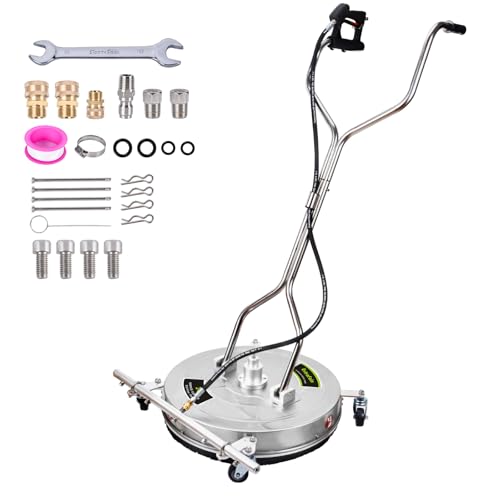
EXTRAFEIN 24″ Surface Cleaner Mate

TOR 14″ Pressure Washer Surface Cleaner
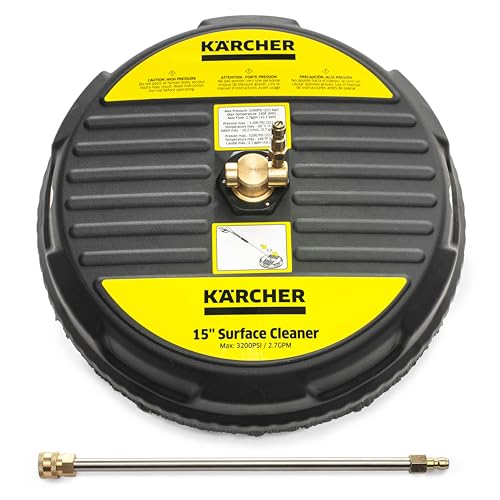
Kärcher 15″ Surface Cleaner Attachment
The Strengths Of Each Pick
The APOWER 16.5″ surface cleaner fills the middle ground between small homeowner attachments and the wider commercial units further down this list. Two spinning nozzles work under a 304 stainless housing rated up to 4400 PSI, which suits gas machines in the 3000 to 4400 PSI range that most serious DIYers already own.
Four wheels keep the housing steady on rough concrete, and the 16.5″ cleaning deck covers roughly a 14-inch working path once overlap is counted. For most backyards, that footprint moves fast enough to finish a two-car driveway in well under an hour without the stripe marks a wand leaves behind.
Noteworthy Benefits
- Stainless steel housing holds up to daily contractor use and resists the rust that plagues cheaper stamped-steel units.
- Compact 16.5″ footprint slips through standard gate openings, which wider picks like the TOR 24″ cannot always do.
- 4400 PSI ceiling gives headroom for the heavy gas washers homeowners and contractors already run.
- Two-nozzle rotating head lays down even, overlapping coverage that eliminates the tiger stripes a single wand creates.
Worth Noting
- The 1/4-inch quick-connect fitting may need a separate adapter if your gun uses a 3/8″ thread.
- For a half-acre driveway, the smaller deck means more passes than the 20″ or 24″ options on this list.
Feature Snapshot
Made For
Homeowners with a mid-power gas washer who want cleaner results than a wand without buying a contractor-sized deck.
Consider Something Else When
The TOR 14″ Pressure Washer Surface Cleaner is a better fit for narrow walkways, stairs, and tight spaces where a 16.5″ deck is too wide to maneuver cleanly.
The TOR 24″ is the widest deck on this list, built for crews that treat concrete like a job site rather than a weekend chore. A stainless steel body holds up to frequent transport in a truck bed, and the dual-handle bar gives two-handed control when the housing drifts on uneven expansion joints.
Two counter-rotating nozzles under the 24″ shroud cover nearly two feet per pass, which on a long parking lot or warehouse apron means a real reduction in labor hours. Compared to the APOWER 16.5″ reviewed above, the trade is weight and storage space for raw speed.
Practical Pluses
- 24-inch working width is the largest in this roundup, cutting passes on big flat slabs nearly in half.
- Stainless construction shrugs off the rust and denting that cheaper units pick up after a season of work.
- Dual handle layout keeps the deck tracking straight when one hand would let it wander.
- Four-wheel chassis glides over rebar and small cracks without catching the way a 3-wheel design sometimes does.
Trade Offs
- The 24″ width will not pass through a standard residential gate, so plan on lifting it over fences.
- Heavier than the 14″ or 16.5″ picks, which adds fatigue on long jobs and may not suit smaller electric washers with low flow.
- Larger housing takes up more storage space in a garage or trailer corner.
Right Fit For
Pro cleaners, property managers, and contractors handling large driveways, parking pads, or warehouse floors on a regular schedule.
Skip It When
The TOR 20″ Pressure Washer Surface Cleaner is the smarter pick for most residential work where the extra 4 inches of width saves less time than the smaller deck costs in storage and maneuverability.
The TOR 20″ sits in the sweet spot between the 16.5″ APOWER and the wide 24″ TOR flagship. The 20-inch deck eats through a typical two-car driveway in fewer passes than 16-inch hardware, and the dual-handle bar keeps the housing honest when one hand would let the shroud skate sideways.
For pros who run multiple driveways a week, this is the size that does not overreach in storage and still finishes the work in good time. The four-wheel base handles expansion joints and small cracks that catch two-wheel designs.
What It Does Well
- 20-inch path covers ground faster than 14″ or 16.5″ units without the gate-clearance problem of a 24″ deck.
- Stainless body holds up to daily truck transport and weather exposure better than painted or plated steel.
- Four wheels glide over uneven concrete and small debris without the housing catching.
Honest Caveats
- Still heavier than the 14″ TOR or 15″ Kärcher, so on long overhead vertical jobs fatigue sets in faster.
- The 1/4″ quick-connect fitting may require a separate adapter for 3/8″ wand threads.
Built With In Mind
Contractors and serious DIYers who wash concrete weekly and want pro results without committing to the 24″ footprint.
A Better Fit Elsewhere
The TOR 24″ Pressure Washer Surface Cleaner suits property managers cleaning very large parking aprons where every extra inch of width compounds into saved hours per week.
The Westinghouse 16.5″ is the most familiar-name option in this lineup, and the spec sheet reads like a direct comparison point to the APOWER reviewed above. Both share the 16.5″ width and 4400 PSI ceiling, and both use a 1/4″ quick-connect for broad wand compatibility.
Where the Westinghouse pulls ahead is the brand’s long presence in outdoor power equipment. For shoppers who already own a Westinghouse pressure washer, the parts ecosystem and warranty paperwork are easier to deal with than chasing down a less-known importer.
Useful Strengths
- Stainless steel housing shrugs off the rust streaks that cheaper plated units show after one season outside.
- 1/4″ quick-connect fits most consumer and prosumer wand setups without adapters.
- 4400 PSI ceiling handles the heavy gas washers homeowners and small crews already run.
Points To Keep In Mind
- Owners commonly report that the stock spray tips wear faster than aftermarket replacements on heavy weekly use.
- No dedicated water broom attachment, so jobs that benefit from a final rinse pass need a separate nozzle.
Spec Overview
Who Will Love This
Homeowners and small-business owners who already trust the Westinghouse name and want a no-fuss attachment for a mid-size gas washer.
Reach For A Different Pick When
The EXTRAFEIN 20″ Surface Cleaner Plus is a stronger fit for shoppers who want a bundled water broom to handle both heavy grime and a final rinse pass.
EXTRAFEIN earns its place on this list by bundling the surface cleaner with a five-nozzle water broom, which functions like a wide rinse bar for the final pass after heavy scrubbing. For homeowners who do everything from oil-stained driveways to delicate pool decks, that two-in-one setup is genuinely useful.
The 20-inch path sits between the APOWER 16.5″ and the TOR 24″ reviewed earlier. You give up a little raw coverage compared to the widest deck, but the bundled broom and the dual-handle control make the trade feel fair.
Where It Delivers
- Bundled five-nozzle water broom cuts down the time spent dragging a separate rinse attachment over cleaned concrete.
- 20-inch width covers most two-car driveways in fewer passes than a 16.5″ deck without the storage problem of a 24″ unit.
- Dual-handle layout makes long sessions less tiring on the wrists and shoulders.
Small Caveats
- Multiple nozzle parts to keep track of, and the smaller tips can clog if your water source has sediment.
- Wider than 16.5″ picks, so maneuvering between parked cars takes a little more care.
Quick Facts
Perfect Match For
Homeowners who want one attachment to handle both heavy grime and a fast rinse without buying a separate broom nozzle.
Not Your Match When
The Kärcher 15″ Surface Cleaner Attachment is a smarter pick for shoppers who mostly clean vertical surfaces like garage doors and siding, where the lower-splash design matters more than raw width.
The EXTRAFEIN 24″ is the bigger sibling to the 20″ Plus reviewed above, and it leans into the same bundled water broom concept with more reach per pass. Where the 20″ is a flexible homeowner tool, this one nudges firmly into pro territory.
Two-handed control and a five-nozzle broom make it a two-in-one scrub and rinse rig. The honest read is that for very long driveways, the 24″ path will save real time, but most weekend users will feel the size more than they need.
A Few Highlights
- 24-inch cleaning path trims passes on long driveways and small parking lots.
- Bundled water broom handles the final rinse without swapping attachments mid-job.
- Dual handles reduce fatigue compared to single-bar 24″ units during sustained work.
Possible Compromises
- Too wide for many standard fence gates, so plan on lifting it over.
- Heavier than the 20″ Plus, which adds strain on vertical surfaces and upper-body work.
Feature Snapshot
Whose Shelf It Belongs On
Property owners with very long driveways, barns, or shop floors who run a heavy gas washer and want a one-rig scrub-and-rinse setup.
Where Another Pick Suits Better
The TOR 20″ Pressure Washer Surface Cleaner is a better fit for crews who want most of the speed without the storage and gate-clearance hassle of a 24″ deck.
The TOR 14″ is the smallest deck in the TOR family and the most maneuverable option in this roundup. On narrow walkways, between AC units, or around hot tub surrounds, the smaller housing slips in where a 20″ or 24″ deck would get stuck.
The 4000 PSI ceiling handles most residential gas machines without complaint, though shoppers running electric washers under 2000 PSI will not get the same cleaning punch. The 1/4″ quick-connect plug fits most wands, but 3/8″ outlets will need a separate adapter.
What Earns Its Place
- 14-inch width reaches into narrow spaces that wider picks on this list cannot access.
- Stainless steel body resists the rust that shows up on stamped steel after one wet season.
- Four-wheel base tracks cleanly over paver joints and small cracks.
Points To Note
- Smaller deck means more passes on open driveways compared to the TOR 20″ or 24″.
- 1/4″ plug will not fit 3/8″ thread wands without buying an adapter separately.
Key Product Details
Who Should Grab It
Homeowners with narrow walkways, paver patios, and detail areas where a wider deck would simply not fit.
Swap It Out When
The APOWER 16.5″ Pressure Washer Surface Cleaner is the better pick for shoppers who mostly wash open driveways and want a few extra inches of reach per pass.
The Kärcher 15″ rounds out this list with a design that prioritizes controlled, low-splash cleaning over raw width. Two spinning nozzles sit at a fixed height inside a tight housing, which keeps overspray off siding, parked cars, and the operator.
That fixed nozzle height is also why this attachment handles vertical surfaces like garage doors and stucco walls better than open-bottom picks. For shoppers who wash more than just flat concrete, the narrower focus pays off.
What Helps Most
- Enclosed housing limits splash back, which matters for garage doors, fences, and walls.
- Two-nozzle design reduces the streak patterns a single-nozzle wand leaves on smooth concrete.
- Compact 15″ body fits standard gates and is easy to store in a garage corner.
Things To Weigh
- Pressure ceiling tops out around 3200 PSI, so this attachment will not pair with the heaviest 4000+ PSI machines.
- Smaller cleaning width means more passes on open driveways than the 20″ or 24″ picks reviewed earlier.
Best Suited To
Homeowners who wash a mix of flat and vertical surfaces and want a controlled, low-mess attachment for everyday projects.
Look Elsewhere When
The Westinghouse 16.5″ Surface Cleaner Attachment is a stronger match for shoppers who own a heavy 4000+ PSI gas washer and want every bit of pressure the machine can deliver.
What To Match Up Before You Choose A Surface Cleaner
Width Versus Maneuverability
Cleaning width controls how many passes a job takes, but it also controls whether the deck physically fits where you need to work. A 24″ shroud covers ground fast but will not clear a standard residential gate, while a 14″ deck reaches every paver walkway but triples the passes on an open driveway. Match the width to the smallest area you clean regularly, not the biggest.
Pressure Rating And Washer Match
Surface cleaners all list a maximum PSI, which is the ceiling the housing and seals can handle, not the PSI you must run. A 4400 PSI attachment on a 2000 PSI electric washer simply underperforms, while an attachment capped at 3200 PSI is a poor match for a 4000 PSI gas machine. Always check your washer’s rated PSI against the attachment’s ceiling before ordering.
Housing Material And Long-Term Care
Stainless steel housings resist rust, denting, and the chipping that plagues painted or plated steel after a season of outdoor storage. Most attachments rinse clean with a garden hose, but rotating nozzles benefit from occasional inspection to clear debris before it scores the housing seal.
Connection Type And Compatibility
Most residential surface cleaners use a 1/4″ quick-connect plug that fits standard consumer wands. Washers with 3/8″ outlets need a separate adapter, which is often not included. Confirming your washer’s thread size before ordering saves a return trip and an extra accessory purchase.
Key Considerations Across These Picks
Pitfalls Shoppers Hit
A common mistake is buying the widest deck available, then discovering it will not fit through the side gate or store on a wall hook. Another is pairing a high-PSI attachment with a low-flow electric washer, which leaves streaks and forces multiple passes. Always match the deck width to your access points, and the PSI ceiling to your washer’s actual output.
When Paying More Pays Off
Higher-tier models in this category earn their price through stainless housings, dual-handle control, and bundled water broom accessories. For weekly commercial work, those upgrades cut labor time and reduce downtime from rusted parts or clogged nozzles. For occasional weekend driveway cleaning, a mid-tier 16″ pick often delivers all the cleaning power most homeowners actually need.
Frequently Asked Questions
What PSI do I need for a commercial surface cleaner?
Most residential surface cleaners in this roundup work comfortably with washers rated between 2000 and 4000 PSI, which covers the gas and electric machines most homeowners and small crews own.
Can a surface cleaner be used on wood decks?
Yes, but lower pressure and wider nozzle tips are recommended, since wood fibers lift under concentrated spray. Many shoppers test on a small corner first to dial in the right distance and pressure.
How is a surface cleaner different from a pressure washer wand?
A surface cleaner uses two or more rotating nozzles under an enclosed housing, which delivers even coverage and limits splash back. A wand produces a single jet that is harder to keep level and tends to leave stripes.
Do surface cleaners work with electric pressure washers?
Most do, though electric models usually produce lower flow rates than gas machines, so cleaning takes longer and stubborn stains may need a second pass. The PSI rating on the attachment should match or exceed your washer’s output.
How do I store a surface cleaner attachment?
Most units store flat on a garage shelf or hang from a wall hook, and stainless housings tolerate outdoor storage better than plated steel. Rinsing the nozzles and draining residual water before long storage helps prevent clogs.
Closing Remarks
The right commercial surface cleaner comes down to the size of your typical job, the washer you already own, and how much space you have to store the deck. Smaller 14″ and 15″ models handle detail work and vertical surfaces, while 20″ and 24″ decks eat through open concrete fast. Match the attachment to your real workflow rather than chasing the widest shroud, and you will end up with a tool that earns its place on every weekend project.