ATVs work hard, sit hard, and burn fuel that wasn’t always stored gently. Whether your rig idles rough after a winter in the shed or your throttle response feels lazy mid-trail, the right cleaner can wake up an injector that has been quietly gumming up for months. ATV fuel injector cleaners come in two main forms: bottle additives you pour into the tank, and bench-top ultrasonic machines that test and clean injectors outside the engine. Both deserve a spot in a serious garage, and the eight picks below cover both styles for riders who want their machine to run like it should.
An Overview Of The Picks

Sea Foam Motor Treatment 16 oz, Pack of 3

STA-BIL 360 Marine Fuel System Treatment 12-Pack

Quicksilver Quickleen Engine and Fuel System Cleaner

Red Line 60103 SI-1 Complete Fuel System Cleaner 15 oz

STA-BIL In-Season Fuel System Treatment 32 oz
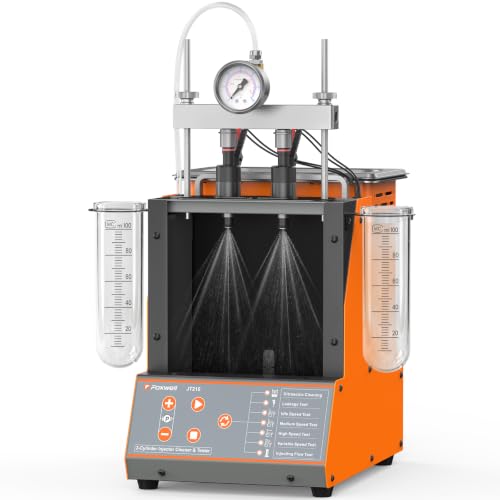
FOXWELL JT210 Fuel Injector Tester & Cleaner Machine

FOXWELL JT200 Fuel Injector Tester Cleaner

FOXWELL JT410 Fuel Injector Tester & Cleaner Machine
The Strengths Of Each Pick
Sea Foam sits at the top of this list because it does three jobs in one bottle: it cleans the fuel system, stabilizes fuel between rides, and treats engine oil. For ATV owners who pull a quad out of the shed after a long layoff, that triple role is genuinely useful rather than just marketing. The additive works in gasoline, diesel, ethanol blends, and conventional or synthetic oil, which means one pack covers the truck, the ATV, the lawn tractor, and the generator without juggling different products.
The recommended interval is every 3,000 miles, and the three-bottle pack keeps a multi-machine household covered for a full riding season. You may find a single bottle cheaper up front, but most shops keep a backup on the shelf because shelf-stored fuel starts breaking down faster than people expect. Compared with the dedicated injector cleaners further down this list, Sea Foam is the gentler, all-purpose option rather than a focused carbon-buster.
The Value In It
- Cleans injectors, carburetor restrictions, and chamber deposits in one pour
- Doubles as a fuel stabilizer for seasonal storage
- Safe for gas, diesel, and ethanol-blended fuels
- Three-pack covers multiple vehicles across the household
- Long 3,000-mile service interval reduces how often you remember to dose
Things To Consider
- Works gradually through the fuel rather than delivering a deep injector overhaul
- Heavy varnish on a stored machine may still need a stronger detergent
Who It Suits Best
Riders who want a single bottle to handle fuel cleaning, storage prep, and light oil treatment across multiple gas-powered machines.
Consider Something Else When
Shops chasing stubborn carbon should look at the Red Line 60103 SI-1 Complete Fuel System Cleaner 15 oz for a stronger detergent blend.
The STA-BIL 360 Marine formula was originally aimed at boat owners, but the chemistry matters just as much for an ATV that sits in humid air, salt spray, or muddy sheds. It uses PEA additives (polyetheramine, a class of synthetic detergent that scrubs injector internals) to clean injectors, lines, and pumps, while pulling water out of fuel and coating metal parts against rust. On a quad used near the coast or stored outside, that corrosion protection is the real selling point.
The 8 oz bottle in a 12-pack is built for volume users. If you run a small rental fleet, manage a hunt club fleet, or simply dose every tank through riding season, twelve bottles prevent the mid-season run-out that always happens at the worst time. You may find the marine branding off-putting, but the formulation does not care whether it sits in a bass boat or a side-by-side. Compared with Sea Foam, this is more focused on water removal and rust defense rather than oil treatment.
Useful Touches
- PEA detergent blend scrubs injectors and lines on every tank
- Pulls water out of fuel to prevent phase separation in ethanol blends
- Coats internal metal against rust during long storage
- Twelve-bottle pack covers a full riding season for fleet use
Worth Noting
- Smaller 8 oz bottles mean more frequent replacement once you crack a few open
- Marine branding can confuse first-time shoppers used to automotive-only labels
- Not formulated as an oil additive like Sea Foam
Key Product Details
Built With In Mind
Year-round riders, fleet managers, and coastal property owners who need ongoing injector cleaning and rust defense across multiple tanks.
Skip It When
Solo riders treating a single tank occasionally will find the STA-BIL In-Season Fuel System Treatment 32 oz a better fit for less waste.
Quicksilver Quickleen is the kind of bottle you keep next to the gas can so you never forget a dose. The mix ratio is straightforward: one ounce per five gallons of gasoline, which means even a casual rider can measure by eye after the first or second fill-up. It works with every grade of pump gas and ethanol-blend fuel, so there is no second-guessing at the station when the ATV only burns whatever you grabbed that morning.
The product targets more than just injectors. It is also designed to lift carbon off carburetors, intake valves, spark plugs, piston crowns, and cylinder heads, which makes it useful on older ATVs that have decades of residue baked into the upper engine. The manufacturer part number is 8M0047921, helpful if you are matching a service manual. Compared with STA-BIL 360, this formula leans harder on combustion-chamber cleaning and lighter on water removal.
What Earns Its Place
- Simple 1 oz per 5 gallons mix ratio is easy to remember
- Safe for every gasoline grade and ethanol-blend fuel
- Targets carbon on carburetors, valves, plugs, and piston crowns
- Designed to be used at every fill-up without over-treating
- Helps prevent piston seize-up on machines that sit between rides
Points To Note
- Smaller bottle size means frequent reorder for heavy users
- Not formulated for diesel engines
The Right Fit
Riders who dose at every fill-up and want a forgiving formula that handles older ATV engines with built-up combustion chamber residue.
A Better Fit Elsewhere
Owners running diesel-powered UTVs should look at STA-BIL 360 Marine Fuel System Treatment 12-Pack for a formula that handles diesel fuel.
Red Line SI-1 is the choice for riders who want a concentrated detergent rather than a general-purpose additive. The blend combines high-temperature and low-temperature detergents (chemicals that target deposits formed under different engine heat conditions) to scrub injectors, carburetors, valves, and combustion chambers in one pass. The 15 oz bottle treats a meaningful volume of fuel, which is why detailers often reach for it when refreshing a neglected machine before sale or after long storage.
The brand has a long track record in motorsports chemistry, so the label carries weight with enthusiasts who care about trace additive packages. For an ATV owner chasing every bit of throttle response back from a sluggish injector, that pedigree matters more than shelf appeal. You may find a single bottle overkill for routine maintenance, but as a deep-clean intervention, it stands apart from the gentler daily-use picks on this list.
Well-Handled Touches
- High-temp and low-temp detergent blend reaches deposits most additives miss
- Cleans injectors, carburetors, valves, and combustion chambers
- Includes corrosion-inhibiting chemistry for stored fuel systems
- 15 oz bottle covers a full tank at recommended mix ratios
- Trusted name in motorsports additive chemistry
Trade Offs
- Higher concentration means over-dosing is easy if the mix ratio is ignored
- Premium positioning lifts the per-bottle price
Quick Facts
Who Should Grab It
Detailers, enthusiasts, and ATV owners reviving a long-stored machine who want a focused injector-and-chamber deep clean.
Look Elsewhere When
Riders who prefer a gentler every-fill-up dose should consider Quicksilver Quickleen Engine and Fuel System Cleaner instead.
The In-Season formula sits alongside STA-BIL’s better-known storage product, but its job is different: it cleans and protects fuel systems during regular riding. The 32 oz bottle is sized for households that rotate between an ATV, a UTV, a dirt bike, and a generator without buying a separate additive for each. Pouring one larger bottle is also easier than tracking down smaller ones in a cluttered shop.
The chemistry cleans injectors, lines, and pumps while removing water, gum, and varnish that build up between rides. Rust protection on internal fuel parts is also part of the deal, which is helpful for machines stored in unheated barns where condensation collects. Compared with the marine formula in this list, this is positioned as the everyday-use option rather than the wet-environment specialist.
A Strong Showing
- 32 oz size covers multiple tanks across several machines
- Cleans injectors, fuel lines, and fuel pumps during routine use
- Removes water, gum, and varnish before they cause idle problems
- Coats internal fuel components against rust
Points To Keep In Mind
- Larger bottle is heavier to handle and store on a crowded bench
- Not a stabilizer, so long-term storage still needs a dedicated stabilizer
Best Suited To
Multi-machine households and small shops that want one bottle of cleaner shared across an ATV, a UTV, and other gas-powered gear.
Another Choice May Suit
Riders focused on a single seasonal-storage machine may prefer Sea Foam Motor Treatment 16 oz, Pack of 3 for the stabilizer benefit.
Moving from chemistry to hardware, the FOXWELL JT210 is a bench-top tester for injectors that have been removed from the engine. Instead of guessing which cylinder is misbehaving, you can compare spray patterns side by side on the same fuel pressure, in real time. That visual comparison is exactly what catches a clogged or leaking injector before it strands you mid-trail.
Ultrasonic cleaning adds another layer. Ultrasonic cleaning uses high-frequency sound waves to vibrate cleaning fluid, creating tiny bubbles that scrub surfaces the fluid alone cannot reach, and the JT210 applies that to the inside of the injector body. For ATVs that see a lot of dust, the deep clean option matters more than a quick rinse. The trade-off is real: you need a clean workspace, a fuel supply, and the patience to remove and reinstall injectors.
Standout Benefits
- Side-by-side spray pattern comparison catches weak injectors visually
- Ultrasonic cleaning reaches internal varnish that fuel additives miss
- Real-time flow diagnostics reduce parts-swapping guesswork
- Useful for any vehicle in the household, not just the ATV
Honest Caveats
- Requires injector removal, which not every rider is comfortable with
- Bench setup takes space and a clean work area
- Higher learning curve than a pour-in additive
Feature Snapshot
Whose Shelf It Belongs On
DIY mechanics and small shop owners who already remove injectors for service and want visual proof of injector health before reinstall.
Reach For A Different Pick When
Riders who want a quicker, in-tank treatment should stay with STA-BIL In-Season Fuel System Treatment 32 oz.
The FOXWELL JT200 is the lighter sibling in the lineup, focused on visualizing spray pattern and flow rather than full ultrasonic cleaning. For a first-time bench tester, that focus is actually a feature. You learn what a healthy injector looks like without paying for tank capacity, heated fluid, or pulse wires you may not use yet.
The unit is well suited to a single-cylinder or small-displacement ATV where one injector is easier to isolate and test than four on a side-by-side. You may find the lack of an ultrasonic tank limits how much carbon you can actually remove, so the JT200 works best as a diagnostic tool first and a cleaning tool second. Compared with the JT210 covered above, this trades cleaning depth for a friendlier entry-level price.
Practical Advantages
- Visual spray pattern testing helps identify weak injectors quickly
- Lower cost than full ultrasonic cleaning stations
- Compact bench footprint fits a small garage workspace
- Useful diagnostic tool even if cleaning is done elsewhere
Room For Improvement
- No built-in ultrasonic tank, so deep cleaning still requires another method
- Best suited to lower cylinder counts rather than multi-cylinder UTVs
Right Fit For
First-time bench testers and hobbyists working on single-cylinder or small-displacement ATVs who want to learn injector diagnostics without overspending.
Swap It Out When
Shops tackling heavy carbon on multi-cylinder engines should move up to the FOXWELL JT410 Fuel Injector Tester & Cleaner Machine with Ultrasonic.
The FOXWELL JT410 sits at the top of the bench-tool trio, pairing ultrasonic cleaning with heated fluid for stubborn carbon. The 2L cleaning tank uses 38kHz ultrasonic waves (ultrasonic frequency, measured in kilohertz, that determines cleaning intensity) paired with a constant 45°C/113°F bath temperature, which maximizes cavitation (the formation and collapse of micro-bubbles that physically lift grime off surfaces) and dissolves sludge that a cold tank leaves behind. That matters on ATVs that have run on neglected fuel for thousands of miles.
The pulse-wire connection lets the machine fire the injector inside the cleaning cycle, so the unit deep-cleans the internal passages rather than just the exterior tip. For shop owners servicing multiple side-by-sides or older carb-converted quads with stuck injectors, that combination is the whole point of upgrading. You may find the larger tank and higher price unnecessary for a single lightly used machine, so this is the right pick for heavy work, not casual weekend tinkering.
Where It Delivers
- Heated 45°C/113°F bath maximizes ultrasonic cleaning efficiency
- Pulse-wire operation cleans inside the injector, not just the spray tip
- 2L tank handles multiple injectors per cycle
- Suitable for shop use on multiple side-by-sides and UTVs
Some Limits To Know
- Heavier and bulkier than the JT200 entry-level tester
- Higher price tag is overkill for a single lightly used ATV
Feature Rundown
Perfect Match For
Small shops and serious hobbyists servicing multi-cylinder UTVs or older ATVs with heavy carbon buildup who need heated ultrasonic cleaning.
Not Your Match When
Casual riders treating a single machine will get everything they need from FOXWELL JT200 Fuel Injector Tester Cleaner at a friendlier price.
Matching The Right Cleaner To Your ATV
Additive vs Bench Machine
Pour-in additives and bench-top ultrasonic cleaners solve different problems, and the right choice depends on how you use your machine. Daily riders who want a no-tools approach benefit from a fuel-system additive dosed every few thousand miles, because the detergent rides through the injectors during normal combustion. Bench machines make sense when an additive has not fixed the symptom, when an injector is suspected dead, or when a shop services multiple vehicles. Mixing the two is also realistic: a regular additive routine with an annual bench service for stored machines covers most scenarios.
Fuel Type And Tank Size
Confirm that the additive is rated for your fuel before pouring. Most modern ATV engines run on pump gasoline with ethanol blends, but diesel UTVs and powersport equipment need a product formulated for diesel, like the STA-BIL 360 Marine Fuel System Treatment 12-Pack. Tank size also matters, since a 1 oz per 5 gallon ratio behaves very differently in a 4 gallon ATV tank than in a 30 gallon transfer tank. Match the mix ratio to the actual fuel volume you treat, not the size of the additive bottle.
Frequency And Storage Habits
Riders who store an ATV for months need a stabilizer with cleaning action, like Sea Foam Motor Treatment 16 oz, Pack of 3, which prevents varnish from forming while the machine sits. Year-round riders who keep topping off the tank benefit more from a frequent-dose additive that keeps the system active. Storage environment also shifts the choice: humid sheds and coastal air pull moisture into fuel, so a water-removing formula pays off faster than a detergent-only option.
Symptoms That Justify A Bench Test
A bench tester is worth the setup when the symptom does not respond to additives. Persistent misfires on one cylinder, visible smoke that smells strongly of fuel, or a sudden drop in mileage without a check-engine light often point to a single failed injector. A pour-in cleaner cannot fix a mechanical leak or a dead coil, so the diagnostic side of a JT-series tester earns its keep by confirming whether cleaning will solve the problem before you swap parts.
Common Pitfalls And Upgrade Trade-Offs
Pitfalls Shoppers Hit
Treating every fuel problem as a tank additive issue is the most common trap. A weak fuel pump, a clogged filter, or a failing pressure regulator will not respond to detergent, so dosing the tank again and again wastes money while the real cause worsens. Another misstep is over-dosing concentrate, which can flood the combustion chamber and leave its own residue. Reading the mix ratio on the bottle and matching it to actual tank volume is small effort that protects the engine. Skipping regular use is the third pitfall: a single deep clean followed by another year of untreated fuel returns the system to square one.
What The Higher Tier Buys
Premium additives like the Red Line 60103 SI-1 Complete Fuel System Cleaner 15 oz justify their position with multi-temperature detergent blends that handle deposits formed across different engine operating conditions. Bench tools like the FOXWELL JT410 Fuel Injector Tester & Cleaner Machine with Ultrasonic add heated ultrasonic cleaning and pulse-wire operation, which reaches internal passages a cold tank misses. The upgrade pays off when machines see heavy use, sit through long storage, or run multi-cylinder engines where a single weak injector is hard to isolate without a diagnostic station.
Frequently Asked Questions
How often should ATV fuel injector cleaners be used?
Most pour-in additives recommend dosing every 3,000 miles or at every fill-up, depending on the formula. Heavier use, longer storage, and older engines benefit from the shorter interval.
Will a fuel injector cleaner fix rough idle on an ATV?
A cleaner can fix rough idle caused by varnish or carbon on the injector tip, but it cannot fix mechanical wear, a failing pump, or a vacuum leak. Symptoms that do not improve after a full tank of treated fuel usually point elsewhere.
Are ultrasonic injector cleaners safe for ATV injectors?
Yes, when the machine runs at the manufacturer-recommended frequency and temperature. The 38kHz ultrasonic frequency in tools like the FOXWELL JT410 sits within the safe range for typical powersport injectors.
Can I use automotive fuel injector cleaner in an ATV?
Generally yes, but confirm the formula is rated for powersport fuel systems and the mix ratio matches your smaller tank. Marine and diesel-rated additives also work in gasoline engines, while gasoline-only additives should not be used in diesel UTVs.
Do fuel injector cleaners improve fuel economy?
A clean injector restores the original spray pattern and combustion efficiency, which can recover lost mileage. The actual effect varies with how degraded the system was before treatment.
Bottom Line
ATV fuel injector cleaners come in two flavors worth keeping in mind: pour-in additives for routine maintenance and bench-top testers for deeper diagnostics. Match the choice to how you ride, how you store, and how stubborn the symptoms are, and the right pick from this list will keep your quad firing on every cylinder.