Strip lighting used to be a novelty tucked behind one gaming desk. Now it lines staircases, mirrors, ceilings, soffits, and outdoor kitchens in homes that have nothing to do with gaming. Choosing the right strip matters more than people expect, because the wrong voltage, the wrong density, or the wrong color temperature turns a fun upgrade into a flickering eyesore.
The list below focuses on real installation scenarios: ambient coves, under-cabinet task lighting, behind-the-TV bias lighting, outdoor patios, and full-room programmable color. Each pick calls out voltage, density, color temperature, and the kind of project it actually suits, so you spend less time returning tape and more time enjoying it.
The Essentials At A Glance

SVFISHKK WS2812B LED Strip 16.4FT 150LED
JOYLIT PRO+ 24V COB LED Strip 16.4FT 4000K Indoor

JOYLIT 24V UL LED Strip 16.4ft 3000K Warm White Indoor
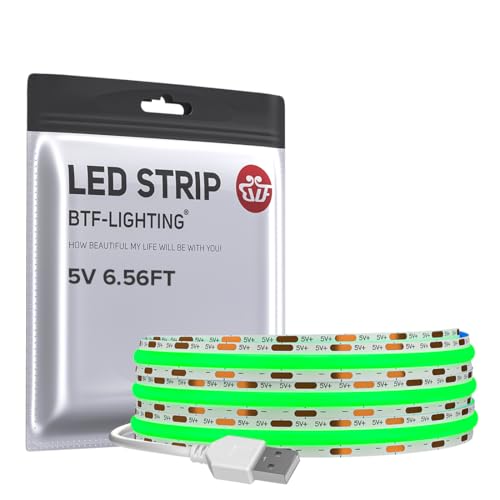
BTF-LIGHTING FCOB 5V USB Green COB Strip for TV

SVFISHKK WS2812B LED Strip 3.2FT 144LED High-Density

Pandery COB LED Strip 16.4ft Warm White 2700K Touch Dimmer

Pandery CCT COB LED Strip Kit 9.84ft 2700K-6500K Bluetooth

JOYLIT 24V White LED Strip 16.4ft 6000K IP67 Outdoor

Pandery Outdoor LED Strip 32.8FT 6000K IP67 Waterproof
The Picks, Examined More Closely
If you have ever wanted a strip that paints moving rainbows along a shelf or syncs to music, addressable pixels (chips built into each LED so every bulb gets its own color command) are the reason. The SVFISHKK WS2812B runs on 5V DC, lays down 150 LEDs across 16.4 feet, and uses the classic WS2812B chip that hobby firmware like WLED and FastLED speaks natively. That means it plays well with Arduino, ESP32, and Raspberry Pi setups straight out of the box.
For most hobby builds, a 5V supply keeps wiring simple and lets you power short runs from a phone charger. The SMD 5050 package (a 5mm x 5mm LED body) is the de-facto standard for WS2812B projects, and the black PCB keeps the strip visually quiet when off. Makers building costume props, PC mods, or seasonal decorations get a lot of mileage out of this density.
Everyday Perks
- Each LED takes its own color command, so animations can chase, pulse, or rainbow-spiral instead of staying uniform.
- 5V input is forgiving: a basic USB or phone-charger-style brick can drive shorter runs without extra circuitry.
- SMD 5050 LEDs with an integrated driver IC reduce wiring complexity for first-time builders.
- The 16.4ft length suits most shelf, desk, and entertainment-center builds without leftover waste.
Things To Consider
- IP30 (no protective coating) means dust and splashes are real risks, so this stays indoors and away from kitchens.
- 5V strips lose brightness on long runs because voltage drops over distance; injecting power at both ends is commonly recommended.
- You’ll need a separate controller (ESP32, Arduino, or dedicated pixel controller) and a matching 5V power supply, neither of which ships in the box.
Built With In Mind
Hobbyists and DIYers who already own or are willing to learn a microcontroller like Arduino or ESP32 and want full per-pixel animations.
A Better Fit Elsewhere
The JOYLIT PRO+ 24V COB LED Strip suits anyone who wants clean architectural accent lighting rather than animated pixel displays.
COB (Chip-on-Board) strips pack hundreds of tiny LED dies directly onto the flex PCB (printed circuit board, the flexible strip the chips sit on), producing a continuous ribbon of light with no visible hotspots. The JOYLIT PRO+ leans into that hard: 480 LEDs per meter, a 10mm dual-copper PCB for heat dissipation, and a neutral 4000K color temperature that flatters skin tones in bathrooms and dressing areas.
Running on 24V rather than 12V cuts voltage drop across the 16.4ft run, so the far end stays nearly as bright as the start. The 580 lm/ft output is plenty for coves, toe-kicks, and behind-mirror halos without feeling clinical. Compared to the SVFISHKK WS2812B above, this is firmly an architectural pick, not an animation pick.
What Works In Its Favor
- Dense LED count kills the “dots on a strip” look that cheaper SMD strips show when mounted close to a reflective surface.
- 24V operation means the end of the roll stays bright, which matters on full-room coves.
- 4000K sits in the sweet spot between warm and cool, reading as clean white in living spaces and slightly warm in kitchens.
- UL listing (Underwriters Laboratories safety certification for electrical products) and a 3oz copper PCB point to solid thermal and safety credentials.
Trade Offs
- This is single-color-temperature tape, so swapping from a cozy evening glow to a cool task look requires buying a different strip.
- COB strips need a 24V driver sized to total wattage, which is one more component to source.
- Indoor rating only; moisture and outdoor mounting are not in scope.
Perfect Match For
Homeowners renovating bathrooms, closets, or living-room coves who want a smooth, dot-free glow without chasing animated effects.
Swap It Out When
The Pandery COB LED Strip is a stronger match for warm-white-only bedroom projects, while the JOYLIT 24V UL LED Strip wins for serious task-lighting brightness.
Under-cabinet lighting has a way of looking cheerful on the sell sheet and dim in real kitchens. The JOYLIT 24V UL LED Strip sidesteps that with 793 lumens per foot, a CRI (Color Rendering Index, a 0-100 score that measures how accurately a light reveals true colors compared to sunlight) above 92, and a warm 3000K that flatters wood cabinetry. CRI 92+ means food, paint swatches, and wood grain read closer to their true colors than under cheap strips, which can wash everything green or pink.
The 1190 SMD 2835 LEDs across 16.4 feet sit on a 3oz copper PCB, a heavier copper layer that handles heat and current better than thinner boards. For commercial prep areas or home kitchens that double as homework stations, that density pays off.
Practical Pluses
- 793 lm/ft output rivals under-cabinet puck fixtures, so you can light a countertop with one strip rather than three.
- CRI 92+ keeps vegetables, makeup, and fabrics looking accurate, which matters in kitchens and dressing rooms.
- UL listing lets you install it in commercial settings where inspectors check the paperwork.
- The 24V design reduces voltage drop, keeping brightness even on longer runs.
Honest Caveats
- Warm 3000K is cozy but reads yellow in workshops or art studios where you may want the cleaner 4000K of the JOYLIT PRO+.
- Non-waterproof rating means splash zones and outdoor mounting are off the table.
- You will need a 24V driver matched to the total wattage, plus a compatible dimmer if you want level control.
Quick Facts
Right Fit For
Homeowners outfitting under-cabinet task lighting and small workshops needing warm-white, high-output illumination.
Look Elsewhere When
The Pandery CCT COB LED Strip Kit is the better call for anyone who wants to dial between warm and cool on the same run.
Bias lighting (a soft glow placed behind a screen to reduce eye strain and improve perceived contrast) sounds fussy until you watch a movie with it and then try to go back. The BTF-LIGHTING FCOB strip pulls power from any USB port on the back of the TV, which means no extra outlet, no wall wart, and almost no installation friction. FCOB (Flip Chip On Board) is a packaging variant of COB that bonds the LED die directly to the PCB, smoothing the light line even further.
The single green color is the obvious curiosity here. Green bias light sits in a narrow band that the human eye handles comfortably during long viewing sessions, and it pairs especially well with displays calibrated for color accuracy. For green-screen adjacent workflows or just calmer night-time viewing, that focus pays off.
Positive Takeaways
- USB power removes the driver step entirely, which is the part that intimidates first-time installers.
- FCOB packaging keeps the light line continuous, hiding the individual LED structure that can distract behind a glossy panel.
- The 6.56ft length wraps most 55-65 inch TVs with a little trim room to spare.
- 5V input matches any spare TV port, laptop, or streaming-stick power brick already on hand.
Points To Note
- A single fixed green hue means no warm/cool adjustment, so it is not a mood-light replacement.
- Short 6.56ft length suits TVs, not larger entertainment centers or soffits.
Made For
Movie watchers, console gamers, and content creators who want simple bias lighting without buying a separate driver or dimmer.
Not Your Match When
Those wanting general accent color should consider the SVFISHKK WS2812B 16.4ft strip, which trades plug-and-play simplicity for full RGB control.
Big reels are great until you only need a small accent. The SVFISHKK WS2812B 3.2ft strip crams 144 individually addressable pixels into a tight run, which is the same density per meter as the longer 16.4ft sibling reviewed earlier. For small builds, that means smoother gradients in less physical space, without paying for tape you would never unroll.
Each pixel still takes its own color command, so the same WLED and FastLED firmware work without modification. The 3-pin JST-SM connectors (a small 3-wire plug common on addressable strips) on both ends make daisy-chaining painless, and the separate power/ground wires let you inject 5V cleanly from either side. For a desk bezel, a small costume piece, or a single-shelf accent, this is the sweet spot.
Strong Points
- 144 LEDs per meter keeps gradients smooth even on compact builds.
- Short 3.2ft length costs less than buying a longer reel you will mostly store.
- JST-SM connectors on both ends make daisy-chaining and inline wiring straightforward.
- Same WS2812B protocol as the larger SVFISHKK strip, so firmware and code transfer over with no rewrites.
A Few Limitations
- 3.2ft caps the kind of project this can serve; whole-room cove lighting is out of scope.
- Still no IP rating, so kitchens, bathrooms, and outdoor builds are off limits.
- Like all WS2812B strips, you’ll need to budget for a controller and 5V supply.
Who Should Grab It
Makers prototyping small wearable builds, desk accents, or model-railroad lighting who want high pixel density without buying a full reel.
Reach For A Different Pick When
The SVFISHKK WS2812B 16.4ft strip is the obvious step up once you know your design needs more length than 3.2ft.
Bedroom lighting is rarely about wattage; it is about the moment you tap something soft and the room dims to read. The Pandery COB LED Strip uses 1600 LEDs across 16.4 feet paired with a touch dimmer, so the input feels like a hotel床头 lamp rather than a remote control. The 2700K warm white sits firmly in the candlelight zone, which keeps melatonin-friendly evenings on track.
COB packaging eliminates the visible dot pattern that SMD strips show under frosted diffusers. Combined with a CRI above 90, the result is wood, fabric, and skin tones that read true rather than amber-tinted. For anyone whose evening routine happens at low light, that matters more than peak lumens.
The Helpful Details
- Touch dimmer simplifies control; no app, no remote, no pairing rituals.
- CRI 90+ keeps skin tones and wood finishes looking natural rather than jaundiced.
- COB LEDs remove the spotlight-dots look under shallow diffusers and frosted channels.
- Double-layer copper PCB manages heat well for an extended 16.4ft run.
Points To Keep In Mind
- Touch dimmers have a fixed location; running the strip in two places means two controllers.
- 2700K only, so those wanting a cooler daytime mode will need to pair it with a second strip elsewhere.
- Drivers and touch modules live close to the strip, so plan a discreet mounting spot for the controller box.
Who It Suits Best
Anyone outfitting a bedroom, nursery, or reading nook where warm white, simple touch control, and a dot-free glow matter more than color-changing tricks.
Consider Something Else When
Households that want warm and cool on the same run are better served by the Pandery CCT COB LED Strip Kit with its app-driven temperature slider.
CCT (Correlated Color Temperature, the ability to slide between warm and cool white on a single strip) strips are the underrated sweet spot between single-temperature tape and full RGB. The Pandery CCT COB kit slides from 2700K to 6500K on one run, controlled via Bluetooth app and a music-sync mode that pulses to ambient sound. For a studio apartment or open-plan living area, that flexibility replaces two separate strips.
COB density keeps the line smooth, and 5760 LEDs across 32.8ft of strip (counting both reels) means no visible pixelation under shallow mounting. The 8mm width fits a wide range of aluminum channels for clean architectural installation. CRI 90+ rounds out the picture, which is unusual at this price tier for tunable white.
Useful Highlights
- Tunable color temperature on a single run replaces the need to buy separate warm and cool strips.
- Bluetooth app control and music mode add playful features without requiring a hub or Wi-Fi.
- CRI 90+ across the full temperature range keeps colors accurate whether you are reading or working.
- COB packaging keeps the light line continuous under common aluminum extrusions.
Where It Is Less Suited
- Bluetooth range means you need to be reasonably close to the controller; whole-house control needs a hub upgrade.
- 9.84ft is shorter than the longer 16.4ft and 32.8ft options, so larger rooms need extra reels or splices.
Feature Snapshot
Best Suited To
Renters, content creators, and home-office dwellers who want one strip to handle movie nights and daytime focus sessions.
A Better Fit Elsewhere
Those needing pure warm white for sleep-friendly bedrooms will find the Pandery COB LED Strip with touch dimmer a simpler match.
Outdoor lighting lives or dies on two things: brightness and sealing. The JOYLIT 24V IP67 White LED Strip delivers 853 lm/ft at a crisp 6000K, sealed in a silicone sleeve that shrugs off rain, splashes, and the occasional hose-down. CRI 92+ keeps deck colors and stonework honest, which matters more than people expect when you are lighting a textured patio.
The 1190 SMD 2835 LEDs sit on a 3oz copper PCB, the same heavy-copper recipe that keeps the indoor JOYLIT strip running cool. IP67 (Ingress Protection 67, meaning fully dust-tight and submersible up to one meter briefly) goes beyond splash-proof into real weatherproof territory, which is what you want for soffits, pergolas, and outdoor kitchens. Compared to the indoor JOYLIT strip reviewed earlier, this is the same engineering with a tougher jacket.
The Practical Payoff
- IP67 silicone sleeve handles rain and hose-spray without a separate channel.
- 853 lm/ft at 6000K reads as clean, bright daylight, ideal for security and task zones.
- CRI 92+ keeps foliage, stone, and architectural colors true at night.
- 3oz copper PCB and 24V operation keep the strip efficient on long outdoor runs.
Worth Bearing In Mind
- The IP67 sleeve is flexible but adds bulk, so routing it around tight corners or shallow channels takes patience.
- 6000K reads cool and clinical at night, which can feel harsh on relaxation-focused patios.
- Wire-entry points still need extra sealing where you cut the strip, since cutting exposes the PCB.
Right Fit For
Homeowners lighting soffits, gazebos, outdoor kitchens, and pool-deck edges who want a sealed, high-output cool-white run.
Skip It When
The Pandery Outdoor LED Strip Lights are a better fit for very long 32.8ft runs around gardens or pool perimeters.
Wrapping a pool deck or running light along a fence line eats reel length fast. The Pandery Outdoor LED Strip comes in at 32.8ft, IP67 sealed, and runs on 24V so the far end stays bright. COB packaging delivers a smooth ribbon of light even when the strip is visible rather than tucked behind a molding, which is common around garden walls and water features.
CRI 90+ keeps plant foliage and stonework reading naturally, even under cool 6000K. The catch is that the power supply is not included, which is honest about how outdoor runs vary in length and load. Pick a 24V driver rated for the total wattage of your cut, and you have a clean outdoor setup.
Key Advantages
- 32.8ft length covers most pool perimeters and fence runs without splicing reels.
- IP67 silicone sleeve handles rain, sprinklers, and pool-adjacent splashes.
- COB packaging keeps the line continuous even when the strip is mounted visibly.
- CRI 90+ renders garden colors accurately at night, which most cool-white strips do not.
Trade-Offs To Consider
- The power supply is not included, so factor in a 24V driver sized to your actual run length.
- Wire lead exits the silicone sleeve at the strip end, so leaving the unsealed lead dry is part of installation discipline.
Whose Shelf It Belongs On
Outdoor renovators building long runs around pools, decks, garden walls, or sauna exteriors who already plan to source a separate 24V driver.
Another Choice May Suit
Those working on a smaller covered patio should look at the JOYLIT 24V White LED Strip, which is a tighter fit for shorter sealed runs.
What Matters Most Before Choosing Places For Led Strip Lights
Voltage And Drop
Pick the right system voltage for the run length first. Short accent pieces under three meters usually run fine on 5V. Anything that stretches across a ceiling, staircase, or outdoor perimeter is happier on 24V, because higher voltage means less current for the same power, which means less brightness loss along the run. Choosing the wrong voltage is the most common reason a long install looks moody at one end and bright at the other.
LED Density And The Dot Look
LED density, measured in LEDs per meter, decides whether the strip reads as a smooth ribbon of light or as a row of visible dots. SMD strips at 60 LEDs per meter often show the dot pattern when mounted close to a reflective surface. COB and FCOB strips push density into the hundreds per meter, which is why they are the go-to for shallow channels, behind-mirror installs, and any spot where the strip itself is visible. For accent coves and toe-kicks, density matters more than peak brightness.
Color Temperature And CRI
Color temperature (measured in Kelvin, where lower numbers are warm and higher numbers are cool) sets the mood, while CRI (Color Rendering Index, a 0-100 score for color accuracy) sets the honesty. Kitchens and workspaces typically want 3500K-5000K with CRI above 90, so food and finishes read true. Bedrooms and living rooms lean toward 2700K-3000K with the same CRI floor, so skin tones stay natural. Anything below CRI 80 tends to wash colors green or pink, especially on wood and produce.
Indoor Versus Outdoor Rating
IP ratings (Ingress Protection ratings, two-digit codes for dust and water resistance) describe sealing, not “weatherproof” in a vague sense. IP20 means bare PCB; IP65 handles splashes; IP67 survives brief submersion. Bathrooms, soffits, and any outdoor mount want at least IP65, with IP67 for anything near pools or sprinklers. Driver boxes, connectors, and wire exits all need their own sealing discipline, because the strip is only as safe as its weakest joint.
Key Considerations Across These Picks
Common Shopping Slip Ups
Treating LED density as interchangeable across brands is the most common mistake. A 30-LED-per-meter strip and a 480-LED-per-meter strip can both advertise “LED strip,” but the former looks like runway lights while the latter looks like a soft bar of light. The second common slip is ignoring driver sizing. A 16.4ft 24V strip pulling 80 watts needs a 100W driver, not the cheapest 36W brick on the shelf.
Where The Extra Money Goes
Premium pricing on LED strips buys three things: heavier copper PCB for thermal headroom, higher LED density for smoother light, and tighter binning (where the manufacturer sorts LEDs so neighboring diodes match in color and brightness). That last point is invisible on the spec sheet but obvious when a strip shows visible color steps along its length. The upgrade is worth it for any install you have to look at directly, like under a floating vanity or along a stairway where shadows would draw attention to inconsistencies.
Frequently Asked Questions
Where do LED strip lights work best in a home?
LED strip lights perform best where the strip itself stays hidden but the light reflects onto a surface, including under cabinets, behind TV panels, along ceiling coves, and under toe-kicks. They also handle stair treads and closet rods well, because the angle hides the LEDs and shows only the wash of light they cast.
What is the difference between 12V and 24V LED strips?
12V strips are common for short accent runs, while 24V strips handle longer distances with less voltage drop (the gradual brightness loss that happens as current travels down a strip). For runs over about 16 feet, 24V usually delivers more even brightness end-to-end.
Can LED strip lights be cut to size?
Most LED strips include clearly marked cut points, typically every three LEDs on standard density tape. Cuts must happen exactly on those marks, and any exposed end needs a fresh solder or a sealed end cap to keep moisture and dust out, especially on outdoor strips.
Do LED strip lights need a separate power supply?
Almost every LED strip runs on low-voltage DC, so a matching driver (power supply) is required to convert household AC into the strip’s voltage. Strip kits sometimes bundle one; bare strips rarely do, and undersized drivers are a common cause of dim or flickering installs.
Are LED strip lights safe for outdoor use?
Only strips with an IP65 rating or higher should go outdoors, and even then, every cut end, connector, and wire exit needs its own sealing. Mounting under an eave helps the strip last longer, because direct sun and standing water degrade even sealed products faster than sheltered installs.
Bottom Line
LED strip lighting rewards a little homework. Match voltage to run length, density to mounting depth, color temperature to room function, and IP rating to moisture exposure, and the rest of the install falls into place. Pick the tape that fits the room, not the tape with the most lights per meter, and the glow will look intentional for years rather than like a retrofit six months from now.