Bringing smart control to lamps, fans, and small appliances changes how a home feels on a daily basis. Z Wave Smart Plugs stand out for homeowners who already use (or plan to build) a Z-Wave hub, since the protocol is known for low power draw, mesh reliability, and solid encryption. The lineup below mixes true Z-Wave options with closely related smart plugs and bulbs worth knowing.
A Side-By-Side Look

YoLink Plug Mini Smart Outlet with Hub
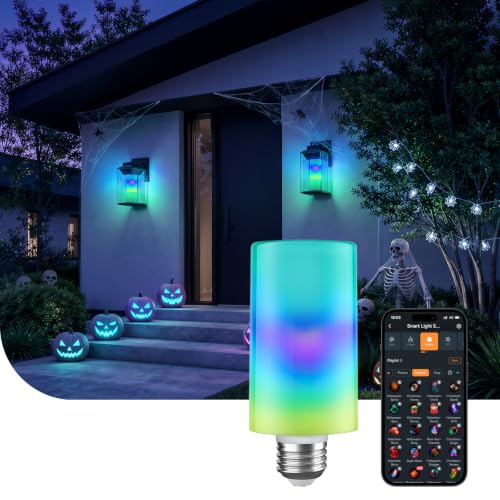
Linkind Smart Light Stick Color Bulb 850lm

Zoiinet WiFi Smart Plug with Remote

Kasa Smart Plug Ultra Mini EP10P2

Linkind Matter Smart Plug for HomeKit

Linkind Matter Smart Light Bulb

New One 800 Series Z-Wave Smart Plug

EIGHTREE WiFi Smart Plug 4-Pack
A Closer Look At Each Pick
The YoLink Plug Mini takes a different path than most smart outlets you will find on a retailer’s shelves, relying on LoRa wireless (a long-range, low-power radio standard) rather than Wi-Fi or Z-Wave. That shift matters in detached buildings where Wi-Fi signals struggle to reach, and the included hub keeps setup painless for anyone new to the ecosystem.
Over-temperature protection adds a layer of confidence for older space heaters or vintage lamps that run warm. Precision scheduling helps automate porch lights, fish tank pumps, or holiday decorations without daily fiddling. In larger properties with outbuildings, the quarter-mile open-air range tends to outperform standard smart outlets that drop off after one or two walls.
What Earns Its Place
- Long-range radio reaches detached garages and backyard offices where Wi-Fi often fails
- Over-temperature protection adds a practical safety margin for older appliances
- Hub bundled in the box removes the guesswork for first-time smart home shoppers
- Scheduling precision supports sunrise and sunset routines without manual resets
- Compact housing keeps both outlets accessible on standard wall plates
Things To Consider
- Uses YoLink’s own protocol rather than Z-Wave, so it does not pair with existing Z-Wave hubs
- Voice integration runs through the YoLink skill and may feel a step behind native Alexa routines
Key Product Details
Right Fit For
Homeowners with detached garages, workshops, or long driveways where standard Wi-Fi signals fade out and a long-range radio is more useful than mesh coverage.
Consider Something Else When
The New One Z-Wave Smart Plug (Item 7) suits shoppers who already own a Z-Wave hub and want native mesh integration instead of a separate YoLink ecosystem.
Strictly speaking, this Linkind stick is a bulb rather than a smart plug, yet it lands on this list because Z-Wave-curious homeowners often weigh color lighting as part of the same automation plan. The E26 base fits standard American sockets, and the slim T19 form factor (about 57 by 131 mm) suits fixtures where a chunky A19 bulb looks awkward.
An 850-lumen output (roughly equivalent to a 60W incandescent in brightness, while drawing far less power) handles most reading lamps and small ceiling fixtures. The bulb shifts between tunable white and full color, which opens up practical scene setting beyond basic on/off control. Wi-Fi setup requires a 2.4 GHz network, and the bulb is not compatible with Tuya or Smart Life ecosystems.
A Strong Showing
- Color and tunable white support covers accent lighting and task lighting in one bulb
- Slim stick shape fits shallow fixtures and decorative lamps where round bulbs look oversized
- Standard E26 base drops into common sockets without rewiring
Honest Caveats
- Only supports 2.4 GHz Wi-Fi, so dual-band routers need that band active
- Will not pair with Tuya or Smart Life apps, which limits multi-brand consolidation
- Not compatible with traditional dimmer switches, which can cause flicker or buzzing
Made For
Homeowners who want color-changing accent lighting in decorative fixtures and prefer app or voice control over a physical dimmer switch.
Skip It When
The Linkind Matter Smart Plug (Item 5) makes more sense for shoppers whose priority is controlling existing lamps and appliances rather than swapping out bulbs.
Zoiinet bundles a handheld remote with its Wi-Fi outlet, which is the kind of small touch that makes a real difference in a hallway or bedside lamp. The remote snaps out of its wall plate for portable use, or stays put as a manual switch for guests who never downloaded the app. At 15A and 1500W, the rating covers most household lamps, fans, and small kitchen gear.
Compared with the YoLink Plug Mini in slot one, this one trades long-range radio for a simpler Wi-Fi connection that anyone with a router can run. Timer and countdown schedules keep coffee makers or holiday lights on a predictable rhythm. The included remote addresses a complaint many shoppers raise about app-only smart plugs: a backup option when the phone is charging in another room.
Advantages To Know
- Includes a physical remote with a wall-mount plate for non-smartphone households
- 15A/1500W load handling covers space heaters and similar higher-draw appliances
- App, voice, and remote controls offer three layers of redundancy
Things To Consider
- Wi-Fi only, so it does not integrate into a Z-Wave mesh network
- Bulky housing may block the second outlet on a standard duplex receptacle
- Setup depends on a stable 2.4 GHz network for first pairing
Right Fit For
Families or roommates who want physical-button control alongside app and voice control, especially in hallways and bedrooms.
Look Elsewhere When
The Kasa Smart Plug Ultra Mini EP10P2 (Item 4) is a cleaner fit for tight outlet spacing where a slim profile matters more than a bundled remote.
Kasa’s EP10P2 leans into one simple promise: it should not hog the second outlet on the wall. The housing stays low-profile enough to keep both receptacles usable, which is more useful than it sounds behind a TV stand or a nightstand crowded with chargers. Setup connects directly to a 2.4 GHz Wi-Fi network, so no extra hub sits on the shelf.
Unlike the Zoiinet plug above, this one skips the physical remote and goes straight to the Kasa app, Alexa, and Google Home. For shoppers who already run a Kasa-heavy household, that consistency matters more than a bundled remote. The trade-off shows up in outlet crowding: any plug with a chunkier shell tends to block neighbors, and Kasa built this model specifically to avoid that headache.
Real Benefits
- Ultra-slim body keeps both outlets free on standard wall plates
- No hub required, which simplifies installation for first-time smart home shoppers
- Tight integration with the Kasa app and major voice platforms
- 15A rating handles most lamps, fans, and small appliances
- Two-pack value covers a room without buying singles
Worth Noting
- Runs only on 2.4 GHz Wi-Fi, so 5 GHz-only networks need a guest band set up
- Lacks energy monitoring, which feature-focused shoppers may want
Quick Facts
Best Suited To
Anyone outfitting a rental, dorm, or first apartment who needs a hub-free smart plug that stays out of the way.
A Better Fit Elsewhere
The EIGHTREE Smart Plug 4-Pack (Item 8) makes more sense for shoppers outfitting several rooms at once and wanting a larger multi-pack at one go.
Matter is a newer smart home standard designed to make devices from different brands speak the same language, and this Linkind plug leans into that promise. It works with Apple Home, Alexa, Google Home, SmartThings, and AiDot through Matter, cutting down on the app-juggling that frustrates mixed households. The setup skips extra manufacturer apps once a compatible Matter hub is in place.
Note that a Matter-certified hub such as a HomePod, Echo Dot, Nest, or SmartThings Hub is required for Apple Home support. For shoppers already invested in one of those ecosystems, this plug slides in without friction. Compared with the Wi-Fi-only Kasa in the slot above, the Matter route offers broader long-term compatibility across ecosystems, depending on which hub you already own.
The Practical Payoff
- Matter support bridges Apple, Alexa, Google, and SmartThings under one protocol
- Reduces app clutter by skipping the manufacturer’s own app for daily control
- Compact housing fits standard outlets without blocking the second receptacle
Possible Compromises
- Requires a Matter-certified hub for full Apple Home or advanced routines
- Feature set may be lighter than vendor-specific apps like Kasa’s
Made For
Homeowners running a mixed-vendor smart home who want one protocol to tie together Apple, Google, and Alexa devices.
Swap It Out When
The New One Z-Wave Smart Plug (Item 7) is a better fit for households already standardized on Z-Wave mesh rather than Matter.
This second Linkind entry is another Matter-certified bulb, included here because shoppers building a smart home around Z-Wave hubs often add compatible Matter lighting at the same time. It runs on standard 120V household current and pairs through a Matter hub such as HomePod, Echo, or Nest for unified multi-platform control.
The bulb cuts down on app switching, which is a real win when other devices in the home run through different vendor apps. For rooms where you want grouped lighting plus a smart plug or two, the Matter route keeps everything in one dashboard. As with the previous Linkind plug, a Matter-certified hub is required for full functionality.
Strong Points
- Matter certification simplifies integration across Apple, Alexa, and Google ecosystems
- 120V compatibility matches standard North American fixtures
- Pairs with existing Matter hubs for grouped routines alongside smart plugs
Things To Consider
- Requires a Matter-certified hub for full multi-platform control
- Bulb form factor limits placement to fixtures, not bare outlets
Perfect Match For
Shoppers already running a Matter-certified hub who want lighting that joins the same routines as their smart plugs.
Reach For A Different Pick When
The Linkind Matter Smart Plug (Item 5) makes more sense for controlling existing lamps without swapping every bulb.
This is the actual Z-Wave entry on the list, and the only one built around the 800 Series chip. Z-Wave is a low-power mesh wireless protocol designed specifically for smart home devices, where each plug can act as a repeater to extend the network. Open-air transmission up to 1,300 feet reaches detached garages, basements, and backyard structures that strain other protocols.
S2 security encryption (an enhanced authentication layer for Z-Wave networks) and a unique DSK QR code on each unit harden the network against unauthorized access. The built-in repeater function means every plug you add strengthens the mesh rather than just consuming a slot. For homeowners committed to Z-Wave as the backbone, this slot belongs at the center of any shortlist.
Points In Its Favor
- 800 Series Z-Wave chip offers the latest mesh performance and range in the protocol
- Built-in repeater strengthens the Z-Wave network with every installed plug
- S2 encryption and unique DSK code protect against unauthorized pairing
- 1,300 ft open-air reach covers detached structures with line of sight
- Plays nicely with existing Z-Wave hubs like SmartThings and Hubitat
Trade-Offs To Consider
- Requires a compatible Z-Wave hub, which adds cost for shoppers starting from scratch
- Does not work directly with Wi-Fi-only or Matter-only ecosystems
Feature Snapshot
Whose Shelf It Belongs On
Existing Z-Wave hub owners who want a true Z-Wave plug that doubles as a mesh repeater rather than a Wi-Fi workaround.
Not Your Match When
The Linkind Matter Smart Plug (Item 5) is a better fit for shoppers starting fresh on a Matter-certified hub instead of a Z-Wave controller.
The EIGHTREE bundle trades single-pack convenience for a four-room rollout, which suits anyone outfitting a living room, bedroom, and office in one shot. Setup relies on the Smart Life app and Bluetooth-assisted pairing to cut the manual steps down. Once linked to Alexa or Google Home through the third-party services menu, the plugs respond to standard voice commands.
The 15A rating covers lamps, fans, and most small kitchen gear. Direct Alexa pairing is not supported, so the Smart Life link step matters for shoppers planning to skip straight to voice. Compared with the Kasa 2-pack above, this bundle trades a tighter app ecosystem for a larger quantity.
Where It Delivers
- Four plugs in one box covers multiple rooms without repeat purchases
- 15A current rating handles most common household loads
- Bluetooth-assisted setup simplifies the first connection in the Smart Life app
Points To Keep In Mind
- Alexa and Google Home require linking through Smart Life first rather than direct pairing
- Wi-Fi only, with no Z-Wave or Matter path
- Smart Life ecosystem may overlap with other vendor accounts already in use
Best Suited To
Shoppers planning a multi-room rollout on a budget who do not mind the Smart Life app as the daily control center.
Skip It When
The Kasa Smart Plug Ultra Mini EP10P2 (Item 4) is a better fit for shoppers who prefer Kasa’s standalone app over the Smart Life path.
What Matters Most Before Choosing Z Wave Smart Plugs
Protocol Match Comes First. Z-Wave, Matter, and Wi-Fi each behave differently in a real home. Z-Wave needs a compatible hub and rewards a mesh layout. Matter fits mixed-vendor homes with a certified hub. Wi-Fi skips the hub but leans harder on router strength and bandwidth. Your existing gear should drive this choice, not the other way around.
Range And Mesh Behavior. Look at open-air range figures only as a ceiling; walls, floors, and metal enclosures cut that number fast. Z-Wave plugs with built-in repeaters strengthen the mesh each time you add one. LoRa-based options shine in detached buildings where Wi-Fi already struggles.
Load Capacity And Outlet Real Estate. A 15A rating covers most household loads up to about 1500W on a standard 120V circuit. Slimmer housings matter when both receptacles on a duplex outlet need to stay usable, especially behind furniture.
App And Voice Ecosystem. A plug that needs five different apps defeats the convenience of going smart. Native Alexa and Google Home support save headaches, and Matter support offers a future-friendly path for households running multiple brands.
Cross-Category Considerations
Hidden Buying Traps. First-time smart plug shoppers often pick a Wi-Fi plug assuming it will integrate with their existing hub, only to discover it needs its own app and cannot join the mesh. Check the protocol before the box arrives on your porch. Another trap is grabbing a plug rated below the appliance’s actual draw. A small heater on a 10A plug is a fast way to trip breakers.
When Paying More Pays Off. Higher-tier Z-Wave plugs like the 800 Series option in this list include S2 encryption and repeater functions, which lower-priced Wi-Fi alternatives skip. The premium pays off in long-term mesh strength and security, especially in larger homes. Shoppers outfitting a small apartment rarely need that level, but anyone building a multi-room Z-Wave backbone feels the difference within a year.
Frequently Asked Questions
What Is A Z-Wave Smart Plug? A Z-Wave smart plug is an outlet adapter that joins a Z-Wave mesh network, letting you automate lamps and small appliances through a compatible hub. Unlike Wi-Fi plugs, Z-Wave models use low-power radio waves designed specifically for smart home devices.
Do Z-Wave Smart Plugs Need A Hub? Yes, Z-Wave plugs require a Z-Wave-compatible hub such as SmartThings, Hubitat, or other certified controllers. The hub handles routines, schedules, and remote access when you are away from home.
Can A Z-Wave Plug Work With Alexa Or Google Home? Most Z-Wave hubs expose connected devices to Alexa and Google Home through their own skill or integration. The voice assistant does not speak Z-Wave directly, so the hub acts as the translator.
What Is The Difference Between Z-Wave And Matter? Z-Wave is a mature mesh protocol with a long track record in smart homes, while Matter is a newer cross-platform standard designed to bridge Apple, Google, and Alexa ecosystems. Both work well; your choice depends on which hub you already own.
Are Z-Wave Plugs More Secure Than Wi-Fi Plugs? Z-Wave plugs with S2 encryption add an extra authentication layer that older Wi-Fi plugs often lack. That said, any plug on a secured home network with current firmware offers reasonable protection for typical use.
Wrap Up
Choosing among Z Wave Smart Plugs comes down to which protocol your home already speaks and how far the signal needs to travel. A hub-backed Z-Wave mesh rewards larger homes and detached buildings, while Matter and Wi-Fi plugs suit simpler setups. Match the plug to your hub, your outlets, and your daily routines, and the rest of the automation plan tends to fall into place.