Smart outlets used to feel like a hobbyist rabbit hole. Today they sit in the same conversation as a new appliance, because the right plug quietly automates lamps, fans, holiday lights, and the small energy hogs that run all day. The ten options below cover a wide spread: Matter-compatible outdoor models, Z-Wave 800 Series repeaters, dimmers, energy monitors, and a few wall-receptacle upgrades that don’t need a hub at all. Pick the one that matches your hub (or absence of one) and the rooms you actually want to automate.
An Overview Of The Picks

Tapo Matter Outdoor Smart Plug (P400M)
Minoston 800 Series Z-Wave Dual Outlet Plug (MP26Z)

Minoston Z-Wave Plug Energy Monitor (MP21ZP)

ELEGRP USB Outlets with 3 USB Ports (2-Pack)

THIRDREALITY Smart Plug Gen3 4-Pack

New One Z-Wave Smart Plug 800 Series
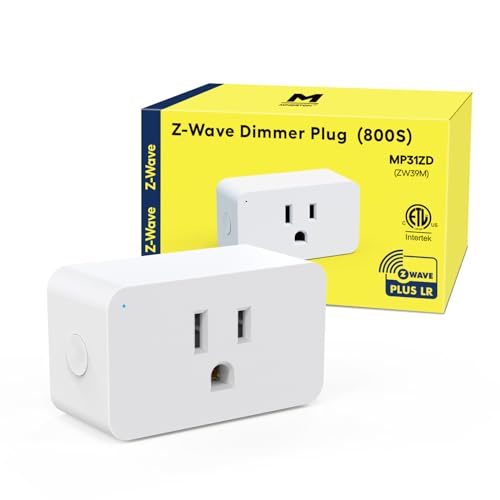
Minoston 800 Series Z-Wave Dimmer Plug (MP31ZD)

Minoston Mini Z-Wave 800 Series Plug (MP21Z)

Minoston Z-Wave Outlet Mini 800 Series

Geeni Indoor/Outdoor Weatherproof Smart Plug
Why These Options Stand Out
Holiday lights, patio heaters, pond pumps, and backyard string lights are the awkward jobs for most indoor smart plugs. The Tapo Matter Outdoor Smart Plug handles them with two individually switched outlets, which means your string lights and the pond pump can run on separate timers without buying a second plug. Matter certification (a cross-platform smart-home standard that lets devices from different brands talk through one app) keeps it friendly if your household uses Apple Home, Alexa, Google Home, or SmartThings.
An IP65 weather-resistance rating (a standard meaning dust-tight and protected against low-pressure water jets) makes it reasonable for covered patios and most weather-exposed mounting. Compared with the indoor-only picks below, this one is the clear choice for anything that lives outside a wall outlet.
Standout Benefits
- Two sockets run independently, so one outlet can handle string lights while the other runs a fountain on a different routine.
- Matter support sidesteps vendor lock-in and works across most modern smart-home apps.
- Outdoor-rated housing removes the need to wrestle with weatherproof covers and extension cords.
- Independent scheduling per outlet turns a single plug into a small automation hub for the yard.
Things To Consider
- You’ll still want a hub or app that supports Matter for the smoothest setup experience.
- IP65 protects against splashes and jets, but fully submerged mounting should still be avoided.
Feature Snapshot
Right Fit For
Households that want one plug to handle two outdoor devices without adding a second hub.
A Better Fit Elsewhere
Shed owners chasing the longest possible signal should consider the New One Z-Wave Smart Plug 800 Series for its dedicated long-range radio.
Most Z-Wave smart plugs give you one socket and call it a day. The Minoston MP26Z hands you two, each controllable from your hub or manually with the side buttons. If your nightstand or home-office power strip has a lamp and a fan you want on separate schedules, this is the kind of plug that quietly solves the problem without dragging in a second device.
The 800 Series chip (Z-Wave’s latest generation, which adds longer range and stronger encryption than older 500 and 700 Series devices) means stronger radio performance and S2 secure pairing, a security protocol that encrypts communication between the plug and your hub. It works with SmartThings, Hubitat, and Fibaro, the three hubs most Z-Wave households already run.
Where It Helps
- Two independently switched outlets cut down on the number of plugs you actually need to own.
- 800 Series chip supports longer wireless reach for large homes or basement setups.
- S2 security keeps your switch traffic encrypted at the network level.
Trade Offs
- Like every Z-Wave pick on this list, it requires a compatible hub to do anything useful.
- The body is bulkier than a single-outlet plug, so it may block the neighboring socket on a wall outlet.
Made For
Existing Z-Wave households that want one plug to manage two devices on independent routines.
Reach For A Different Pick When
Energy-conscious shoppers will get more from the Minoston Z-Wave Plug Energy Monitor (MP21ZP), which adds power reporting on top of the same dual-outlet flexibility.
If you’ve ever wondered which appliance is quietly adding ten dollars a month to the power bill, this is the plug that answers the question. The Minoston MP21ZP reports power and energy draw through your Z-Wave hub’s app, so you can finally see what that old dehumidifier or window AC unit actually costs to run. Beyond the monitoring feature, it functions as a standard on/off smart plug and doubles as a repeater, extending the Z-Wave signal across your home.
It’s a slightly different tool than the MP26Z reviewed just above. Where that one focuses on running two devices, this one is about measuring the load of one device at a time. For most people looking to audit a single appliance, the trade-off is fair.
Useful Touches
- Real-time power and energy reporting helps identify energy-hungry appliances.
- Built-in repeater function strengthens the Z-Wave mesh network across larger homes.
- Works with Alexa and Google Assistant for voice on/off once paired through a compatible hub.
Worth Noting
- Energy history typically lives inside your hub’s app, so reporting depth depends on the platform you use.
- Requires a Z-Wave hub, which adds a separate piece of hardware and setup step.
Quick Facts
Best Suited To
Energy-conscious households that want one plug to track the real cost of running a specific appliance.
Look Elsewhere When
Zigbee households already running SmartThings or Home Assistant should look at the THIRDREALITY Smart Plug Gen3 4-Pack for a multi-pack option with the same monitoring benefit.
This one breaks the smart-plug mold on purpose. The ELEGRP USB Outlet is a tamper-resistant wall receptacle with two USB-C ports and a USB-A port built in, designed to replace the standard duplex outlet in your kitchen, bedroom, or home office. There’s no app, no hub, no radio; you just install it and your phone chargers stop hogging the wall outlets.
It earns a place on this list because so many people shopping for smart outlets actually need a better way to plug things in. For households where “smart” isn’t the goal, this is a refreshingly practical upgrade that costs nothing to maintain.
Notable Gains
- Three USB ports (two USB-C, one USB-A) free up the regular receptacles for actual appliances.
- Tamper-resistant shutters are required in many new-build kitchens and bedrooms.
- Comes with matching wall plates and arrives as a two-pack, so you can refresh two rooms in one project.
Points To Keep In Mind
- This is a hardwired install, not a plug-in product, so basic electrical comfort or an electrician is needed.
- USB ports do not support fast-charge standards, so a high-watt phone may charge slower than its dedicated brick.
Whose Shelf It Belongs On
Anyone replacing an old duplex outlet in a kitchen, bedroom, or entryway and tired of bulky charging bricks.
Not Your Match When
Shoppers wanting app and voice control should skip ahead to the Minoston MP21Z or the Geeni Outdoor Smart Plug.
Most smart-plug reviews treat one plug as one plug. The THIRDREALITY Gen3 4-Pack flips that around, giving you four Zigbee 3.0 outlets (a wireless protocol widely supported by Echo devices with built-in Zigbee hubs, SmartThings, and Home Assistant) at once, plus real-time power metering on each. For a household that wants to spread automation across multiple rooms without buying four separate devices, this is the kind of bulk purchase that actually makes sense.
Each plug is also a Zigbee repeater, so dropping four of them around the house doubles as a mesh-network upgrade. In practice, that’s the difference between reliable automations and occasional “the plug didn’t respond” headaches.
Reasons It Performs
- Four-pack format lets you automate an entire room or small home in one shopping trip.
- Real-time power metering is included on every plug, not just a single premium unit.
- Each plug strengthens the Zigbee mesh network as a built-in repeater.
Room For Improvement
- A compatible Zigbee hub is required, which is an extra purchase if you don’t already own one.
- Owners commonly report that firmware updates occasionally need a manual re-pair step.
Core Details
Perfect Match For
Zigbee households outfitting several rooms at once and wanting per-outlet energy reporting.
Swap It Out When
Z-Wave households running SmartThings or Hubitat will get more from the Minoston MP21Z, which fits the same single-outlet role on the Z-Wave side.
Detached garages, basements, and backyard offices are the spots where traditional smart plugs drop off the network. The New One Z-Wave Smart Plug uses the 800 Series chip, which is engineered for longer open-air range and stronger penetration through walls. If your hub lives at one end of the house and you want automation at the other end, this one is built to bridge the gap.
It also brings S2 security to the table with a unique pairing QR code, so the only thing that ends up on your network is the plug you actually scanned in. For Z-Wave households that care about both reach and security, it’s a reasonable middle-ground pick.
Positive Takeaways
- 800 Series radio improves range and wall penetration for far-flung devices.
- S2 encryption with QR-code pairing keeps the network lock-down tight.
- Built-in repeater function extends the mesh for other Z-Wave devices downstream.
Honest Caveats
- Requires a Z-Wave hub, which is a non-starter for households without one already.
- Single outlet only, so power-strip situations need additional plugs.
Who Should Grab It
Z-Wave households that need a reliable connection in detached garages, basements, or backyard offices.
Skip It When
If dual-outlet flexibility matters more than range, the Minoston MP26Z covers two devices in one body.
Most plug-in smart outlets only know two states: on and off. The Minoston MP31ZD adds a full 1-100% dimming range, which turns a basic table lamp into tunable accent lighting without rewiring the lamp itself. For renters, that’s a big deal, since swapping the wall switch isn’t an option.
It runs on the same 800 Series Z-Wave platform as the other Minoston entries above, so hubs and ecosystems that work with one typically work with the other. Just remember that dimming only works with dimmable bulbs, so incandescent and most dimmable LEDs are fine, while non-dimmable LEDs will flicker or stay stuck at full brightness.
Key Advantages
- 1-100% dimming range adds tunable lighting without rewiring.
- 800 Series radio delivers strong range and Z-Wave Long Range support on compatible hubs.
- Built-in repeater extends mesh coverage for nearby Z-Wave devices.
A Few Limitations
- Only works with dimmable bulbs, so existing non-dimmable LEDs may flicker.
- A compatible Z-Wave hub is required, adding setup complexity for first-time smart-home shoppers.
Who Will Love This
Renters and lamp-heavy households that want dimmable scenes without touching the wall switch.
Where Another Pick Suits Better
For two-outlet flexibility instead of dimming, the Minoston MP26Z is the better match for shared outlet strips.
Bulky plugs are the most common reason people abandon smart-plug installs halfway through. The Minoston MP21Z keeps a low profile, so it tucks behind a nightstand or into a power strip without elbowing out the neighboring outlet. That’s a small thing on paper, but in a tight home-office setup, it’s the difference between a tidy install and one that constantly unplugs itself.
It runs on the 800 Series Z-Wave platform with S2 authentication, meaning the plug and your hub exchange encrypted keys during setup so unauthorized devices can’t impersonate it. It also acts as a mesh repeater, which makes it useful as a stealth range extender for less-accessible corners of the home.
Everyday Wins
- Compact body fits in tight outlet strips and behind furniture.
- S2 secure pairing keeps the network safe from rogue devices.
- Doubles as a Z-Wave repeater for whole-home mesh coverage.
Less-Strong Areas
- Single outlet only, which is fine for lamps and fans but limiting for multi-load setups.
- A Z-Wave hub is required, so this is not a starting point for first-time smart-home households.
Built With In Mind
Anyone with crowded outlet strips who wants a smart plug that doesn’t take up the second socket.
Consider Something Else When
For a hub-free path with app and voice control, the Geeni Indoor/Outdoor Smart Plug is the friendlier entry.
The Minoston Z-Wave Outlet Mini is a sibling to the MP21Z above, focused on the same general goal but tuned for travelers and small-space dwellers. Its compact body suits bedside lamps, dorm rooms, and the kind of tight outlet cluster behind an entertainment center where every centimeter matters.
It runs the same 800 Series Z-Wave chip with S2 security and SmartStart pairing, a feature that pre-configures the device on the network before you even plug it in. If you already use a Z-Wave hub and want a small, unobtrusive plug for the second bedroom, this one slides in cleanly.
Notable Upsides
- Small footprint keeps second outlets accessible even on crowded power strips.
- 800 Series radio supports long-range connections on compatible hubs.
- SmartStart pairing speeds up adding the plug to your hub during setup.
Worth Bearing In Mind
- Requires a Z-Wave hub, which excludes shoppers without an existing automation setup.
- Single outlet only, so power-hungry multi-device scenarios need additional plugs.
The Right Fit
Travelers, renters, and small-space households that want a discreet Z-Wave plug for bedside or desk use.
Wrong Turns To Avoid
Energy-monitoring households should reach for the Minoston MP21ZP, which adds power reporting to the same basic plug-in role.
Smart-home newcomers don’t always want to buy a hub before they buy a plug. The Geeni Indoor/Outdoor Smart Plug skips that step entirely by connecting over your existing 2.4 GHz Wi-Fi network, no separate bridge required. Plug it in, open the app, and you’re running a timer for a lamp or outdoor lights within minutes.
It’s also one of the few single-outlet picks on this list rated for outdoor use, with a weather-resistant cover designed to protect the body from splashes and direct sun. For an apartment balcony, a covered porch, or a first step into smart lighting, this is one of the friendliest introductions around.
Everyday Advantages
- No hub required, which lowers the cost and setup steps for first-time shoppers.
- Weatherproof body supports both indoor and outdoor mounting.
- Works with Alexa and Google Assistant for voice control without extra bridges.
Potential Drawbacks
- Single outlet only, so multi-device setups need additional plugs.
- Wi-Fi-only means range depends on your router’s reach, with no mesh repeating like Z-Wave or Zigbee alternatives.
- The included weatherproof cover should be sealed during heavy rain for the best protection.
Who It Suits Best
First-time smart-plug shoppers who want outdoor-capable automation without buying a hub.
A Different Pick Shines
For a hub-based path with stronger mesh coverage, the Minoston MP21Z is a natural next step once you’re ready to expand.
What To Weigh Before Choosing Z Wave Outlets
Smart outlets fall into three families, and the right pick usually depends on which one fits your home. Z-Wave plugs like the Minoston MP21Z and New One Z-Wave Smart Plug require a dedicated hub but reward you with a self-healing mesh network (a setup where each plug relays signals for others, so the system reroutes around weak spots automatically), strong encryption, and very low power draw. Zigbee alternatives like the THIRDREALITY Gen3 4-Pack run on a similar mesh model and pair well with Echo devices that have built-in radios. Wi-Fi-only plugs like the Geeni model skip the hub but tie up router bandwidth and lose connection when your network drops.
Outdoor use is the next big decision point. Any plug rated for outdoor duty, such as the Tapo P400M or the Geeni model, needs an IP rating of at least IP44 (protection from splashing water and objects larger than 1mm) for general exposure. For full rain and dust protection, IP65 is the safer bet. Indoor-only plugs are fine behind furniture but should never sit in a deck box or under a soffit where moisture collects.
Think about load type too. A standard on/off plug handles lamps, fans, and small appliances, but a dimmer plug like the Minoston MP31ZD is what unlocks tunable accent lighting. Energy-monitoring plugs like the Minoston MP21ZP make the most sense when you want to audit specific appliances. Finally, if you don’t need automation at all and just want more charging ports, a hardwired USB receptacle such as the ELEGRP option may serve your needs more directly than any wireless plug.
Key Considerations Across These Picks
Common Shopping Slip Ups
The most common mistake is picking a Z-Wave or Zigbee plug without owning the matching hub. These radios don’t speak Wi-Fi, so the plug looks dead out of the box until you pair it. A second trap is assuming outdoor-rated means fully waterproof; in practice, an IP65 plug should hang vertically with the cover closed, not sit in a puddle. Last, mixing protocols inside one outlet strip can leave you juggling two apps, so try to standardize on one ecosystem per room.
Where The Extra Money Goes
Premium smart plugs earn their higher tier in three places: better radios, encryption, and physical build. The 800 Series Z-Wave chip used across several Minoston picks supports Z-Wave Long Range and S2 authentication, both of which meaningfully harden a home network. Higher-tier models also tend to use better internal relays, which are the mechanical switches that handle the actual on/off cycling, so they tolerate more switching cycles before wearing out. For households running multiple plugs daily, that longer component life is the quiet payoff you only notice years later.
Frequently Asked Questions
Do Z-Wave smart plugs need a hub?
Yes. Z-Wave is a dedicated low-power mesh protocol that needs a Z-Wave-compatible hub to translate commands and bridge to your phone or voice assistant. Wi-Fi and Matter-based plugs like the Tapo P400M and Geeni model are the exceptions, since they connect directly to your router or smart-home platform.
What is Z-Wave Long Range?
Z-Wave Long Range is an extension of the standard Z-Wave protocol that increases wireless reach, often up to roughly a mile in open-air conditions, while reducing power draw. It’s supported by 800 Series chips and requires a hub that also supports the feature.
Can I use Z-Wave outlets outdoors?
Only if the specific plug is rated for outdoor use. Look for an IP44 or higher weather-resistance rating, a sealed cover, and an outdoor-rated housing. Indoor-only plugs should never be exposed to rain or extended humidity, even under a covered porch.
How many smart plugs can one Z-Wave hub handle?
Most modern Z-Wave hubs support well over a hundred devices, so a typical household of ten to thirty plugs is no problem. The practical limit is usually mesh health, not raw device count, which is why range-extending repeaters like the Minoston MP21Z help in larger homes.
Do smart plugs increase my electricity bill?
The plug itself draws a small amount of standby power, usually well under one watt. In most households, the bigger savings come from cutting standby draw on the appliances the plug controls, especially older entertainment centers and computer peripherals.
Closing Remarks
The right pick comes down to your existing setup and what you want to automate. Z-Wave households get the most from the Minoston MP21Z and MP21ZP, while newcomers looking for an easy first step will find the Geeni plug surprisingly capable. Outdoor patios and holiday lights call for the Tapo P400M, and anyone replacing old outlets gets a clean win with the ELEGRP USB receptacle. Match the plug to the protocol, the room, and the load, and the rest takes care of itself.