Apartment life has its own heating quirks: shared walls, limited thermostat wiring, and a landlord who may not love DIY projects. A well-chosen smart thermostat can tame hot-and-cold swings without rewiring the wall or breaking the lease. This lineup focuses on units that install easily in common apartment HVAC setups, play nicely with rent-friendly wiring, and keep energy use low when you’re out.
A Side-By-Side Look

Google Nest Learning Thermostat Pro Edition (Polished Silver)

Google Nest Thermostat with Trim Kit (Snow)

Heagstat Non-Programmable Thermostat 1 Heat/1 Cool

ecobee Smart Thermostat Premium with SmartSensor
Google Nest Thermostat (Charcoal)

ecobee SmartSensor 2-Pack
ecobee Smart Thermostat Enhanced

Google Nest Learning Thermostat (4th Gen) Bundle (Silver)

Google Nest Learning Thermostat (4th Gen) Bundle (Obsidian)

Google Nest Learning Thermostat (4th Gen, Polished Gold)
A Deeper Look At The Lineup
Most apartment thermostats live on a wall for years, so the Pro Edition’s polished-silver face and slim profile tend to disappear into the room instead of dominating it. The included temperature sensor (a small wireless puck you place in another room) is the feature that quietly sells the whole package, because it tells the thermostat what the bedroom actually feels like rather than guessing from the hallway.
Renters tend to appreciate how the system tunes itself: it watches when you adjust the dial, builds a schedule over a week or two, and slips into an Eco mode when nobody’s home. For a 24V forced-air or heat-pump setup, professional installation is the smoother path, since many apartment systems carry a common wire (a low-voltage wire that keeps the thermostat powered) that’s worth verifying before mounting anything.
What It Does Well
- Adaptive scheduling learns your weekly routine without manual programming
- Remote sensor brings bedroom or office readings into the comfort equation
- Works with Alexa and Google Home for hands-free temperature shifts
- Adaptive Eco (an energy-saving mode that adjusts to outdoor conditions) trims HVAC runtime when you’re away
- Polished silver face looks at home on most interior walls
Trade Offs
- Pro Edition is generally priced higher than the standard Nest Thermostat in this list
- Older apartment wiring may need a common wire pulled for stable power
Made For
Renters with a stable 24V system who want a thermostat that quietly tunes itself over time without constant app fiddling.
Consider Something Else When
The Google Nest Thermostat (Charcoal) suits you better if you want a faster self-install and a lower entry point without remote-sensor flexibility.
Older apartments often carry a telltale rectangle of faded paint where a previous thermostat lived for a decade. The Snow-colored trim kit is built for exactly that situation, covering roughly the area a standard Nest base would otherwise leave exposed. It also ships with a steel mounting plate that adapts to an existing electrical box, which is helpful when the wiring hole is wider than the new unit.
Beyond the cosmetic cover, the thermostat itself runs on ENERGY STAR-certified hardware (a federal standard for energy-efficient appliances) and steps the temperature down automatically when it senses an empty home. Most renters report a smooth install using the Google Home app on Android or iPhone, though you may want to confirm your system has the required C-wire before mounting.
What Works In Its Favor
- ENERGY STAR certification supports lower utility use over time
- Trim plate hides paint scars from previous thermostats
- Steel plate bridges an electrical-box install cleanly
- App-driven schedule building works on Android and iPhone
- Auto-away mode trims heating and cooling in empty rooms
Things To Weigh Up
- Some older HVAC systems may need a power accessory to feed the C-wire (common wire) requirement
- No remote temperature sensor in the box
Best Suited To
Apartments with visible paint rings or oversized electrical boxes behind the existing thermostat where cosmetic cleanup matters.
Not Your Match When
The Google Nest Learning Thermostat Pro Edition (Polished Silver) makes more sense if you want built-in learning behavior and a remote sensor from day one.
Not every apartment needs an app or a learning curve. The Heagstat non-programmable unit is a wall-mounted dial-and-button thermostat aimed at the simplest heating and cooling setups. Its 1-heat/1-cool rating covers a single-stage forced-air system, which is exactly what many older buildings still run, with up to five low-voltage wires for typical hookups.
The white backlight makes the temperature legible at a glance when you’re walking past, and the absence of a connected app means there’s no account to manage or firmware to track. For tenants whose landlord wants a clean wired swap from a worn-out mercury or mechanical thermostat, this is the practical pick.
Positive Takeaways
- Compatible with conventional 1H/1C forced-air systems common in older buildings
- No app or account required for daily operation
- White backlight keeps the display easy to read
- Simple two-wire to five-wire install fits common apartment wiring
Worth Noting
- Not compatible with multi-stage, heat-pump, or six-to-eight-wire systems
- No scheduling or remote app control for energy-saving shifts
- Wiring is restricted to conventional setups, so heat-only baseboard systems are out
Feature Snapshot
Right Fit For
Tenants in buildings with a straightforward single-stage heating and cooling system who just want reliable manual control.
A Better Fit Elsewhere
The Google Nest Thermostat (Charcoal) makes more sense if your system supports a C-wire and you’d rather automate savings with an app schedule.
ecobee’s flagship turns the wall thermostat into a small smart display. The Premium model includes a built-in air quality monitor, a speaker, and both Siri and Alexa support without an extra device on the counter. For apartment dwellers who already run a HomeKit or Alexa household, this consolidates a few gadgets into one wall unit.
The included SmartSensor, which is a wireless temperature and occupancy sensor, addresses the classic apartment complaint that the hallway thermostat doesn’t know how cold the bedroom gets. Place the sensor in a bedroom or home office, and the system shifts the average toward that reading when motion is detected. Owners commonly report that the music and microphone features work best with a stable Wi-Fi connection, so a strong signal near the wall is worth confirming before mounting.
Real Benefits
- Siri and Alexa are built into the wall unit
- SmartSensor included for room-specific comfort
- Air quality monitor adds indoor condition awareness
- Compatible with most 24V systems found in modern apartments
- Works alongside Apple Watch and major smart-home platforms
A Few Limitations
- Carries a higher entry price than basic smart thermostats
- Some advanced features depend on a stable Wi-Fi signal at the wall
Perfect Match For
Smart-home power users who want a multi-function device that replaces a separate speaker or display.
Look Elsewhere When
The ecobee Smart Thermostat Enhanced is a better fit if you don’t need the speaker and want to spend less for the core scheduling and sensor features.
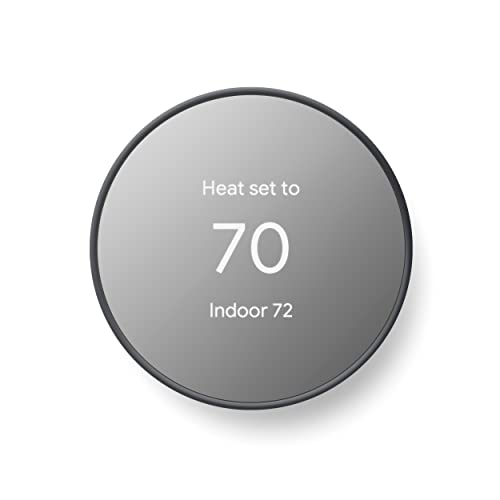
The Charcoal Nest Thermostat is the friendly entry point for renters who want connected comfort without the Pro Edition’s price tag. It installs in about half an hour for most DIYers, runs on the same Google Home app as the larger units, and uses a familiar swipe-down interface on the wall. The charcoal finish tends to recede against darker accent walls, which apartment decorators tend to appreciate.
It still pulls off the core Nest tricks: turning itself down when the home is empty, building a schedule from your manual adjustments, and letting you nudge the temperature from the app while you’re out. Setup is the smoothest in this list for first-time smart-thermostat owners, though you’ll want to check the wiring guide in the Google Home app to confirm your system is compatible.
What Helps Most
- Self-install commonly finishes in around 30 minutes
- Auto-away mode reduces heating and cooling in empty apartments
- App control from Android, iPhone, or a tablet
- ENERGY STAR-certified for reduced energy use
- Lower entry cost than the Pro Edition
Honest Caveats
- Some HVAC systems require an extra power accessory for stable operation
- No remote temperature sensor included
Who Should Grab It
First-time smart-thermostat owners who want a quick install and core app features without the Pro Edition’s price.
Skip It When
The ecobee Smart Thermostat Enhanced is a better match if room sensors matter and you prefer Apple’s HomeKit ecosystem.
This isn’t a thermostat on its own, but rather the upgrade that makes an existing ecobee behave like a different product. The 2-pack of SmartSensors detects temperature and occupancy in rooms up to about 60 feet away from the main unit, then nudges the HVAC system toward the rooms where people actually sit. Open-plan lofts and split-bedroom layouts benefit most.
The sensors are battery-powered, so placement is essentially cordless: stick one on a shelf in a drafty corner and another in a sunny home-office nook. Pair them with the Smart Thermostat Enhanced or Premium from this list, and the central unit will average readings intelligently across the apartment rather than relying on a single hallway measurement.
Where It Helps
- Infrared occupancy detection triggers comfort when someone enters the room
- Two-room expansion tackles typical apartment layouts in a single purchase
- Wireless range reaches about 60 feet from the main thermostat
- Battery-powered design needs no wall wiring
- Pairs with most current ecobee thermostats
Room For Improvement
- Only useful when paired with a compatible ecobee thermostat
- Replacement batteries add modest long-term ownership cost
Technical Highlights
Whose Shelf It Belongs On
Existing ecobee owners whose apartments have hot or cold pockets that the hallway thermostat never quite catches.
Reach For A Different Pick When
The ecobee Smart Thermostat Premium with SmartSensor is a better fit if you don’t yet own a main thermostat and want the sensor bundled in.
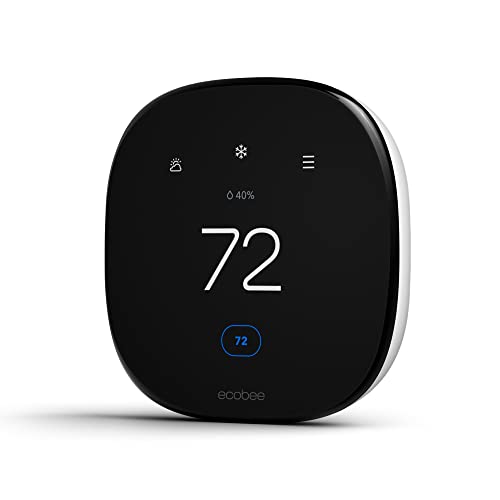
The Enhanced sits one tier below the Premium, trading the built-in speaker for a lower price while keeping the smart-sensor compatibility and occupancy-aware scheduling. For renters who don’t need voice on the wall, this is the more honest middle option: it still adjusts the temperature based on who’s home and what the rooms report, and it integrates with Apple Watch and major smart-home platforms.
Daily life with the Enhanced is quiet in the best way. It suggests schedule changes based on occupancy patterns rather than forcing you into a fixed program, and it works with most 24V forced-air, boiler, and heat-pump systems commonly found in apartments. Owners frequently comment that the touchscreen feels snappier than older models, which makes a difference when you’re adjusting the temperature on a sleepy morning.
Benefits That Matter
- Automatic energy savings adapt to occupancy
- eco+ features shift temperatures down when you’re asleep or away
- Compatible with Apple Watch, HomeKit, Alexa, and Google Assistant
- Pairs with ecobee SmartSensors for room-specific comfort
- Lower cost than the Premium model
Points To Note
- No built-in voice assistant or speaker on the wall
- Some scheduling benefits need an ecobee account and stable Wi-Fi
Quick Facts
Who It Suits Best
Renters who want ecobee’s scheduling intelligence and sensor support without paying for a built-in speaker.
Another Choice May Suit
The ecobee Smart Thermostat Premium is worth the jump if you’d use the on-wall speaker and air quality monitor often enough to justify the difference.
This bundle pairs the 4th-generation Nest Learning Thermostat with a second-generation Nest Temperature Sensor, which means the learning behavior and a remote sensor come in one box. For apartments where one thermostat has to serve both the living area and a closed-off bedroom, the sensor is the difference between “fine” and “actually comfortable at night.”
The 4th-generation display is the brightest, most legible Nest so far, and the silver finish softens the look against white walls. The learning algorithm takes about a week of regular adjustments to settle in, after which it starts anticipating your morning and evening shifts on its own. In larger apartments with more than one climate zone, you may find the single remote sensor limiting, depending on how your landlord zones the ductwork.
Bright Spots
- Learning thermostat adapts to schedule changes over time
- Remote sensor included in the bundle
- Compatible with Alexa, Apple HomeKit, and Google Home
- Advanced calibration (an algorithm that adjusts HVAC cycling to reduce temperature swings) supports steady room temperatures
- ENERGY STAR-certified for efficient HVAC cycling
Softer Spots
- Bundled price runs higher than the standard Nest Thermostat
- Multi-room apartment setups may need extra sensors for full coverage
Built With In Mind
Larger apartments with separate sleeping and living zones where one thermostat reading isn’t enough.
Swap It Out When
The Google Nest Thermostat with Trim Kit (Snow) is a better choice if your wall needs cosmetic cover and you don’t need the learning algorithm.
The Obsidian finish is the same 4th-generation learning thermostat as the Silver bundle, but the dark face tends to read as a deliberate design choice rather than a utility fixture. In apartments with darker paint, exposed brick, or moody accent walls, the polished black reads more like a piece of hardware than a plastic control panel.
Underneath the finish, you still get the learning algorithm, the bundled second-generation Temperature Sensor, and compatibility with the major voice platforms. The sensor placement strategy is the same as with the Silver version: pick the room where you sleep or spend the most stationary hours, and let the system average toward that reading.
Well-Handled Touches
- Obsidian finish pairs with darker interior palettes
- Bundle includes the second-generation remote sensor
- Learns routine shifts over the first one to two weeks
- Compatible with Apple HomeKit, Alexa, and Google Home
- ENERGY STAR-certified for lower energy use
Practical Considerations
- Dark face may show dust and fingerprints more readily than lighter finishes
- Bundled cost is higher than the standard Nest Thermostat
Who Will Love This
Apartment dwellers with darker accent walls or modern interiors where a black thermostat reads as intentional.
Where A Sibling Pick Shines
The Google Nest Learning Thermostat (4th Gen, Polished Gold) is a better match if your décor runs warmer and you’d like a metallic accent instead.
The Polished Gold variant rounds out the 4th-generation Nest family with a warm metallic face that reads as jewelry on the wall. Functionally identical to the Silver and Obsidian models, it carries the same learning algorithm, the same second-generation Temperature Sensor in the box, and the same broad compatibility with major smart-home platforms.
For renters with brass hardware, warm-toned wood, or a curated gallery wall, the gold finish tends to feel less clinical than silver or black. The setup experience follows the same Google Home app walkthrough as the other 4th-gen units, so install time and wiring checks stay consistent across the family.
A Few Highlights
- Polished gold finish suits warm interior palettes
- Remote sensor included for room-specific comfort
- Compatible with Alexa, Apple HomeKit, and Google Home
- Learning algorithm refines schedule over the first weeks
- ENERGY STAR-certified for efficient HVAC cycling
Minor Gripes
- Polished gold finish is a personal design call, not a universal match
- Bundled cost sits above the standard Nest Thermostat
Who Should Grab It
Style-conscious renters whose interiors lean warm and want a thermostat that doubles as a small accent piece.
Reach For A Different Pick When
The Google Nest Learning Thermostat (4th Gen) Bundle (Obsidian) is the better match for darker walls and modern, moodier décor.
What Matters Most Before Choosing Smart Thermostats For Apartment
A few practical details decide more than any spec sheet. Wiring compatibility comes first: most smart thermostats need a common wire (C-wire), which is a low-voltage wire that delivers continuous power, and many older apartments lack one. Pull the faceplate off your current thermostat before buying and count the wires. Two to five wires without a C generally means you’ll need a power accessory or a basic non-programmable unit like the Heagstat in this list.
System type matters just as much. Forced-air gas, electric, oil, and basic heat pumps are widely supported. High-voltage baseboard heaters, proprietary two-wire setups, or systems with six or more wires often need a specific model. Match the thermostat to the system, not the other way around.
For renters, installation reversibility is the underrated factor. A unit that mounts on the existing footprint, hides paint scars with a trim plate (like the Snow bundle), and doesn’t require new holes keeps the security deposit safe. Sensors are the bonus: a remote temperature sensor (an accessory that reports room-specific readings to the main thermostat) solves the bedroom-versus-hallway comfort gap, which is the most common apartment complaint.
Key Considerations Across These Picks
Common Shopping Slip Ups
The biggest mistake is skipping the wiring check. Count the wires behind your existing thermostat and look at the system label in the furnace closet before choosing. Buying a learning thermostat for a system without a C-wire is the most common reason renters return units. Another slip is ignoring HVAC type: heat-pump-only buildings reject thermostats designed for conventional systems, and high-voltage baseboards reject low-voltage units outright.
Where The Extra Money Goes
Higher-tier models in this list (the Pro Edition, the ecobee Premium, and the 4th-gen bundles) spend the extra money on three things: included remote sensors, learning behavior that replaces manual scheduling, and better displays. Whether those are worth it depends on how much you tweak your thermostat and how uneven your apartment runs. For a small studio with a balanced HVAC system, a mid-tier unit handles the job. For a multi-room apartment with hot and cold pockets, the sensor alone tends to justify the upgrade.
Frequently Asked Questions
Do I need a C-wire to install a smart thermostat in my apartment?
Most smart thermostats in this list need a C-wire for stable power. Open your current thermostat faceplate and count the wires before buying. If you see fewer than five wires and no C-wire labeled, plan on a power accessory or stick with the Heagstat non-programmable unit.
Can I install a smart thermostat without losing my security deposit?
Yes, in most apartments. Mount the new unit on the existing footprint, use a trim plate if the old paint ring shows through, and keep the original thermostat in a drawer. Avoid drilling new holes in the wall, and you’ll be fine when you move out.
Will a smart thermostat work with a heat-pump system?
Several models here, including the ecobee Enhanced, the ecobee Premium, and the Nest Learning Thermostat bundles, support common heat-pump setups. Confirm your system type on the furnace label before ordering, since heat-pump wiring differs from standard forced-air.
Are these thermostats compatible with Alexa and Google Home?
Most units in this list work with both Alexa and Google Home, and several also support Apple HomeKit. The ecobee Premium adds Siri on the wall itself. Check the specific model’s compatibility section before pairing it with your existing smart-home setup.
How much can a smart thermostat save on energy bills?
ENERGY STAR-certified smart thermostats can trim heating and cooling energy use by running the system only when someone is home. Actual savings depend on your local climate, your apartment’s insulation, and your schedule, so no guaranteed reduction can be promised.
Wrap Up
A smart thermostat in an apartment should ask for as little as possible from you and your walls. Match the wiring first, the system type second, and the design finish third, and you’ll land on a unit that keeps the place comfortable without complicating your lease.