SmartThings sits at the center of a lot of mixed-protocol smart homes, and the switch you choose quietly decides how reliable that setup feels day to day. The right module turns a dumb light into a scheduled, voice-controlled routine that just works, while the wrong one leaves you toggling a wall switch to keep automations in sync. This list focuses on switches that pair cleanly with SmartThings today, spanning tiny in-wall relays that hide behind your existing plate, dual-channel modules for fan and light control, and full replacement switches that slot into standard US boxes.
An Overview Of The Picks
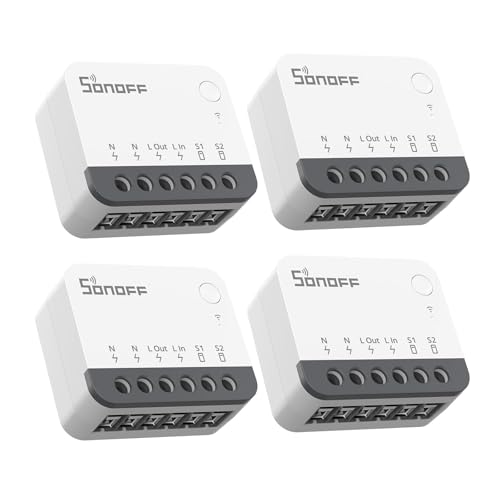
SONOFF ZBMINIR2 Zigbee Smart Relay Switch 4-Pack

Shelly 1PM Gen4 Smart Relay Switch with Power Metering

Shelly 2PM Gen4 Smart Relay Switch 2-Channel

Shelly 1 Gen4 Smart Relay Switch with Dry Contacts

TREATLIFE Smart Light Switch Single Pole 4-Pack
HQL Smart Light Switch 3 Gang

HQL Smart Light Switch 1 Gang

HQL Smart Light Switch 4 Gang

HQL Smart Light Switch 2 Gang
The Strengths Of Each Pick
The SONOFF ZBMINIR2 hides behind your existing rocker or push-button switch, leaving the wall plate and your decor untouched. It speaks Zigbee 3.0, which is the same mesh protocol SmartThings already speaks natively, so pairing tends to be quick once your hub is online. The 4-pack format makes it practical to upgrade a whole apartment in one afternoon.
You will need a Zigbee hub, and depending on your existing wiring, a neutral conductor in the box, so renters in older buildings should peek at the wall switch cavity before committing. The relay plays nicely with SmartThings, Alexa, and Google Home, giving you flexibility if you ever migrate ecosystems.
The Value In It
- Compact enough to fit shallow EU-type, 86-type, and 120-type mounting boxes without forcing the wiring
- Zigbee 3.0 keeps response times snappy on a well-planned mesh
- Works with existing rocker and push-button wall switches, preserving your current look
- Four units per pack drops the per-room cost for whole-home retrofits
Things To Consider
- Requires a Zigbee hub, adding a piece of hardware to your setup
- Neutral wire presence in the box should be confirmed before purchase
Who It Suits Best
DIYers outfitting multiple rooms on a Zigbee mesh who want their existing wall switches to stay visible.
Look Elsewhere When
Homeowners who would rather swap the visible switch entirely should step up to the TREATLIFE Smart Light Switch Single Pole 4-Pack.
The Shelly 1PM Gen4 packs Wi-Fi, Zigbee, and Matter radios into a single relay, which means it can talk to SmartThings today and still pivot if your setup changes tomorrow. The standout is the onboard power metering, a useful tool for spotting which appliance is quietly running up the bill. Setup reportedly takes under ten minutes once the wiring is sorted.
Unlike the SONOFF relay above, the 1PM Gen4 does not require a dedicated hub, so it suits smaller homes or anyone avoiding extra boxes on the shelf. The compact footprint lets it tuck behind most standard wall switches and outlets without a struggle.
Where It Delivers
- Tri-radio design covers Wi-Fi, Zigbee, and Matter in one module
- Real-time power metering helps identify energy-hungry appliances
- Hub-free operation simplifies smaller installations
Worth Noting
- Metering accuracy is best validated against a known load during initial setup
- You will want a stable 2.4GHz Wi-Fi signal at the switch location for reliable cloud features
Made For
Smart homeowners who want energy data on a specific appliance without committing to a hub-centric ecosystem.
Reach For A Different Pick When
Anyone controlling a paired fan and light from one box should consider the Shelly 2PM Gen4 Smart Relay Switch 2-Channel for its dedicated second channel.
Feature Snapshot
Where the 1PM is a single-channel workhorse, the Shelly 2PM Gen4 doubles down with two independently controlled channels rated at 16A each. That second channel turns a standard ceiling box into a smart combo for a fan and a light kit, or two lighting circuits on different schedules. The tri-radio setup mirrors the 1PM, so SmartThings adoption is the same low-friction path.
The added capacity also unlocks control for bi-directional motors, which is helpful for projects like automated blinds or window openers. Independent energy metering per channel gives a clearer picture of what each circuit is drawing.
What Makes Sense
- Two channels at 16A each handle a fan plus light kit from one module
- Per-channel metering separates energy use by load
- Works with Wi-Fi, Zigbee, Matter, and Bluetooth, matching the rest of the Gen4 family
Trade Offs
- Two channels can mean more wiring complexity in older boxes with limited space
- SmartThings automations should be tested for both channels to confirm independence
Best Suited To
Anyone modernizing a ceiling fan box or running two paired fixtures that need independent schedules.
A Better Fit Elsewhere
Single-room upgrades without paired loads will find the Shelly 1PM Gen4 Smart Relay Switch with Power Metering plenty for the job.
The Shelly 1 Gen4 steps into spaces the relay-only modules cannot, thanks to dry contacts that sit safely on low-voltage circuits. Garage door openers, gate motors, and intercom triggers all benefit from that isolation, since the switch only signals rather than carrying the full mains load. It carries the same tri-radio design as its siblings, so SmartThings routines can trigger it alongside your lights.
For installers, the dry-contact setup means you can wire it to devices without disturbing the original hardware, which keeps warranties intact on motorized equipment. A 16A single channel handles typical residential loads when used in wet-contact mode.
The Good Stuff
- Dry contacts isolate the module from the load, protecting sensitive electronics
- Native SmartThings support alongside Alexa, Google Home, and Home Assistant
- Bluetooth gateway function extends mesh range into nearby rooms
- Compact form factor drops into standard electrical boxes
Minor Gripes
- Wiring a dry-contact setup takes more planning than a basic live-wire relay
Whose Shelf It Belongs On
Makers and integrators automating garage doors, gates, or low-voltage control circuits.
Skip It When
Homeowners just upgrading room lighting will get a more direct experience from the TREATLIFE Smart Light Switch Single Pole 4-Pack.
Key Specs
The TREATLIFE Smart Light Switch is a full replacement for your current toggle, not a hideaway module, so the upgrade is visible at the wall plate. A 4-pack drops the per-switch cost low enough to justify doing a whole home in one weekend. The 2.4GHz Wi-Fi radio connects directly to your router, which keeps the setup free of extra hubs.
You will need a neutral wire in the box, and the switch handles single-pole circuits only, so hallways with two switches controlling one light will need a different approach. Built-in timers and SmartThings compatibility make routines like “lights off at bedtime” straightforward.
Standout Benefits
- Full-replacement design refreshes the look of the wall plate while adding smarts
- 4-pack pricing suits whole-home rollouts
- Hub-free operation over 2.4GHz Wi-Fi
- Screwless snap-on wall plate included per switch
Points To Note
- Neutral wire required, so older homes may need rewiring before installation
- Single-pole only, not suited to 3-way hallway circuits
Right Fit For
Budget-focused homeowners upgrading multiple rooms to full smart switches without adding a hub.
Consider Something Else When
A hallway needing 3-way control should look at the HQL Smart Light Switch 3 Gang instead.
Feature Rundown
The HQL 3 Gang replaces a triple switch plate, consolidating three independent lighting circuits under one wall control. For a living room with overhead lights, sconces, and accent strips, that single plate handles everything. Pair it with SmartThings and you can shut down the whole entertainment scene with one tap.
UL certification adds a layer of confidence for installers thinking about long-term safety, and the backlight switch keeps the LEDs from glowing through the night in bedrooms. You will need a neutral wire and a 2.4GHz Wi-Fi connection.
The Helpful Details
- Three independent circuits in a single wall plate keep aesthetics clean
- UL certification speaks to baseline electrical safety
- Backlight toggle prevents nighttime glow in darker rooms
Honest Caveats
- Bluetooth must be enabled during initial pairing, which can confuse first-time installers
- Neutral wire required, which older properties sometimes lack
Who Should Grab It
Anyone with a triple-gang box looking to consolidate three circuits into one smart wall unit.
Where Another Pick Suits Better
Rooms with just one or two circuits will appreciate the simpler HQL Smart Light Switch 1 Gang instead.
The HQL 1 Gang is the cleanest entry point for a first smart switch, replacing a single toggle without piling on extra wiring concerns. The same UL certification carries over, and the SmartThings pairing path mirrors the rest of the HQL family. For a bedroom, hallway, or pantry with one circuit, it is hard to overcomplicate.
The shared design language across HQL means once you install one, the next swap is familiar territory. Depending on your comfort with wiring, the whole project may take less than an afternoon.
What Stands Out
- Simplest form factor for first-time smart switch installers
- Compatible with Alexa, Google Home, and SmartThings over 2.4GHz Wi-Fi
- UL certification mirrors its multi-gang siblings
Room For Improvement
- Same neutral wire requirement as the other gang options
- No dimming function, only on/off switching
Perfect Match For
Newcomers to smart switches looking for a single-room trial before committing to a whole-home rollout.
Not Your Match When
Households needing more circuits per plate should jump to the HQL Smart Light Switch 2 Gang for paired fixtures.
The HQL 4 Gang is the densest plate in this lineup, packing four independent circuits into one wall unit. Kitchens with overhead, task, pendant, and under-cabinet circuits benefit most, since one plate keeps wall clutter under control. The optional relay-state memory means each switch remembers whether it was on or off after a power loss.
The trade-off is a larger electrical box requirement, so measure your existing gang depth before committing. For most modern homes with multi-gang boxes, however, the swap is direct.
Features That Help
- Four circuits in one plate suits busy rooms like kitchens and living areas
- Adjustable relay-state memory preserves preferences through power cycles
- UL certification carries through the gang range
Small Caveats
- Requires a deeper multi-gang electrical box for safe wire termination
- Setup flow asks for Bluetooth pairing, which adds a step for some phones
Built With In Mind
Homeowners outfitting kitchens or great rooms where many lighting zones share a single wall location.
Swap It Out When
Smaller rooms with only two circuits will find the HQL Smart Light Switch 2 Gang easier to manage.
Quick Facts
The HQL 2 Gang covers the most common multi-switch scenario: two fixtures controlled side by side, like a hallway overhead and a closet light. It slots into a standard double-gang box and keeps the wall layout familiar. SmartThings routines can group both circuits under a single scene for arrivals and departures.
The same UL certification and 2.4GHz Wi-Fi radio appear here as in the wider HQL range, so consistency across rooms is easy to maintain. The setup asks for Bluetooth during initial pairing, a small wrinkle most installers handle quickly.
Positive Takeaways
- Two-circuit plate suits the most common paired-fixture layout
- SmartThings compatibility keeps routines centralized
- Consistent design with the rest of the HQL gang family
A Few Limitations
- Bluetooth must be on during first pairing, which can be missed in phone settings
- Neutral wire still required at the box
The Right Fit
Anyone with two adjacent fixtures wanting a balanced smart upgrade without overpopulating the wall plate.
Where A Sibling Pick Shines
Rooms needing three or four circuits benefit more from the HQL Smart Light Switch 3 Gang or the HQL Smart Light Switch 4 Gang.
Spec Overview
What Matters Most Before Choosing Switches For Smartthings
Protocol Compatibility With Your Hub
SmartThings speaks Zigbee, Z-Wave, Matter, and many cloud-to-cloud integrations over Wi-Fi, so almost any modern switch will pair, but the experience varies. Pure Zigbee modules like the SONOFF ZBMINIR2 ride the same mesh as your sensors, which keeps things responsive. Tri-radio devices like the Shelly Gen4 lineup add a future-friendly layer if Matter becomes central to your routine. Pick the protocol that matches how the rest of your home already communicates, otherwise you risk managing two parallel networks.
Wiring Constraints In Your Walls
Switches that hide behind existing plates still need a neutral wire in most modern designs, and older homes sometimes lack that conductor. A quick peek behind a wall plate before purchase saves the headache of returning a module mid-project. Boxes with limited depth also push you toward compact modules like the SONOFF or Shelly lines, since bulky replacements can crowd the wiring.
Power Monitoring Versus Plain Switching
If you care about which appliance is drawing what, modules with onboard metering, like the Shelly 1PM Gen4 and Shelly 2PM Gen4, give you the data without extra clamps. For rooms where switching on and off is enough, the HQL and TREATLIFE wall switches keep things simpler. The honest read is that metering matters most for older fridges, space heaters, or mystery vampire loads, and matters less for a hallway light.
Gang Density And Visible Plate Style
Replacement wall switches come in 1-, 2-, 3-, and 4-gang versions that match your existing electrical box layout. Choosing the right gang count up front avoids mismatched plates or forcing two separate switches into a one-gang hole. For rooms where you would rather keep the wall untouched entirely, a hideaway relay under the existing switch preserves the original look.
Key Considerations Across These Picks
Common Shopping Slip Ups
The most frequent stumble is picking a switch without confirming a neutral wire in the box, which turns a simple install into a rewiring project. Another trap is assuming a 3-way hallway circuit works on a single-pole switch, which forces a return visit to the hardware aisle. Buyers also overlook the protocol mismatch, picking a Z-Wave switch for a pure Zigbee mesh and wondering why the device shows offline. Confirm wiring, count the poles, and match the radio to your hub before clicking through.
What The Higher Tier Buys
Stepping up to a Shelly Gen4 module costs more than a basic relay, but the upgrade covers tri-radio flexibility and per-channel power metering that basic switches skip. You also tend to get firmware support for Matter, which protects the purchase as the smart home standard matures. For most rooms, the basic tier does the job, while energy-tracking appliances and future-friendly homes benefit from the higher-tier buy.