A thermostat is one of those quiet upgrades that reshapes daily life: cooler air on a sweltering July night, a warm bathroom on a freezing December morning, and an HVAC system that ramps down the moment you leave for work. Picking the right Google thermostat, or the right sensor to expand an existing setup, depends on how your home is wired, how hands-on you want to be, and how much scheduling you want the app to handle for you. This roundup covers the core models and accessories in the current Nest lineup, plus a single non-programmable option for older conventional systems, so you can match the right unit to your walls and your routine.
Your Options, Compared

Google Nest Thermostat Snow with Trim Kit

PRO1 T701 Non-Programmable Wall Thermostat
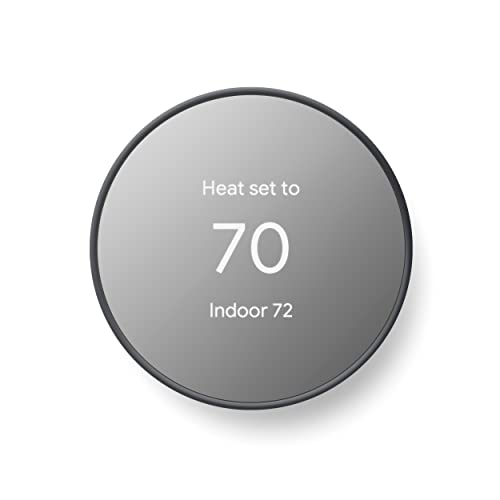
Google Nest Thermostat Charcoal

Google Nest Thermostat Fog

Google Nest Thermostat Sand
Google Nest Temperature Sensor 3-Pack

Google Nest Thermostat Snow

Google Nest Learning Thermostat 4th Gen Polished Gold

Google Nest Learning Thermostat 4th Gen Obsidian

Google Nest Learning Thermostat 4th Gen Silver
Why These Options Stand Out
Upgrading from an old rectangular mercury thermostat usually leaves a visible paint ring or a too-large hole in the wall. This Snow-colored Nest ships with the same programmable Wi-Fi brain found across the standard Nest line, but it adds two install aids that matter when the wall behind your old unit looks rough.
A trim plate covers any oversized cutout left by previous thermostats, and a steel plate adapts the base to a standard electrical box. For renters and owners living with quirks from past renovations, that translates into a cleaner end result with fewer trips back to the hardware store.
A Favorable Mix
- ENERGY STAR certification, so the hardware meets recognized efficiency benchmarks
- Trim plate hides paint lines and oversize holes from older thermostats
- Steel backplate adapts the unit to a standard electrical box in older homes
- Schedules and temperature adjustments run through the Google Home app on Android or iPhone
- Auto-away behavior trims heating and cooling when no one is home
Worth Noting
- Wall surface still needs basic prep, like cleaning and a level mark, before the trim plate sits flat
- You may find the steel plate adds a slight bump behind the thermostat, depending on the box depth
Who Will Love This
Anyone replacing an outdated thermostat on a wall with visible scars or a junction box will appreciate the bundled install hardware.
Look Elsewhere When
Homeowners with newer wiring and a clean wall opening should save the trim kit step and grab the standard Snow unit below.
Not every household wants a connected thermostat, and not every HVAC setup supports one. The PRO1 T701 is a single-stage, non-programmable unit built for a straightforward 1 heat / 1 cool conventional system. It sits on the larger T700 platform, which gives it a more generous screen than older mercury-switch designs.
For an older condo with a gas furnace and a single-stage AC compressor, this unit covers the basics without dragging you into app setup or Wi-Fi pairing. You adjust the temperature, the system responds, and that’s the whole story.
What It Does Well
- 4 sq. in. blue backlit display stays readable in low light
- Glow-in-the-dark light button helps at night without a flashlight
- Works with gas or electric conventional systems, giving you flexibility
- Larger T700 platform layout feels familiar if you are upgrading from a basic digital wall unit
Honest Caveats
- No scheduling, so you adjust manually when routines change
- Single-stage only, so multi-speed or heat-pump setups will need a different model
- No app or voice control, which is a downside if you already use a smart-home hub
Best Suited To
Owners of conventional 1H/1C HVAC systems who want dependable manual control without learning curves.
Swap It Out When
The Google Nest Thermostat in Charcoal is the better match for renters or homeowners who want app-based scheduling and away modes.
The Charcoal Nest sits at the practical center of the lineup. Compared to the trim-kit version above, this is the bare thermostat without extra wall plates, so it suits clean installations on newer walls. The unit runs on the same Google Home app, so once installed, you set schedules, monitor energy history, and adjust temperatures from your phone.
The self-down behavior when you leave is one of those quiet features that adds up: the system trims heating or cooling while you’re gone and warms back up before you return. For most apartments and small homes, that’s a meaningful shift in monthly energy use.
Noteworthy Benefits
- Programmable schedules through the Google Home app on Android and iPhone
- Auto-away mode reduces conditioning of empty rooms
- Charcoal finish hides fingerprints and blends with darker wall colors
- DIY-friendly install that typically takes well under an hour
Points To Keep In Mind
- No trim plate included if your old thermostat left a visible paint outline
- Wi-Fi connectivity is required to unlock the smart features
The Right Fit
First-time smart-thermostat owners in small homes or apartments who want a balanced mix of app control and simple hardware.
Consider Something Else When
Anyone wanting self-learning routines and bundled sensor support should consider the 4th Gen Learning Thermostat instead.
Color choices matter more than people think, especially when the thermostat sits on a feature wall. Fog is a soft, muted gray that disappears into off-white, pale gray, or sage-painted interiors better than the deeper Charcoal. Functionally, you get the same programmable Wi-Fi experience as the rest of the Nest Thermostat family.
The trade-off shows up when you share the wall with darker décor; Fog can look slightly washed out next to espresso tones. For most rooms with neutral paint, though, it reads as understated rather than busy.
Key Advantages
- Soft gray finish pairs with light, airy color schemes
- Same scheduling and away-mode features as other Nest Thermostat models
- App control on Android and iPhone via the Google Home app
- Low visual footprint on minimalist walls
Small Caveats
- Less contrast against pale walls, so the dial can be hard to spot across the room
- Same trim-plate limitation as the Charcoal model if your old opening is oversized
Perfect Match For
Homeowners with neutral, minimalist, or coastal-style interiors who want the thermostat to fade into the wall.
Not Your Match When
A room with dark wood paneling or bold accent walls would benefit from the visual weight of the Charcoal Nest instead.
Sand is the warmest finish in the Nest Thermostat line, and it tends to look at home in rooms with natural wood, terracotta, or earthy paint palettes. The hardware matches every other color option in this list: same Wi-Fi radio, same Google Home app controls, same away-mode scheduling.
For mid-century homes or spaces where Charcoal feels too cool and Snow feels too sterile, Sand lands in a friendly middle ground. Depending on your lighting, it can shift from a soft beige to a richer tan throughout the day.
A Few Strong Suits
- Warm beige tone complements wood-paneled or earth-tone walls
- Identical app control and scheduling as the broader Nest Thermostat family
- Helps the unit blend into cottage, craftsman, or rustic interiors
- Easy DIY swap from an existing low-voltage thermostat
Trade Offs
- Limited contrast against beige walls, so locating the dial in dim light can be tricky
- Doesn’t stand out against decorative tile or patterned wallpaper backdrops
Built With In Mind
Rooms with warm woods, clay walls, or boho-inspired textiles where cooler finishes would feel out of place.
Reach For A Different Pick When
Bright white walls with high contrast would show off the Snow Nest Thermostat more effectively.
A single thermostat on the hallway wall only knows the temperature in the hallway. If your nursery runs cold or your home office runs hot, the rest of the rooms stay uncomfortable. The Nest Temperature Sensor 3-Pack adds room-level awareness to a compatible Nest thermostat.
Each sensor reports the temperature where it sits, and the system uses those readings to decide when to heat or cool. You place one in the baby’s room, one in the living room, and one upstairs, then prioritize which rooms matter at different times of day.
What Earns Its Place
- Three sensors in one box covers most multi-room floor plans
- Communicates wirelessly with compatible Nest thermostats over reasonable indoor distances
- Useful for households with a hot upstairs and a chilly basement
- Helps balance comfort in rooms with large windows or poor airflow
Points To Note
- Requires a compatible Nest thermostat to function, so it’s an add-on, not a standalone product
- Wireless range and signal strength depend on wall materials and home layout
Who Should Grab It
Families in multi-story homes where one wall thermostat can’t represent every room’s true temperature.
Where Another Pick Suits Better
Studio apartments or open-plan homes will get more out of upgrading to the Learning Thermostat with bundled sensor instead.
Snow is the brightest option in the standard Nest Thermostat lineup, and it tends to look at home in modern, well-lit rooms with white trim. The hardware, app integration, and scheduling features mirror what you’d get with Charcoal or Fog; the difference is purely aesthetic.
Compared to the trim-kit version at the top of this list, this Snow model ships without extra wall plates, so it suits new installations where the opening is already clean. If your old thermostat left a paint ring, plan on a quick patch and repaint before mounting.
Real Benefits
- Bright white finish pops on neutral and pastel walls
- Matches modern, Scandinavian, or coastal interior styles
- Programmable schedules managed through the Google Home app
- Auto-away behavior trims conditioning when the house is empty
Small Limitations
- Shows dust and smudges more visibly than darker finishes
- No trim plate in the box, so older walls may need prep work
Made For
Bright, modern interiors where a crisp white thermostat feels like a deliberate design choice rather than a default.
A Better Fit Elsewhere
Rooms with warmer wall tones may benefit from the Sand finish for a more cohesive look.
The 4th Generation Nest Learning Thermostat is the flagship of the lineup, and Polished Gold is its showpiece finish. Unlike the standard Nest Thermostat, this model learns your preferred temperatures over time and builds a schedule around your actual routine rather than fixed inputs.
This package includes a Nest Temperature Sensor, so you get room-level awareness right out of the box. Compatibility with Alexa, Apple HomeKit, and the Google Home app means it slots into most existing smart-home setups without friction.
The Case For It
- Learns your temperature preferences and adapts as routines change
- Bundled Nest Temperature Sensor adds room-by-room data from day one
- Works with Alexa, Apple HomeKit, and Google Home for flexible voice control
- Polished Gold finish doubles as a statement piece on the wall
- More advanced energy reporting compared to the standard Nest Thermostat
A Few Limitations
- Premium finish commands a higher price tier than the standard Nest Thermostat
- C-Wire or compatible power accessory often required for smooth installation
Feature Snapshot
Whose Shelf It Belongs On
Smart-home enthusiasts who want adaptive scheduling, premium materials, and broad ecosystem compatibility in a single unit.
Where A Sibling Pick Shines
Budget-focused shoppers should consider the standard Nest Thermostat in Snow for the core scheduling experience at a lower tier.
Obsidian trades the warm gold finish for a deep, almost-black surface that disappears into darker walls. Functionally, this is the same 4th Generation Learning Thermostat platform, complete with a 2nd Gen Nest Temperature Sensor in the box. The learning engine still builds a schedule around your real habits, and it still adapts as your week changes.
For homeowners who want the smarts of the flagship without the jewelry-box look, Obsidian reads as quietly capable. The dark dial blends into charcoal walls and stone fireplaces more naturally than the lighter alternatives.
The Upside
- Deep black finish suits dark interiors and modern monochrome spaces
- Self-learning engine adapts schedules as routines shift
- Bundled 2nd Gen sensor improves multi-room coverage from day one
- Compatible with major voice ecosystems
Things To Weigh
- Premium tier price compared to standard Nest Thermostat models
- May need a C-Wire adapter depending on your existing HVAC wiring
- Dark finish shows fingerprints more than lighter colorways
Right Fit For
Design-conscious owners building a modern dark interior who want flagship learning features in a low-key finish.
Skip It When
Light, airy rooms would clash with Obsidian, so the Polished Gold Learning Thermostat is a friendlier match.
Silver is the most versatile finish in the 4th Gen lineup. It looks at home next to brushed-nickel hardware, stainless kitchen appliances, or simple white trim. The hardware inside is identical to the Obsidian and Polished Gold variants: same learning engine, same bundled 2nd Gen temperature sensor, same smart-home compatibility.
For households that redecorate often or rent out the home later, Silver ages gracefully across style shifts. It’s the finish that rarely feels out of place.
Well-Handled Touches
- Neutral metallic finish suits most interior styles
- Learning engine builds a personalized schedule over time
- Bundled 2nd Gen sensor delivers multi-room data from day one
- Plays nicely with multiple voice ecosystems
Less Ideal Details
- Sits in the premium price tier, so it’s overkill for small apartments
- Some HVAC systems need a C-Wire adapter for stable power
Who It Suits Best
Homeowners who want flagship learning behavior without committing to a bold color statement.
Another Choice May Suit
Shoppers who don’t need self-learning routines will find the standard Charcoal Nest Thermostat easier on the budget.
What Matters Most Before Choosing Google Thermostats
Check Your HVAC Compatibility First
The single biggest predictor of a smooth install is whether your current thermostat wiring includes a C-Wire, which is a common wire that delivers continuous power to smart thermostats. Many older homes only have four or five conductors behind the wall plate, and the Nest lineup can run with or without a C-Wire on most systems, but the install is cleaner and more reliable when one is present. Before buying, pop the cover off your existing thermostat and count the wires. If you see only R, W, Y, and G, plan on either pulling a new cable through the wall or adding a power accessory during setup.
Match The Finish To The Room
Color choice is more than decoration: it affects how often you actually interact with the unit. A thermostat that blends into the wall stays out of mind; one with sharp contrast gets tapped and turned more reliably. Snow pops on dark walls, Charcoal disappears into them, Fog suits neutrals, and Sand warms up earth tones. The 4th Gen finishes add Polished Gold as a statement, Obsidian as a stealth option, and Silver as the safe middle ground for evolving interiors.
Decide How Much Scheduling You Want
The standard Nest Thermostat gives you app-based scheduling, which means you set the times and temperatures yourself and the system follows that script. The 4th Gen Learning Thermostat goes further: it observes when you adjust the temperature and gradually builds a schedule around your real habits. For predictable households on a tight budget, manual scheduling is plenty. For people with shifting routines or variable work hours, the learning engine saves daily fiddling.
Plan For Multi-Room Coverage
A hallway thermostat reads the hallway, not the nursery or the upstairs bedroom. If your home has temperature imbalances, a Nest Temperature Sensor lets the system prioritize the room that matters most at any given time. The 3-Pack bundle covers most small homes; the single sensor bundled with the 4th Gen Learning Thermostat is enough for one priority room, with extra sensors available separately if you need more coverage later.
Key Considerations Across These Picks
Pitfalls Shoppers Hit
The most common mistake is buying a smart thermostat for a system that doesn’t support it. Heat pumps, multi-speed fan systems, and high-voltage baseboard electric heat all need specific compatibility, and a generic Nest may not control them properly. Another trap is skipping the C-Wire check entirely, which leads to install-day frustration when the unit keeps losing power. Finally, assuming every Nest sensor works with every Nest thermostat leads to mismatched bundles; verify compatibility before pairing sensors with a particular generation of thermostat.
What The Higher Tier Buys
Stepping up to the 4th Gen Learning Thermostat adds adaptive scheduling, a more advanced display, and broader smart-home ecosystem support. It also bundles a 2nd Gen temperature sensor, which delivers more reliable room readings than older sensor generations. For a studio apartment with a predictable routine, that upgrade is hard to justify. For a multi-room home with shifting schedules, the learning engine and bundled sensor pay for themselves in comfort and energy savings within a season or two.
Frequently Asked Questions
Do all Google thermostats need a C-Wire?
Most current Nest thermostats can operate without a C-Wire by drawing power from the heating and cooling circuits, but a C-Wire makes the install cleaner and prevents power interruptions on certain HVAC systems. If your wall only has four wires, plan on either pulling a new cable or using an approved power accessory.
Can I install a Nest thermostat myself?
Many homeowners complete a Nest install in under an hour using the app’s guided steps, provided the existing wiring is compatible and the system is low voltage. Higher-voltage systems or unfamiliar wiring setups are better handled by an HVAC professional.
Will a Nest thermostat work with Apple HomeKit?
The 4th Generation Learning Thermostat supports Apple HomeKit alongside Alexa and Google Home. The standard Nest Thermostat works primarily through the Google Home app and may not pair directly with HomeKit, so ecosystem fit is worth checking before you buy.
How many temperature sensors can I pair with one thermostat?
A compatible Nest thermostat can pair with multiple Nest Temperature Sensors, and you can set priorities so different rooms matter at different times of day. The 3-Pack bundle covers most households; adding more sensors later is straightforward through the app.
Do these thermostats help lower energy bills?
Smart scheduling and away-mode behavior trim conditioning of empty rooms, which typically translates to noticeable savings over a heating or cooling season. The actual impact depends on your local climate, utility rates, and how often the system ran before you upgraded.
Closing Thoughts
The right pick comes down to your home’s wiring, your appetite for app-based scheduling, and the kind of finish that fits the wall it’ll live on. The standard Nest Thermostat covers most households comfortably, while the 4th Gen Learning Thermostat earns its place in homes with shifting routines. Pair whichever unit you choose with a temperature sensor if your home runs uneven from room to room, and you have a setup that should handle daily life with very little fuss.